
Commercial Steel Structure for Data Centers: Key Procurement Factors
2026-09-23 13:00:01






When sourcing structural frameworks for mission-critical facilities, understanding what defines a reliable commercial steel structure becomes a decisive competitive advantage. Data centers demand more than generic building frames—they require precision-engineered steel systems capable of supporting dense server loads, seismic forces, and complex MEP integration. This guide addresses the key procurement factors that EPC contractors, facility developers, and infrastructure engineers must evaluate, from material grades and fire protection to supplier qualification and sustainability compliance.
Understanding Commercial Steel Structures in Data Centers
Data centers are some of the most difficult buildings to build in the modern era. Unlike most business buildings, they have equipment that constantly creates vibrations, heavy loads on the floors, and tightly controlled temperatures. The steel frame that supports these conditions needs to be carefully planned from the very beginning.
Material Grades and Structural Integrity
The choice of steel type directly affects how well a structure works. Because they are more flexible and have a higher yield strength, low-alloy high-strength steels like Q355B or ASTM A572 Grade 50 are often used for data center main frames. Carbon structure steels, such as Q235, can still be used for minor parts and parts that don't carry weight. The right grade choice strikes a balance between the ability to hold weight, the ability to be welded, and the ability to fight fatigue over time while being used continuously.
Fire and Corrosion Protection Systems
Passive fire protection is very important in data centers. In order to get UL-rated fire resistance ratings of one to four hours, intumescent coatings or vermiculite sprays are put on structural parts. Hot-dip galvanization according to ISO 1461 standards is still the gold standard for stopping rust. The thickness of the zinc layer must be checked to make sure it meets the project's environmental exposure classes. High-build epoxy primer systems offer extra long-lasting protection in places with a lot of humidity or near the coast.
Connection Methods for Data Center Applications
Welding and high-strength bolt joints are both useful in Commercial Steel Structure data center steel frames, but they do different things. Welded connections make joints that are stiff and one piece, which is good for main moment-resisting frames. High-strength friction grip (HSFG) bolted connections, on the other hand, let you put things together faster in the field and make changes to the structure in the future. Procurement teams should choose connection methods based on the needs of the seismic zone, the facility's planned expansion, and the ease of access for maintenance.
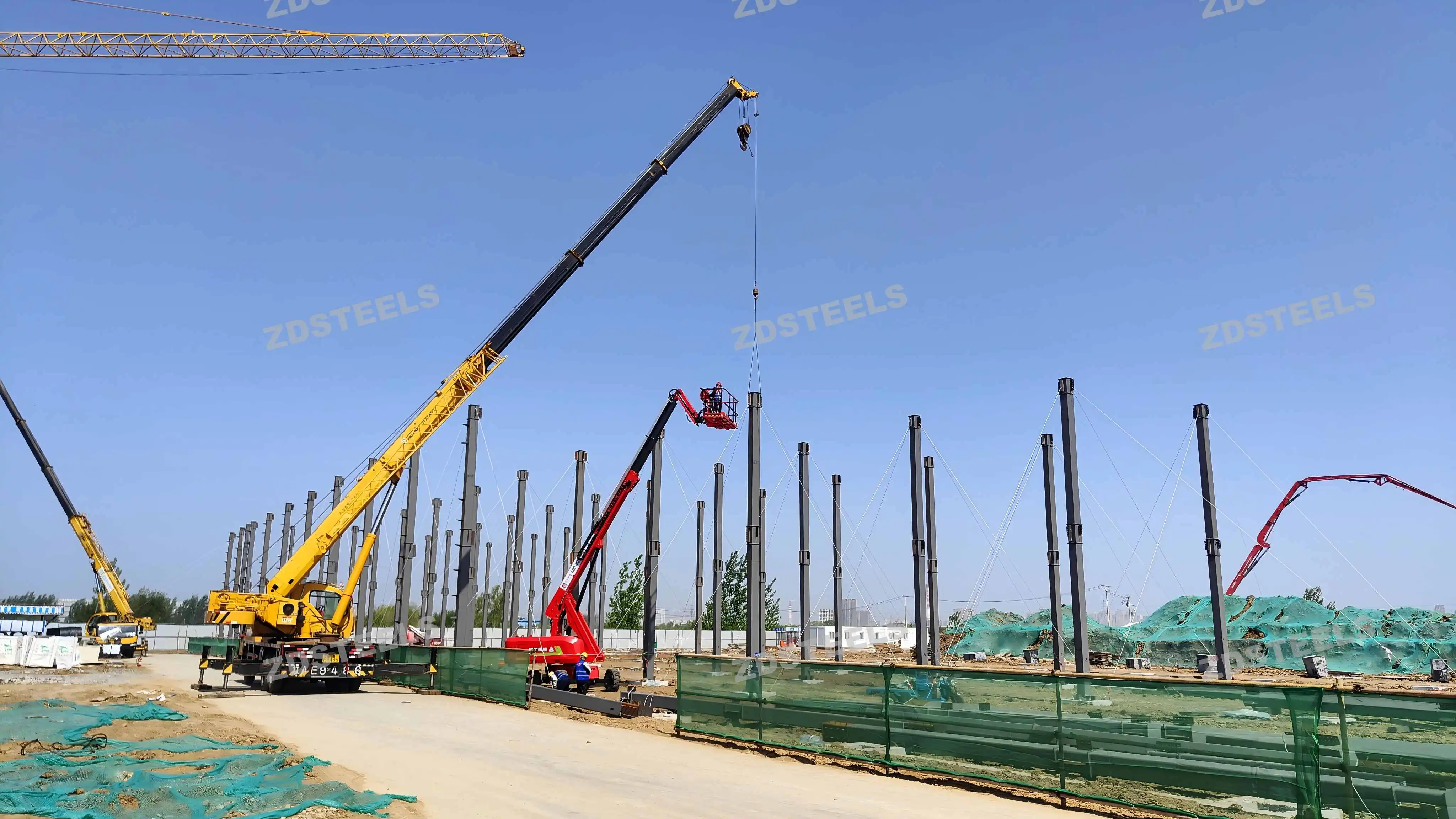
Key Procurement Considerations for Commercial Steel Structures
Buying data center steel frameworks comes with a lot of project risk if you don't carefully evaluate the suppliers you're considering. It is important to look at cost visibility, fabrication capability, and delivery reliability all at the same time.
A good Commercial Steel Structure provider should have national qualifications as well as globally known certifications like ISO 9001:2015 for quality management and EN 1090 for structural steel execution. All orders of structural steel must come with Mill Test Certificates (MTCs) that confirm the steel's chemical make-up and mechanical qualities. Ultrasonic testing (UT) of full-penetration welds and other non-destructive testing (NDT) should be required by contract instead of being a choice.
Here are the main criteria that procurement teams use to judge bids:
- Fabrication precision: Components manufactured with BIM-integrated production workflows achieve dimensional tolerances as tight as ±0.2mm, reducing costly on-site rework and accelerating installation schedules.
- Pre-fabrication capability: Factory-prefabricated steel modules can reduce on-site assembly time by up to 50% compared to conventional concrete construction, a critical advantage when data center operators face tight go-live deadlines.
- Customization flexibility: Suppliers offering OEM and ODM services allow procurement teams to specify non-standard column spacings, cable tray routing integrations, and floor live load capacities tailored to specific IT equipment densities.
- Delivery coordination: Structural steel components designed for modular containerization minimize transit deformation risks and allow phased deliveries aligned with construction milestones.
All of these things together show if a seller can regularly deliver on projects with different levels of complexity, location, and operational urgency.
Comparative Analysis: Steel Structures vs. Alternative Building Materials for Data Centers
There is a lot of pressure on procurement professionals to explain why Commercial Steel Structure is better than concrete or mixed building systems. When performance benchmarks for data centers are used, the technical and financial case for steel is strong.
Concrete buildings have inherent mass and temperature stability, but the long times needed for formwork and curing make project plans much longer. Steel framing lets the envelope close and the MEP rough-in start earlier, which means that operators can start making money faster. Steel's high strength-to-weight ratio also lowers the size of the base needed, which lowers the cost of the footing on limited urban sites.
When it comes to fire protection, dimensional stability, and seismic flexibility, structural steel is better than wood and concrete. Steel doesn't bend, shrink, or break down when it comes to changing levels of wetness. This is very important in buildings where HVAC condensation and raised floor cooling cause long-lasting humidity differences. These benefits are increased by modular steel buildings, which allow quality-controlled fabrication to happen off-site, reduce the need for field labor, and allow for future capacity increases with little structural disruption.
Construction Process and Maintenance Best Practices for Data Center Steel Structures
The steps used to build data center steel frames are organized in a structured way. Buying things comes before making them, and detailed shop plans are looked over and approved before any cutting starts. Computer-aided design and BIM planning make sure that the structural sections fit perfectly with the platforms for UPS equipment, electrical conduits, and cooling ducts. Advanced welding, precise cutting, and quality control checks at each step of the manufacturing process make sure that parts meet specifications before they are shipped.
MEP Integration During Erection
In data centers, putting up Commercial Steel Structure is tied to coordinating the mechanical, electrical, and plumbing systems. Cable tray support brackets, pipe penetration sleeves, and equipment mounting pads must be built in during fabrication, not drilled out after the structure is up.
Preventive Maintenance Protocols
This unified method keeps structural members strong and stops guarantee fights between trades.
Environmental and Sustainability Aspects of Commercial Steel Structures
There is a real environmental profile for structural steel that is becoming more and more important in purchasing decisions. Steel can be recycled over and over again without losing any of its industrial qualities. Using steel to build data centers helps meet LEED and BREEAM certification goals. The World Steel Association says that more than 85% of steel is recycled around the world. This makes steel one of the most environmentally friendly building materials.
Greener ways of making steel, like using recycled scrap in the electric arc furnace (EAF), are lowering the amount of carbon that structural parts contain. It has been shown that a project's Scope 3 emissions footprint can be cut by specifying low-carbon steel grades from certified mills. When combined with the steel frame, energy-efficient insulation layer plates lower the amount of energy needed for operations even more. This directly helps the data center reach its PUE (Power Usage Effectiveness) goals.
Conclusion
Getting Commercial Steel Structure frames for data centers requires a lot of technical detail at every step, from making sure the right material grade is used and that fire safety rules are followed to making sure the seller is qualified and that there is paperwork about sustainability. Steel is the best material for mission-critical buildings because it can be used in a variety of ways, can be built quickly, and can be recycled over and over again. When you work with qualified, experienced makers who consistently deliver accurate measurements and full quality traceability, buying risk is reduced to a level that you can handle.
FAQ
What steel grades are typically specified for data center structural frames?
For main load-bearing parts, low-alloy high-strength grades like Q355B or ASTM A572 Grade 50 are the norm. It is easy to weld these grades because they have a high yield strength. Depending on the load, secondary parts may be made of Q235 or a similar type of carbon steel.
How long does fabrication and delivery typically take?
Different projects have different lead times. When compared to cast-in-place concrete, factory-prefabricated parts can cut total project time by up to 50%. Shipping in modular containers lets deliveries happen in stages that match the order of building.
Can a steel structure be modified after the data center is operational?
Steel can be used in many ways. As the density of IT infrastructure changes, members can be strengthened, and new holes or equipment supports can be welded or bolted in with little trouble.
What certifications should a qualified supplier hold?
Check for ISO 9001:2015, EN 1090, and any other national building standards that are important. Every shipment should have Mill Test Certificates, NDT reports, and records of the coating inspection.
How does steel support data center sustainability goals?
Steel used in buildings can be recycled over and over again, and it can help you get LEED and BREEAM certification points. To lower the amount of carbon that is built into steel, certified mills now offer low-carbon EAF steel grades.
Partner with Zhongda for Your Next Data Center Steel Structure Project
Trusted Commercial Steel Structure seller Zhongda Steel has been making steel structures for over 18 years, is ISO 9001/14001/OHSAS 45001 certified, and has a 120,000 m² factory that can make 60,000 tons of steel every year. We are a reliable partner for data center developers and EPC contractors because our prefabrication is based on BIM, our cutting accuracy is ±0.2mm, and we have delivered to 20+ countries before. You can get in touch with our engineering team at Ava@zd-steels.com or visit zd-steels.com to get technical advice and pricing right away.
References
1. American Institute of Steel Construction (AISC). Steel Construction Manual, 16th Edition. AISC, 2023.
2. World Steel Association. Steel Statistical Yearbook. World Steel Association, 2023.
3. Uptime Institute. Global Data Center Survey Results. Uptime Institute, 2023.
4. International Organization for Standardization. ISO 1461: Hot Dip Galvanized Coatings on Fabricated Iron and Steel Articles. ISO, 2022.
5. Underwriters Laboratories. UL 263: Standard for Fire Tests of Building Construction and Materials. UL, 2022.
6. U.S. Green Building Council. LEED v4.1 Reference Guide for Building Design and Construction. USGBC, 2023.
YOU MAY LIKE