
Modular Steel Pontoons Support Floating Docks, Work Platforms, and Transport
2026-09-15 13:00:01






When a project demands a reliable floating foundation — whether for a temporary bridge, an offshore work platform, or a heavy-load transport vessel — the Steel Pontoon has become the go-to structural solution across the globe. Engineered from high-grade Q235B galvanized steel with polyurethane foam fill, these buoyant modules deliver ≥500kg/m³ displacement capacity while resisting wind and wave forces up to Level 8. At Shenyang Zhongda, we have supplied modular pontoon systems to infrastructure projects across Southeast Asia, Northern Europe, and coastal regions — proving that smart engineering and durable materials change how industries operate on water.
Understanding Modular Steel Pontoons and Their Core Benefits
What Makes a Steel Pontoon Structurally Superior?
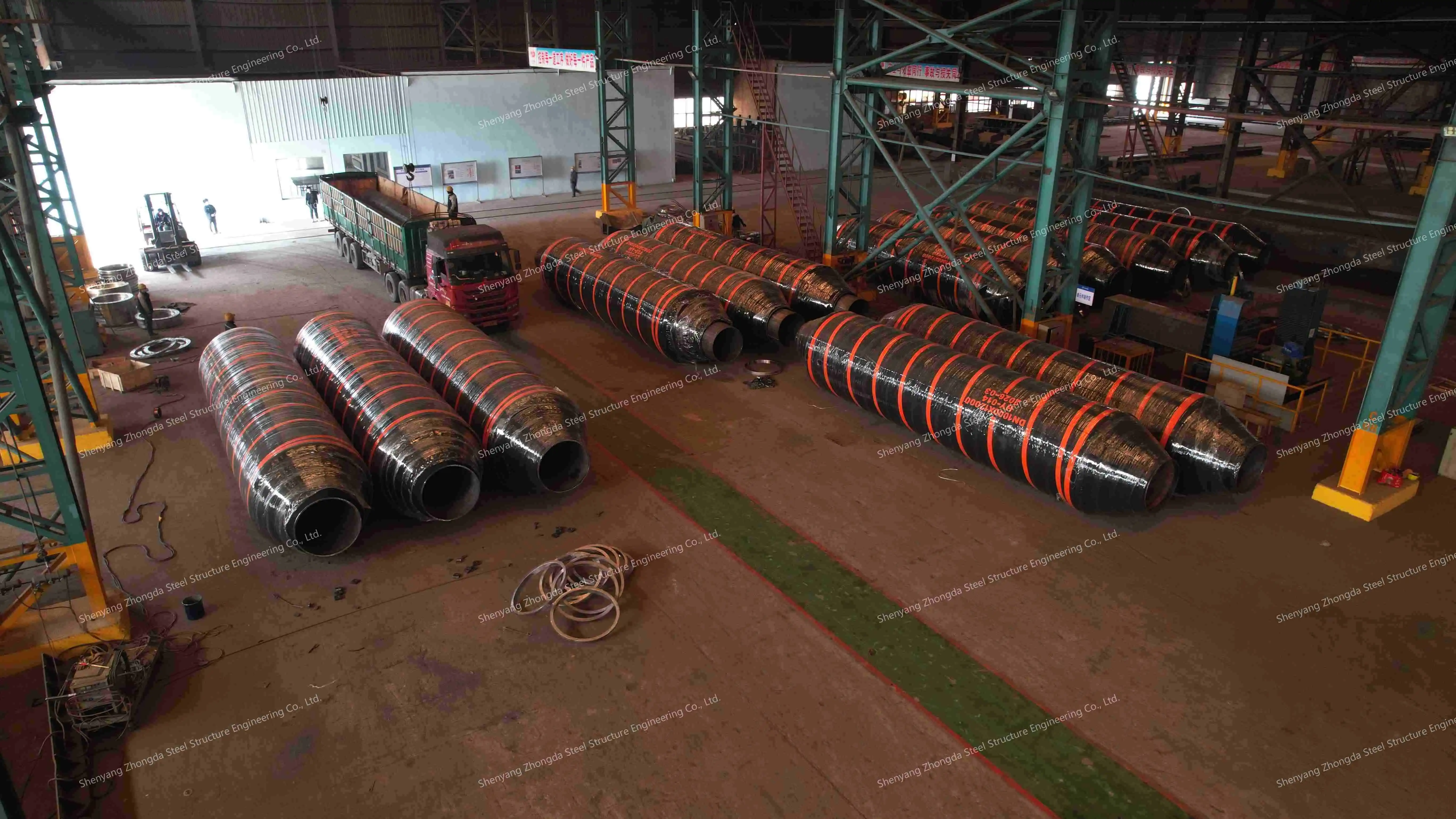
A modular steel pontoon is a hollow, compartmentalized buoyancy unit fabricated from structural-grade steel plate. Unlike single-hull floats, internal bulkheads divide the vessel into isolated chambers. If one compartment is breached, the remaining sections maintain buoyancy — a redundancy feature that plastic cube systems simply cannot replicate. For EPC contractors, government bridge builders, and offshore energy developers, this structural safety margin is non-negotiable.
Zhongda's pontoon modules are crafted from Q235B galvanized steel with plate thicknesses optimized for each application. Polyurethane foam filling adds a secondary buoyancy layer, ensuring the unit remains afloat even under extreme mechanical stress. The result is a floating foundation that supports heavy machinery, crew operations, and transport loads with consistent stability.
Here are the core structural advantages that set these systems apart from conventional floating solutions:
- Compartmentalized buoyancy redundancy: Internal bulkhead divisions isolate potential breach zones, preventing systemic flooding and maintaining operational safety across the entire assembled platform — a critical feature for offshore dredging rigs, pump platforms, and emergency flood control deployments.
- High load-bearing displacement: With buoyancy rated at ≥500 kg/m³ and customizable module diameters from 1 to 5 meters, each unit can be precisely configured using Archimedes' principle calculations to match exact payload specifications, from light personnel walkways to 60-ton excavator crossings.
- Level 8 wind and wave resistance: Zhongda's pontoon geometry and connection system are engineered to absorb dynamic lateral forces, making them viable in tidal estuaries, exposed coastal waters, and high-altitude reservoirs where conditions fluctuate dramatically.
These structural properties translate directly into reduced project risk and longer asset lifecycles — two priorities that procurement teams at construction firms, energy developers, and port operators consistently rank above all others.
Comparing Steel Pontoons with Alternative Materials
Why Steel Outperforms Aluminum, Plastic, and Concrete?
Procurement professionals evaluating floating infrastructure often compare steel against aluminum, HDPE plastic, fiberglass, and concrete, and a Steel Pontoon consistently outperforms across heavy-duty B2B applications. Each material has a niche, but none matches steel's balance of strength, customization, and total cost of ownership across heavy-duty B2B applications.
Aluminum reduces weight effectively, but its yield strength under impact loading — particularly in ice-prone or debris-heavy waterways — is significantly lower than structural steel. HDPE plastic modules develop creep deformation under sustained heavy loads, which creates unacceptable deflection in machinery platforms. Concrete offers rigidity but adds dead weight, complicates on-site modifications, and carries substantially higher maintenance obligations over time.
Steel pontoons occupy a different performance tier. Their tensile strength reaches up to 410 MPa for Q235B grades, and their modulus of elasticity far exceeds polymer alternatives. Critically, Zhongda's modular pontoons carry maintenance costs that run 70% lower than concrete float systems over a comparable service period — a figure verified through lifecycle analysis on port infrastructure projects. Combined with a design lifespan exceeding 20 years under DNV GL certification standards, the total cost advantage is substantial for any project with a multi-decade operational horizon.
Procurement Guide: Selecting and Purchasing Modular Steel Pontoons
Key Evaluation Criteria for Sourcing Floating Dock Systems
Selecting the right steel pontoon supplier involves more than comparing catalog specifications. Procurement teams managing large-scale dock, bridge, or offshore platform projects need to evaluate certification depth, fabrication capacity, and customization capability simultaneously.
Zhongda holds DNV GL Offshore Float Certification and complies with ISO 17357 anti-aging test standards — two benchmarks that specifically address the long-term structural and material performance of marine floatation systems. Our facility also operates under ISO 9001, 14001, and 45001 quality management frameworks, which govern fabrication consistency, environmental responsibility, and worker safety across the full production chain.
Sourcing decisions should also account for delivery windows. Zhongda's standard pontoon modules ship within 20 days of order confirmation. Units specified with enhanced anti-corrosion coating systems require 25 days — a timeline that supports most major project schedules without creating critical path delays.
OEM and ODM services are available for clients who need proprietary configurations. We support custom mooring ring integration, specialized fender systems, non-standard module dimensions, and coating specifications tailored to aggressive environments such as petrochemical tailing ponds or arctic waterways. Prototyping, third-party testing coordination, and certification documentation are all included within our OEM process.
Maintenance, Longevity, and Environmental Impact of Steel Pontoons
Sustaining Performance Over a 20-Year Service Life
A well-maintained Steel Pontoon system does not require frequent intervention. The maintenance framework centers on three activities: annual coating inspection and localized touch-up, biennial sacrificial anode checks for cathodic protection, and periodic weld seam audits using magnetic particle inspection or ultrasonic testing methods.
Zhongda's pontoons undergo an air-tightness test at 0.02 MPa internal pressure before dispatch, verifying zero leakage across all weld seams. Zinc layer thickness gauging and adhesion pull-off testing per ASTM D4541 confirm coating durability before delivery. These quality control steps eliminate the most common causes of premature corrosion failure — a problem that frequently shortens the lifespan of improperly coated marine steel structures.
From an environmental standpoint, steel is one of the most recyclable construction materials available. At end-of-service life, structural steel recovers at high material value through established scrap markets, generating minimal waste compared to fiberglass or composite alternatives. Zhongda's production process also adheres to ISO 14001 environmental management standards, which govern waste reduction and emissions across our 120,000 m² manufacturing facility in Shenyang.
Applications of Modular Steel Pontoons in Floating Docks, Work Platforms, and Transport
Real-World Deployment Across Heavy Civil and Industrial Projects
The versatility of modular steel pontoon systems makes them applicable across a wide range of industries. In heavy civil construction, we supplied 500 pontoon units to support a temporary floating bridge in Southeast Asia — the project completed 30% faster than traditional construction timelines. In the energy sector, we engineered custom pontoon arrays for an offshore wind farm in Northern Europe, where extreme wave exposure and sub-zero temperatures demanded Level 8 resistance ratings and specialized anti-corrosion coatings.
For port terminal developers and logistics operators, modular pontoons create large-span floating dock systems that adapt to fluctuating water levels without fixed pile infrastructure. Mining operations leverage these platforms for pump station support in tailing ponds, where chemical resistance and anchoring stability are primary requirements. Emergency management agencies have deployed Zhongda pontoon systems for rapid flood control operations, citing fast on-site assembly and reliable performance under surge conditions.
Conclusion
Modular steel pontoon systems have redefined what's possible in marine and waterfront infrastructure. Their compartmentalized design, high buoyancy ratings, and corrosion-resistant fabrication give engineers a floating foundation that performs reliably across decades of heavy service. Zhongda's product line — built to DNV GL, ISO, and EN 1090 standards, with customizable dimensions and mooring configurations — addresses the full spectrum of procurement requirements, from offshore energy platforms to emergency flood response. When long-term value, structural integrity, and global compliance matter, modular steel floating systems remain the most defensible engineering choice available.
FAQ
What is the expected service life of a Steel Pontoon in saltwater environments?
With marine-grade epoxy coating and active cathodic protection through sacrificial anodes, Zhongda's steel pontoons achieve a verified design life exceeding 20 years. DNV GL certification supports this performance claim.
Can a pontoon module be customized for specific equipment mounting requirements?
Yes. The top deck can be reinforced with internal stiffeners and fitted with custom bolt patterns, crane pedestals, or winch foundations during the fabrication phase. Our OEM team handles specification development from initial drawing to certified delivery.
How do modular units connect for large floating platform assemblies?
Heavy-duty male/female connector sets or high-strength bolt-flange systems transfer shear and bending loads across the full assembly, maintaining structural continuity regardless of platform scale.
How does steel perform in freezing water compared to plastic alternatives?
Steel resists ice-crushing forces and thermal contraction far more effectively than HDPE. This makes it the standard material choice for cold-climate and high-altitude floating applications.
What quality tests does Zhongda perform before shipping?
Every unit passes a 0.02 MPa air-tightness test, non-destructive weld inspection, zinc layer gauging, and a hydrostatic displacement verification within ±2% of engineering specifications.
Get Your Custom Steel Pontoon Quote from Zhongda Today
Zhongda is a trusted Steel Pontoon manufacturer with over 20 years of proven engineering experience, DNV GL certification, and 60,000-ton annual fabrication capacity. Whether you need a turnkey floating dock system, a custom offshore work platform, or a rapid-deployment transport solution, our team delivers precise, compliant results on schedule. Contact our technical team today at Ava@zd-steels.com or visit zd-steels.com to discuss your project specifications and request a tailored sourcing proposal.
References
1. Det Norske Veritas (DNV GL). Offshore Standard: Floating Production Units. DNV GL, 2021.
2. International Organization for Standardization. ISO 17357: Life-saving Equipment — Floating Rescue Platforms. ISO, 2020.
3. American Welding Society. AWS D1.1/D1.1M: Structural Welding Code — Steel. AWS, 2020.
4. Port Technology International. Modular Floating Infrastructure in Port Development. Port Technology International, 2022.
5. ASTM International. ASTM D4541: Standard Test Method for Pull-Off Strength of Coatings. ASTM, 2017.
6. Steel Construction Institute. Design Guide for Steel Pontoon and Floating Structures. SCI Publication, 2019.
YOU MAY LIKE