
Steel Arch Bridge Structures Provide Reliable Long-Term Performance
2026-09-18 13:00:00






When engineers and procurement professionals evaluate crossing solutions for demanding infrastructure projects, the steel arch bridge consistently emerges as a top-tier choice. By leveraging a curved structural form that channels loads into compression along the arch ribs, these bridges deliver exceptional span capacity, dimensional stability, and service longevity. Whether you are managing a highway expansion, an industrial corridor, or a port access route, understanding how a steel arch bridge performs over decades — and what separates a superior fabricator from an average one — directly affects your project's bottom line.
Understanding Steel Arch Bridge Structures
How Do the Arch Mechanics Work?
Vertical loads are turned into horizontal pressure at the abutments or tie-girders of a Steel Arch Bridge. This gets rid of the bending forces that normally govern girder designs. This path for compressive loads lets structural steel work close to its material efficiency limit. This lets clear spans get longer without having to use intermediate piers, which is very helpful in situations where waterways, valley floors, or rail lines need to stay clear.
Main Design Configurations
There are three main designs that can be used for different types of projects. The through-arch suspends the deck below the crown, which gives ships more room to move. The "deck-arch" lets people go over the arch, which works well for shallower waterways. The tied-arch, also called the "bowstring," moves horizontally within a bottom chord. This makes it perfect for sites with soft soil where big abutments wouldn't work. Choosing the right setup during buying saves a lot of money on redesigning later on.
Material Selection Principles
Today, most arch ribs are made from high-strength grades like Q420qE and ASTM A709. This is because their high yield strength lets them have thin cross-sections that lower both dead load and wind resistance. During design, thermal expansion coefficients and dynamic fatigue performance must also be considered. This is especially important for highway and rail applications where loads are constantly cycling.
Advantages and Performance Benefits of Steel Arch Bridges
Steel Arch Bridges beat suspension and truss options in a number of important ways. The arch shape creates a good stress state—mostly compressive—that steel can handle with little material volume. This gives it a high strength-to-weight ratio that makes foundations easier and speeds up construction.
Here are the main performance benefits that buying teams always point out:
- Extended service life: Properly protected steel arch bridges routinely achieve 100-year design lives. Zhongda's Q420qE arch ribs carry a 150 μm thermally sprayed aluminum (TSA) coating followed by a fluorocarbon topcoat compliant with GB/T 30790 C5M, delivering C5-Marine-grade corrosion resistance in the most aggressive industrial and coastal environments.
- Superior load-bearing capacity: Pentagonal box arch ribs measuring 3.2 m × 4.5 m provide exceptional section modulus, supporting heavy traffic and seismic demands that standard I-girder systems cannot match.
- Reduced maintenance expenditure: TSA coatings suppress corrosion for decades between major rehabilitation cycles, lowering lifetime ownership costs compared to conventional paint systems that require recoating every 10–15 years.
- Environmental responsibility: Structural steel carries a recycled content of approximately 93% in electric arc furnace production, and end-of-life scrap retains substantial commodity value — aligning arch bridge procurement with sustainability mandates increasingly required on public infrastructure bids.
These benefits directly address the concerns of lifecycle cost that EPC companies, government engineering departments, and industry developers have as they try to find a balance between large capital costs and decades of reliable operation.
The Steel Arch Bridge Construction Process: From Fabrication to Installation
Precision Fabrication at Scale
The first step in Zhongda's manufacturing process is getting certified Q420qD/Q420qE plates. Next comes CNC plasma cutting, automated submerged-arc welding, and testing every arch rib joint for 100% CTOD (crack-tip opening displacement). CTOD testing confirms that the material is not easily broken at low temperatures, which is a must for bridges in northern climates or seismic zones. At a steady rate of 1,203 tons per month, arch rib segments are made in 20-meter modules, which makes it possible to keep delivery dates for big contracts.
Stentless Rotation Erection
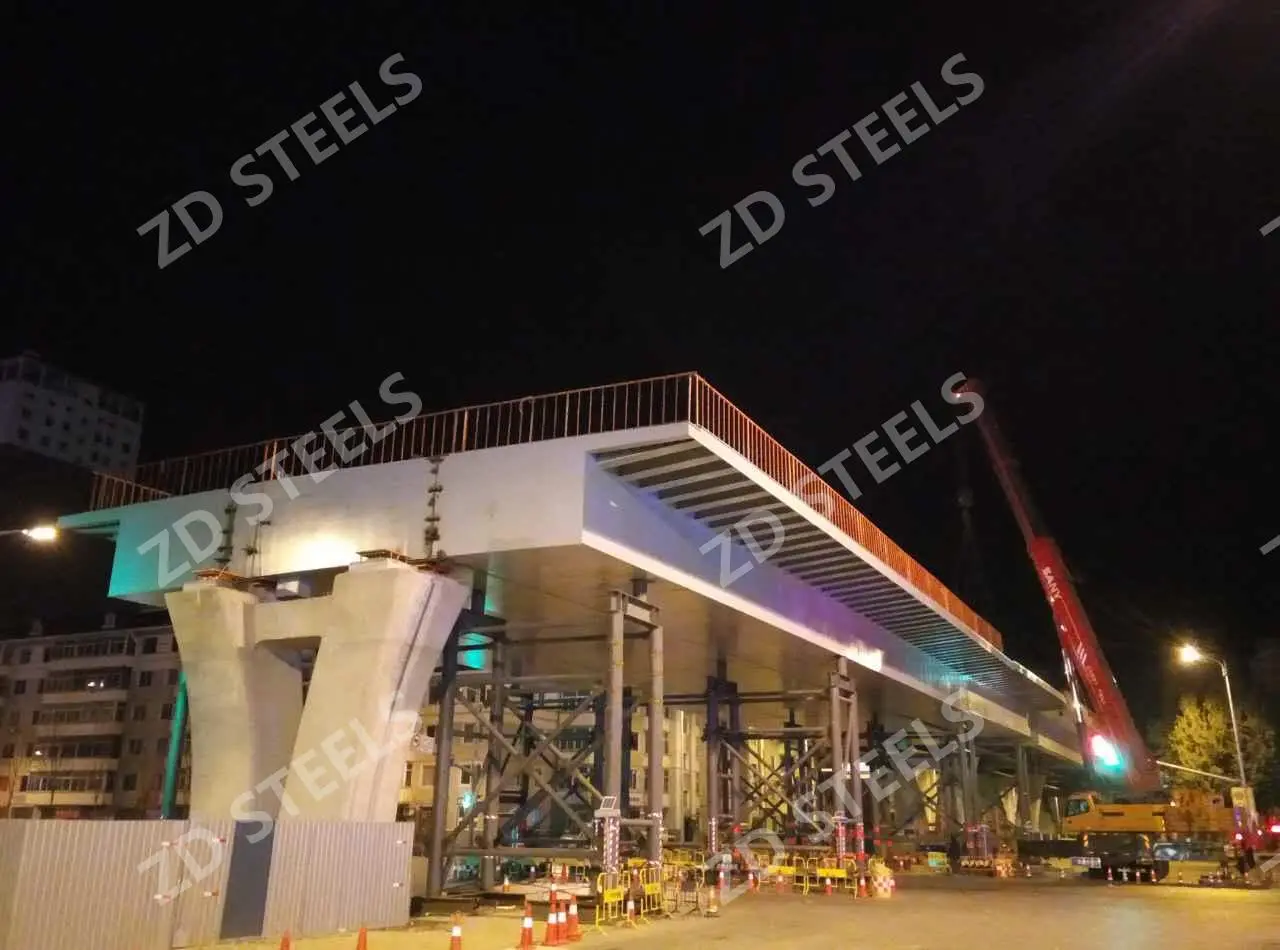
In situations where building falsework over busy waters or traffic lanes would be too expensive and dangerous, Zhongda uses a stentless rotation (swivel) method for a Steel Arch Bridge. The 18,000-ton Shenyang Dongta Cross-Hunhe River Bridge was built using this method, which involved rotating an 8,000-ton arch assembly into place without stopping traffic on the river below. This method shortens the time needed on-site, lowers the cost of temporary work, and keeps the environment as quiet as possible during installation.
Selecting a Qualified Fabrication Partner
When purchasing goods, purchasing managers should look for suppliers with EN 1090 Execution Class 4 certification, which shows the best structural weld quality level, as well as ISO 9001:2015 and a Class I Steel Structure Professional Contracting Qualification. These qualifications are objective signs of a company's ability to deliver code-compliant, consistent parts on a large scale.
Maintaining and Optimizing Steel Arch Bridges for Long-Term Use
Inspection and Structural Health Monitoring
Zhongda builds a full-bridge sensor network with more than 200 monitoring points into every structure they send out. These points measure in real time things like vibration, strain, displacement, and temperature differences. Continuous data collection lets operators find signs of wear and tear or strange deflection patterns before they get worse and need expensive repairs. This feature lowers the chance that high-traffic corridors will have to close without warning.
Corrosion Rehabilitation Technologies
When it's time for maintenance of a Steel Arch Bridge, focused actions like spot TSA re-spraying and fluorocarbon topcoat refill bring back the protective system without having to move the whole scaffold. Advanced data from stress-tracking points directs techs to priority areas, focusing resources where they can do the most good for the structure and reducing downtime.
Making the Right Choice: Procurement Insights for Steel Arch Bridges
If a project meets its performance and price goals, it will depend on how well the suppliers are evaluated during the bidding stage. Procurement teams should look at a fabricator's past work on similar span lengths, how well they know how to do in-house welding, how fast they can make things compared to the needs of the project timeline, and whether they have any third-party certifications.
A full lifetime cost model needs to take into account the type of raw material, how hard it is to make, the specifications for the anti-corrosion system, how sensors are integrated, and how often upkeep is expected to be done. A more expensive original specification that needs to be re-coated and inspected by hand more often will usually have a higher net present cost over a 75–100-year service life than a better corrosion protection system and structural health tracking.
From the idea stage to the finished product, Zhongda's engineering team works with clients to make sure that the arch rib geometry, wind resistance specifications (up to 1.5 kN/), rotation construction sequences, and monitoring architectures are all tailored to the site's specific traffic loads, environmental exposure categories, and seismic design needs. This partnership approach lowers the risk of buying things and makes sure that deliverables are closely linked to project goals.
Conclusion
Few other crossing options can compare to a well-designed Steel Arch Bridge in terms of structural confidence, operational continuity, and cost-effectiveness over its entire life. All parts of a Zhongda arch bridge are made to last for at least one hundred years. This includes the high-strength steel Q420qE, the accurate welding that has been checked by CTOD, and the 200+ smart devices that are built in. When buying things, people who work in procurement look at things like corrosion system quality, manufacturing certifications, and the ability to watch structures as part of their source evaluation factors will always get better long-term results for their infrastructure investments.
FAQ
How long does a steel arch bridge typically last?
With high-strength steel types, a C5M-rated anti-corrosion system, and regular checks, a Steel Arch Bridge is made to last for 100 years. This standard is backed up by real-world performance data from bridge stock in North America and Europe, as long as maintenance procedures are consistently followed.
How does proactive maintenance affect long-term reliability?
Putting 200 or more structural health sensors in from the start changes upkeep from being reactive to being proactive. Operators get real-time information on stress, deflection, and environmental exposure, which lets them target repairs before small damage turns into a structural issue. This method usually lowers the total cost of maintenance over the life of a structure by stretching the time between major repairs and avoiding unplanned traffic jams.
What are the primary cost drivers in arch bridge procurement?
The main things that affect the cost are the type of steel used, the amount and grade of that steel, the complexity of the arch rib geometry, the anti-corrosion system, the way the structure is put together (stentless rotation vs. conventional falsework), and how the monitoring system is integrated. Higher-specification parts cost more up front, but over the life of an asset (75–100 years), they have a much cheaper total cost of ownership.
Partner with Zhongda for Your Next Steel Arch Bridge Project
As a trusted Steel Arch Bridge manufacturer, Zhongda has a lot of experience building infrastructure for highways, rail lines, factories, and ports around the world. Our Q420qE arch bridge options include EN 1090 EXC4-certified fabrication, 150 μm TSA corrosion protection, and real-time tracking by 200+ sensors to make structures that will last longer than their planned life. You can email our engineering team at Ava@zd-steels.com or go to zd-steels.com to get personalized advice and a project quote.
References
1. American Association of State Highway and Transportation Officials (AASHTO). AASHTO LRFD Bridge Design Specifications, 9th Edition. AASHTO, 2020.
2. Biezma, M. V., & Schanack, F. "Collapse of Steel Bridges." Journal of Performance of Constructed Facilities, ASCE, 2007.
3. Chen, W. F., & Duan, L. (Eds.). Bridge Engineering Handbook: Superstructure Design, 2nd Edition. CRC Press, 2014.
4. European Committee for Standardization. EN 1993-1-1: Eurocode 3 — Design of Steel Structures. CEN, 2005.
5. ISO 12944-5: Paints and Varnishes — Corrosion Protection of Steel Structures by Protective Paint Systems — Part 5: Protective Paint Systems. ISO, 2019.
6. Manzanares, A., & Ruiz-Teran, A. M. "Structural Behavior and Design Criteria of Under-Deck Cable-Stayed Bridges and Combined Systems." Proceedings of the Institution of Civil Engineers — Bridge Engineering, Thomas Telford, 2021.
YOU MAY LIKE