
Steel Pontoons Provide Stable Floating Platforms for Marine Construction Projects
2026-09-15 13:00:01






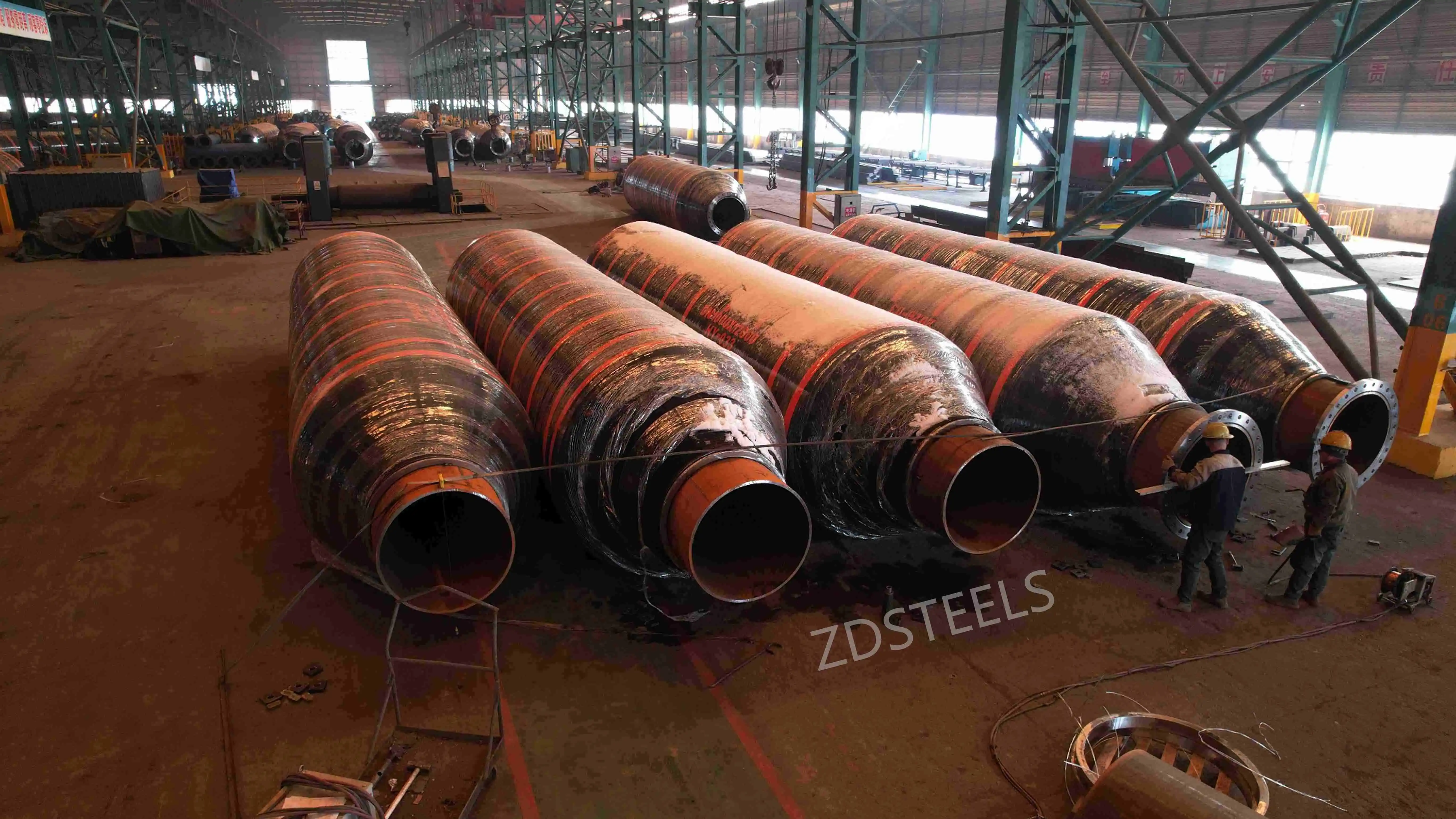
A steel pontoon is the best material for marine construction because it doesn't bend or break when it's under pressure. These hollow buoyancy boats are made from structural-grade Q235B stainless steel and filled with polyurethane foam. They have a minimum buoyancy of ≥500 kg/m³ and can withstand wind and wave forces up to Level 8. Steel pontoons are the load-bearing backbone of modern marine infrastructure projects all over the world, whether they are supporting a temporary bridge, an installation platform for offshore wind turbines, or a modular floating dock.
What Makes Steel Pontoons Essential for Marine Construction?
Structural Design and Flotation Mechanics
A steel pontoon works on a simple engineering principle: the amount of water that is moved creates an upward lifting force equal to the weight of the water that is moved. Internal compartmentalization is what sets a high-performance marine raft apart from a simple float. The hull is separated into secure rooms by internal bulkheads. This way, a small weld break cannot affect the whole structure. In commercial marine operations, where a structural failure could cost a lot of money and put people in danger, this redundancy is a must.
Core Benefits That Drive B2B Value
When looking at moving platform options, procurement professionals always put sturdiness, lifetime cost, and operating efficiency at the top of their lists. Because steel floating platforms work better than other materials, they are the best choice for tough naval projects:
- Better load capacity: Q235B steel plates with thicknesses between 6mm and 16mm can support heavy excavators, pumping stations, and crane pedestals without deflection, which is a common problem with plastic modular cube systems.
- Longer working life: Well-kept units safely last longer than 20 years thanks to DNV GL-certified anti-corrosion coats and meeting ISO 17357 anti-aging standards. This cuts down on the number of times that capital needs to be replaced by a large amount.
- Low maintenance costs: They are about 70% less expensive to maintain than similar concrete floats, which directly improves the project's return on investment over multiple years.
- Recyclability for the environment: Steel can be recycled in its entirety when it is no longer needed. This is in line with global marine environmental compliance frameworks and ESG buying rules that infrastructure developers are increasingly adopting.
These benefits directly address the three problems that B2B buyers most often bring up: structures that bend under load, impacts that happen in water that is heavy with debris or freezing, and the need for long-term operational commitments for infrastructure that lasts decades.
Steel vs. Concrete, Aluminum, and Plastic: An Honest Comparison
B2B buyers rarely make procurement decisions in isolation — they evaluate materials against alternatives before committing capital, and a Steel Pontoon consistently emerges as the preferred choice. Concrete pontoons carry significantly higher dead weight, limiting modular reconfiguration and increasing crane and transport costs. Aluminum alternatives offer good corrosion resistance but exhibit lower tensile strength and higher material costs per unit buoyancy. HDPE and plastic cube systems work adequately for light pedestrian dock applications but fail under concentrated machinery loads and ice crushing forces — conditions where steel excels.
At this point, no polymer or composite floating platform can match the strength-to-buoyancy ratio of steel platforms on a large scale. The heavy-duty bolt-flange sections in the modular connection systems pass shear and bending moments. This means that procurement teams can change the platform configurations from a small work boat to a full-span floating bridge without having to rethink the core parts. This ability to be reconfigured directly means less time and money spent on mobilization for EPC contractors working on tight schedules for bridge repair, offshore energy, or port construction projects.
Key Procurement Considerations When Sourcing Steel Pontoons
Finding a certified marine floating platform is more complicated than just looking at prices. The general success of a project depends a lot on how reliable the supplier is, how well they can make unique parts, and how well they help after delivery.
Shenyang Zhongda Steel Structure Engineering Co., Ltd. was established in 2004 and has its main office in Shenyang's Economic-Technological Development Zone. It has a manufacturing facility that covers 120,000 m² and can make 60,000 tons of steel each year. Zhongda is a qualified steel float maker. They have ISO 9001, 14001, and 45001 quality management certifications, as well as DNV GL Offshore Float Certification, which makes sure that every unit meets international safety standards for the marine industry.
Custom manufacturing is possible for diameters ranging from 1 to 5 meters, and mooring rings and fender systems can be added as options to fit the mooring layouts of each project. Standard delivery takes 20 days, and units that need better anti-corrosion coating systems ship in 25 days. Zhongda's vertically integrated production includes research and development, CNC cutting, automatic welding, and precise assembly. This means that there are no delays caused by third-party manufacturing, and quality control is maintained at all stages of production.
Maintenance Practices That Extend Service Life
Corrosion Protection Strategies
Proactive protection control is the best way to keep a Steel Pontoon safe. When used with sacrificial anode cathodic protection systems, marine-grade epoxy coatings with a Dry Film Thickness greater than 300 microns are the best way to keep things from rusting in saltwater. Maintenance crews can stop structural thinning before it starts by doing visual inspections once a year to look for coating breaches and condition checks every two years on the anodes.
Inspection and Repair Protocols
Non-destructive testing methods — including Ultrasonic Testing and Magnetic Particle Inspection — detect internal weld flaws before they propagate. Air tightness testing at 0.02 MPa validates compartment hermeticity following any structural modification or impact event. These protocols keep floating work platforms operational with minimal downtime, a critical requirement for infrastructure projects running on fixed completion schedules.
Real-World Applications and Project Results
Zhongda's steel floating platform systems have been deployed across diverse and technically demanding environments. In Southeast Asia, Zhongda supplied 500 pontoon units for a temporary floating bridge project, completing the structure 30% faster than traditional construction methods allowed. In Northern Europe, custom-fabricated pontoons supported an offshore wind farm installation, withstanding extreme weather conditions throughout the installation campaign. In coastal flood-affected regions, modular pontoon systems enabled rapid emergency deployment with assembly times that earned commendation from project coordinators.
These project outcomes reflect a broader industry reality: according to data cited by the International Association of Ports and Harbors, floating infrastructure deployment in marine construction has expanded consistently as developers prioritize speed and adaptability over permanent concrete solutions. Steel floating structures, with their modular nature and certified load ratings, sit at the center of this shift.
Conclusion
Steel pontoons are not simply floating platforms — they are precision-engineered infrastructure components that underpin the safety and efficiency of marine construction projects across energy, civil, and industrial sectors. Their structural advantages over concrete, aluminum, and plastic alternatives are measurable and well-documented. With a lifespan exceeding 20 years, maintenance costs running 70% below concrete alternatives, and certifications meeting DNV GL and ISO standards, steel pontoon systems represent a credible, long-term asset for any procurement portfolio. For project teams operating in challenging marine environments, the choice of buoyancy platform is a foundational decision — one that deserves serious technical and commercial evaluation.
FAQ
How does a steel pontoon compare to aluminum in terms of durability?
Steel pontoons carry a higher tensile strength and superior resistance to impact forces — including ice crushing — compared to aluminum. While aluminum resists corrosion naturally, steel units with marine-grade epoxy coatings and cathodic protection systems achieve comparable corrosion performance at higher load capacities and typically lower cost per unit buoyancy, making them more practical for heavy marine construction applications.
What are typical lead times for custom pontoon orders?
At Zhongda, standard steel pontoon modules are ready for delivery within 20 days. Units specified with enhanced anti-corrosion coating systems require approximately 25 days. Custom configurations with integrated mooring systems or specialized deck reinforcement are accommodated within these production windows, subject to engineering review.
Is leasing or renting available for temporary project needs?
Most reputable steel pontoon suppliers, including Zhongda, focus on outright sale and custom fabrication. For temporary applications such as construction access bridges, project teams often purchase modular units and resell or redeploy them after project completion, as the durable steel construction retains significant residual value.
Can deck surfaces be customized for equipment mounting?
Yes. Internal stiffeners, custom bolting patterns, crane pedestals, and winch foundations can all be integrated during the fabrication phase to meet specific equipment mounting requirements.
Partner With Zhongda for Certified Steel Pontoon Solutions
Zhongda brings 20 years of structural engineering expertise to every marine floating platform we fabricate. As a trusted steel pontoon supplier with DNV GL certification and global project references, we offer custom dimensions, mooring integration, and reliable delivery schedules tailored to your project timeline. Connect with our engineering team at Ava@zd-steels.com or visit zd-steels.com to request a project-specific quote and explore our full product catalog.
References
1. International Association of Ports and Harbors (IAPH). World Ports Sustainability Report. 2022.
2. Det Norske Veritas (DNV GL). Offshore Standard: Floating Production Units. 2021.
3. American Welding Society. AWS D1.1/D1.1M: Structural Welding Code — Steel. 2020.
4. International Organization for Standardization. ISO 17357: Floating Pneumatic Rubber Fenders — Anti-Aging Performance. 2014.
5. Bhattacharyya, R. Dynamics of Marine Vehicles. John Wiley & Sons. 1978. (Reprinted and cited in marine engineering curricula through 2020.)
6. U.S. Army Corps of Engineers. Design of Floating Plant and Marine Structures: Engineer Manual EM 1110-2-2104. 2016.
YOU MAY LIKE