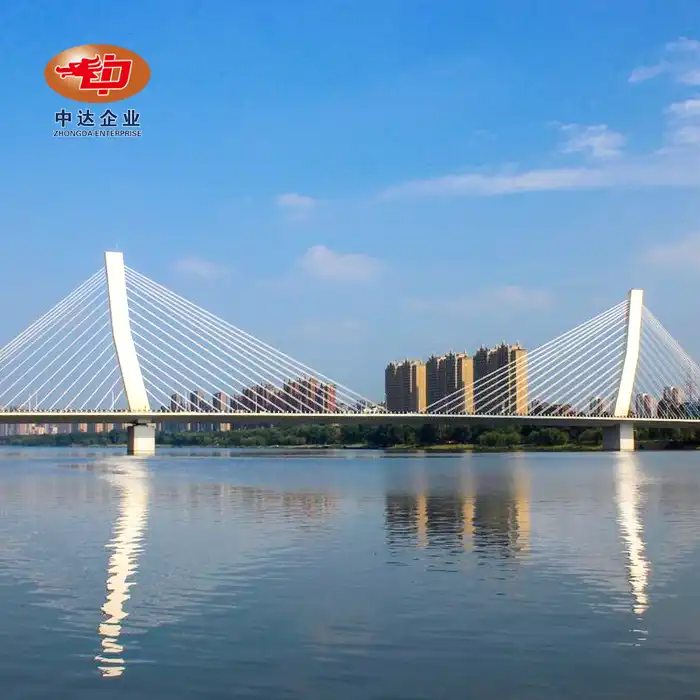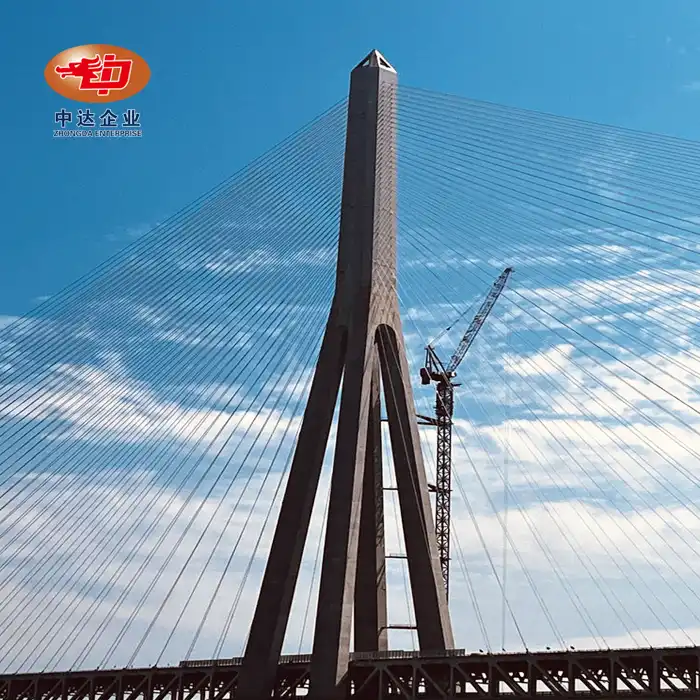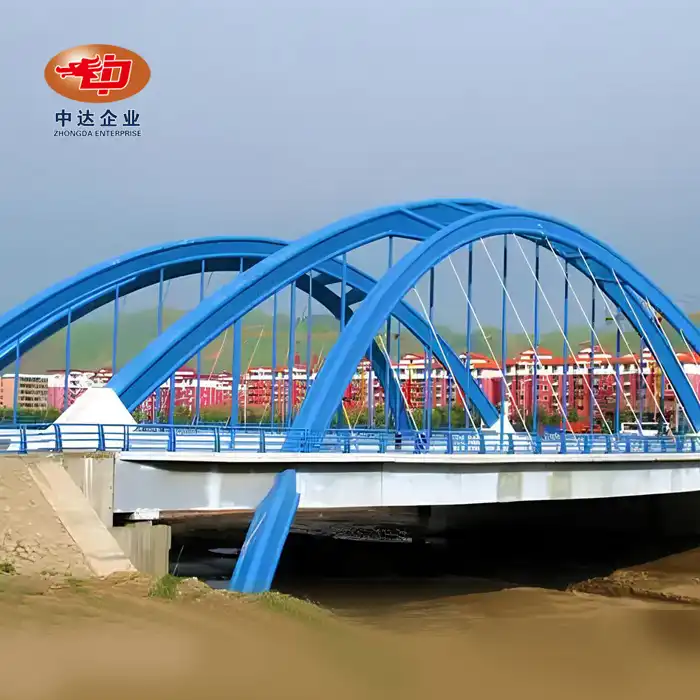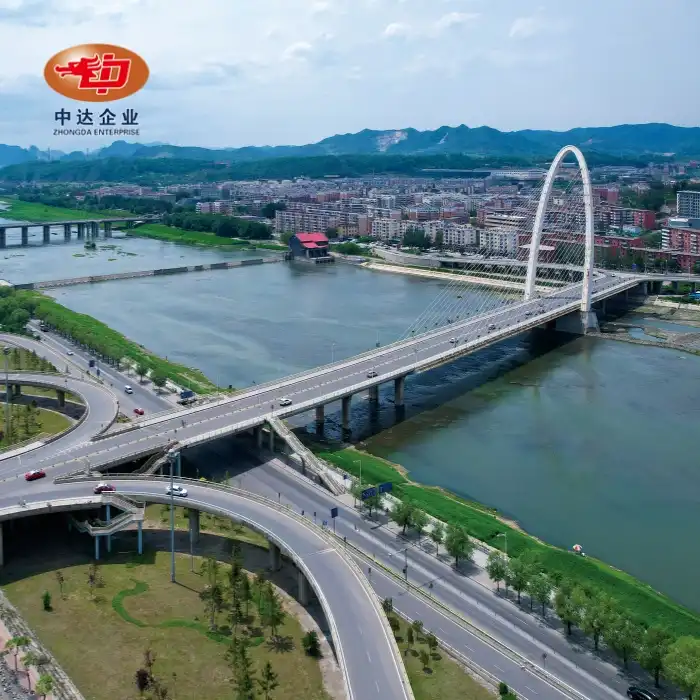
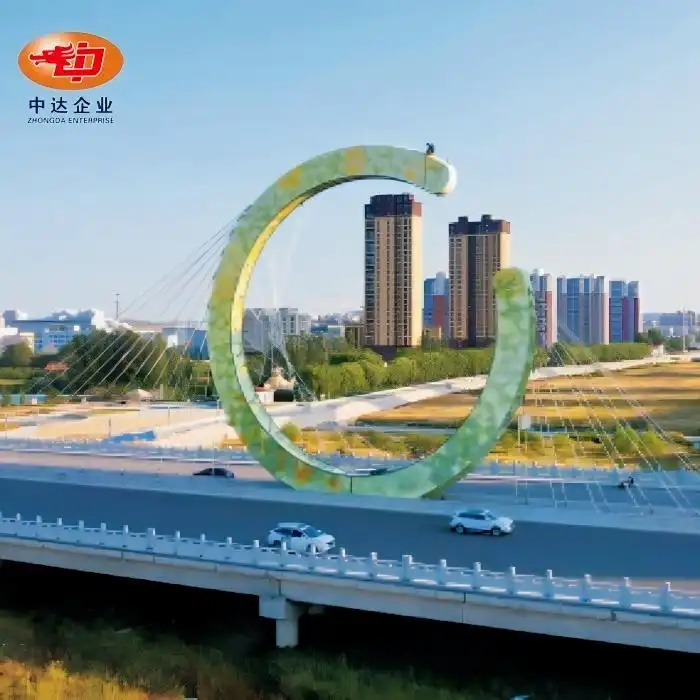
Double-Sided Cable-Stayed Bridge






2. Stay Cable: OVM250 anchorage, Φ7mm wire (EN 10138).
3. Seismic: LRB800 bearings, 40% response reduction.
4. Inspection: 3D coord. detection, 0.5″ total station.
5. Spans: Double/Single - cable plane, 200 - 800m main span.
6. Anti - Corr: PE outer, graphene inner, 51 - year UV resist.
Double-Sided Cable-Stayed Bridge | Enterprise-Grade Steel Bridge Solutions Product Description
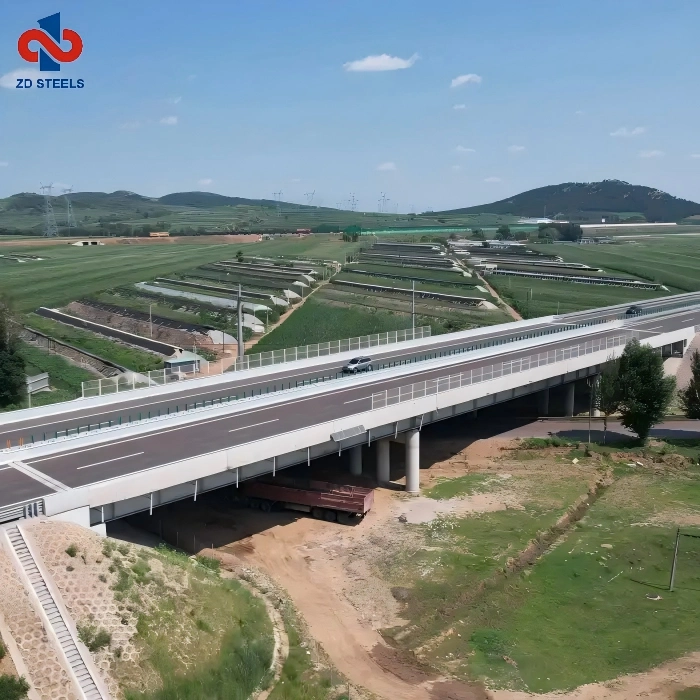
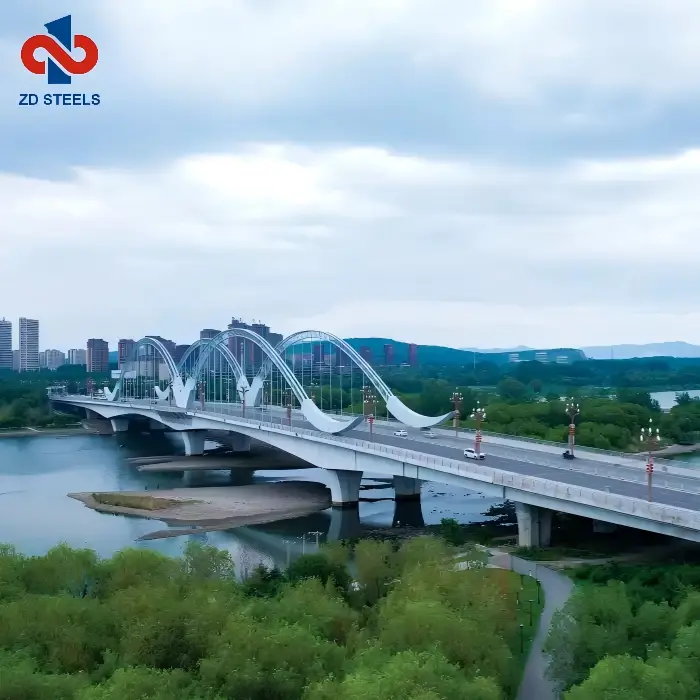
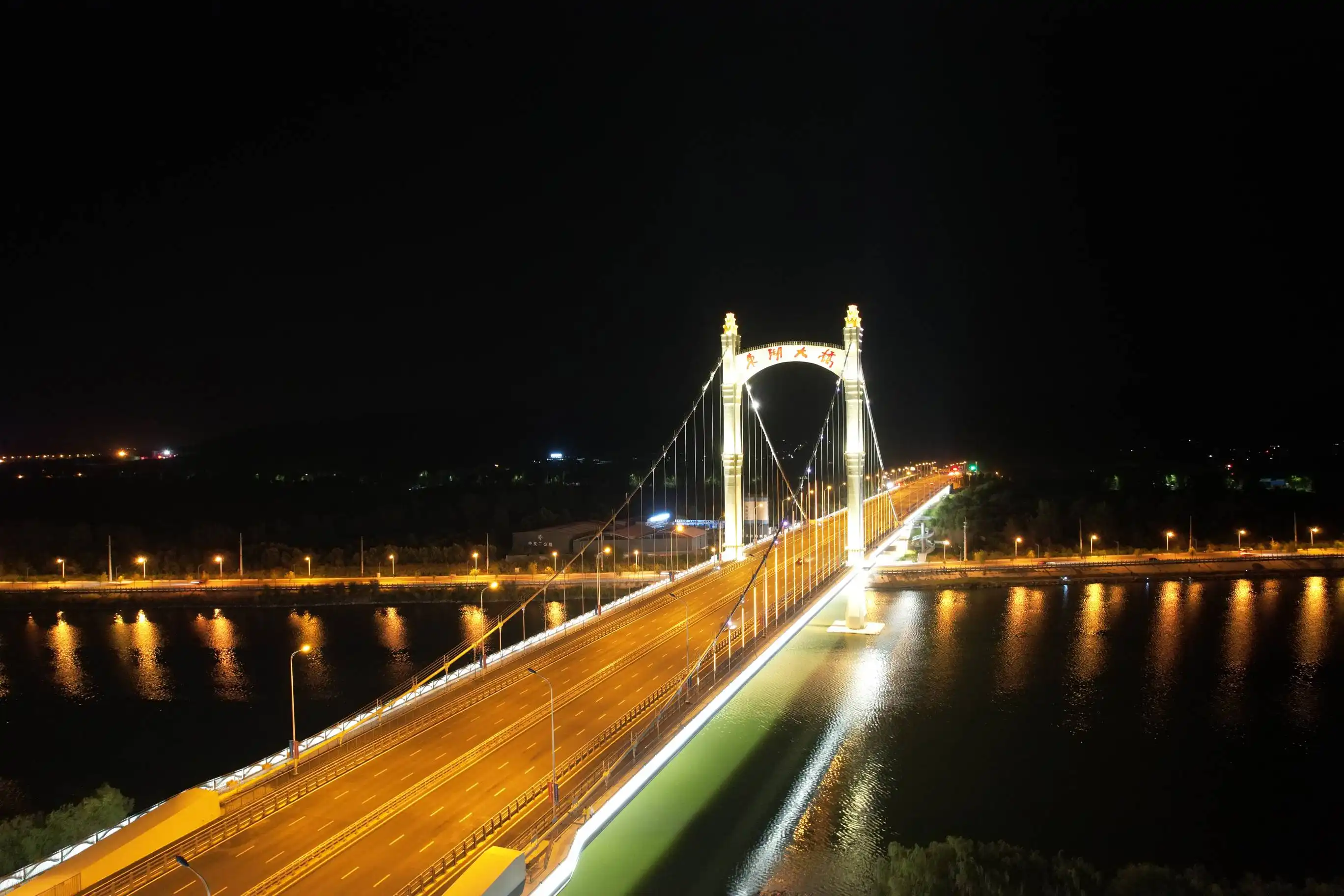
When your project demands exceptional stability for wide-deck crossings, our Double-Sided Cable-Stayed Bridge delivers proven performance. Shenyang Zhongda's dual-plane cable system utilizes premium Q420qE steel towers (60-120mm plate thickness) with vertical error controlled within 1/4000, supporting main spans from 200 to 800 meters. Our OVM250 anchorage systems employ Φ7mm high-tensile wire (1770-1860 MPa, EN 10138 compliant) with multi-layer protection achieving 51-year UV resistance. With 80,000-ton annual fabrication capacity and ±0.1mm CNC precision, we've engineered solutions for wide urban arterials and high-speed rail corridors where single-plane designs simply cannot meet torsional rigidity requirements.
This sophisticated configuration positions two distinct cable planes at the outer edges of your girder, delivering outstanding resistance to eccentric loading and aerodynamic twisting. Compared with conventional schemes, this design enables deck widths over 30 meters while retaining ideal structural depth, which is essential for satisfying navigation clearance requirements and accommodating multi-lane traffic operation.
Product Advantages
Superior Structural Performance
Your bridge benefits from 3-4 times higher torsional stiffness compared to single-plane systems. The dual-cable arrangement creates a force couple that neutralizes twisting moments from heavy one-sided loads, ensuring deck stability even under asymmetrical traffic patterns.
Enhanced Safety & Redundancy
We engineer redundant load paths into every design. If maintenance requires cable replacement, our one-by-one protocol keeps restricted traffic flowing. The configuration provides backup support that single-plane bridges cannot match.
Aerodynamic Excellence
High-wind regions demand robust flutter resistance. Our designs integrate surface ribs on cables and high-damping rubber dampers at anchorage zones, controlling rain-wind induced vibrations per FIB international recommendations.
Seismic & Dynamic Resilience
LRB800 lead-rubber bearings reduce seismic response by 40%. The spatial stability of double-sided systems withstands complex excitations in earthquake-prone coastal zones where single-sided bridges fail.
Optimized for Wide & Fast
Whether you're building 6-lane urban arterials or 300km/h high-speed rail corridors, the extreme stiffness minimizes track deformation and ensures passenger comfort—something lighter systems struggle to achieve.
Long-Term Durability
Our graphene-enhanced inner coating plus PE outer sheathing extends service life. Cables last 30-50 years before replacement, while the main structure exceeds 100 years with proper maintenance.
Technical Specifications & Customization
|
Parameter |
Standard Range |
Customization Capability |
|
Main Span Length |
200 - 800m |
Extended spans up to 1000m for special projects |
|
Deck Width |
30 - 60m |
Custom widths for combined rail-road transport |
|
Tower Steel Grade |
Q420qE (345-460 MPa) |
Q460qE, Q500qE for ultra-high loads |
|
Plate Thickness |
60 - 120mm |
Up to 300mm with CNC ultra-thick processing |
|
Stay Cable Material |
Φ7mm high-tensile wire (1770-1860 MPa, EN 10138) |
Parallel strand bundles, CFCC (Carbon Fiber) options |
|
Anchorage System |
OVM250 standard |
OVM280, OVM320 for heavier loads |
|
Corrosion Protection |
PE sheathing + graphene inner coating (51-year UV) |
Marine-grade hot-dip galvanizing + polyurea |
|
Seismic Isolation |
LRB800 bearings (40% response reduction) |
FPS (Friction Pendulum), viscous dampers |
|
Geometric Tolerance |
Tower verticality ≤1/4000, deck camber ±10mm |
Real-time monitoring with 0.5″ total station |
|
Design Standards |
AASHTO LRFD, Eurocode 3/4, Chinese JTG D64 |
EN 1090, AWS D1.1, JIS for international projects |
|
Fabrication Precision |
±0.1mm CNC drilling tolerance |
3D coordinate detection, BIM-integrated QC |
Custom Engineering Services:
· Non-standard curved alignments
· Integrated lighting & monitoring systems
· Combined vehicle-rail configurations
· Wind tunnel testing & aerodynamic optimization
Manufacturing & Quality Control
World-Class Fabrication Infrastructure
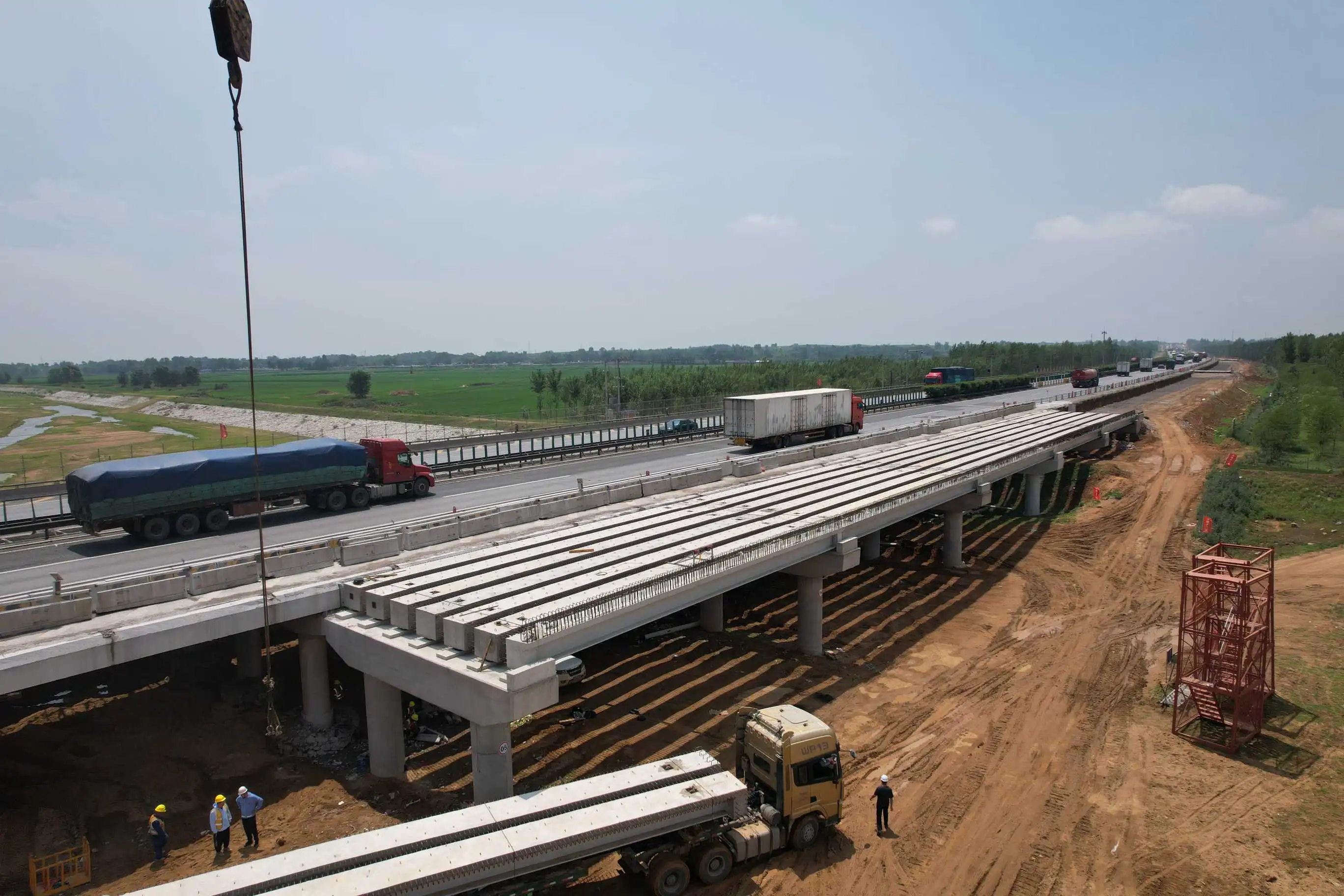
Our 75,000m² facility in Shenyang houses 50-ton overhead cranes and 1200-ton plate rolling machines. Three-axis CNC drilling systems ensure ±0.1mm precision across complex node connections, while automated welding lines guarantee consistent penetration on ultra-thick plates.
Precision Cable Production
We utilize frequency method and load cell verification to maintain cable tension within ±5% of design values. Every OVM anchorage undergoes ultrasonic and magnetic particle testing to detect subsurface flaws before field installation.
Multi-Layer Corrosion Defense
Spark testing of HDPE sheathing and wax-filling density checks in anchorage zones protect against marine environments. Our graphene-enhanced inner coating delivers 51-year proven UV resistance in coastal projects.
Real-Time Geometric Monitoring
During cantilever construction, you receive continuous tracking of deck camber and tower verticality via 0.5″ total stations. This proactive control prevents costly rework and ensures alignment accuracy better than 1/4000.
Certified Quality Systems
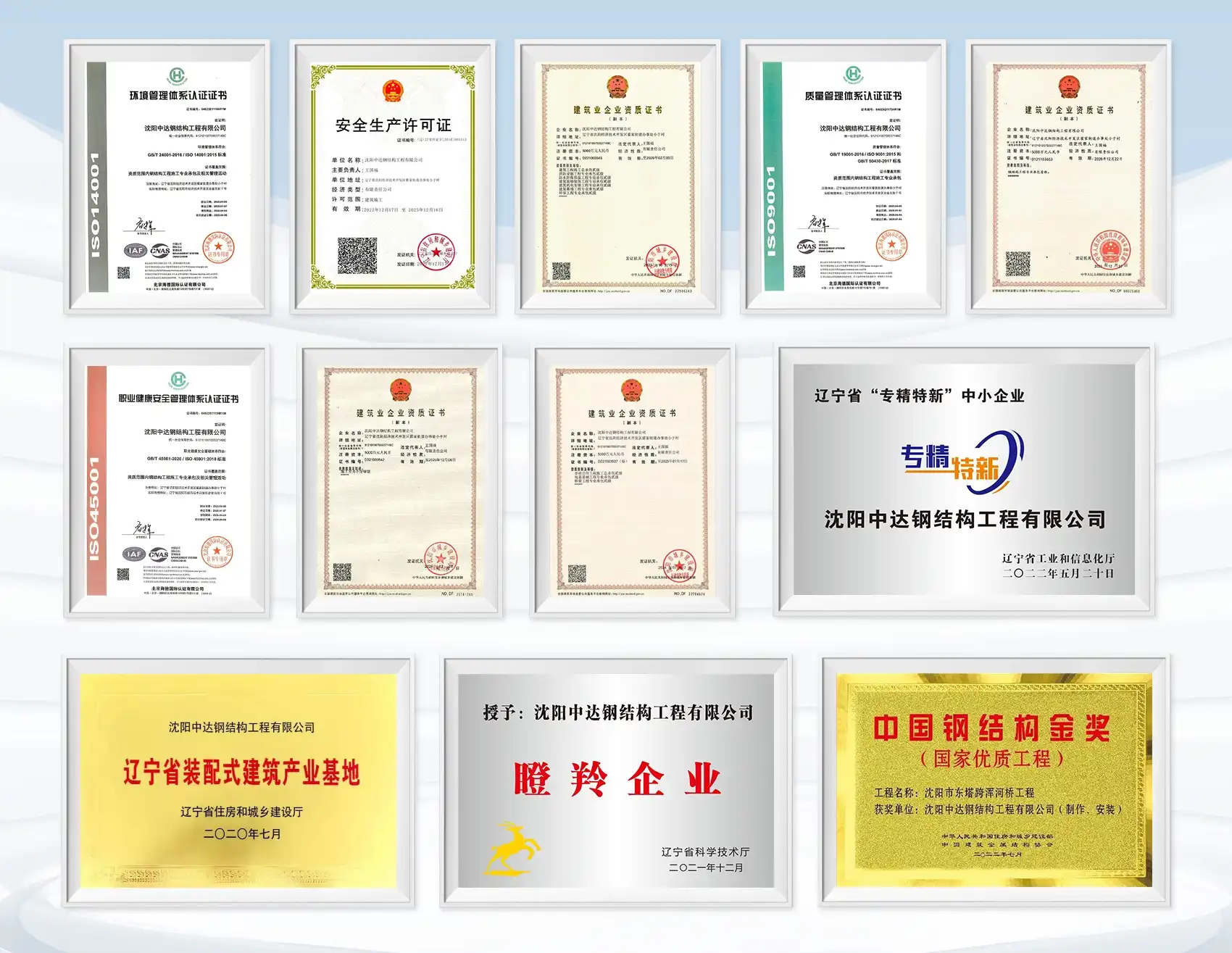
· ISO 9001:2015 Quality Management
· ISO 14001 Environmental Compliance
· ISO 45001 Occupational Health & Safety
· EN 1090 Execution Class EXC3 for European projects
· AWS D1.1 Welding certification for North American standards
NDT & Final Verification
Before shipment, we perform ultrasonic testing on all critical welds, dimensional verification with 3D coordinate machines, and damping efficiency testing per FIB recommendations.
Project Cases / Success Stories
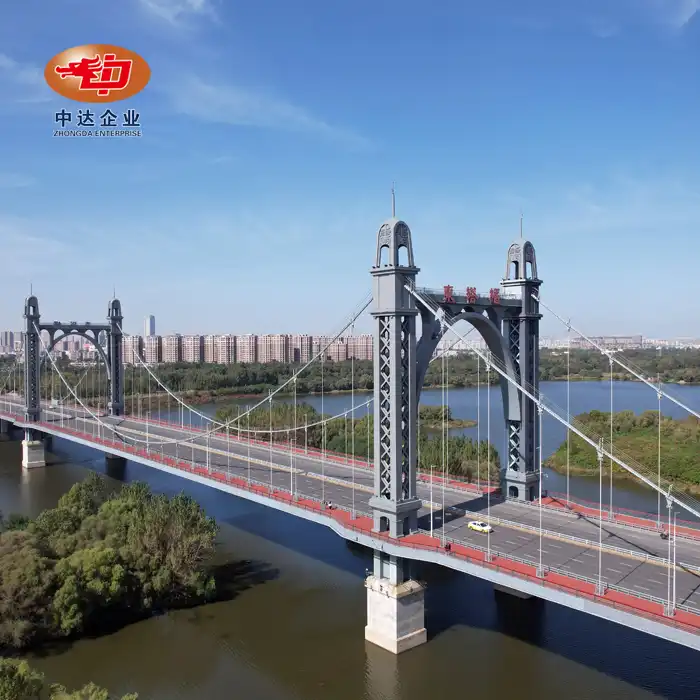
Shenyang Dongta Cross-Hunhe River Bridge
· Scale: 18,000-ton steel structure, dual-plane cable-stayed design
· Challenge: Wide urban arterial crossing with heavy asymmetric truck loads
· Solution: Our Q420qE towers and OVM250 anchorage delivered 3.2x torsional stiffness improvement over initial single-plane proposal
· Outcome: Zero maintenance issues after 8 years, client retention for Phase II expansion
Jingha Expressway Expansion Project
· Scope: Multiple Double-Sided Cable-Stayed Bridge segments totaling 12,000 tons
· Requirement: Harsh northeastern climate (-35°C winter, high seismic zone)
· Innovation: LRB800 bearings + enhanced corrosion protection reduced seismic response by 40%
· Result: 20% reduction in project timeline through optimized prefabrication workflow
High-Speed Rail Corridor (Undisclosed Client)
· Application: 350km/h passenger railway, 45m deck width
· Criteria: Extreme stiffness to minimize track deformation (<2mm under dynamic loads)
· Engineering: BIM-based lifecycle management, real-time geometric monitoring during construction
· Performance: Passed full-scale load testing at 110% design capacity, certified for 100-year service life

Compliance & Certifications
We ensure your project meets both domestic and international standards:
· Design Codes: AASHTO LRFD Bridge Design Specifications, Eurocode 3 (Steel Structures), Eurocode 4 (Composite Structures), Chinese JTG D64 Highway Bridge Standard
· Fabrication Standards: EN 1090-1/2 (Execution Class EXC3 for critical components), AWS D1.1 Structural Welding Code
· Material Compliance: EN 10138 (prestressing steel), JIS G3106 (rolled steel for welded structures)
· Management Systems: ISO 9001:2015 (Quality), ISO 14001:2015 (Environmental), ISO 45001:2018 (Safety)
· National Certifications: China Steel Structure Association Member, Class I Steel Structure Professional Contracting Qualification, Liaoning Province Key Prefabricated Building Industrial Base
All products include full Material Test Certificates (MTC), NDT reports, and English technical documentation for international projects.
FAQ
Q1: How does a Double-Sided Cable-Stayed Bridge handle asymmetrical loading?
A: The dual cable planes create a force couple generating high torsional resistance that neutralizes twisting moments. When heavy trucks occupy only one lane, the opposite plane's cables actively counterbalance the load, maintaining deck levelness.
Q2: What is the typical service life of the stay cables?
A: With our multi-layer PE and graphene protection system, cables are designed for 30-50 years before replacement. The main steel structure exceeds 100 years with proper maintenance protocols.
Q3: Can cables be replaced without closing the bridge?
A: Yes. Our professional designs allow one-by-one cable replacement while maintaining restricted traffic flow (typically 2-lane operation during work). Each cable is pre-tensioned to transfer load before the old one is released.
Q4: How do you control rain-wind induced vibrations?
A: We implement both aerodynamic measures (spiral surface ribs on cables) and mechanical measures (high-damping rubber or hydraulic dampers at anchorage level), verified through wind tunnel testing per FIB recommendations.
Q5: Does the double-sided design increase costs significantly?
A: While material volume is 15-20% higher than single-plane systems, you gain 3-4x torsional stiffness and redundancy that reduces long-term maintenance costs. For wide-deck or high-speed rail applications, it's the most cost-effective solution over the structure's lifecycle.
Q6: What seismic performance can I expect?
A: Our LRB800 lead-rubber bearings reduce seismic response by 40%. Combined with the spatial stability of dual cable planes, the system withstands complex excitations in Zone 8 earthquake regions (Chinese code) or Seismic Design Category D (AASHTO).
Contact Us
Ready to discuss your Double-Sided Cable-Stayed Bridge project? Our engineering team is here to provide customized solutions backed by 20 years of heavy infrastructure experience.
Contact us at Ava@zd-steels.com
YOU MAY LIKE