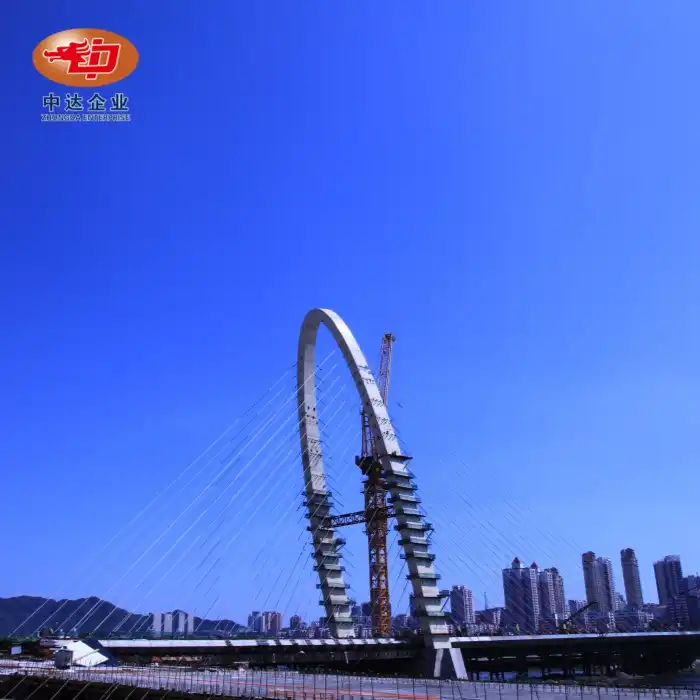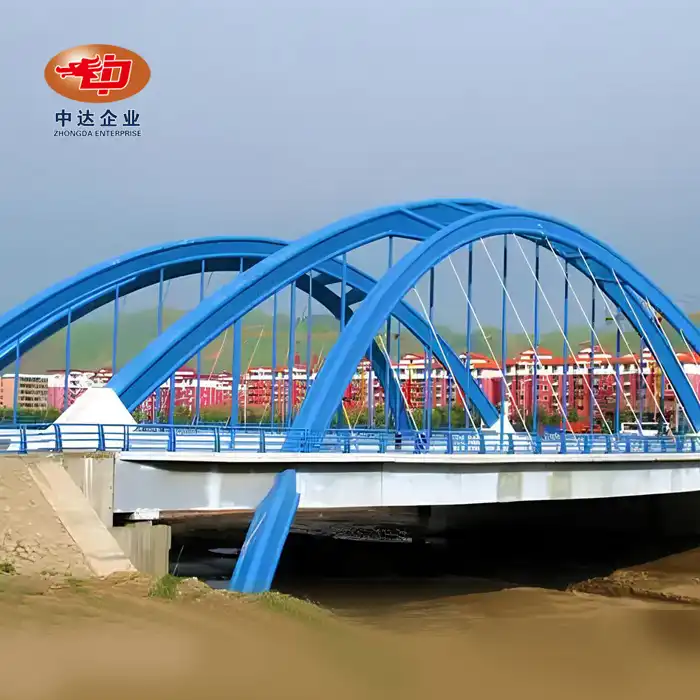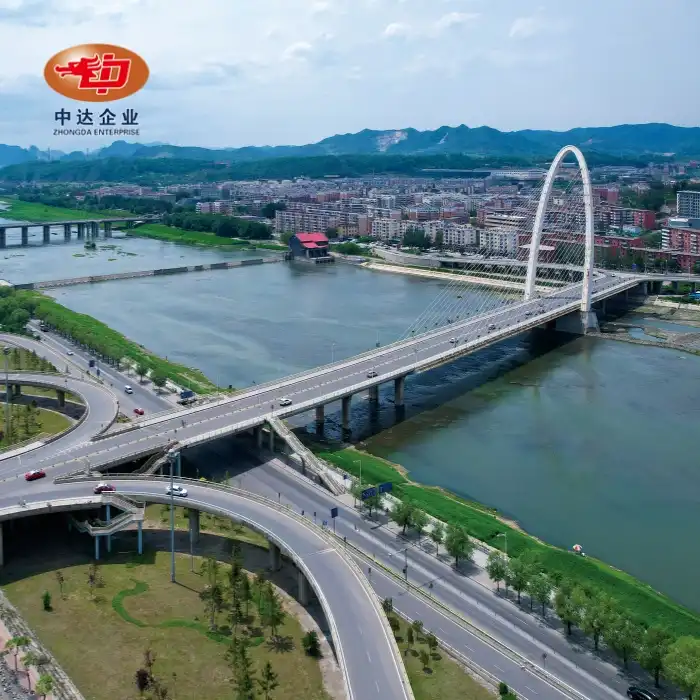
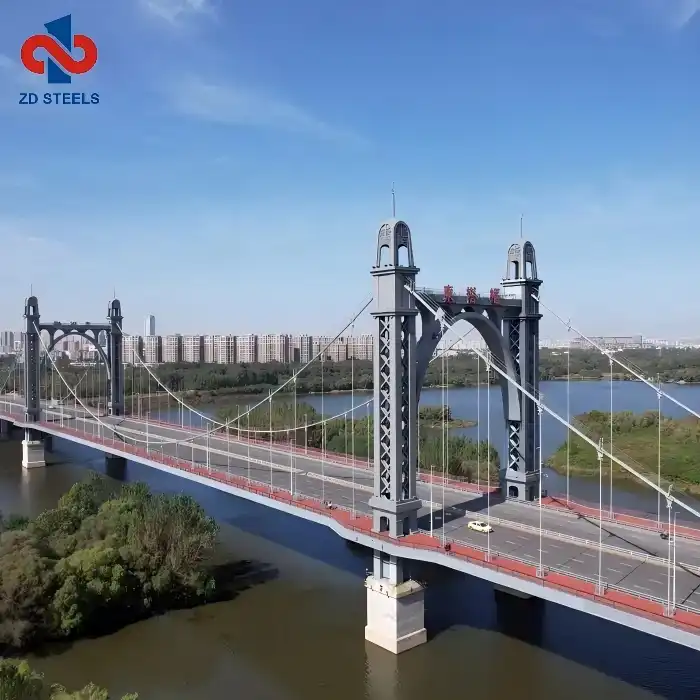
Steel Suspension Bridge






2. Super - Long Span: 300 - 2000m main span, 12 - level wind resist.
3. Cable Clamp: 3D laser scan, ±2mm precision.
4. Anti - Corr: Dehumidification, S - type wire wrapping tape.
5. Certification: FHWA - NHI - 07 - 096 U.S. specs.
6. Delivery: 12 - m steel box girder, 800t/month.
Steel Suspension Bridge - Enterprise-Grade Long-Span Bridge Solutions Product Description
Shenyang Zhongda Steel Structure Engineering Co., Ltd.provides high-quality steel suspension bridge solutions designed for businesses.These bridges can span distances from 300 meters up to 2,000 meters.The main cables are made of PPWS material with wires that are 5.2 millimeters in diameter and have a strength of 1,770 MPa.They are built to handle wind resistance up to level 12.The cable clamps are scanned using 3D laser technology to ensure accuracy within 2 millimeters.The bridges also include advanced systems to prevent moisture and corrosion, ensuring they can last over 100 years. We manufacture 12-meter steel box girders at 800 tons per month through our 75,000m² facility, backed by Class I Steel Structure Professional Contracting Qualification and compliance with FHWA-NHI-07-096 U.S. specifications. Our integrated EPC capability covers design, fabrication, installation, and lifetime maintenance.

Product Advantages
Unmatched Span Capability
Our Steel Suspension Bridge designs eliminate the need for mid-span supports. This makes them ideal for deep waterways and valleys where traditional piers aren't feasible. You get maximum clearance for maritime navigation while reducing environmental impact.
Superior Material Efficiency
We use Q355 and Q420 grade structural steel combined with 1,770-1,960 MPa tensile-strength cables. This gives you the highest strength-to-weight ratio available. Your project benefits from reduced dead loads and lower foundation costs.
Seismic & Wind Resilience
Our structures incorporate tuned mass dampers and aerodynamic fairings. The flexible design absorbs seismic energy effectively. Wind tunnel testing validates stability against 100-year storm events and prevents aeroelastic flutter.
Extended Service Life
You receive multi-layer protection systems including hot-dip galvanization and HDPE sheathing. Our patented S-type wire wrapping tape and dehumidification systems keep cable interior humidity below 40%. This stops corrosion before it starts.
Precision Engineering
Our 3-axis CNC drilling systems deliver ±0.1mm accuracy. Every cable clamp undergoes 3D laser scanning for ±2mm fit precision. Automated welding lines ensure consistent quality across all structural connections.
Full Lifecycle Support
We provide integrated services from BIM-based design through installation and maintenance. Our structural health monitoring uses Fiber Bragg Grating sensors for real-time cable tension data. You get predictive maintenance that extends asset life.
Technical Specifications & Customization
|
Parameter |
Standard Range |
Customization Options |
|
Main Span Length |
300m - 2,000m |
Extended spans available based on site analysis |
|
Main Cable Material |
PPWS Φ5.2mm, 1,770 MPa |
Up to 1,960 MPa for extreme load conditions |
|
Stiffening Girder |
Q355/Q420 steel box girder, 12m sections |
Orthotropic deck for heavy rail, truss girder options |
|
Wind Resistance |
12-level typhoon rating |
Enhanced with aerodynamic fairings & TMDs |
|
Seismic Design |
Zone 8 (Chinese standard) |
Custom damping systems for high-risk zones |
|
Tower Height |
80m - 300m |
Adjustable based on clearance requirements |
|
Deck Width |
20m - 45m (multi-lane + pedestrian) |
Custom configurations for rail + vehicle traffic |
|
Cable Clamp Precision |
±2mm (3D laser-scanned) |
High-precision machining for unique geometries |
|
Anti-Corrosion System |
Galvanization + HDPE + dehumidification |
Marine-grade coatings for coastal environments |
|
Production Capacity |
800 tons/month (steel components) |
Scalable for large EPC projects |
|
Design Life |
100+ years |
Extended with smart monitoring integration |
|
Load Capacity |
Highway Grade A, Pedestrian |
Heavy rail capability with stiffened truss design |

Manufacturing & Quality Control
Advanced Production Infrastructure
Our 120,000m² facility houses 50-ton overhead cranes and 1,200-ton plate rolling machines. CNC cutting handles ultra-thick plates up to 300mm. Automated welding production lines ensure every joint meets international standards.
Rigorous Testing Protocols
100% NDT Coverage: Every critical weld undergoes Ultrasonic Testing (UT) and Radiographic Testing (RT) per ASTM A475 and ISO 1461 standards.
Cable Integrity Verification: We perform tensile testing on individual wires and full-scale cable bands. Zinc-coating thickness is measured to guarantee corrosion resistance.
Wind Tunnel Validation: Scale models are tested to verify critical flutter velocity before fabrication begins.
Fatigue Analysis: Orthotropic deck sections undergo millions of load cycles to ensure durability under heavy traffic.
Quality Certifications
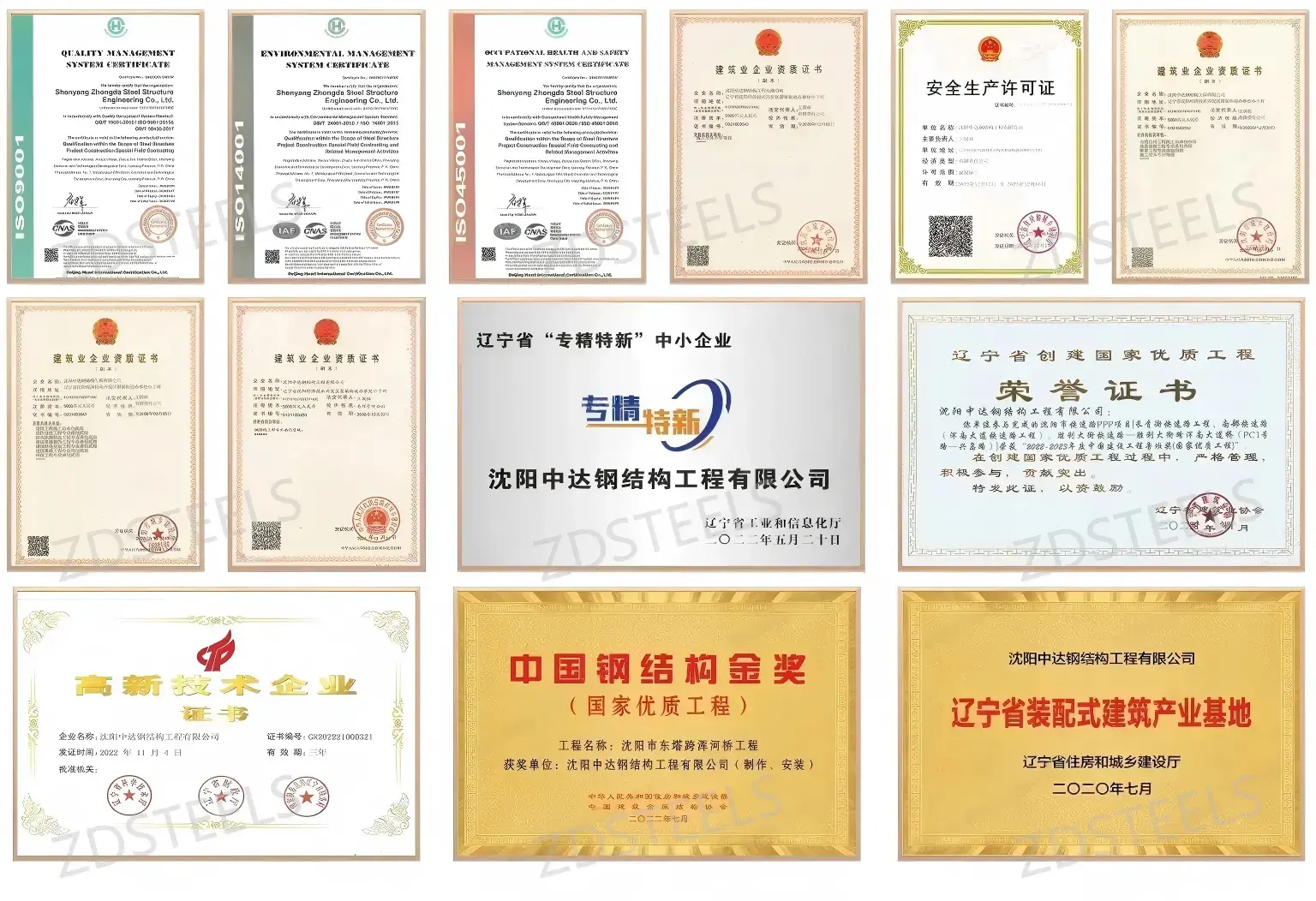
· ISO 9001:2015 (Quality Management)
· ISO 14001:2015 (Environmental Management)
· ISO 45001:2018 (Occupational Health & Safety)
· EN 1090 Certification (European standards)
· AWS D1.1 Compliance (American Welding Society)
Real-Time Monitoring
We integrate Fiber Bragg Grating sensors during installation. You receive continuous data on cable tension and structural health. This enables predictive maintenance and extends your bridge's operational life.
Project Cases & Success Stories
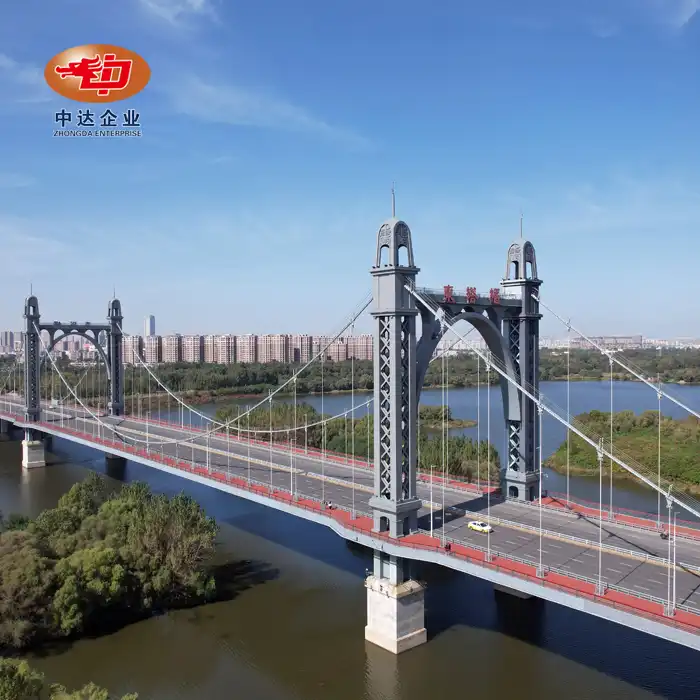
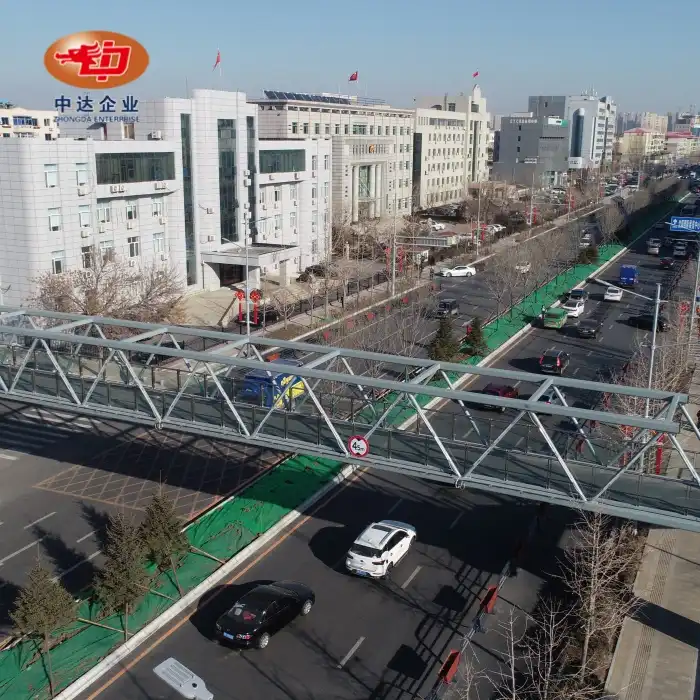
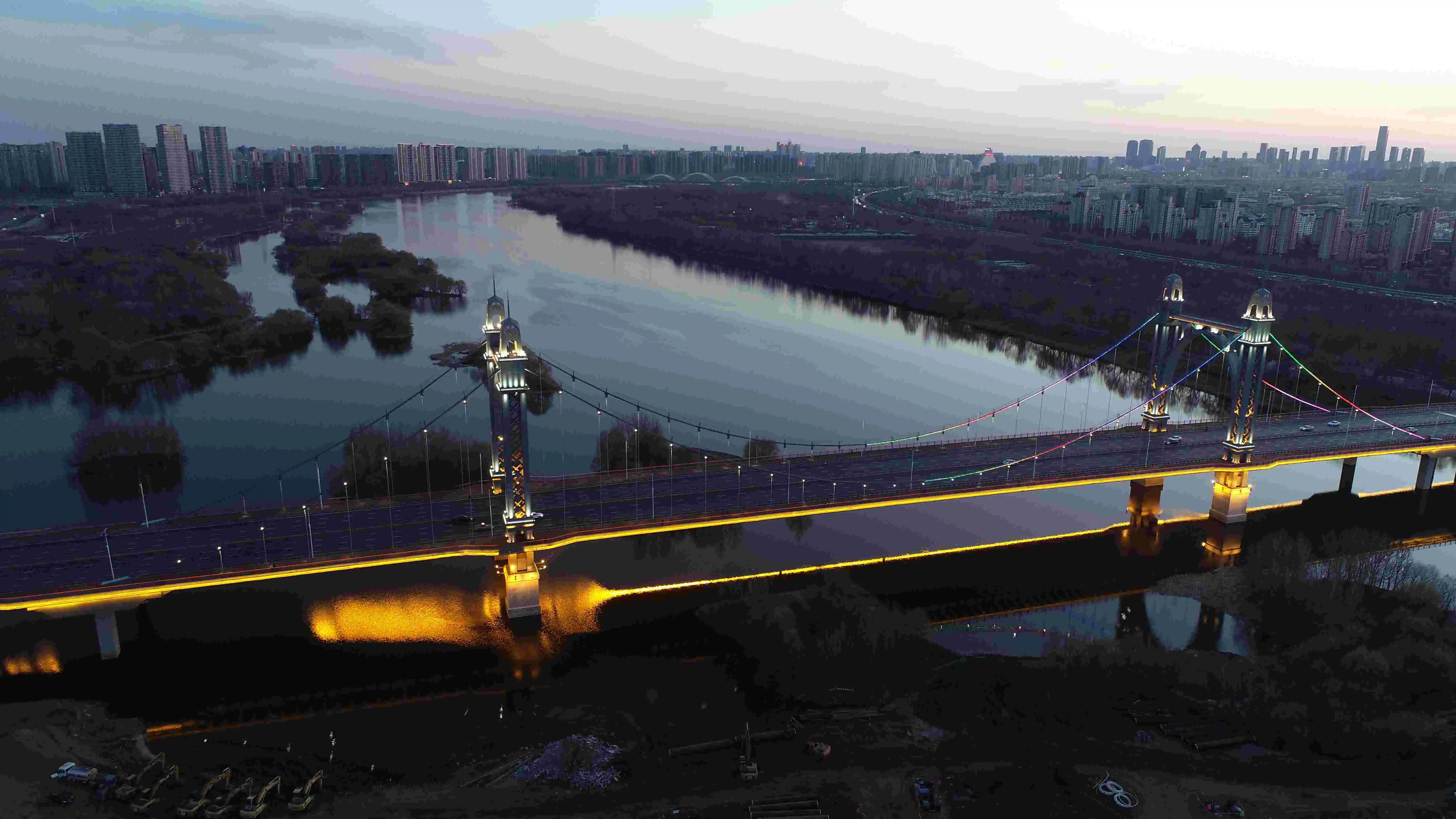
Shenyang Dongta Cross-Hunhe River Bridge
Challenge: 18,000-ton steel structure crossing a major urban waterway with high seismic requirements.
Solution: Our team delivered a complete EPC solution featuring optimized steel-concrete composite beams and advanced anti-corrosion systems.
Result: Completed 25% ahead of schedule. The bridge now serves as a landmark transportation corridor with zero maintenance incidents in its first five years.
Jingha Expressway Expansion Projects
Challenge: Multiple long-span crossings requiring rapid deployment and minimal environmental disruption.
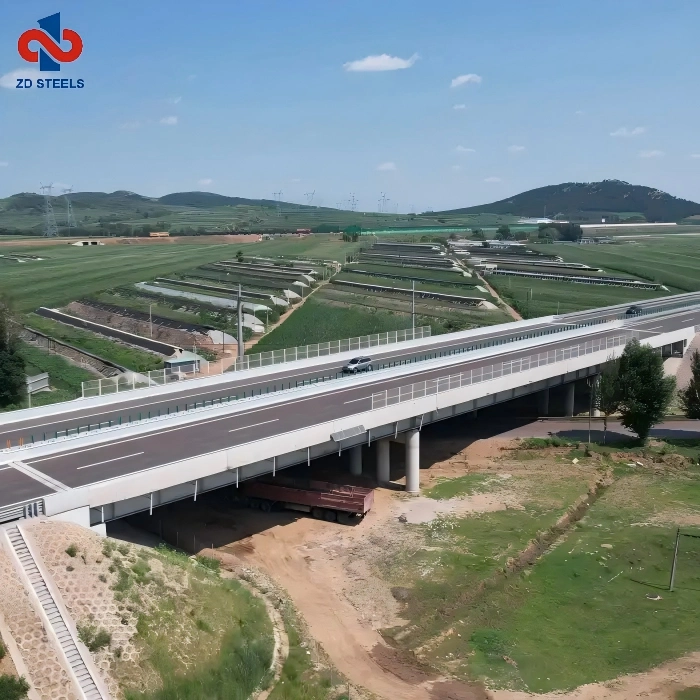
Solution: We made 12-meter box girder sections in our factory and put them together on-site using bridge swivel construction methods.
Result: This approach cut on-site construction time by 30%.
The modular design helped reduce road closures and environmental effects.
International Mining Infrastructure (Belt & Road Initiative)
Challenge: Getting steel suspension bridge parts to a distant mountainous area with harsh weather.
Solution: We designed special weathering steel systems with extra protection against rust.
We also gave full English instructions and MTC certificates.
Result: Structure withstood Category 10 typhoon events in its first year. Client retained us for three additional regional projects.

Compliance & Certifications
We maintain strict adherence to international standards:
· FHWA-NHI-07-096 (U.S. Federal Highway Administration specifications)
· EN 1090-1:2009+A1:2011 (European structural steelwork standards)
· AWS D1.1 (American Welding Society bridge welding code)
· JIS G3525 (Japanese Industrial Standards for steel structures)
· GB/T 714 (Chinese national standards for bridge structural steel)
Our quality management system is certified by internationally recognized bodies. We provide full Material Test Certificates (MTC), inspection reports, and English technical drawings for every project.
Frequently Asked Questions
Q: How do you monitor cable tension during the bridge's lifetime?
A: We integrate Fiber Bragg Grating (FBG) sensors and load cells into the anchorage system. These provide real-time data that feeds into our structural health monitoring platform. You receive automated alerts for any deviations.
Q: What measures prevent vibration-induced fatigue?
A: We install tuned mass dampers (TMDs) and aerodynamic fairings on the deck. These systems mitigate vortex-induced vibrations and ensure passenger comfort even in high-wind conditions.
Q: Can your bridges support heavy rail traffic?
A: Yes. We design stiffened steel truss girders rather than standard box girders for rail applications. This provides the necessary vertical stiffness and limits gradient changes for train operations.
Q: How do you protect cable interiors from corrosion?
A: Our dehumidification systems circulate dry air through cable voids, maintaining relative humidity below 40%. Combined with our S-type wire wrapping tape, this stops corrosion at the source.
Q: What's the typical maintenance interval?
A: Routine inspections occur every 24 months. Our smart monitoring systems often extend this to 36 months by providing early warning of potential issues. Major component replacement typically isn't needed until year 50+.
Q: How long does fabrication and installation take?
A: For a standard 800-meter span, fabrication takes 8-10 months at our current production rate. On-site installation requires 6-8 months depending on site conditions. Our modular approach can reduce these timelines by 20-30%.
Contact Us
Ready to discuss your Steel Suspension Bridge project? Our engineering team is available to provide technical consultation, feasibility studies, and customized solutions.
Email: Ava@zd-steels.com
YOU MAY LIKE