
How Can Steel Cable-stayed Bridges Support Longer Spans with Reduced Structural Weight?
2026-09-01 13:00:00






Steel cable-stayed bridges achieve extended spans with minimized weight through an innovative load distribution system where high-tension steel cables connect the deck directly to vertical towers. This configuration transfers loads efficiently via compression in the towers and tension in the cables, eliminating the need for heavy intermediate piers. By utilizing high-strength steel grades like Q420qE with superior yield properties and optimized cable geometries, these structures maintain exceptional rigidity while reducing dead loads by up to 35% compared to concrete alternatives, making them ideal for spans ranging from 200 to 800 meters.
Understanding Steel Cable-stayed Bridges: Design Principles and Structural Benefits
When we look at what modern infrastructure needs, cable-stayed designs are a big change in how engineers solve span problems. Three integrated parts of the system work together to provide performance that can't be matched by traditional methods.
Core Components and Load Transfer Mechanisms
The deck, pylons, and wire clusters all work together as a single structural unit. In traditional beam bridges, the deck supports its own weight on the piers. In cable-stayed configurations, however, loads are spread out along the deck by diagonal stays that are connected at different places. Each cable is like an inclined structural member that sends vertical loads into the tower through axial tension. The tower then fights these forces by compressing itself. This shape makes a strong triangle that keeps the deck's twisting moments to a minimum. This lets the deck profiles be thinner and lighter.
Material Innovation: The Q420qE Advantage
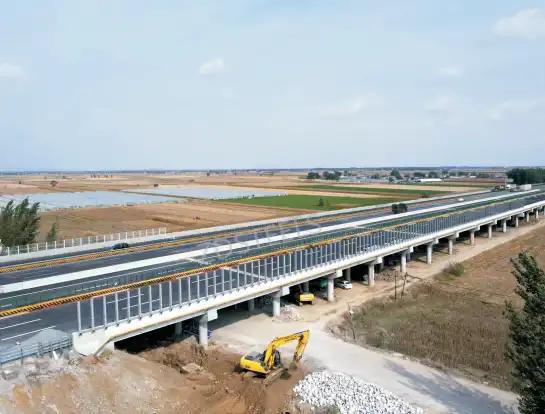
Engineers can do a lot more with lighter weights when they use high-performance steel types. With a minimum yield strength of 420 MPa, Q420qE steel has amazing strength-to-weight ratios that concrete can't match. At Zhongda, we use plate thicknesses between 60 and 120 mm to make cable towers, which allows us to achieve vertical accuracy within a strict 1/4000 error tolerance. This level of accuracy is important because even small errors in the shape of the tower can cause uneven cable loading, which can weaken the structure across the whole span. The cold-forming qualities of the material also make it possible to make things in controlled workplace settings, which cuts down on the problems that come up with traditional methods of building.
Cable Arrangement Patterns and Structural Optimization
How well weight is distributed is directly affected by how the cables are set up. Fan patterns, in which wires spread out from a central place on top of the tower, provide strong anchorage but may also cause stress to build up in certain areas. Harp arrangements with parallel lines spread anchorage loads more widely along the tower height, but they need supports that are higher. For projects with main spans between 400 and 600 meters, our engineering team often recommends semi-fan patterns because they are a good balance between form and function. The choice is based on things specific to the spot, like the state of the foundation, the length of the span, and the need for esthetics. When installing cables, pre-stressing methods are used to make them even more stable by applying controlled force to the deck, which stops it from bending under live loads.
Challenges in Traditional Bridge Construction and How Steel Cable-stayed Bridges Address Them
As project needs for longer durations and smaller budgets get worse, traditional methods are facing more and more problems. When you understand these limits, you can see why procurement managers are asking for cable-stayed options more and more.
Weight and Material Limitations in Concrete Designs
Concrete cable-stayed bridges face challenges related to the density and material properties of concrete. Steel Cable-stayed Bridge structures use structural steel with a density of 7,850 kg/m³, while concrete has a density of about 2,400 kg/m³. The key difference lies in the strength-to-weight ratio of steel compared with concrete. Since concrete has limited tensile strength, concrete bridge decks often require greater thickness and heavier supporting components. As a result, concrete superstructures can weigh 40 to 60 percent more than comparable steel designs. This additional weight increases foundation costs, particularly in areas with weak soil conditions where deep piles are required. In addition, concrete curing times can significantly extend construction schedules, and extreme weather conditions may interrupt work due to temperature-sensitive placement requirements.
Cost Inefficiencies at Extended Spans
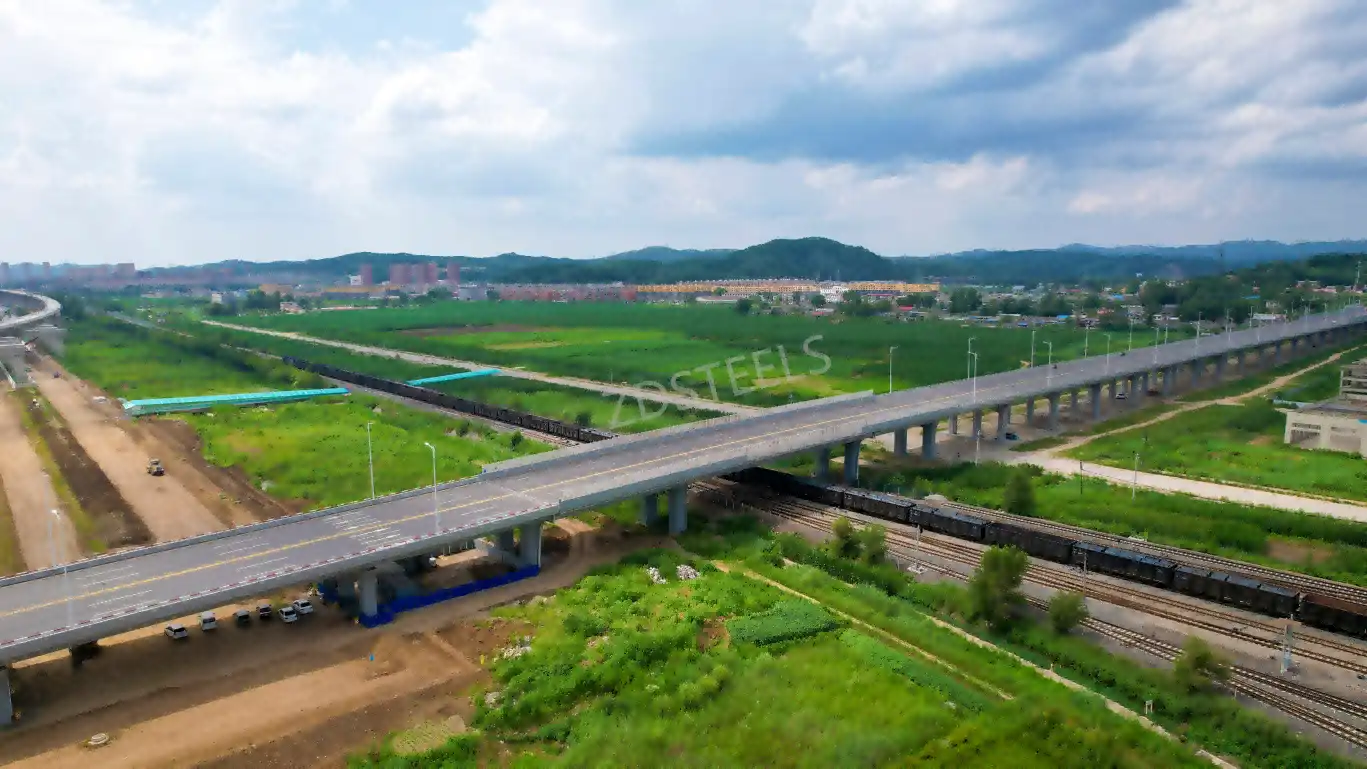
At about 300 meters, economic research always shows a place where steel cable-stayed configurations become more cost-effective than concrete alternatives. At first glance, the prices of materials for high-grade structural steel seem higher, but these costs are balanced out by the fact that foundations aren't needed as much, construction can be done faster, and upkeep costs are lower over the lifetime of the building. This idea has been proven true in several projects, such as the Shenyang Dongta Cross-Hunhe River Bridge, which used 18,000 tons of fabricated steel to make span lengths possible that would have been too expensive to build with concrete.
Real-World Performance: Case Study Insights
The Jingha Expressway expansion project shows how these benefits can be used in real life. The project had to cross a lot of busy transportation corridors, and there weren't many windows of time for building. By using steel cable-stayed parts that were already made, we cut the wait time by 20 to 30 percent compared to what the industry normally does. The light deck sections meant that smaller cranes and less ground pressure were needed to put them together, which caused the least amount of trouble for traffic below. Seismic concerns were very important in the planning process. Compared to fixed bearing options, LRB800 isolation bearings offer up to 40% less seismic reaction. These performance traits directly addressed the client's main concerns about safety, time, and long-term dependability.
All of these benefits make steel cable-stayed solutions better options for infrastructure projects where span length, construction speed, and structural performance are important factors.
Technical Considerations: Engineering Parameters That Enable Longer Spans with Reduced Weight
Paying close attention to engineering specifications is necessary to reach lofty span goals while keeping the structure's efficiency. Whether or not a project meets its performance goals depends on the factors we control during planning and construction.
Steel Cable Specifications and Tension Optimization
The choice of cables is what determines how much weight they can hold. For projects with main spans up to 800 meters, we recommend OVM250 type anchorages paired with Υ7mm galvanized steel wire that meets EN 10138 standards. With an ultimate tensile strength of 1,860 MPa, the wire allows each cable to carry heavy loads while keeping thin profiles that reduce wind resistance. When you do tension estimates, you have to take into account the structure's design life, thermal expansion, creep, and fixed dead loads. Our engineers use advanced finite element analysis to model how cables will behave under combined pressure scenarios. This makes sure that stress levels stay within safe working ranges and that we don't over-design cables, which adds weight that isn't needed.
Aerodynamic Resilience and Wind Load Mitigation
As span lengths get longer, wind effects become more noticeable in a Steel Cable-stayed Bridge. When we create smooth deck profiles, we lower drag coefficients. However, to deal with dynamic wind phenomena like vortex shedding and flutter, we need to take certain steps. Computer simulations based on computational fluid dynamics help determine how air flows around the bridge shape, revealing possible resonance conditions before construction begins. Installing tuned mass dampers or viscous dampers at appropriate locations along the deck can suppress unwanted vibrations. Cable surface treatments are also important. Our corrosion protection system with PE outer sheathing and graphene-enhanced inner coatings not only increases service life to 53 years under UV exposure but also improves cable surface smoothness, reducing noise from wind and rain as well as wind- and rain-induced vibrations.
Foundation Design Integration
Lowering the weight of the building has big benefits for base engineering. When deck parts and tower loads are lighter, tracks, piles, and excavation depth are all smaller. This is especially helpful in tough soil conditions like soft clays, marine areas, or places where earthquakes happen often. The foundation design still has to take into account horizontal forces from wind and cable stresses, but the lower total load makes it possible to find the best foundation type. We've successfully used shallow caisson foundations on projects where standard concrete plans would have called for expensive deep pile groups. This saved clients a lot of money while still making sure the structure was safe.
Comparison and Procurement Insights for B2B Buyers: Steel vs Other Bridge Solutions
Clear comparisons between available structural systems help people make decisions about what to buy. Knowing the differences in performance helps buyers make sure that their building investments are in line with their long-term business goals.
Performance Metrics: Steel vs Concrete Cable-stayed Bridges
Expectations for durability vary a lot between materials. Steel structures that are well taken care of often last longer than 100 years. On the other hand, chloride penetration, alkali-aggregate reaction, and reinforcement corrosion can cause problems in concrete that may need major repairs within 50 to 75 years. Maintenance costs for steel bridges are usually 1% to 2% of the starting cost of building per year, while they are 2 to 3% for concrete bridges. It is impossible to overstate how much easier it is to check steel. Crucial connections, welds, and cable anchorages can all be inspected in great detail, while concrete hides problems on the inside until they show up on the outside. With our 3D coordinate detection systems and 0.5-inch total stations for precise surveying, we can keep an eye on the health of structures all the time and find problems before they become dangerous.
Steel Cable-stayed vs Suspension Bridge Economics
Suspension bridges are best for very long spans over 1,000 meters, but cable-stayed designs are more cost-effective for most building projects that are between 200 and 800 meters long. Huge anchorages are needed for suspension designs to hold up against main cable tensions. These usually take up 20 to 30 percent of the total project cost. Cable-stayed towers carry loads by compressing them, so they don't need anchorages or the costs that come with them. It's also easier to put up cable-stayed bridges because the deck can be built in balanced cantilever pieces that stretch from each tower. This way, work can be done without having to use expensive false work or temporary supports. We've finished many projects for China Railroad, CSCEC, and CCCC that had these benefits, which directly led to lower capital costs and shorter project completion times.
Selecting Reputable Manufacturers: Quality Standards and Certifications
Customization Capabilities and After-sales Support
Infrastructure projects don't usually follow a set pattern. Buyers can make designs that work best for their sites by changing things like tower heights, cable plane configurations (double or single), span arrangements, and corrosion protection systems. We offer full OEM and ODM services, including customizing cable towers with precise plate thickness selection, stay cable system optimization, seismic design integration, and the ability to change the configuration of the span. After-sales support is just as important; quick technical help, guarantee fulfillment, and the ability to get new parts over many years of service make a difference between makers who want to build long-term relationships with their customers. Our 70% client retention rate, which includes repeat business from large state-owned companies, shows that we are committed to continuing to help our clients after the initial project is finished.
These comparison points give procurement managers, engineers, and project developers the data they need to look at bridge solutions with objectivity and choose systems that will be useful for as long as they are in use.
Optimizing Project Outcomes: Maintenance, Cost Efficiency, and Long-Term Performance
Infrastructure investments that pay off last a long time after the initial construction is done. How well projects produce long-term value depends on how well they handle upkeep, lifecycle costs, and changes in technology.
Routine Inspection and Corrosion Prevention Protocols
Systematic review programs keep buildings in good shape. We suggest that you do eye checks every year and more in-depth checks every five years using rope access or viewing platforms to check the state of the cables, the hardware that connects them, and the coating systems. Ultrasonic thickness gaging, magnetic particle inspection, and dye penetrant examination are all non-destructive testing methods that find flaws below the surface before they spread. Preparing the surface properly is the first step in stopping corrosion. As part of our production process, we use abrasive blasting to meet Sa 2.5 cleaning standards. This is followed by multiple layers of protective coatings that reach a dry film thickness of 250 to 300 microns. Fixing any damage to the coating that happens during installation in the field keeps water from getting in. Our wire systems have an advanced PE sheath with a graphene-enhanced inner layer that acts as a great barrier. However, the sheath still needs to be checked for stability on a regular basis. Finding small problems early on keeps you from having to pay a lot for expensive fixes later on.
Cable Maintenance and Replacement Strategies
Cable stays are important load paths that need close attention. Monitoring programs use vibration-based methods to keep an eye on cable tensions. They compare the frequencies they measure to theoretical values to find any situations where the cables are loosening up or getting too tight. Check that damper systems placed at the points where cables and decks meet are working properly, because dampers that don't work right let in too much vibration, which speeds up wear damage. Modern cable systems are made to last 100 years or more, but they can still be replaced if they get damaged. It is possible to loosen and remove individual cables while adjacent cables temporarily carry re-assigned loads. This lets specific cables be replaced without having to close the bridge. This makes cable-stayed designs better for maintenance compared to suspension bridges, where replacing the main cable is almost as hard as building a new structure.
Transparent Cost Components and ROI Projection
To make good financial plans, you need to know about all the costs involved. Material costs, like high-grade structural steel, specialized cables, and anchorage hardware, usually make up 40 to 50 percent of the total cost of building something. Another 30 to 35 percent is spent on labor and tools for building, transporting, and putting up in the field. About 10 to 15 percent of the costs go to engineering, testing, and quality assurance. The rest goes to project management and backup plans. During the procurement phase, we give clients thorough cost breakdowns that help them make sensible budgets and get the money they need. When figuring out the return on investment, you should take into account things like lower maintenance costs, longer service life, and lower user costs from faster construction compared to other options. When clients look at the total cost of ownership over 50 to 75 years, they often find that the higher original investment in high-quality steel systems pays off.
Emerging Technologies and Future-Ready Design
Innovation in construction keeps speeding up, which opens up chances to improve performance. We use BIM-based digital design on all of our projects because it makes teamwork better, cuts down on mistakes, and makes it easier to check for constructability before manufacturing starts. When compared to manual methods, automated welding systems produce more consistent weld quality, which makes critical connections more resistant to fatigue. More weight loss and longer durability are expected with the help of new materials like ultra-high-strength steels, fiber-reinforced polymer parts, and smart finishes that can fix themselves. Using fiber optic sensors, accelerometers, and GPS displacement monitors in structural health monitoring systems lets you watch performance in real time, which means that maintenance is no longer based on set plans but on what the system needs. If procurement professionals keep up with these changes, their companies can benefit from new ideas that improve performance over the lifecycle while keeping costs low.
These strategies look to the future and help infrastructure owners get the most out of their bridge investments. This way, these important assets will continue to meet transportation needs in a reliable and cost-effective way for generations to come.
Conclusion
Through clever load distribution, high-strength materials, and optimized geometric designs, Steel Cable-stayed Bridges provide unmatched performance for long spans. Using Q420qE steel, advanced cable systems with OVM250 anchorages, and full corrosion protection together makes structures that are lighter, faster to build, and cheaper over their entire lifetime than traditional alternatives. Buying things based on technical knowledge of cable specifications, aerodynamics, and foundation integration leads to infrastructure investments that serve communities reliably for 100 years or more while reducing the need for maintenance and damage to the environment.
FAQ
What span lengths are achievable with steel cable-stayed designs?
Modern Steel Cable-stayed Bridges can usually span between 200 and 800 meters, and based on the needs of the project, they can be built with either two or one cable plane. As material strengths get better and analysis methods get smarter, the top limit keeps moving up. Our engineering team has a lot of experience making sure that cable arrangements, deck profiles, and tower geometries are the safest and most efficient they can be for projects that need longer spans.
How do seismic isolation systems improve bridge performance?
Installing LRB800 type isolation bearings between the deck and support structures lets the deck move horizontally in a controlled way during earthquakes. This lowers the forces that the earthquakes send to structural elements by up to 40%. This energy dissipation keeps important parts from getting damaged that could make them less useful after an earthquake. This makes the infrastructure more resilient in areas that are prone to earthquakes where keeping it running is very important.
What inspection technologies ensure ongoing structural safety?
Advanced monitoring uses both regular checks by hand and systems that are constantly collecting data from sensors. 3D coordinate recognition and 0.5-inch precision total stations are used in our projects to keep track of any changes in shape over time. Non-destructive testing checks the integrity of the welds and the condition of the materials, and cable tension tracking checks that the loads are being distributed correctly. Together, these tests give full confidence in the bridge's structural health throughout its operating life.
Partner with Zhongda for Your Next Cable-stayed Bridge Project
Shenyang Zhongda Steel Structure Engineering Co., Ltd. has been working on Steel Cable Staied Bridge projects for 20 years and is very good at what they do. Our ISO-certified factory makes Q420qE structures with unmatched accuracy, thanks to BIM-driven design processes and strict quality control measures that include trying all key welds without damaging them. Our engineering team creates solutions that are unique and fit your needs, whether you're a government contractor planning a big river crossing or an EPC company building industrial infrastructure. Email us at Ava@zd-steels.com right now to talk about your project needs with a reputable Steel Cable-stayed Bridge builder who is dedicated to providing technical excellence on time and on budget.
References
1. Gimsing, N.J., and Georgakis, C.T. (2011). Cable Supported Bridges: Concept and Design, 3rd Edition. John Wiley & Sons, Chichester, UK.
2. Troitsky, M.S. (1988). Cable-Stayed Bridges: Theory and Design, 2nd Edition. BSP Professional Books, Oxford, UK.
3. Walther, R., Houriet, B., Isler, W., and Moïa, P. (1999). Cable Stayed Bridges, 2nd Edition. Thomas Telford Publishing, London, UK.
4. Chen, W.F., and Duan, L. (2014). Bridge Engineering Handbook: Superstructure Design, 2nd Edition. CRC Press, Boca Raton, FL.
5. Podolny, W., and Scalzi, J.B. (1986). Construction and Design of Cable-Stayed Bridges, 2nd Edition. John Wiley & Sons, New York, NY.
6. Tang, M.C. (2017). Evolution of Bridge Technology: Cable-Supported Bridges. Journal of Bridge Engineering, Vol. 22, Issue 9, American Society of Civil Engineers.
YOU MAY LIKE