
Power Plant Steel Structure for Boiler Buildings and Pipe Racks
2026-09-17 13:00:01






When engineering teams and procurement managers evaluate structural frameworks for energy facilities, the performance gap between adequate and exceptional becomes immediately visible. A well-engineered Power Plant Steel Structure for boiler buildings and pipe racks must simultaneously manage suspended pressure components exceeding 10,000 tons, absorb vibration from rotating turbines, and accommodate thermal expansion cycles—all while meeting AISC 360, ASTM, or EN 1090 compliance requirements. This guide walks through the critical design, procurement, and lifecycle considerations every B2B buyer needs before committing to a supplier.
Understanding Power Plant Steel Structures: Standards, Types, and Materials
Design Codes That Govern Safe Construction
Energy facilities have strict rules that keep an eye on their structural frameworks. In the U.S. market, AISC 360 sets the rules for designing with structural steel and AWS D1.1 describes how to weld. EN 1090-2 (Execution Class 3 or 4) and ISO 9001 quality control standards are used around the world. For thick-plate jobs, welders must be certified to either AWS D1.1 or ISO 9606-1, and procedure qualification records must back up the weld procedure specifications. For important infrastructure, not meeting these requirements could cost a lot of money and put people in danger. Choosing the right steel grade is very important because it decides whether a building lasts the 50 years it was designed to last. The GB standard Q355B/C/D/E, the ASTM A572 Grade 50, and the EN standard S355JR are all common specs. These grades have yield strengths between 345 and 355 MPa and are better for welding, even when the plate thickness is more than 100 mm. Heavy H-beams and box columns support boiler support towers by taking care of both vertical dead loads and the downward thermal expansion of parts that are under pressure. For pipe rack frames, the beam height-to-span ratio and node design need to take into account wind-induced vibration, thermal movement, and dynamic pipe loads all at the same time.
Material Grades and Structural System Parameters
Selecting the right steel grade directly determines whether a structure survives its projected 50-year design life. Common specifications include Q355B/C/D/E (GB standard), ASTM A572 Grade 50, and S355JR (EN standard). These grades deliver yield strengths of 345–355 MPa with superior weldability, even at plate thicknesses exceeding 100mm. For boiler support towers, heavy H-beams and box columns manage both vertical dead loads and the downward thermal expansion of suspended pressure parts. For pipe rack frameworks, the beam height-to-span ratio and node configuration must account for dynamic pipe loads, thermal movement, and wind-induced vibration simultaneously.
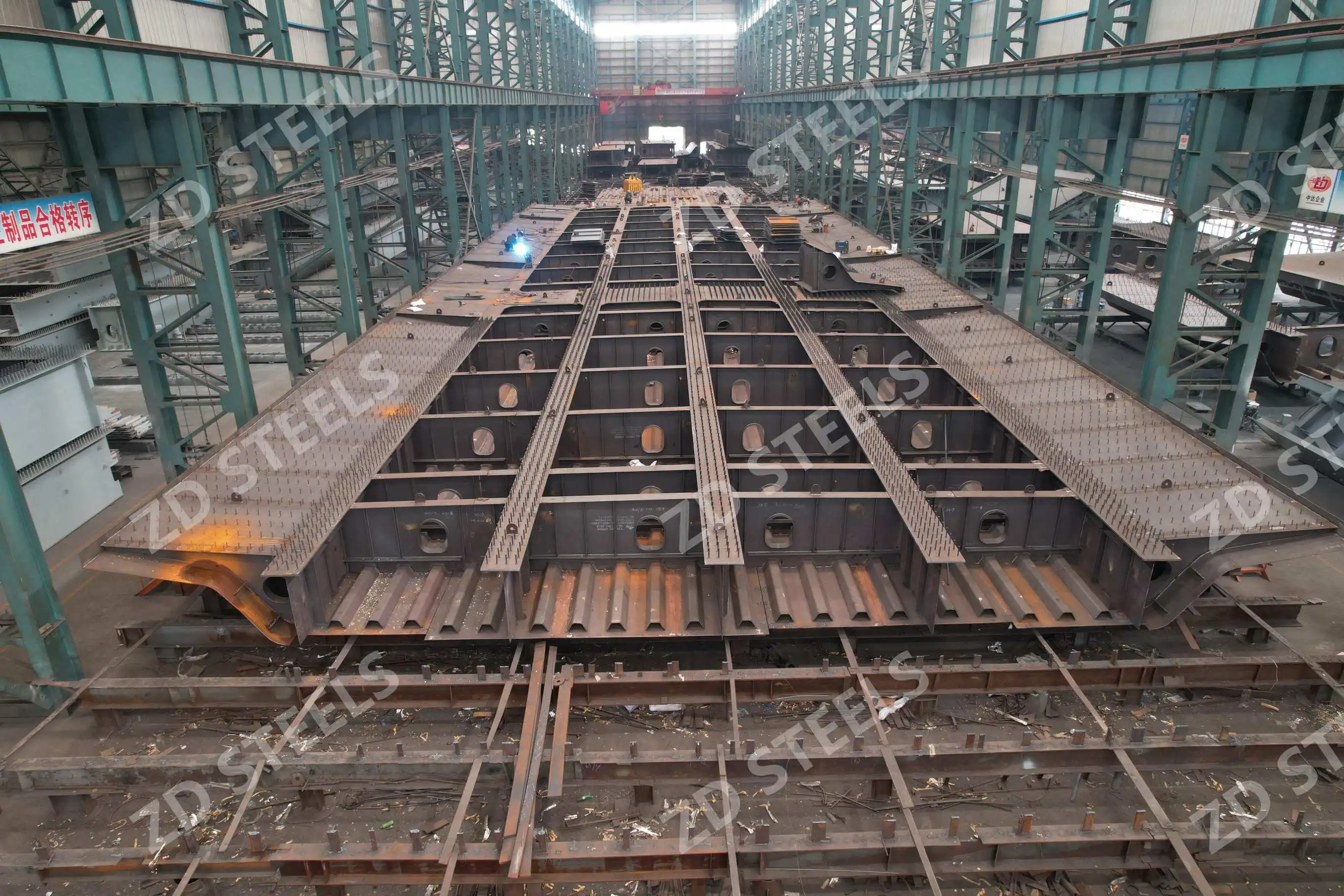
Advantages and Technical Considerations of Steel Structures in Power Plants
Steel always works better than concrete in power generation applications, and not just by a small amount, particularly for a Power Plant Steel Structure. Steel is better in terms of structure and cost throughout the lifecycle of the project. When compared to cast-in-place concrete, prefabricated steel modules cut EPC project timelines by 20–30%. This is a known benefit that speeds up grid link and operating ROI.
Because it is strong and durable, steel is the best material for building boilers and supporting pipes in factories.
- High-temperature stability: Structural integrity is retained up to 400°C in boiler zones, provided fire-resistive coatings or intumescent systems are applied per AISC design guidelines.
- Seismic ductility: Steel frames absorb and redistribute seismic energy more effectively than rigid concrete, a critical requirement for power plants located in seismic zones.
- Vibration management: High-strength friction-grip bolting and tuned mass dampers dissipate rotational energy from turbines and generators, preventing resonance-induced fatigue.
- Thermal expansion accommodation: Sliding bearings and slotted-hole connections allow controlled movement in boiler support grids without compromising lateral stability.
When put together, these qualities make frameworks that protect both equipment and people for decades of continuous use. When corrosion protection is done right—hot-dip galvanizing followed by a fluorocarbon topcoat that meets ISO 12944 C5-M standards for coastal or humid areas—maintenance intervals get a lot longer, which lowers the asset's lifecycle costs over its useful life.
Comparing Solutions: Prefabrication, Onsite Construction, and Supplier Selection
Prefabrication vs. Onsite Assembly
Both timing and quality for a Power Plant Steel Structure are affected by the way the goods are made. Prefabricated modular systems make it possible to weld in a controlled environment in a shop, work with tighter tolerances on sizes (±0.2mm is possible with precision cutting equipment), and prepare the site at the same time. On-site building is flexible for sites with odd shapes, but the quality of the welds can vary, weather delays can happen, and labor costs are higher. High-altitude welding is no longer needed for pipe rack modules and flue duct assemblies thanks to modularization. This is an improvement in safety and quality that most project owners now see as a must.
Procurement Criteria That Protect Your Project
It takes more than looking through a product catalog to find a reliable structural steel supplier for a power generation project. The results of a project are directly affected by the following factors:
- Certification compliance: Verify ISO 9001, EN 1090, and applicable national qualifications. Zhongda holds China's First-Class Steel Structure Engineering Qualification alongside ISO 9001/14001 and OHSAS 45001 certifications.
- Manufacturing capacity: A supplier with 60,000-ton annual output and a 120,000 m² facility can handle phased delivery schedules for large EPC contracts without production bottlenecks.
- BIM integration: Full 3D modeling and BIM compatibility ensures design data transfers directly to fabrication, reducing RFI cycles and coordination errors during construction.
- Customization capability: Projects require OEM and ODM solutions, including unique column grid dimensions, specialized connection details, and non-standard material grades for extreme environments.
Suppliers for a Power Plant Steel Structure with recorded project references in a wide range of locations, such as Arctic bridges, industrial facilities, and port infrastructure, show that they have the flexible engineering skills that are needed for complex power plant projects.
Installation, Inspection, and Technical Support for Power Plant Steel Structures
Installation and Inspection Protocols
In power plants, building structures is done in stages: accepting the foundation, putting up the columns and making sure they are straight, connecting the beams, and checking the loads before they are put into service. Before pressure systems are turned on, non-destructive testing (NDT), which includes ultrasound testing and magnetic particle inspection, makes sure that vital connections are properly welded. Continuous structural health tracking with sensor groups is now standard on all new buildings. This gives real-time information on how the load is distributed and how well the connections are working.
Optimizing Procurement and Lifecycle Management for Power Plant Steel Structures
When you look at the total cost of ownership over 40 to 50 years, lifecycle cost analysis always shows that steel is better than other materials. The structure framework usually costs 15–20% of the total cost of building a plant, but the state of it has a direct effect on how reliable the equipment is and when it needs to be maintained. When procurement teams involve structural suppliers early on in the EPC bidding phase, they can take advantage of value engineering possibilities that lead to faster project completion times. These include optimized cross-sections, standardized connection details, and planned delivery plans.
In the future, digital engineering tools like advanced FEA modeling and BIM-driven prefabrication will change how boiler support systems and pipe rack structures are planned, built, and kept up to date. If suppliers engage in these skills now, they will produce significantly better results on projects awarded after 2025.
Conclusion
To design a strong framework for boiler houses and industrial pipe support systems, you need to do a careful load analysis, choose the right materials, and find a source that can do approved fabrication on a large scale for a Power Plant Steel Structure. Steel is still the best material for building structures on power plants, not because it's the default option, but because it's the most cost-effective and technically sound option. Teams that work with skilled structure partners early on in the project development process always finish on time, keep costs down, and get more use out of their assets.
FAQ
What design standards apply to boiler building steel frames in the U.S.?
People in the U.S. who build steel frames mostly follow AISC 360 for structural design and AWS D1.1 for welding. EN 1090-2 (Execution Class 3 or 4) and ISO 9001 may also be used in projects that involve buying things from other countries. Meeting the requirements of local building codes and seismic zones adds another level of detail that is different depending on the site.
How does corrosion protection affect pipe rack maintenance costs?
Using the right anti-corrosion product cuts down on long-term upkeep costs by a large amount. A duplex system, which includes hot-dip galvanizing and an ISO 12944 C5-M-compliant fluorocarbon topcoat, makes coatings last longer in harsh industrial or ocean settings, putting off recoating processes by 15 to 25 years compared to regular paint systems.
What should procurement teams prioritize when choosing between prefabricated and onsite steel structures?
Access to the site, time constraints, and requirements for weld quality all play a role in this decision. Prefabrication is the best way to control quality, speed, and safety, especially for pipe rack modules and air duct systems that can't be welded at high altitudes. On-site construction works best for installations with a lot of angles and where delivering modules would be hard to manage.
Partner with Zhongda for Your Next Power Plant Steel Structure Project
Zhongda makes heavy steel frameworks for boiler buildings, pipe rack systems, and turbine hall structures that are certified and made with great care. With ISO 9001/EN 1090 certification, an annual capacity of 60,000 tons, and BIM-driven planning, we are a trusted Power Plant Steel Structure supplier. We bring both technical depth and manufacturing stability to every EPC project. Get in touch with our engineering team at Ava@zd-steels.com or go to zd-steels.com to ask for a custom structural solution for your project.
References
1. American Institute of Steel Construction (AISC). Steel Construction Manual, 16th Edition. AISC, 2023.
2. American Welding Society. AWS D1.1/D1.1M: Structural Welding Code—Steel. AWS, 2020.
3. European Committee for Standardization. EN 1090-2: Execution of Steel Structures and Aluminium Structures. CEN, 2018.
4. International Organization for Standardization. ISO 12944: Paints and Varnishes—Corrosion Protection of Steel Structures by Protective Paint Systems. ISO, 2018.
5. Gorenc, B., Tinyou, R., & Syam, A. Steel Designers' Handbook, 8th Edition. UNSW Press, 2012.
6. Tamboli, A. R. Handbook of Structural Steel Connection Design and Details, 3rd Edition. McGraw-Hill Education, 2016.
YOU MAY LIKE