
Steel Truss Girder Enhances Structural Strength for Railway and Highway Bridges
2026-09-02 13:00:01






Steel Truss Girder systems represent a transformative solution in modern bridge engineering, particularly for railway and highway applications where structural reliability is non-negotiable. These interconnected steel frameworks distribute loads efficiently across multiple points, reducing stress concentrations while maximizing span capabilities. Unlike traditional solid beam configurations, truss girders leverage geometric triangulation principles that convert complex forces into manageable tension and compression loads, delivering exceptional strength-to-weight ratios that infrastructure projects demand today.
Understanding Steel Truss Girders and Their Structural Benefits
What Defines a Steel Truss Girder System
A Steel Truss Girder is made up of three triangle-shaped pieces that are linked to each other and are made from high-strength structural steel alloys that usually meet ASTM A572 or a similar international standard. These frames make rigid geometric shapes that stay fixed even when the load changes. The triangulated design keeps the structure from deforming by spreading forces across several members instead of putting all the stress on a single one. With today's fabrication methods, precise connection points can be made through welding or high-strength bolting. This makes sure that load paths stay the same over the structure's lifetime.
Material Selection and Engineering Principles
High-performance bridge beams are made of weathering steel alloys that are more resistant to rust. This is especially important for transportation infrastructure that is exposed to salts used to melt snow and water from the environment. Copper, chromium, and nickel are added in advanced metallurgy to form protective oxide layers that greatly extend the time between maintenance visits. The engineering behind truss designs is based on well-known statics rules. In these arrangements, diagonal members handle shear forces and horizontal chords stop bending moments. By splitting up the work, engineers can make sure that each part works best with a certain type of load, instead of overbuilding whole sections.
Advantages for Infrastructure Projects
While still being able to hold more weight, bridge projects that use truss girder systems use less material than those that use solid plate options. Electrical lines, drainage systems, and communication equipment can be installed within the truss depth thanks to the open-web design, which doesn't affect the structure's performance. When prefabricated truss pieces come ready to be put together, they cut down on construction delays caused by welding in the field and bad weather. Long-term operational costs go down because of longer service intervals and easier inspection processes. Individual truss parts can still be inspected without having to be taken apart, which can be disruptive.
Comparing Steel Truss Girders with Alternative Bridge Support Solutions
Steel Truss Versus Concrete Girder Systems
When procurement teams look at different bridge superstructure options, the choice between steel truss and concrete girder affects more than just the initial capital cost. Concrete solutions don't catch fire and don't need much work on the outside, but they're heavy, so they need stronger foundations and can't be used for long spans. With intermediate supports, steel truss structures can span more than 200 meters, which is something that concrete has a hard time doing cost-effectively. There are big differences in the order of construction. For example, concrete girders need long drying times that can stop work for weeks, but bolted steel links can be loaded right away after the assembly is checked.
Comparing durability brings up some important points. When properly kept and used in mild areas, steel trusses can last more than 75 years, during which time the members can still be replaced. In chloride settings, reinforcement rust can be a problem for concrete buildings, which could mean expensive post-tensioning repairs. Steel projects can be finished a lot faster than concrete ones. For example, a standard highway bridge built with prefabricated trusses could be finished six months earlier than options made of cast-in-place concrete. This would mean fewer traffic delays and less damage to the economy.
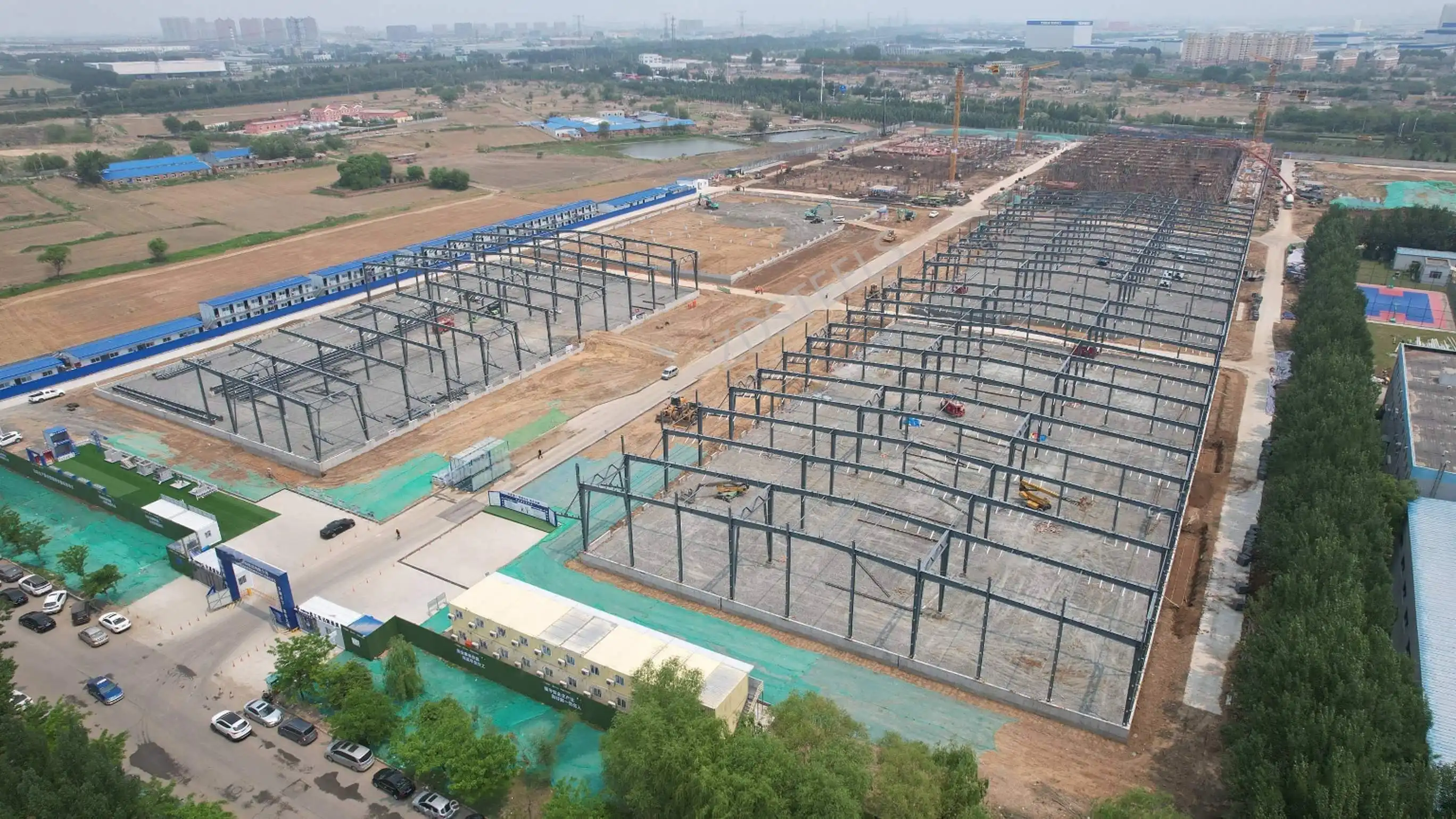
Evaluating Lightweight Steel Options
Key Considerations for Procurement and Fabrication of Steel Truss Girders
Custom Fabrication Versus Prefabricated Solutions
Depending on the needs of the project, procurement methods vary between custom engineering and stock parts. Custom fabrication is used when there are specific span needs, load profiles, or geometric limitations that can't be met by standard catalogs. With this method, lead times are longer because engineering teams have to make shop drawings, do finite element analysis, and coordinate approval cycles with government regulators. On the other hand, prefabricated truss systems from well-known manufacturers come with set delivery dates and performance data that has been proven. These systems also speed up the permit process by having pre-approved structural certifications.
The decision grid compares how unique the job is to how quickly it needs to be finished. Custom engineering is needed for a signature bridge crossing that needs to look good with its urban setting. On the other hand, standard solutions are used for a country highway replacement that focuses on speed and cost predictability. There are also hybrid methods, in which makers change standard connection details to fit different span lengths. This strikes a balance between the benefits of customization and the cost-effectiveness of production.
Supplier Selection and Quality Assurance
In order to find qualified Steel Truss Girder suppliers, you need to look at more than just price quotes. Some important things that are looked at when deciding who to hire are welding certifications that follow the AWS D1.5 Bridge Welding Code, the ability to do non-destructive tests like ultrasonic and magnetic particle inspection, and the ability to show that measurements are accurate through third-party surveying. If a supplier has an ISO 9001 quality management system and EN 1090 structural steel execution standards, you can be sure that the fabrication process will be the same from one production run to the next.
When evaluating a provider, you should also look closely at their logistical skills. Transporting put-together truss pieces that are 15 meters or longer requires special heavy-haul skills, such as planning routes, coordinating permits, and making plans for escorts. When compared to faraway producers that don't have regional transportation partnerships, suppliers with established North American distribution networks lower delivery risks. There are also big differences in how quality paperwork is done. Reliable fabricators provide full material traceability through mill certificates, weld procedure specs, and inspection records that make planning future upkeep easier and managing liability easier.
Since 2004, Zhongda Steel has built a name for working on global building projects in ways that are ISO 9001, 14001, and 45001 certified. Our 120,000-square-meter building has BIM-driven fabrication workflows that find problems before they happen, so expensive changes don't have to be made in the field. The special treatment for rusting steel can handle temperatures as low as -60°C. This has been shown by installing Arctic bridges across Russian territory, where regular coats fail. Cutting ultra-thick plates with limits of ±0.2mm ensures precise connections, which makes field assembly easier and cuts down on building time.
Understanding Cost Structures and Procurement Timing
Truss girder prices depend on many factors, such as the type of steel used, the difficulty of the connections, the requirements for surface preparation, and the logistics of shipping. Steel Truss Girder costs are also affected by base material prices, which fluctuate according to market conditions, steel production capacity, and the availability of raw materials. Purchasing professionals can get the best deals by strategically placing orders at the right time. For example, ordering when manufacturers have extra production capacity often leads to better terms because they want to keep their workers and facilities operating efficiently. Buying in bulk across multiple stages of a project can help negotiate better prices, but companies must carefully calculate storage expenses and the impact of locked-up capital.
Transportation costs are a big part of costs that are often understated when budgeting. Extra fees for things like oversize load permits, special trucks, and route infrastructure studies can add up to a lot of money for project sites that are far away. To avoid demurrage charges and site congestion, shipping plans must be coordinated with building readiness. This requires close cooperation between buying teams, general builders, and erection subcontractors all along the supply chain.
Installation, Load Calculations, and Maintenance Best Practices
Construction Process and Assembly Protocols
Truss girder installation starts months before the field crews get there. This is when fabrication shops work with erection specialists to make lift plans and temporary bracing schemes. As part of preparing the site, foundation verification studies are done to make sure that the positions of the anchor bolts match the shop plans within certain limits, usually ±6mm horizontally. The choice of crane depends on the weight of the assembled segments and the length of reach needed. Hydraulic cranes have flexible boom configurations that work well in confined urban areas.
The steps for putting things together are planned out so that the structure stays stable while it's being built. Temporary supports keep things from getting too heavy during the progressive installation process, and surveying teams check the alignment after each placement. Bolted joints must have their design holding forces checked using measured wrenches, while welded field splices need to be heated up and their interpass temperatures must be monitored according to approved welding procedures. Camber measurements taken after installation confirm predictions of deflection, which means that structural calculations are correct before bridges are opened to traffic.
Engineering Load Analysis and Software Tools
To find the right truss member sizes, you have to look at a lot of different types of loads, such as dead loads from deck systems, live loads from vehicle classes, environmental forces like wind and earthquakes, and thermal effects that cause things to expand and contract. In the past, key loading positions were found using influence lines. Now, finite element software like SAP2000 or MIDAS Civil is used to model three-dimensional behavior, such as how connections can bend and how building staging affects the structure.
Load rating estimates check the current capacity of bridges that are getting close to the end of their design life or seeing more traffic than expected. These tests find members that need to be strengthened before they stop working properly. This helps asset managers make decisions that get the most out of infrastructure investments. By using advanced analysis that includes fatigue evaluation, we can guess how much longer something will last under real-life driving conditions. This lets us make choices based on facts about when to repair it and when to replace it.
Proactive Maintenance and Longevity Strategies
To make truss girders last longer, they need to be inspected in a way that finds damage before it affects the structure's ability to hold weight. Visual checks are done every two years to keep track of the condition of the coating, the strength of the connections, and any signs of distortion or cracking. Critical connections are checked by hand with measured torque tools to make sure that the bolt tension stays in place. Bolts are replaced when the stated preload decreases. As protection layers wear away due to UV light and mechanical wear, coating systems need to be replaced every so often. The quality of the surface preparation determines how well the new coating sticks and how well it works.
Coatings aren't the only way to stop corrosion. Design features that keep moisture out are also important. For a Steel Truss Girder, drainage holes at the connection pockets help prevent water from pooling, while cleaning off horizontal surfaces removes organic matter that can stick to steel parts and retain moisture. Environmental monitoring programs keep track of how much chloride is deposited in coastal or winter maintenance zones. They do this by comparing atmospheric data with observed damage patterns to determine the best inspection schedules and protective treatment methods for each type of exposure.
Case Studies and Future Trends in Steel Truss Girder Applications
Proven Performance in Transportation Projects
When existing supports make replacement choices limited, railroad bridge repair projects show the benefits of truss girders. An improvement to a train route in the Midwest replaced old riveted trusses with new welded structures that can hold 286,000-pound railcars. This doubled the capacity while reusing masonry piers that are over a hundred years old. The modular fabrication method made it possible to install things on the weekends, which kept freight schedules on track and saved millions of dollars in costs that would have been caused by closing the whole line.
Highway uses show how quickly they can be used during emergency rebuilding. After a very bad bridge failure, transportation agencies ordered prefabricated truss spans that came in eight weeks, whereas cast-in-place alternatives took six months. The faster schedule restored regional connectivity months earlier, showing that steel truss systems offer benefits beyond just being more efficient during construction.
Emerging Manufacturing Technologies
Additive manufacturing is starting to change the way connection parts are made, especially when it comes to making nodes with complicated shapes that are hard to make cheaply with traditional methods. Three-dimensional printing of steel connector castings cuts down on lead times and allows topology optimization, which gets rid of material in areas with low stress while strengthening load paths that are very important. Even though it can only be used for smaller parts right now, scaling paths show that it will be possible to use it for bigger structural parts in the future as printer bed sizes get bigger and deposition rates get faster.
Robotic welding improves the accuracy of the manufacturing process and cuts down on the amount of work needed for repeating joint designs. Automated systems with seam tracking sensors can adjust to changes in temperature in real time, keeping the electrodes in the right place during multiple passes. Digitally recording welding parameters improves quality documentation by making records that can be tracked and used to support certification requirements and future forensic investigations in case of service problems.
Sustainability and Material Innovation
As infrastructure owners set goals to reduce their carbon footprint, environmental concerns become more important in the choices they make. High-performance steel grades with better strength properties allow for smaller member sizes that lower the structure's embodied energy while keeping its design capacities. In modern production, more than 90% of steel used in electric arc furnaces is recycled. This supports the circular economy and is good for programs that want to buy things that are good for the earth.
The main goal of developing coating technology is to make upkeep intervals longer by making barrier protection and self-healing processes better. Zinc-rich bases with aluminum flake added offer better galvanic protection than regular ones, and topcoats with fluoropolymer resins avoid ultraviolet degradation, which shortens the service life of regular paint. These improvements lower the costs over the product's lifetime and lessen the traffic problems that come with maintenance work, providing value above and beyond the initial material premiums.
Conclusion
Through optimized load distribution, accelerated building timelines, and long-term longevity, Steel Truss Girder systems offer unrivaled flexibility for railroad and highway bridge uses. The triangulated framework manages complex force combinations well while keeping members easy to access for maintenance and inspection over long service lives. To be successful at procurement, you need to know what the effects of choosing the right materials are, what the standards are for quality fabrication, and what the supplier can do to make sure that project-specific needs get the engineering attention they need. Truss girders are still one of the best ways to build infrastructure that balances performance, cost, and environmental responsibility, even as manufacturing technologies improve and environmental concerns grow.
FAQ
What span lengths can steel truss girders achieve economically?
For highway use, truss girder systems can span 30 to 150 meters without breaking the bank. For railroad bridges, they can usually span 40 to 100 meters, based on the weight that needs to be carried. Beyond these distances, cable-stayed or suspension configurations are usually more cost-effective. However, some specialty truss designs have been able to reach 200 meters in situations where the base conditions or navigation clearances require that type of superstructure.
How do climate conditions affect steel truss performance?
When the weathering steel and protective coating systems are set up correctly, trusses can work in a wide range of temperatures, from the Arctic to tropical humidity. For uses in cold places, Charpy V-notch impact testing is needed to make sure that the steel stays flexible at the lowest temperatures that are expected. Because chloride-induced corrosion happens faster along the coast than in the interior, coatings need to be thicker, and inspections need to happen more often.
What certifications should qualified fabricators possess?
Steel truss makers with a good reputation keep their ISO 9001 quality management certification, their AISC fabricator certification for bridge uses, and their EN 1090 execution class ratings up to date with the needs of the project. Welding jobs need to be approved by the AWS and use qualified welding procedures that cover all types of materials and joint shapes that will be used in production. These procedures must be checked by third-party testing and witness processes.
Partner with a Trusted Steel Truss Girder Manufacturer
For your next bridge infrastructure project, Zhongda Steel is ready to help with precision-engineered truss solutions made according to strict quality standards. Our BIM-integrated manufacturing method gets rid of field problems before they happen, and our special treatment for weathering steel makes sure it works in the harshest conditions. Whether your project needs custom-engineered spans or the best standard configurations, our team has worked with clients from China Railroad to international EPC contractors for 20 years. Get in touch with Ava@zd-steels.com to talk about your specific needs and find out how our 60,000-ton annual capacity and ultra-precision cutting capabilities can help you finish your project faster. Visit zd-steels.com to see our full list of successfully completed infrastructure projects around the world.
References
1. American Institute of Steel Construction. (2020). Steel Bridge Design Handbook: Truss Bridges. Chicago: AISC Publications.
2. Connor, R.J., and Fisher, J.W. (2019). Fatigue Performance of Steel Bridge Truss Members. Journal of Bridge Engineering, Vol. 24, No. 3.
3. Kulicki, J.M., Prucz, Z., and Sorgenfrei, D.F. (2018). Guidelines for Evaluating Corrosion Effects in Existing Steel Bridges. National Cooperative Highway Research Program Report 833.
4. Lay, M.G. (2021). Structural Steel Design for Heavy Load Applications. New York: Engineering Press International.
5. Tonias, D.E., and Zhao, J.J. (2020). Bridge Engineering: Design, Rehabilitation, and Maintenance of Modern Highway Bridges. Third Edition. McGraw-Hill Professional.
6. Wright, R.N., and Walker, W.H. (2019). Criteria for the Deflection of Steel Bridges. Transportation Research Record 2672, Transportation Research Board.
YOU MAY LIKE