
What Steel Beam Shear Studs Actually Do
2026-11-03 13:00:00






What Steel Beam Shear Studs Actually Do
English Version
Title: Shear Studs on Steel Beams: Why Every Composite Floor Depends on Them
Overview
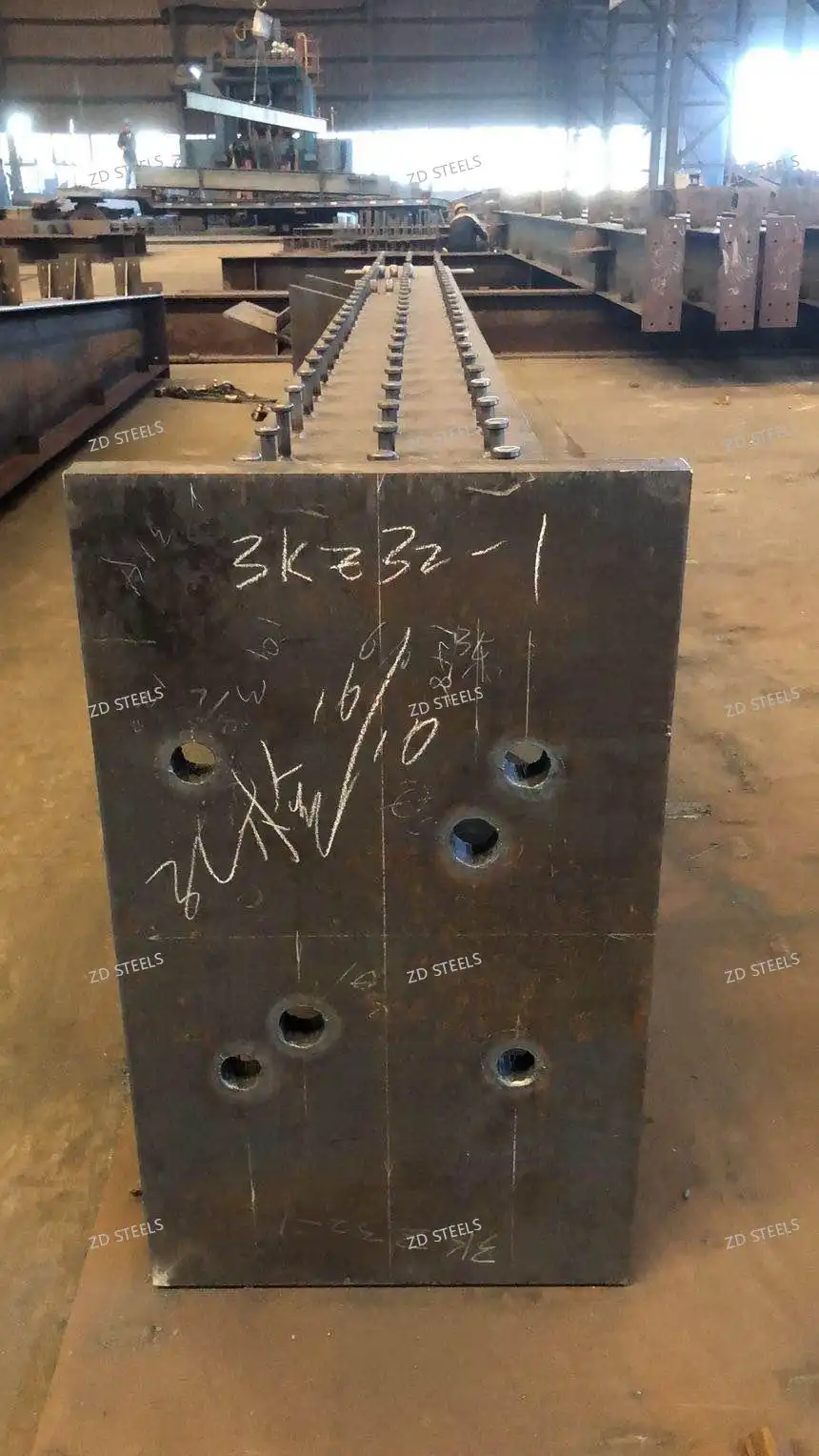
Shear studs — also called headed studs or 栓钉 — are short steel pins welded to the top flange of a steel beam before concrete is poured. Their one job: transfer horizontal shear between the steel beam and the concrete slab so the two act as one composite section. Without them, the slab sits on the beam and does no structural work.
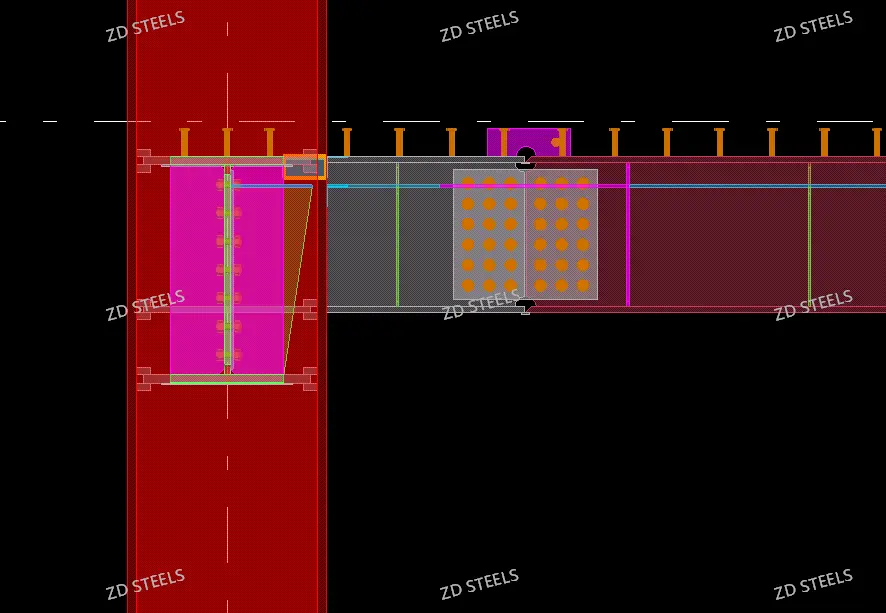
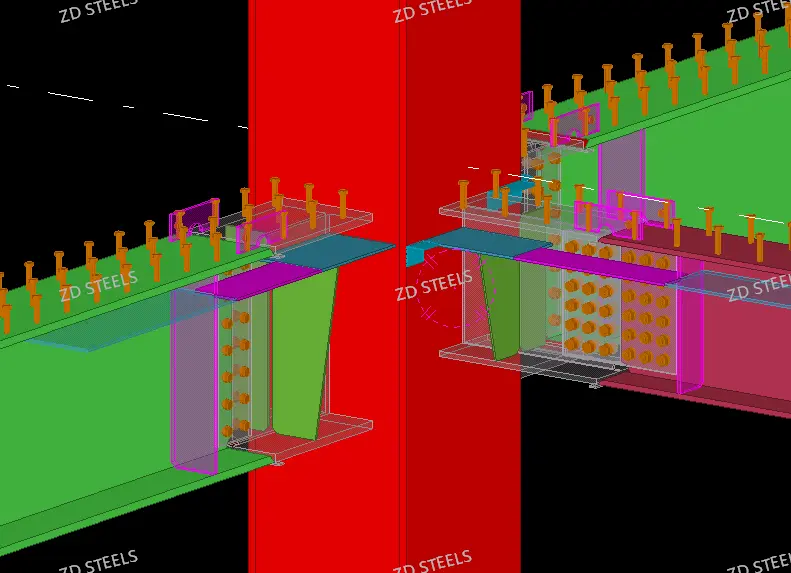
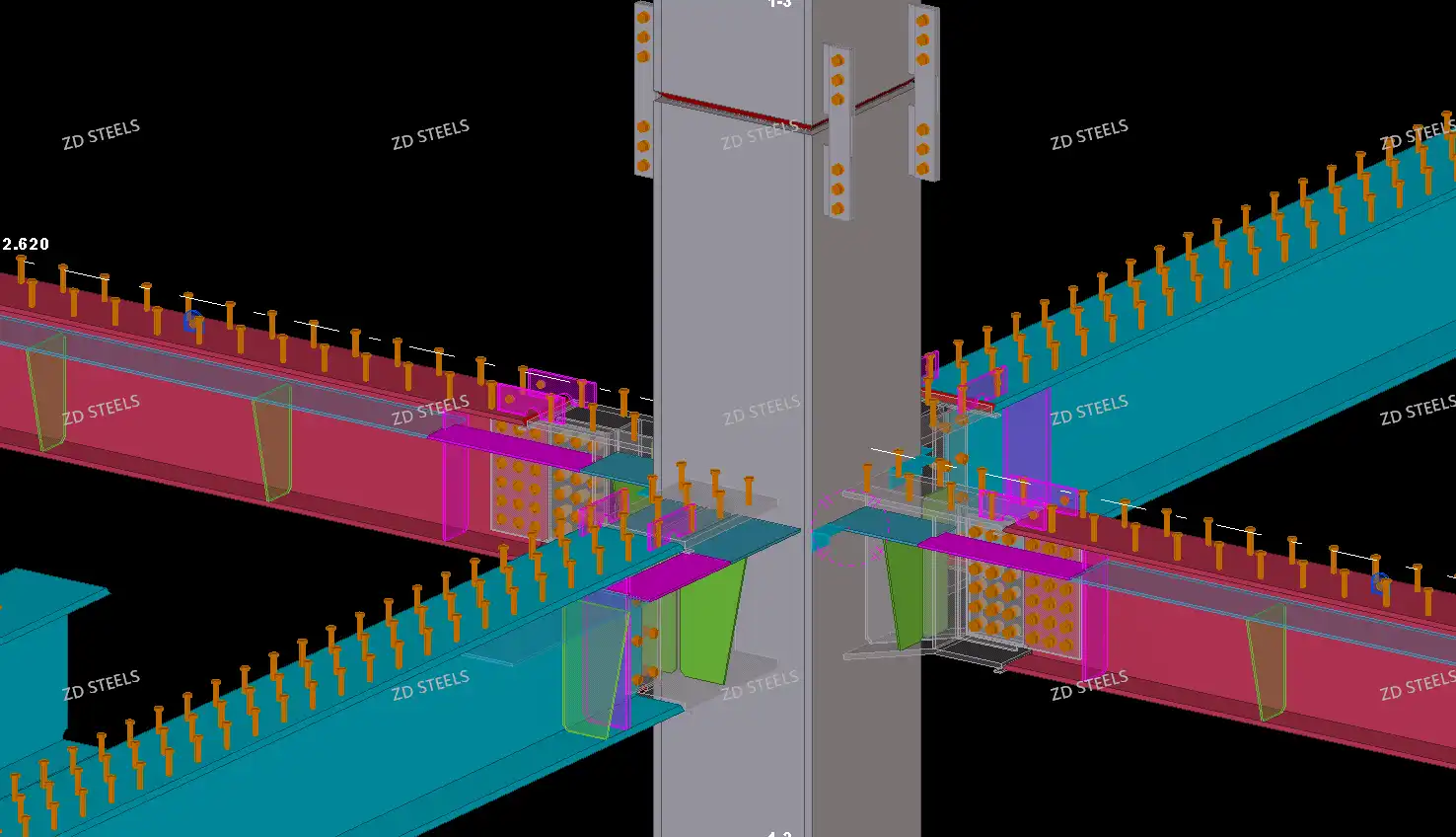
The connection nodes shown in the drawings carry the stud pattern used on this project: rows of studs spread across the beam top flange at the beam-column connection zone, combined with continuity plates, stiffeners, and bolted end connections.
What the Drawings Show
| Item | Detail (from drawing) |
|---|---|
| Beam-to-column connection | Rigid joint, beam web bolted + flange welded |
| Stud arrangement | Rows of headed studs on beam top flange |
| Stud zone | Full-width across flange, dense rows near connection |
| Node details | Stiffener plates at column, continuity plates, shim plates at beam end |
| Typical stud spec (GB/T 10433) | ML15, φ19 or φ22, height 100–150 mm |
| Weld method | Arc stud welding, drawn-arc process |
How They Work
Concrete is strong in compression, steel is strong in tension. A composite beam uses both: concrete carries the top compression, the steel section carries the tension below. But the two materials want to slide past each other at the interface. Shear studs resist that sliding — called horizontal shear — and force the slab and beam to bend together.
One stud of φ19 × 120 mm in normal-weight concrete resists roughly 70–100 kN of shear. A beam with studs every 200 mm along the flange can carry 30–50% more moment than the bare steel beam.
Advantages
30–50% more load capacity — the concrete slab stops being dead weight and becomes part of the structure.
Beam depth reduced — for the same load, a composite beam is one or two rolled sections smaller, saving steel tonnage.
Less deflection and vibration — the composite section is stiffer, which matters for floors under people, machinery, or crane loads.
Fast erection sequence — studs are welded in the shop or on site with a stud gun, seconds per stud; no bolts or holes in the slab.
Works with metal decking — studs are fired through the deck profile into the beam, so composite slabs build without formwork.
Disadvantages / Limitations
Studs are only effective in positive moment zones — near supports where the beam top goes into tension, studs lose efficiency and need special treatment.
Welding quality is critical — a stud with incomplete fusion at its base is invisible after concreting; batch pull-off tests are required before production welds.
Not for every load — high-cycle fatigue loads (rail bridges, crane runways) need stud fatigue checks per code; failure is brittle.
Concrete condition matters — studs need full embedment in the slab; formwork leaks and poor concrete placement reduce their capacity.
Fire behavior — composite beams rely on slab continuity; fire engineers must check the stud zone separately if the slab loses integrity.
Typical Use Cases
High-rise office floors — composite beams with metal decking and studs every 200 mm; the standard fast-floor system in China (GB 50017).
Industrial plant floors — heavy machinery floors where the composite section cuts beam depth and increases stiffness.
Steel-concrete composite bridges — studs on box girder and plate girder top flanges per GB/T 714 and JTG D64.
Crane-supporting mezzanines — studs stiffen floors against crane vibration and impact.
Parking structures — long-span composite floors with reduced beam depth to maximize parking height clearance.
Fabrication and Inspection Notes
Stud material: ML15 per GB/T 10433; verify mill certificate before batch welding.
Stud welding: drawn-arc stud welding, current per stud diameter (φ19 ≈ 900–1100 A), lift height and plunge timing set per weld gun.
Before production: weld sample studs on a test plate, bend 30° — no crack at the weld is accepted.
On site: after concrete pour, exposed studs must show full 360° fusion collar.
Torque test is not used for studs — the acceptance method is the bend test and weld-collar check.
Bottom Line
Shear studs are the cheapest, fastest way to make concrete work as structure instead of dead load. Specify them wherever a steel beam supports a concrete slab, keep the spacing dense in positive moment zones, and never skip the pre-production bend test. A composite beam with proper studs outperforms a bare steel beam of the same size on capacity, stiffness, and cost per square meter.
YOU MAY LIKE