
XG-1 Tie Rod: 4,834 mm Long, P-27/P-28 End Plates, 4.0×5.0 m Panel, Paired with SC-1 Cross Bracing
2026-11-26 22:25:00






XG-1 Tie Rod: 4,834 mm Long, P-27/P-28 End Plates, 4.0×5.0 m Panel, Paired with SC-1 Cross Bracing
English Version
Title: Steel Tie Rod XG-1 — 4,834 mm Overall Length, 4,634 mm Shaft, P-27/P-28 Gusset Plates, Two-Bolt End Connections, 4.0×5.0 m Frame Panel, Longitudinal Tie Between GJ-1 Beams
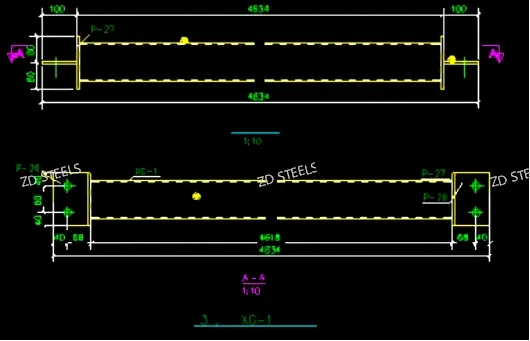
Drawing note: lengths, end plates and panel layout are read from the XG-1 detail (1:10, A-A) and the 1:25 structural plan. This batch does not list rod section, steel grade, bolt size or weight; those remain on the original member schedule and detail drawings.
Overview
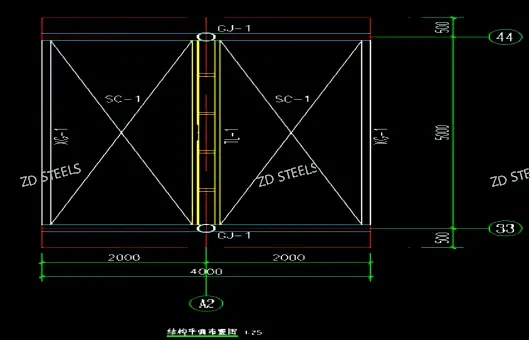
XG-1 is the longitudinal tie rod in the frame panel between axes 33 and 44 on line A2. One finished rod is 4,834 mm overall, with a 4,634 mm shaft section and 100 mm end setbacks at each end. P-27 and P-28 plates form the end connections; each end plate carries two bolts on an 80 mm pitch with 40/68 mm edge distances. The rod ties the side framing together alongside SC-1 cross bracing and GJ-1 frame beams.
Detail Dimensions — XG-1
\
| Item | Value |
|---|---|
| Overall length | 4,834 mm |
| Shaft length (side view) | 4,634 mm; 100 mm end each side |
| Shaft length (A-A) | 4,518 mm |
| End plates | P-27; P-28 |
| End bolt layout | Two bolts per end; pitch 80 mm; edge 40 / 68 mm |
| Vertical plate setout | 80 / 80 mm |
| Detail scale | 1:10 (plan A-A) |
| Panel bay | 4,000 mm wide (2,000 + 2,000); 5,000 mm deep, 500 mm edge each |
| Associated members | GJ-1 frame beam, SC-1 cross brace, TL-1 support |
How the Tie Rod Works
- Rod carries axial force only. XG-1 ties side columns or beams together in the longitudinal direction; it resists tension (and compression where designed) without bending.
- End plates transfer the force. P-27/P-28 gusset plates spread the rod axial force into the adjacent frame member through the two end bolts.
- SC-1 handles lateral shear. The diagonal SC-1 cross brace carries panel shear; XG-1 holds the panel edges aligned and limits longitudinal sway.
- GJ-1 closes the panel top and bottom. Frame beams GJ-1 bound the panel; the rod and brace work inside that frame.
- Panel size sets the rod length. The 5,000 mm deep bay and end connection details produce the 4,834 mm finished rod.
Advantages
- Light axial member — a tie rod adds little dead weight compared with a continuous beam between supports.
- Bolted end connections — P-27/P-28 plates bolt to the frame; the rod can be removed or replaced without welding on site.
- Repeated panel layout — rods repeat across the 4.0×5.0 m bays, so shop fabrication and installation are standardized.
- Clear role in the bracing system — XG-1 ties edges, SC-1 takes diagonals, GJ-1 forms the perimeter; each member has a defined function.
- Short shop pieces — the 4,834 mm rod ships as one straight member with end plates already welded.
Disadvantages / Limits
- Section unspecified here — angle, round tube, channel or double-channel section, and its grade, are not shown; axial capacity must be checked against the design tension/compression force.
- End connection depends on bolts and plates — bolt size, grade, torque and plate thickness are not listed; the joint can slip or fail if undersized.
- Tie rods do not carry bending — lateral loads on the rod itself must be limited; unsupported long rods may need intermediate restraints.
- Corrosion at ends — gusset plate and bolt gaps collect moisture; exposed rods need coating or galvanizing and inspection.
- Data gaps on these drawings — member weight, rod spacing, number of XG-1 rods per panel and foundation reaction are not given; quantities need the original schedule.
Typical Use Cases
- Industrial workshop longitudinal ties between columns along the building length.
- Roof and floor frame edge ties stabilizing perimeter beams and purlin lines.
- Bracing panel edge members paired with diagonal SC-1 cross braces.
- Warehouse and logistics frame longitudinal restraint.
- Retrofit longitudinal ties added to an existing steel frame to improve sway resistance.
Fabrication and Erection Notes
- Confirm rod section, steel grade, bolt grade and torque from the original design before fabrication.
- Cut the shaft to 4,634 mm (side view) per detail; weld P-27/P-28 end plates and check the 4,834 mm overall length.
- Match bolt holes to the 80 mm pitch and 40/68 mm edge distances; do not re-drill holes on site without approval.
- Install rods in line with the frame member axis; check alignment between axes 33 and 44.
- Tighten end bolts to the specified torque; mark installed connections for inspection.
- Coat the rod, plates and contact surfaces; keep end gaps accessible for later inspection.
Bottom Line
XG-1 is a longitudinal steel tie rod in a 4.0×5.0 m frame panel: 4,834 mm overall, 4,634 mm shaft, P-27/P-28 two-bolt end plates at 80 mm pitch, working with SC-1 cross bracing and GJ-1 perimeter beams. Lengths and plate layout come from the detail; section, grade, bolts and weight follow the original member schedule.
**WhatsApp**: +86‑13889862778, +86‑18242444407
**Email**: eddie@zdsteels.com, wells@zdsteels.com
YOU MAY LIKE