



Can Steel Breeding Sheds Adapt to Different Farm Layouts and Climates?
2026-10-12 13:00:01






Yes – a professionally designed steel Breeding Shed may be adapted to suit almost any farm layout or environment. Whether you are managing a small poultry farm in the humid Southeast or a huge swine gestation facility in the chilly Midwest, steel construction provides the structural versatility to meet your site circumstances and animal needs. Steel frames, unlike wood or concrete, may be constructed in modular spans, at a variety of pitches, and combined with insulation technologies that help to moderate interior temperatures throughout the year. It’s that flexibility that makes steel the material of choice for serious agricultural growers throughout the United States.
Understanding the Challenges of Different Farm Layouts and Climates
Not many farm sites are built in the same way. The location and design of a cattle facility are affected by things like the terrain, the amount of land available, and the infrastructure that is already there.
Space Constraints and Layout Diversity
Farm layouts require structures that can be put together in a variety of ways, from narrow rectangular lots to uneven parcels with setbacks for utilities. A shed with a fixed size just can't work everywhere. Modular steel systems let architects change the widths of bays, add sections that run along the length of the building, or tilt the building to get around problems without affecting its structural integrity.
Climate Pressures Across U.S. Regions
Changes in temperature, seasonal humidity, heavy snow loads, and salt air near the coast all break down building materials over time. According to statistics from the USDA, buildings made of wood have much higher upkeep costs for livestock operations in places where the annual temperature goes above 80°F. These pressures are better handled by steel, especially after being treated with hot-dip galvanization.
Why Adaptability Matters for Long-Term Operations
Capital costs will keep going up for a breeding facility that can't be changed when herd numbers or weather factors change. Including flexibility in the design from the start, like using expandable steel frames and covering that changes with the weather, will protect your investment for more than 20 years.
Core Features of Steel Breeding Sheds That Enable Adaptability
When it comes to building livestock facilities, steel's structural and mechanical properties give designers tools that other materials just can't match.
Modular and Configurable Framing
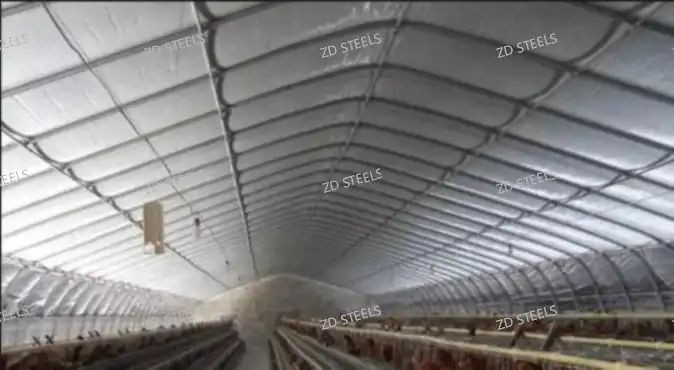
The steel trusses of Zhongda shed roof cover are made of Q235 or Q345 steel; the length may be 10- 40 ft. The normal pitch is 2/12. There are two types of links. Bolting and welding. Bolt joints are easy to dismantle and reassemble, but weld joints provide more strength to the structure in the long run. These choices allow builders to tailor the truss design to meet the load needs of the structure and the shape of the site.
Temperature Control and Ventilation Integration
Using a steel frame with either PIR or rock wool sandwich panel insulation is a good way to get a high R-value. And inside, automated ridge vents and exhaust fans linked to sensors keep ammonia at 20 parts per million, making the atmosphere inside serene no matter the weather outside. This instantly raises the probability of reproduction and reduces the mortality of the newborn. For programs that raise pigs and chicks.
Durability in Harsh Agricultural Environments
Steel trusses are not affected by ammonia, high humidity, or vermin, which commonly deteriorate wood structures. Zhongda employed galvanized treatments, which are rust-resistant and are in compliance with ASTM A123 criteria. That suggests the things are over 20 years old. The structural frame is built to withstand wind loads of up to 0.6 kN/m 2 and meets the local snow load standards, allowing it to be used in projects from Minnesota to the Texas coast.
Comparing Steel Breeding Sheds With Other Materials For Diverse Conditions
Choosing the right construction material for a livestock Breeding Shed facility has long-term financial and operational consequences.
Steel vs. Wood: Maintenance and Lifespan
Timber structures require periodic treatment against rot, mold, and insects. In high-humidity environments, wood can begin to degrade within five to seven years without consistent maintenance. Steel trusses, by contrast, hold structural integrity for decades with minimal intervention. The initial cost difference narrows quickly when factoring in wood's recurring treatment and replacement costs.
Insulated vs. Non-Insulated Steel Sheds
Non-insulated steel sheds experience significant thermal transfer, stressing animals during temperature extremes. An insulated steel breeding facility, using sandwich panels with appropriate R-values, can reduce internal temperature variance by 15–20°F compared to bare metal construction. This directly reduces heating and cooling energy costs and supports more consistent breeding cycles throughout the year.
Manual vs. Automated Climate Systems
Here are the key differences worth considering when selecting your system type:
- Manual systems carry lower upfront costs but require consistent labor attention; in facilities with large animal counts, gaps in monitoring can lead to thermal stress events and productivity losses.
- Automated systems use sensor networks to adjust ventilation, heating, and lighting in real time, removing human error from environmental management and improving reproductive performance metrics.
- Hybrid configurations allow farms to start with manual controls and add automation incrementally as operational needs grow or budgets allow.
These differences directly affect both daily labor demands and long-term production yields, making the choice significant for any procurement decision.
Practical Strategies for Integrating Steel Breeding Sheds into Your Farm Layout and Climate
Planning the right facility requires more than selecting a product — it requires matching the structure to your specific site and animal management system.
Pre-Build Checklist for Procurement Teams
Before finalizing specifications, procurement managers should assess the following:
- Site dimensions and access routes — confirm minimum clearance for truss delivery and crane placement during assembly.
- Local climate data — review historical wind, snow, and temperature records to set accurate structural load requirements.
- Livestock type and density — swine farrowing, poultry propagation, and equine facilities each require different floor areas, ventilation rates, and biosecurity configurations.
Addressing these factors before design begins prevents costly change orders during construction.
Dimension and Configuration Guidance
For swine gestation facilities, clear-span widths of 30–40 feet typically provide efficient pen layouts without interior columns. Poultry Breeding Shed houses often use 24–30-foot spans with continuous ridge ventilation. Equine facilities prioritize acoustic separation and wider stall clearances. Zhongda's engineering team provides pre-engineered components that accelerate on-site assembly and shorten the overall construction timeline.
Maintenance and Safety Protocols
Steel structures need far less ongoing maintenance than wood, but periodic inspection remains important. Quarterly calibration of environmental sensors, semi-annual inspection of emergency backup power, and annual checks of galvanized coating integrity will preserve both structural and mechanical system performance. Facilities should also meet NFPA 701 fire-retardancy standards for insulation materials.
Procurement Insights: Buying Steel Breeding Sheds Adapted to Your Needs
Selecting the right supplier involves more than comparing specifications on a data sheet.
Evaluating Supplier Credentials
Seek manufacturers with ISO 9001:2015 certification, EN 1090 structural compliance, and a proven track record of projects in agricultural or industrial construction. Zhongda has the First-Class Steel Structure Engineering Qualification from China’s Ministry of Housing and Urban-Rural Development and has completed projects on various continents for customers such as China Railway and CSCEC.
Custom vs. Kit Shed Options
Kit shelters are quicker to deliver and cheaper to construct for conventional layouts. Zhongda offers OEM and ODM services for custom steel sheds that may be customized to non-standard locations by adjusting span, pitch, joint form, and insulation specifications. If you are talking about big scale purchase of B2B, bespoke solutions usually provide superior value over the long haul by decreasing retrofitting costs.
Delivery and Installation Planning
Zhongda packs components for safe long-distance shipping and handles delivery logistics on-site for large orders. Pre-fab components save on-site labor time dramatically, being factory drilled. When projects have aggressive deadlines, the company’s logistics staff works hand in hand with contractors to organize staged deliveries that keep construction sequencing on pace.
Conclusion
Steel Breeding Shed facilities may be used on many different types of farms and in many different climate zones in the United States. Steel structures with good construction may last more than 20 years on pig, poultry, and horse farms. Built of structural steel Q235/Q345 with galvanized corrosion protection and can work with existing insulation and air systems. They may be 10 to 40 feet long. Above all, the design requirements should be based on the environment of your site and the needs of your animals. You also want to deal with a source that can do unique engineering as well as deliver traditional gear.
FAQ
1. Can steel breeding structures handle extreme weather like heavy snow or high winds?
Yes. Zhongda's steel trusses are engineered to resist wind loads up to 0.6 kN/m² and comply with local snow load building codes. Hot-dip galvanized coatings meeting ASTM A123 standards protect against corrosion in humid and coastal environments.
2. Can the shed design be adjusted for different animal types?
Absolutely. Span widths, internal layouts, ventilation rates, and biosecurity features can all be configured to suit swine, poultry, or equine breeding programs. Zhongda's engineering team provides OEM and ODM services to match each client's specific animal management requirements.
3. What maintenance does a steel breeding facility require?
Steel structures need less maintenance than timber, but consistent inspection matters. We recommend quarterly sensor calibration, semi-annual backup power checks, and annual coating inspections to maintain structural and mechanical performance over a 20-plus year service life.
4. How long does installation typically take?
A modular 1,000 m² facility generally requires four to six weeks for site assembly, depending on automation complexity. Pre-fabricated components reduce on-site labor time and help keep project timelines predictable.
5. Does Zhongda offer after-sales technical support?
Yes. Zhongda's team of over 100 engineers provides ongoing technical support, including design consultation, installation guidance, and post-completion maintenance advice.
Partner With Zhongda for Your Next Breeding Shed Project
Since 2004, Zhongda has built precise steel buildings in six countries. They have ISO 9001/14001, OHSAS 45001, and EN 1090 certifications to back this up. As a reliable Breeding Shed manufacturer, we design solutions that work with the way your farm is set up, the weather, and the needs of your animals, not the other way around. Contact our team right away to set up a personalized consultation or to get a quote on your project. You can email us at Ava@zd-steels.com.
References
1. USDA National Agricultural Statistics Service. Farm Building and Facility Costs in U.S. Livestock Operations. USDA NASS, 2021.
2. Midwest Plan Service. Structures and Environment Handbook. Iowa State University, 2017.
3. American Society of Agricultural and Biological Engineers. ASABE Standard EP270: Design of Ventilation Systems for Poultry and Livestock Shelters. ASABE, 2019.
4. Steel Framing Industry Association. Steel vs. Wood Framing: Comparative Life-Cycle Analysis for Agricultural Buildings. SFIA, 2020.
5. National Fire Protection Association. NFPA 701: Standard Methods of Fire Tests for Flame Propagation of Textiles and Films. NFPA, 2021.
6. ASTM International. ASTM A123/A123M: Standard Specification for Zinc (Hot-Dip Galvanized) Coatings on Iron and Steel Products. ASTM International, 2022.
YOU MAY LIKE
