



Can Steel Box Girders Support Long Spans in Urban Bridge Projects?
2026-10-12 13:00:01






Yes — and the evidence is hard to argue with. A steel box girder is a hollow, closed-section structural member formed by welding top and bottom flange plates to two web plates, creating a rigid, load-bearing tube. In urban bridge engineering, this geometry delivers the torsional stiffness and span capacity that open-section beams simply cannot match. Projects regularly achieve single spans beyond 400 meters using this system, making it the preferred choice for government contractors, EPC firms, and infrastructure developers tackling complex metropolitan crossings.
Understanding Steel Box Girders and Their Structural Advantages
Core Section Types and Geometry
Single-cell, multi-cell, and composite designs are the three main types of Steel Box Girders. Single-cell sections work well for moderate spans and straight lines. In highway viaducts, multi-cell sections spread the load over wider deck widths. A steel box and a concrete deck slab are put together in composite designs so that the stress is spread out among the two. Each type makes a closed cross-section that is much stiffer in torsional loads than an open I-beam shape of the same steel weight.
Why Closed Sections Outperform Open Profiles
When it comes to rotational stiffness, a closed box section is several hundred times better than an open-flange shape of the same size. This is very important on curved urban alignments, where uneven traffic loads cause twisting forces that open sections can't handle. The fully welded design also gets rid of the risk of lateral-torsional buckling that limits the span range of standard plate girders. This lets engineers increase spans and lower the number of intermediate piers.
Design Standards and Material Grades
Responsible manufacturing follows the rules set out by AASHTO LRFD, AWS D1.5, EN 1090, and ISO 9001. At Shenyang Zhongda, the main grade of structural steel is Q345D, which has a minimum yield strength of 345 MPa. For extra load margin, Q420D is used in high-stress connection zones. Longitudinal and crosswise stiffeners keep the strength-to-weight ratio high along the whole length of the span by stopping local plate bending.
Performance Comparison: Steel Box Girders vs Alternative Girder Types
Steel Box Girders vs Concrete Girders
Prestressed concrete girders are good for short to medium widths, up to 60 meters in most cases. Self-weight becomes a big problem above that point, requiring more piers and larger supports. For the same span, a Steel Box Girder weighs a lot less, which means lower substructure costs and a smaller footprint on the ground. This is especially helpful in urban areas where space is limited, and ground conditions aren't always stable.
Steel Box Girders vs I-Beams and Plate Girders
Standard I-beams and plate girders are cheap for regular bridge work, but their open-section shape makes them weak when used on curved lines. Complex bracing systems can make up for it, but they require more work to install and keep up. A box girder, on the other hand, doesn't need as much bracing because its closed-section is naturally stiff. This makes building bent urban flyovers easier and cheaper in the long run.
Composite and Hybrid Approaches
For medium to long spans, composite box girders are becoming more common. These are made up of a steel box and a cast-in-place concrete deck. Tensile and twisting forces are handled by the steel box, while compression forces are handled by the concrete deck. This combination uses less steel than a system made of only steel, but it can still reach lengths that concrete alone can't. Another good choice is corrugated steel webs, which can cut web weight by up to 20% without lowering shear capacity.
Construction and Fabrication of Steel Box Girders for Urban Bridges
Factory Prefabrication Process
Shenyang Zhongda uses CNC ultra-thick plate cutting (±0.2 mm accuracy) and automated welding lines to make box girder pieces in a controlled environment. The standard length of prefabricated modules is 12 to 30 meters, and they are carefully cut and fully welded before they leave the factory. This managed method gets rid of most of the need for outdoor welding, which lowers the risk of weather changes and mistakes made by people. At each stage of production, quality is checked by a third party before any part is shipped to the site.
On-Site Assembly in Urban Environments
Urban building sites have limited space because of things like small rights-of-way, busy traffic lanes, and utilities that are buried underground. This is directly addressed by prefabricated segments. Each module is put in place overnight or during off-peak hours by cranes or stepwise launching systems. Assembling them can cut on-site building time by up to 50% compared to methods that use cast-in-place concrete. This speed makes traffic less of a problem, which is important for city transportation officials and public-sector clients.
Procurement Planning and Lead Times
Purchasing managers should start working with suppliers early to make sure they can confirm the design, get the materials certified, and set a production schedule. Vertically integrated process at Shenyang Zhongda cuts project lead times by 20 to 30%, from BIM-based design to rust coating. Buying high-value bridge contracts with suppliers whose ISO 9001, EN 1090, or AWS certifications are current, their production capacity, and their track record on similar projects lowers the risk of the purchase.
Maintenance, Structural Analysis, and Longevity of Steel Box Girder Bridges
Load Rating and Structural Health Monitoring
Bridge owners use regular load ratings to make sure that their structures can safely handle the amount of traffic that is currently using them. To do this for Steel Box Girder bridges, you have to do a finite element analysis of the deck-girder system under design truck loads and compare the stress levels to the AASHTO fatigue categories. Now that there are embedded sensor networks, pressure, displacement, and temperature gradients can be continuously monitored. This gives early warning data before damage can be seen.
Corrosion Protection Systems
How long something lasts depends a lot on the quality of the finish. Zhongda uses a two-layer anti-corrosion system that includes hot-dip galvanizing or thermal spray zinc and a high-build epoxy/polyurethane topcoat. This system is said to last for 30 years in mild to severe exposure settings. For jobs in interior areas that don't rust as much, weathering steel grades are available. Every shipment comes with a record of the coating and a certificate of mill test.
Proven Project Performance
The 18,000-ton Shenyang Dongta Cross-Hunhe River Bridge shows that Zhongda can deliver large amounts of goods in real life. The Jingha Expressway expansion and several long-span railroad bridge projects across China are some other completed models. There have also been foreign EPC partnerships. These projects show that Steel Box Girder structures that are built and maintained correctly work effectively for decades, even when they are loaded with heavy traffic.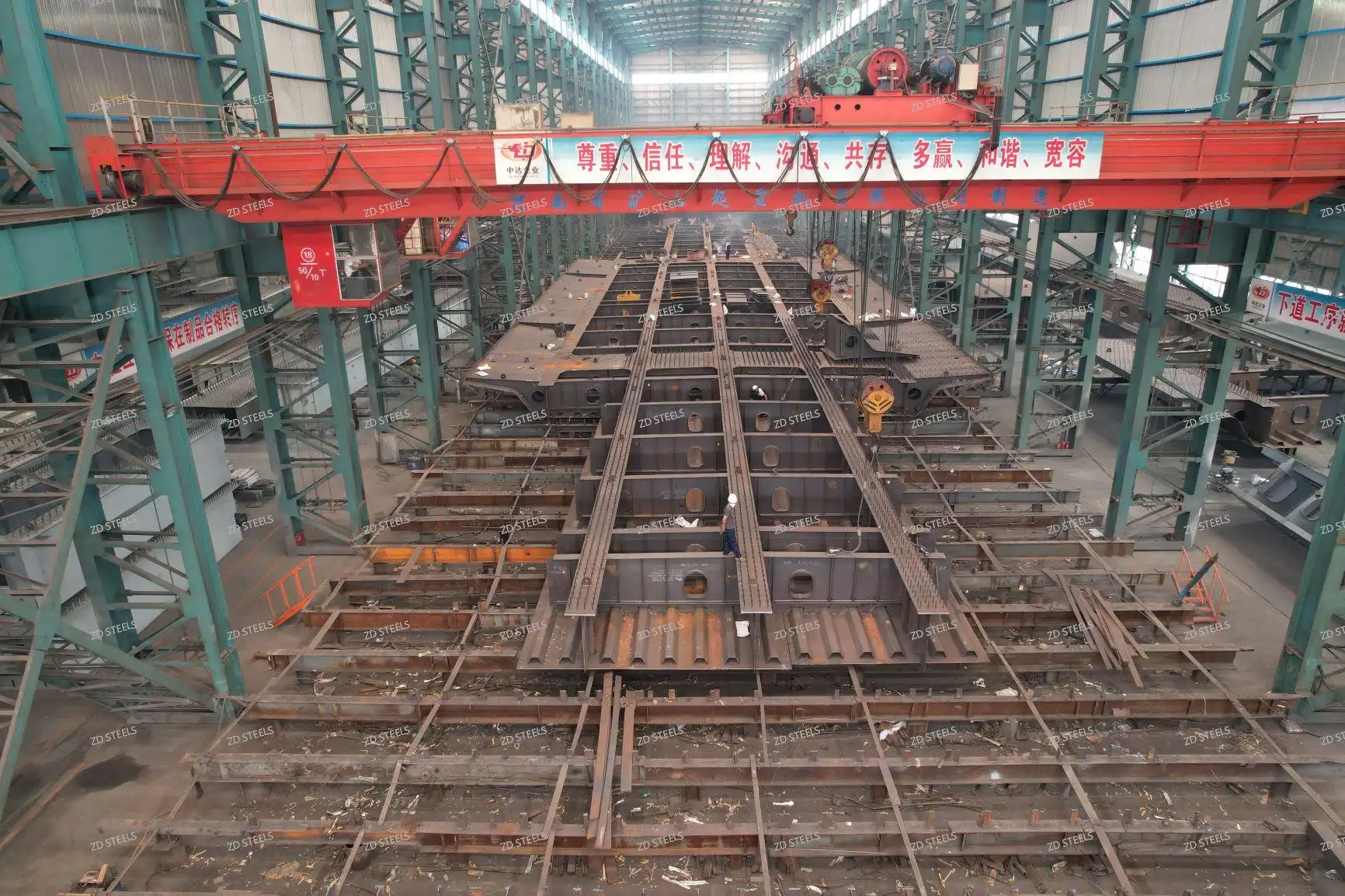
Choosing the Right Steel Box Girder Supplier and Manufacturer
Certification and Quality Management
A reliable Steel Box Girder manufacturer has certifications that are recognized all over the world. The company Shenyang Zhongda has a Class I Steel Structure Professional Contracting Qualification as well as ISO 9001/14001/45001, EN 1090, AWS, JIS, and other certifications. These certificates show that the environmental practices, welding methods, and quality management system all meet third-party standards that have been checked by an independent party. These standards are a must for buying public infrastructure in the US and around the world.
Customization and Technical Capability
Cross-sections that can be changed (beam heights from 1.25 m to 8 m), corrugated web choices, and BIM-integrated design make it easy for sourcing teams to meet the exact needs of each project. Zhongda can handle large, complicated contracts with multiple phases without missing delivery dates. They can produce 60,000 tons of goods every year and keep 70% of their clients. The engineering team helps with technical issues from the first look at the design to the final installation on the site.
Supplier Evaluation Criteria for B2B Buyers
Procurement workers should look at three things before signing a contract:
- Fabrication traceability: Confirm that all steel plates carry mill test certificates and heat numbers linked to quality inspection records.
- Project references: Request documented case studies on comparable span lengths, steel grades, and delivery environments.
- Delivery and packaging protocol: Verify that the supplier offers secure, damage-preventive packaging and a site-specific delivery plan aligned with your construction schedule.
With these factors, suppliers who can handle high-stakes infrastructure projects are separated from those who can't. Before a buy is made, Zhongda's team can walk procurement managers through the paperwork, samples, and site visits that need to be set up.
Conclusion
Steel Box Girders are a tried-and-true, useful way to build long spans for urban bridges. Their closed-section geometry gives them torsional stiffness and span capacity that other systems of the same weight can't match. Factory prefabrication cuts down on time on-site, dual-layer corrosion protection makes things last longer than 30 years, and BIM-based design coordination keeps big projects on track. During the project lifetime, this structural system gives EPC contractors, government bridge agencies, and private infrastructure makers a clear benefit.
FAQ
1. What span length can a steel box girder achieve?
With proper engineering, a single-span steel box girder can reach up to 420 meters. Standard urban viaduct spans typically range from 40 to 150 meters depending on pier spacing, loading class, and site constraints.
2. How does a box girder handle curved bridge alignments?
The closed cross-section generates high torsional rigidity, allowing the structure to carry eccentric loads on horizontal curves without requiring extensive lateral bracing systems. This makes it the preferred choice for curved urban flyovers.
3. What steel grades does Zhongda use?
Primary structural members use Q345D (≥345 MPa yield strength). High-stress connection zones use Q420D. Both grades carry full mill certification.
4. How long does a steel box girder bridge last?
With dual-layer corrosion protection and scheduled inspections, service life exceeds 30 years and can reach 100 years or more under well-maintained conditions.
5. What certifications should I verify from a supplier?
Look for ISO 9001, EN 1090, and AWS D1.5 compliance at minimum. These cover quality management, structural steel execution, and bridge welding standards, respectively.
Partner with Zhongda for Your Next Steel Box Girder Project
Zhongda makes Steel Box Girders and has a production capacity of 60,000 tons per year. They are certified by ISO/EN 1090/AWS and have worked on major bridges on three continents. Our team does everything, from BIM design to coatings that stop corrosion. This cuts your lead time by 20–30%. To get a technical consultation right away, email Ava@zd-steels.com with your project drawings or specifications.
References
1. American Association of State Highway and Transportation Officials (AASHTO). AASHTO LRFD Bridge Design Specifications, 9th Edition. 2020.
2. American Welding Society. AWS D1.5: Bridge Welding Code. 2020.
3. European Committee for Standardization. EN 1993-1-5: Eurocode 3 – Design of Steel Structures – Part 1-5: Plated Structural Elements. 2006.
4. Chen, W.F., & Duan, L. Bridge Engineering Handbook: Superstructure Design, 2nd Edition. CRC Press. 2014.
5. Xanthakos, P.P. Theory and Design of Bridges. John Wiley & Sons. 1994.
6. Kulicki, J.M., & Mertz, D.R. "Evolution of Vehicular Live Load Models During the Interstate Design Era and Beyond." Transportation Research Record, Journal of the Transportation Research Board. 2006.
YOU MAY LIKE
