
Commercial Steel Structure Enhances Load Capacity in Modern Industrial Facilities
2026-08-26 13:00:01






When we talk about enhancing operational efficiency in modern industrial facilities, one element stands out as foundational: load capacity. A commercial steel structure delivers exceptional load-bearing performance, enabling facilities to safely support heavy equipment, multi-level storage systems, and intensive manufacturing operations. By leveraging high-strength materials like Q345 and Q355 steel, paired with advanced engineering design, industrial builders can maximize vertical space utilization while maintaining structural integrity under demanding conditions. This capability transforms how warehouses, production plants, and logistics hubs operate, allowing businesses to scale operations without compromising safety or performance.
Understanding Load Capacity in Commercial Steel Structures
What Defines Load Capacity in Steel Construction
The most weight that a structure can hold without breaking or changing shape is known as its load capacity. In business, this measure controls everything, from how floor plates are laid out to the choice of beams and column length. Steel frameworks are great because they are strong and flexible. This means that structures can hold moving loads like forklifts or overhead cranes without breaking. What you use is very important in this case. Low-alloy high-strength steels, such as Q345 and Q355, work better in places with a lot of stress and can hold up longer spans and heavier loads. Carbon structural steels, such as Q235, offer a solid base strength for uses with mild loads.
How Steel Compares to Alternative Construction Materials
Buying teams often compare steel to concrete, wood, and metal when they look at different building materials. That is, steel can hold more weight while being lighter because it is stronger to weight. Steel can be changed more easily than concrete, even though concrete is good at being squished. When wood gets wet, it breaks down faster and can't handle the weight of long spans. Aluminum doesn't rust, but in heavy industrial settings, it can't hold as much weight as steel. This performance difference is especially clear in buildings that need 50-foot clear spans or multi-tier mezzanine systems. This is because steel's strong structure keeps columns out of the way and makes the most of floor space that can be used.
Key Factors Influencing Load Performance
There are several engineering factors that affect how well a steel framework meets real-world needs. Moment resistance changes based on the shape of the beam; stress is spread out more evenly over longer spans in the lower parts. Both kinds of links are important. Welded joints are strong and transfer load smoothly, while high-strength bolted connections are easy to set up and can be changed in the future. Using cross-bracing and extra framing members to spread the load keeps stress from building up in one place and makes the whole system more stable. When plans are being made, environmental issues are also thought about. For instance, buildings in places where earthquakes or strong winds are common need extra support to keep their weight when things get really bad.
Design Principles Enhancing Load Capacity in Commercial Steel Structures
Engineering Standards Governing Structural Strength
Advanced Modeling Techniques Optimizing Load Paths
These days, engineers use tools like Building Information Modeling (BIM) and finite element analysis (FEA) to make structures work better before they are built. With these computer tools, engineers can model different types of loads, find areas of high stress, and figure out the most efficient member sizes. Zhongda's unique way of making things, called BIM-driven prefabrication, makes sure that parts come to the job site already formed and with the correct measures. This accuracy cuts down on changes that need to be made in the field and makes it easier to line up structures, both of which are very important for making sure that the designed load capacities are met. When steel frame and composite metal decks are used together in hybrid systems, the floor plate is even stronger. This means that buildings can hold 250+ PSF live loads without bending too much.
Real-World Case Study: Heavy Industrial Implementation
These ideas can be put to use in a new project along the Gulf Coast that involved building a plant to process petrochemicals. A 40,000-square-foot building was needed so the customer could store 300-PSF equipment platforms and pipe racks above them that would carry corrosive process fluids. Q355 steel was used for the poles and beams because it is strong and easy to weld. Hot-dip galvanized coatings kept the metal from rusting in the humid seaside air, and diagonal bracing systems put in the right places could stand up to hurricane-force winds. Based on concrete, the building was finished three months before it was supposed to be. This shows how prepared steel parts can speed up the delivery of a job without lowering safety or load performance.
Construction Process and Quality Control for Optimal Load Capacity
Step-by-Step Fabrication and Assembly Workflow
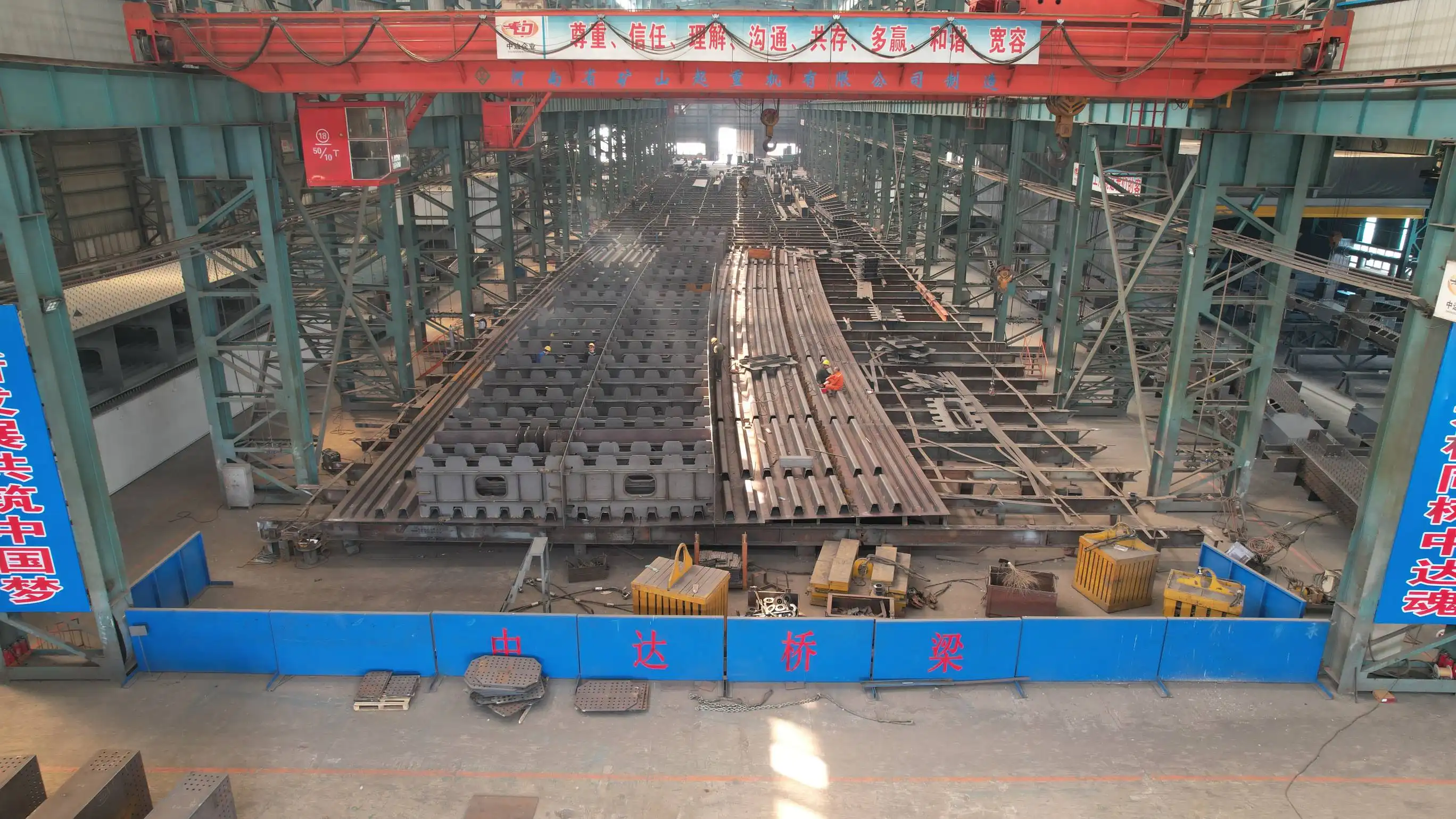
The fabrication shop is where the expected load capacity starts to take shape. This is where building parts are made from raw steel. The process starts at Zhongda's 120,000-square-meter factory with computer-aided cutting tools that can get an error of ±0.2mm in size. This makes sure that when you put it all together, it fits perfectly. Automated welding stations use steady heat, which stops flaws that weaken the joint, such as holes or partial fusion. The outside of each member is either hot-dip galvanized to protect it from rust or coated with intumescent fireproofing that meets ASTM E119 fire-resistance standards after it has been made. On-site, trained erectors follow set procedures for erecting things. When bolted connections are made, measured torque wrenches are used, and the building is checked for level and plumb every 1/500 of its height.
Material Testing and Quality Assurance Protocols
Tough screening systems tell the difference between reliable providers and average ones. A good fabricator will look at mill test records (MTRs) to make sure the steel they get has the right chemical make-up and mechanical properties. Ultrasound (UT) checks thick plate pieces used for heavy-duty beams for flaws. MPI, or magnetic particle inspection, finds cracks on the surface of joints that have been welded. Zhongda's quality system includes checks at every step. For example, after cutting, the sizes are measured, the welds are looked at, and the final finish thickness is checked before the items are sent out. When these steps are taken, they make sure that every part that leaves the building is strong enough to hold up loads for the structure's service life, which is usually 50 years or more in clean places.
Prefabrication Advantages for Load Reliability
Field-welded Commercial Steel Structure buildings aren't as good as factory-built buildings where the building process is controlled. When the weather is calm, delays and quality problems caused by adverse weather conditions are eliminated. When skilled welders work at stations that are more suitable for their bodies, the joints they create are more stable and stronger than those produced on busy construction sites. Using modular building methods reduces the time required for on-site crane operations and decreases the number of field connections, which are among the most common causes of structural problems. This is because sections are pre-assembled and shipped as complete units. This method directly improves the reliability of load capacity by allowing critical load-bearing connections to be inspected for quality issues before leaving the controlled factory environment. As a result, the risk of hidden defects that could affect structural performance under high stress conditions is significantly reduced.

Maintenance Tips to Sustain and Improve Load Capacity Over Time
Routine Inspection Schedules and Preventive Care
Constant care is needed to maintain the expected load capacity. Structures should be checked once a year to make sure that all the connections are tight, the coverings are still in good shape, and there are no signs of damage like cracks or permanent distortion. Every three months, you should check areas that get a lot of foot traffic under crane runways or heavy machinery. This is because repeated loading cycles can loosen bolts or cause local yielding. Corrosion is the greatest danger that steel buildings face in the long term. If there is a lot of moisture in the air, chemicals touching it, or salt air, it will rust faster. Over time, this will reduce the cross-sectional area and load capacity. Keep an eye on the layers that protect to see if they break, chalk, or let rust through. If you paint over small surface damage or re-galvanize it on time, it won't get worse and cause internal damage that needs expensive replacement of members.
Addressing Fatigue and Mechanical Wear
Industrial buildings are put under stress by things that do the same thing over and over again, like forklifts moving across floor plates, overhead cranes lifting loads, and machines vibrating and putting out dynamic forces. For a long time, these methods can lead to fatigue cracks, mostly at welded joints where stress is high. Cracks can be found before they get too big with tests that don't hurt the thing being tested, such as dye penetrant inspection. Mechanical wear happens in bolted joints when they are shaken. Re-torquing it on a regular basis restores binding force and stops slipping. The effects of thermal expansion should be considered by places that work in hot places. For this reason, they can make sure that the expansion joints work well and that members that can't move don't get too stressed when the seasons change.
Retrofit Strategies Boosting Mid-Life Performance
When real needs change, things can sometimes go beyond what was planned. If a warehouse was built to store pallets at first, it might switch to automated high-bay shelving, which takes up more floor space. It works out to be less expensive to fix up old buildings than to build new ones. The lengths of beams can be cut down by adding extra columns, steel stiffeners can be used to make members stronger, or composite decks can be used to cover the floor to make it stronger. Seismic retrofitting is becoming more important as building codes change. To make the structure stronger against side loads, it uses buckling-restrained braces or moment-resisting links. These changes make structures last longer and meet higher operational needs. They also protect capital investments and keep businesses running smoothly while they move or build something new.
Choosing the Right Commercial Steel Structure Solution for Your Facility
Comparing Structural System Types
Different structural methods are needed for different types of industry uses. Factory and building spaces that need to be clear-span up to 150 feet wide are best for traditional rigid-frame systems. Commercial Steel Structure solutions use reliable connections between beams and ceilings, so there is no need for internal supports that get in the way of moving materials or equipment. Standard parts for modular steel buildings can be sent out more quickly. They work well for projects with predictable plans and only a few changes that need to be made. Pre-engineered metal buildings, or PEMBs, are a cost-effective way to build places that do not need to hold heavy loads, such as warehouses or small assembly facilities. Structures that are built to order are better at solving specific challenges, such as those involving complicated shapes, heavy loads, or integration with existing infrastructure. Off-the-shelf solutions cannot compare to their efficiency.
Total Cost of Ownership Analysis
Buying things involves more than just the initial cash spending. Even though steel buildings cost more up front than some other options, lifecycle economics prefers materials that last a long time and don't need much maintenance. Steel is valuable because it can be recovered. When a building's time is up, about 90% of its parts can still be repurposed, which lowers the cost of tearing it down. If you cut down on the time it takes to build something, it costs less to finance and can start making money sooner. When energy-efficient designs use insulated panels and reflective coatings, the cost of running a building over its lifetime goes down. When teams are looking at bids, they should ask for total cost estimates for the next 20 to 30 years. These estimates should include repair plans, estimated energy use, and growth scenarios that make use of steel's natural ability to adapt.
Evaluating Supplier Credentials and Support Capabilities
Picking the right partner is very important for a job to go well. The engineering skills of the supplier are one of the most important factors. Can their design team handle complicated load scenarios and make sure they follow local codes? Shops that use CNC cutting and automatic welding make better parts than shops that do everything by hand, no matter what kind of machinery is used. Certifications prove that someone is trained. For example, ISO 9001:2015 certification proves that someone can handle quality systems, EN 1090 certification proves that someone can weld structures, and AISC certification proves that someone follows North American steel construction standards. The Ministry of Housing and Urban-Rural Development of China gave Zhongda a First-Class Steel Structure Engineering Qualification. They have completed successful projects in over 20 countries. These are some of the skills that smart buyers should look for. Support after installation, like technical help for future changes and training for facility staff on how to do maintenance, is what makes great suppliers stand out from transactional ones.
Here are the main reasons it's a good idea to hire a qualified fabricator:
Proven Technical Knowledge: Suppliers with a lot of experience can deal with tough engineering issues like working within odd site limits and adding supports for specialized equipment, finding solutions that work well and follow safety rules.
Experience with Global Projects: Manufacturers who have worked on projects in other countries know how to deal with issues like different laws, climates, and organizational issues. This makes sure that the items you buy cross-border are safe and up to building code in the country you're going to.
Providers that offer a full range of services handle design engineering, manufacturing, protective coatings, shipping planning, and supervision of installation on-site. It's easier for everyone to talk to each other and take responsibility, and it's also easier for general contractors to work together.
Value for the Long Term: Reliable providers keep thorough records of projects, which makes it easier to change or add to them in the future. They also offer quick expert help when operations need to be changed, and plans need to be made for things like structure assessment or reinforcement.
These skills have a direct impact on how well a project turns out. They keep the project on schedule, keep the costs of change orders low, and make sure that finished structures work as planned for as long as they are supposed to. When buying big pieces of industrial equipment, buyers shouldn't just look at the lowest price. They should also look at these factors.
Conclusion
FAQ
How does steel load capacity compare to reinforced concrete?
Steel is not as heavy as it is strong, so it can hold up smaller parts that are longer and straighter. Concrete can be squished down a lot, but it needs more material space to be able to hold the same amount of weight. When it comes to earthquake or impact loads, steel works better because it is more flexible. On the other hand, concrete is better at fighting fires without protective coatings.
What maintenance practices extend structural load capacity?
That's because they are checked once a year to find damage to the coating, loose connections, and the start of corrosion. This keeps small problems from getting worse. You can help keep the expected strength by fixing rust right away, re-torquing bolts often in places that are likely to shake, and keeping an eye on thermal expansion in places where temperatures are very high or very low. Repairs that keep the building safe should cost 1% to 2% of its value every year.
Can existing steel structures be upgraded for higher loads?
You can make it stronger by adding more columns, member stiffeners, or composite decking systems on top of it. Structural engineers look at how things are now by testing and measuring materials in the field. They then think of ways to make changes that meet new load standards that don't cost too much. Building something this way lasts longer and costs a lot less than building it from scratch.
Partner with a Trusted Commercial Steel Structure Manufacturer
In Zhongda, they carefully design their steel frames to hold the most weight and keep working well for decades. We have been serving energy, infrastructure, and industrial clients all over the world for more than 18 years. This shows how committed we are to quality and technical excellence. We can design using BIM, make things in our 120,000 m² center, and help with installation on-site. We can do it all to meet the needs of your project. Our Q345 and Q355 steel buildings are made with better fireproofing and hot-dip galvanizing, so they can last even in the worst circumstances. Send an email to Ava@zd-steels.com to talk to our engineering team about how much weight your building can hold and get a detailed quote. Visit zd-steels.com to see our range and find out why top builders choose Zhongda as their source for Commercial Steel Structure.
References
1. American Institute of Steel Construction. (2016). Steel Construction Manual (15th ed.). AISC Publications.
2. Salmon, C. G., Johnson, J. E., & Malhas, F. A. (2009). Steel Structures: Design and Behavior (5th ed.). Pearson Education.
3. Dowling, P. J., Owens, G. W., & Knowles, P. R. (1988). Structural Steel Design. Butterworth Scientific.
4. Chen, W. F., & Lui, E. M. (2005). Handbook of Structural Engineering (2nd ed.). CRC Press.
5. Geschwindner, L. F. (2011). Unified Design of Steel Structures (2nd ed.). John Wiley & Sons.
6. Brettle, M. E., & Brown, D. G. (2009). Steel Building Design: Worked Examples for Students. The Steel Construction Institute.
YOU MAY LIKE