
Custom Steel Truss Girder Solutions Meet Complex Infrastructure Requirements
2026-08-27 13:00:00






When modern infrastructure projects demand structures that can span vast distances while supporting substantial loads, custom Steel Truss Girder solutions become indispensable. These high-performance structural frameworks composed of interconnected triangular members act as integrated beams, efficiently distributing longitudinal bending and shear forces across long spans where conventional solid girders prove impractical. Custom engineering addresses unique site conditions, load requirements, and environmental challenges, enabling construction teams to overcome weight limitations, reduce material consumption, and accelerate installation timelines while maintaining structural integrity for decades.
Understanding Steel Truss Girder Design Principles and Engineering Fundamentals
The Triangulated Framework Advantage
Steel Truss Girder systems use triangle-shaped parts that are linked to make a structure that is much stronger than solid-web beams. This geometric arrangement naturally spreads forces across tension and compression parts, making the strength-to-weight ratio the best it can be. Because triangular geometry is naturally stable, engineers can make amazing spans without using intermediate supports. This cuts down on project costs and makes the room under the building more useful.
Based on load calculations and the environment, design teams choose structural steel grades from ASTM A572 to high-tensile Q355B or Q420. The choice of material has a direct effect on the girder's long-term performance, ability to resist bending, and ability to dampen vibrations. Modern engineering software lets you do a precise stress analysis at every node connection. This makes sure that each member contributes to the structure's behavior in the best way possible.
Common Truss Configurations for Different Applications
In Warren truss designs, the top and bottom chords are connected by alternate diagonal members. This pattern works well for medium-span bridges and industrial roofing systems. The uniform shape makes it easier to build and gives you a better idea of where the loads will go. Pratt truss designs use vertical members with diagonals that slope toward the middle. This makes them especially good for railroad bridges that need to be very stiff because of heavy rolling loads.
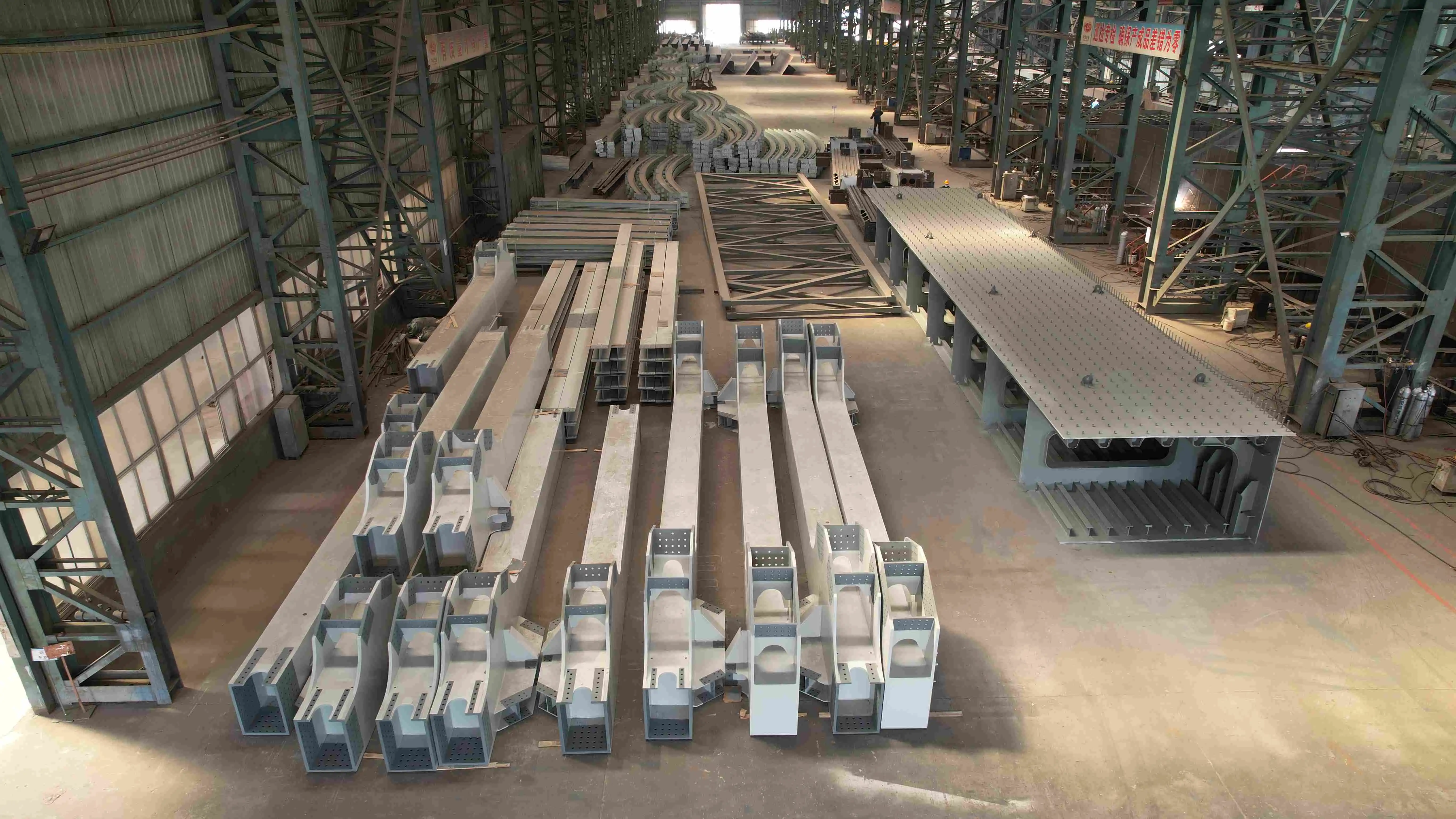
In Howe truss systems, the diagonal orientation is turned around so that the members are tilted away from the center. This arrangement works really well in Steel Truss Girder structures that are subject to strong uplift forces, like airport hangars and sports stadiums. When you add secondary diagonal members to a K-truss arrangement, you get better load distribution that works well for heavy industrial settings like power plants and mines.
Depending on the span length, load factors, and architectural limitations, each layout has its own benefits. For bridges longer than 100 meters, modified Warren designs are common. For warehouses with overhead cranes, Pratt setups are best because they reduce the amount of vertical displacement that happens when loads are moving.
Material Properties and International Standards
For quality control in making truss girders, worldwide standards like AISC 360, Eurocode 3, and GB50017 must be strictly followed. During production, these standards control the accuracy of the node shape, the stability of the welds, and the size tolerances. Structure steel has a high modulus of elasticity, which makes it very resistant to deformation. Its ductile nature also makes it better at handling earthquakes than brittle materials.
Truss girders' open-web design is very useful for engineers because it lets water, electrical, and industrial systems go through the building instead of under it. This ability to integrate lowers the total height of the building, which lowers the costs of the foundation and the siding. This makes the project more cost-effective overall.
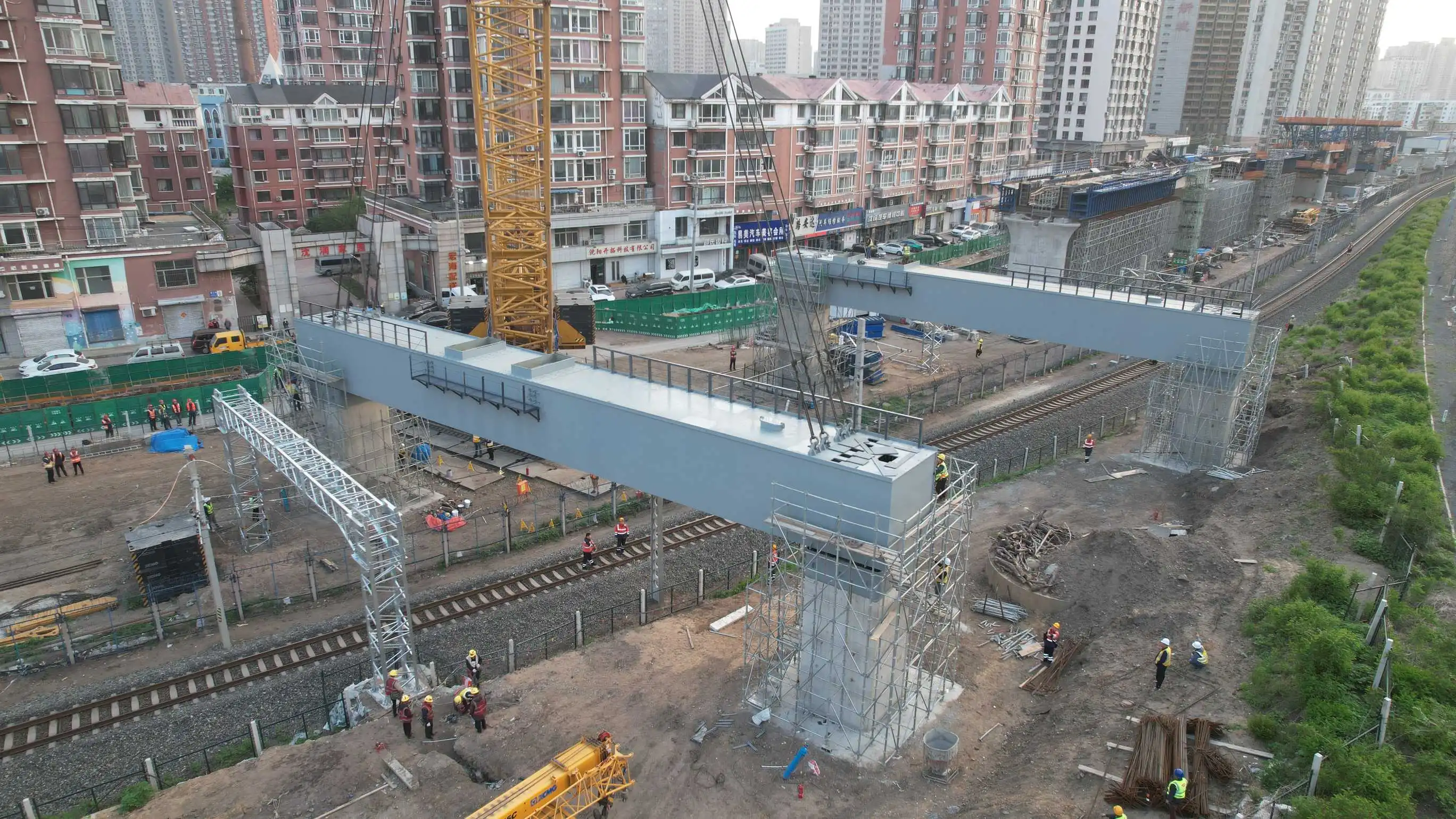
Custom Steel Truss Girder Solutions Meeting Complex Infrastructure Needs
Addressing Unique Load Demands and Site Constraints
Standard templates don't usually work for big infrastructure projects. When building a bridge along the coast, workers have to deal with harmful salt spray, mines have to deal with constant vibrations from heavy equipment, and stadium roofs have to withstand strong wind forces. Custom Steel Truss Girder engineering solves these problems by using custom member sizes, connection details, and material treatments that are made for that specific use.
The way we work with unique solutions has changed because of BIM-driven prefabrication. Advanced 3D modeling lets engineering teams see every part before it is built, which helps them find possible problems and make the best use of materials. This digital integration guaranties a perfect fit during site assembly, which cuts field adjustment time and labor costs by a huge amount.
Innovative Fabrication Techniques and Material Technologies
Large truss girders are broken up into transportable pieces that are bolted together on-site using modular assembly methods. This makes it easier to move things around in rural areas or crowded cities. High-strength friction-grip bolting makes connections in the field that are just as strong as those made in a shop, but it can be installed faster and in a wider range of weather conditions.
New developments in protecting against corrosion have made services last a lot longer. Hot-dip galvanizing and high-build epoxy topcoats are used in duplex coating systems that meet C5-M environment standards and protect buildings in harsh marine and industrial environments. The -60°C Weathering Steel Anti-corrosion Technology, applied to Steel Truss Girder structures, was made for cold conditions and shows how special processes can make it possible to build infrastructure in places that weren't possible before.
Ultra-thick plate cutting with ±0.2mm accuracy lets you make heavy-duty node connections that keep their shape even when they're under a lot of stress. This level of accuracy in manufacturing is very important when building power plants, petroleum plants, and other places where failure would have very bad results.
Performance Benefits Through Real-World Application
A new bridge project in Russia's arctic region needed girders that could handle big changes in temperature and short building windows. Custom engineering added expansion joints and sliding bearings to allow for changes in temperature and stop extra stress from building up. The short summer season made it possible for the prefabricated modular technique to cut down on the time needed for installation, meeting finish dates that traditional building methods could not meet.
Industrial warehouse projects show how custom truss solutions improve the efficiency of structures. Modified Pratt trusses with reinforced bottom chords were used in a distribution center that needed 40-meter clear spans and an overhead crane that could lift 50 tons. The design kept dead weight 30% lower than comparable solid beams and reduced deflection. This cut down on the need for foundations and the total cost of the project.
Comparing Steel Truss Girders with Alternative Structural Solutions
Performance Analysis Across Material Types
When procurement teams look at different structural options, Steel Truss Girders always come out on top in terms of load capacity, lifespan, and maintenance needs. Concrete girders have great compression strength, but they have trouble with tensile forces and need a lot of reinforcement, which makes them heavier and costs more. Because they are stiff, they can settle and move during earthquakes, and fixing cracked concrete is hard and costs a lot of money.
Wooden girders work well for light-duty tasks but aren't strong enough or long-lasting enough for infrastructure projects. Changes in size happen because of absorbing moisture, biological breakdown shortens the useful life, and the risk of fire makes people worry about safety. These worries are put to rest by the fact that steel doesn't catch fire and can't be damaged by biological agents.
Lifecycle Cost Considerations
The initial cost of materials is only one part of the total costs of ownership. Steel Truss Girders don't need much maintenance other than being inspected and having their coatings touched up every so often. Concrete structures, on the other hand, often need extensive crack repair and reinforcement retrofit. By adding support plates or post-tensioning to existing steel beams to make them stronger, service life can be extended without having to buy new ones, which can be expensive.
Environmental impact assessments play a bigger role in buying decisions. Sustainability goals can be met with steel because it can be recycled completely at the end of its useful life and current production methods use less energy to make steel. Because they are light, they use less fuel to transport, and shorter construction schedules mean less damage to the site and lower environmental costs.
Prefabricated Versus Fully Custom Engineering
Trusses that are already standardized can save you money and cut down on lead times for projects with simple needs. But infrastructure uses often need customization to deal with different span lengths, load patterns, or connecting to existing structures. Fully custom engineering makes every part of the design better, but it takes longer to make things and more careful communication between design teams and producers.
These factors are balanced in hybrid methods by changing important parts while using standard parts when they make sense. This approach provides performance tailored to each project while keeping costs and plans under control. This makes it appealing to EPC contractors who are handling multiple projects at the same time.
Procurement Guide for Custom Steel Truss Girders
Evaluating Pricing Models and Lead Times
Cost models that are clear help buying managers make good budgets. Cost-per-ton models are usually used to set base prices, which are then changed to account for steel quality and market conditions. Premiums for customization are based on the number of engineering hours, special manufacturing needs, and extra quality control steps that aren't needed for normal production. For projects with more than one part or framework deals with clients who come back, volume discounts become possible.
True wait times rely on how complicated the design is, how much space the shop has, and what kind of coating is needed. For a Steel Truss Girder, standard setups can ship in 4 to 6 weeks, but fully custom-engineered options take 12 to 16 weeks, which includes time for design approval. Coating processes take more time but are necessary for durability—hot-dip galvanizing takes weeks for big parts, and duplex systems take even longer.
Logistics of delivery have a big effect on the total cost of the job. Costs vary by region for things like oversize transport permits, escort vehicles, and route surveys. Putting buildings into modules that can be moved around lowers these costs and makes it easier to get to sites in crowded areas.
Supplier Selection Criteria and Risk Mitigation
Compliance with certification is the basis for evaluating suppliers. Certifications like ISO 9001, ISO 14001, and OHSAS 45001 show that a company is serious about quality control, protecting the environment, and a safety mindset. EN 1090 approval strictly controls the production of structural steelwork, making sure that it meets European standards that are being used more and more around the world.
Manufacturing ability and technical know-how separate providers who can meet complex needs from those who can't. A production capacity of 60,000 tons per year shows that the company has a lot of resources, and it can meet even the strictest requirements thanks to its precision plate cutting systems and advanced welding stations.
Less risk is involved when the project has been done before with similar applications. Suppliers who work with big companies like China Railroad and CSCEC or foreign clients with strict quality standards must show that they can do what they say they can do. Reference projects in relevant fields, like bridges, mines, or factories, give people confidence in the technical skills of a company.
Streamlined Ordering Process and After-Sales Support
The process of buying something starts with sending in a thorough question that includes details like specs, loading diagrams, and site conditions. Experienced providers can quickly give you basic design ideas and price figures for the Steel Truss Girder, so you can quickly decide if the project is feasible. After design development, approval is given for detailed engineering calculations, 3D models, and material specifications.
Documented quality control procedures are used during fabrication, and critical welds are tested without damaging them. Ultrasonic testing and magnetic particle inspection can find problems inside that can't be seen with the naked eye. Verification of dimensions makes sure that the node spacing, angle levels, and general straightness are all within the allowed ranges for proper assembly on-site.
Support after the sale is very important for long-term success. Technical help during installation quickly solves problems in the field, and maintenance advice helps owners stick to inspection schedules and take care of small problems before they get worse. Suppliers who are committed to business relationships instead of transactional relationships bring more value over the life of the building.
Maintenance and Structural Analysis for Long-Term Performance
Routine Inspection and Preventive Maintenance Protocols
Scheduled inspection programs find damage early, when it's still easy and cheap to fix. Damage to the coating, connections coming loose, and deformation that may be signs of overloading can be seen visually. The number of inspections varies on the environment. For example, marine environments need to be checked every year, while benign environments can go between 3 and 5 years.
Maintaining the coating stops rust that weakens the structure. Small areas of damage can be fixed with surface preparation and spot coating, but large areas of damage need to be recoated completely. The right way to prepare the surface is very important; skipping this step can cause the coating to fail early and require more maintenance.
The focus of connection checking for a Steel Truss Girder is on the state of the welds and the tightness of the bolts. High-strength friction-grip bolts shouldn't come loose or rust, and welds shouldn't have any cracks, especially in areas where stress is concentrated. Addressing minor issues promptly prevents them from worsening and causing structural problems that may require expensive member replacement.
Load Capacity Assessment and Performance Monitoring
Structural analysis makes sure that girders keep meeting the design requirements even as the loads change. When new equipment is added, operational patterns change, or code is updated, capacity may need to be reevaluated. Modern finite element analysis software checks how stress is distributed under new loads to see if any reinforcements are needed.
Real-time monitoring technologies give continuous information about how well critical structures are working. Strain gages measure how much a member is stressed when it is actually being used, and accelerometers measure vibrations that show how the structure is changing. This data-driven method lets you do preventative maintenance instead of fixes after the fact, which increases uptime and lowers costs.
Professional Installation Practices
When something is installed correctly, it will last for decades and work reliably. Correct alignment makes sure that loads are spread out as planned, which stops areas from being overloaded. Expert erection groups use laser instruments to check the geometry of the structure before making the final connections. This way, changes made in the field don't affect the structure's stability.
For field splices and attachment links, the quality of the welding is very important. The AWS D1.5 bridge welding rules explain how to do things in situations with repeated loads. They do this by focusing on detail design that reduces stress concentrations and addresses fatigue issues. Qualified welders and written procedures make sure that quality is always the same, no matter what the site conditions are.
Conclusion
Custom Steel Truss Girder solutions give modern infrastructure the structural performance it needs while also meeting project-specific challenges that standard methods can't. These engineered systems offer better strength-to-weight ratios, longer service life, and easier installation thanks to their optimized triangular shape, modern materials, and precise manufacturing. Truss girders are the best choice for careful engineers and contractors because they are easy to install and last for decades. To make sure a project is successful from the first design to decades of operation, engineers and contractors must carefully choose their suppliers and make sure they meet all certification requirements.
FAQ
What factors most significantly influence Steel Truss Girder project costs?
The main things that affect costs are the choice of material grade, the level of customization, and the finishing specs. High-strength steel types cost more, but they can be used to make designs that are lighter, which lowers the cost of materials by cutting down on the cost of making and transporting them. Engineering and building take longer when there are complex node shapes and non-standard part sizes. Corrosion protection needs range from simple paint systems to complex duplex coatings, and costs go up or down depending on how harsh the work area is expected to be.
How long does fabrication typically require for custom engineered girders?
Standard setups ship 4 to 6 weeks after the order is confirmed, while fully customized solutions take 12 to 16 weeks, which includes time for design approval. Projects that need special coatings, a lot of non-destructive testing, or complicated modular assembly take even longer to finish. Suppliers can properly allocate resources and meet critical path requirements when they are given clear information about project timelines during procurement.
Can truss girders perform reliably in extreme environmental conditions?
Modern building and material methods make it possible to use them in places with a lot of earthquakes, strong winds, and harsh industrial environments. To absorb the energy of an earthquake, seismic design uses ductile connections and controlled yielding. Uplift and horizontal forces are taken into account by wind-resistant designs that have better bracing and grounding. Corrosion protection using hot-dip galvanizing with topcoats or weathering steel formulas can make things last 50 years or more in harsh settings with little upkeep.
Partner with Zhongda for Precision-Engineered Structural Solutions
Zhongda brings twenty years of specialized experience to every custom Steel Truss Girder project, combining advanced fabrication skills with quality systems that are ISO-certified. Our 120,000 m² building has high-precision machines that can hold ultra-thick plate parts to within 0.2 mm of tolerance. Our -60°C Weathering Steel Anti-corrosion Technology keeps structures safe in the harshest conditions. We understand the important performance needs of infrastructure, energy, and industrial projects because we are a trusted Steel Truss Girder supplier to global leaders in our field, such as China Railroad, CSCEC, and BMW. Contact our engineering team at Ava@zd-steels.com to talk about your needs and find out how our BIM-driven prefabrication method and 60,000-ton annual capacity can speed up your project while maintaining the integrity of the structure. Visit zd-steels.com to learn more about all the things we can do.
References
1. American Institute of Steel Construction. (2016). Specification for Structural Steel Buildings (AISC 360-16). Chicago: AISC.
2. European Committee for Standardization. (2005). Eurocode 3: Design of Steel Structures - Part 1-1: General Rules and Rules for Buildings. Brussels: CEN.
3. Salmon, C.G., Johnson, J.E., & Malhas, F.A. (2009). Steel Structures: Design and Behavior (5th Edition). Upper Saddle River: Pearson Prentice Hall.
4. Geschwindner, L.F. (2011). Unified Design of Steel Structures (2nd Edition). Hoboken: John Wiley & Sons.
5. Chen, W.F., & Lui, E.M. (2005). Handbook of Structural Engineering (2nd Edition). Boca Raton: CRC Press.
6. Troitsky, M.S. (1990). Prestressed Steel Bridges: Theory and Design. New York: Van Nostrand Reinhold.
YOU MAY LIKE