
Heavy-Duty Steel Arch Bridges Deliver Reliable Performance for River and Valley Crossings
2026-08-27 13:00:00






When infrastructure projects demand crossing wide rivers or deep valleys, heavy-duty steel arch bridges consistently deliver exceptional performance where other structural solutions falter. These sophisticated engineering systems utilize curved steel frameworks to translate vertical loads into horizontal thrust, eliminating the need for intermediate piers in challenging geographical conditions. By combining advanced materials like Q420qE high-strength steel with precision fabrication techniques, modern arch structures provide unmatched longevity and load-bearing capacity for transportation networks, industrial corridors, and public infrastructure projects across demanding environments.
Understanding Heavy-Duty Steel Arch Bridges
Defining Heavy-Duty Arch Bridge Systems
Heavy-duty arch configurations are basically different from regular bridge designs because they can span long distances and carry heavy loads. The arch shape naturally spreads weight along its bent shape, sending forces to strong abutments instead of relying on tension members. With this load transfer mechanism, these structures can support heavy vehicle traffic, rail transit, and the movement of industrial equipment all at the same time. At Zhongda, our Q420qE steel arch systems are made with pentagonal box ribs that are 3.2m×4.5m in size. These ribs are designed to handle wind loads of up to 1.5kN/◡ while keeping their structural stability for decades of use.
Fundamental Design Principles
The performance of any arch structure is determined by the materials that are used. The Q420qD steel grade has higher yield strength than other structural grades, which lets structures span farther while having smaller cross-sectional sizes. The better weldability of the material makes it easier to make complicated joints while keeping the strength of the joints. Every welded connection in our manufacturing process is tested for 100% CTOD to make sure that the crack-tip opening displacement values meet strict fracture mechanics criteria. Before parts leave our 120,000 m² plant in the Shenyang Economic-Technological Development Zone, this process of checking them out gets rid of any possible weak spots.
Common Arch Configuration Types
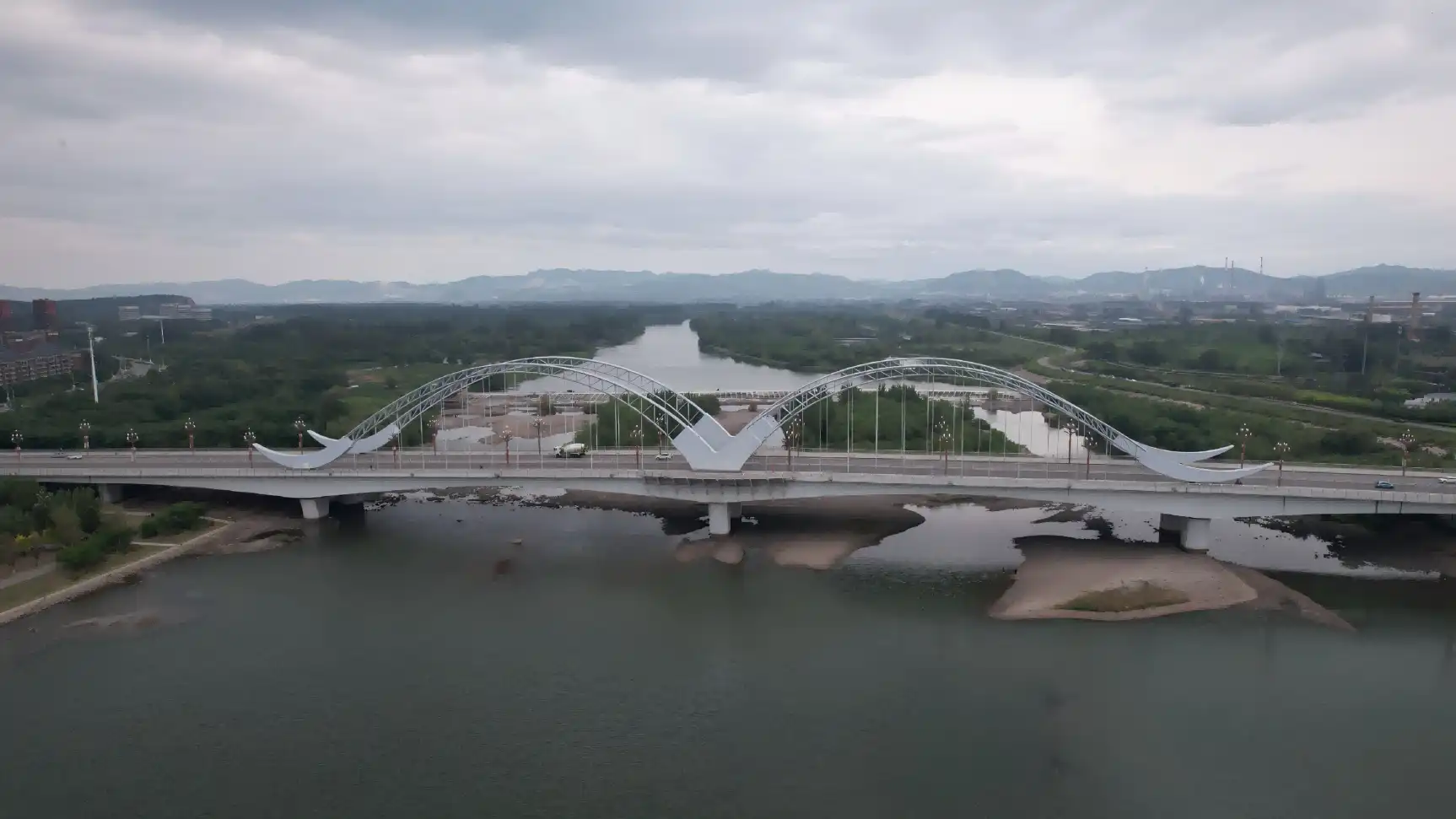
Three main arch versions are used for different types of projects. Fixed arches are best for stable geological conditions because they connect arch ribs to base parts in a way that makes them very stiff. Two-hinged designs have pin connections at both abutments to allow for thermal expansion and small foundation movements that happen when crossing valleys. Three-hinged designs add a center pin joint, which gives them more options for places where settlement patterns aren't clear. Our engineering team looks at several site-specific factors, such as the soil's ability to hold weight, the frequency of earthquakes, and temperature changes, to come up with the best layouts that balance how well the structure works with how easily they can be built.
Engineering and Construction Process of Steel Arch Bridges
Site Analysis and Preliminary Design
Steel Component Fabrication and Quality Assurance
These days, making an arch bridge requires accuracy that can't always be reached by hand. Our CNC cutting equipment keeps tolerances of ±0.2mm on very thick plate sections, which makes sure that everything fits together correctly when it's put together. Automated welding systems use consistent amounts of heat and travel speeds to make penetration depths that can't be achieved with manual welding. Non-destructive tests, such as ultrasonic screening and magnetic particle examination, are done on every section that is made. These quality control measures are in line with our ISO 9001:2015 approval and EN 1090 Execution Class 4 standards. They give buying managers proof of quality that they can check.
Advanced Erection Methods
When crossing deep valleys or busy waterways, traditional scaffolding isn't useful. These problems can be solved with statentless rotation building, which involves putting together arch pieces horizontally on one side and then rotating the whole structure into place. This method was used to build our recently finished 8000-ton arch, which got rid of the need for expensive cofferdams and environmental permits for temporary supports. Synchronized hydraulic systems were used in the turning process and were watched in real time to keep stress levels within the design limits during the 90-degree movement. Compared to traditional methods, this new way of doing things cut the time it took to build by seven months.
Comparing Structural Performance Against Alternative Bridge Types
In some situations, arch designs are clearly better than girder and frame options. If building on piers is too expensive or bad for the environment, arches can be used instead. They don't need any intermediate supports. Arch structures can use the qualities of materials better than tension-dependent suspension designs because they are naturally loaded in a way that causes compression. Lifecycle cost analyzes consistently show that options to concrete are less durable in corrosive environments. Our fluorocarbon topcoat system meets GB/T 30790 C5M standards and protects against rust for many years. This lowers the need for costly upkeep that strains infrastructure budgets.
Procurement Considerations for Heavy-Duty Steel Arch Bridges
Evaluating Manufacturing Capabilities and Certifications
Understanding Cost Components and Value Drivers
Arch bridge project costs are affected by a number of things. The main thing that affects cost is the quality of the raw materials. For example, high-strength steels cost more but can span farther with less weight. The difficulty of fabrication depends on the shape of the arch; compound curves need special tools and skilled workers. Logistics for transportation have a big impact on delivered costs. Our strategic location near major rail corridors and Dalian Port lowers shipping costs for North American projects. When procurement managers look at supplier proposals, they should ask for detailed cost breakdowns that separate materials, fabrication, surface treatment, and logistics. This will help them find ways to get the most for their money.
Customization Capabilities and Project-Specific Solutions
Standardized plans aren't often used for infrastructure work. Customized engineering solutions are needed because of limitations on the site, concerns about how it looks, and needs for functionality. Our customization services cover all important factors, like the size of the arch ribs, the requirements for wind resistance, anti-corrosion systems, and monitoring technologies. Recent projects show how flexible this ability is. For example, the 18,000-ton Shenyang Dongta Cross-Hunhe River Bridge had custom rotation mechanisms built in, and international clients were given seismic reinforcement packages that met the needs of their region's codes. Our in-house engineering team has experience working in a wide range of geological and legal settings, which gives us this design freedom.
Maintenance, Durability, and Long-Term Performance
Essential Inspection Routines and Preventive Practices
Systematic state tracking is needed to get the most out of a service's life. Visual inspections find surface corrosion, worn-out coatings, and connections that are coming loose before they get worse. Our full-bridge monitoring systems use more than 200 sensors to measure temperature, vibration, and strain all the time. This real-time data lets you plan predictive maintenance, which means that you can replace parts based on their actual state instead of random intervals. During the initial procurement process, procurement managers who are in charge of managing infrastructure assets should include complete monitoring packages. Installing sensor networks after the fact is much more expensive than doing it during construction.
Advanced Corrosion Protection Technologies
Steel structures, including Steel Arch Bridge, are constantly at risk of corrosion from the atmosphere, which can lower their load capacity if not fixed. Traditional paint methods need to be reapplied often, which means that the total cost of ownership is higher than the original investment in materials. Our 150μm aluminum thermal spray underlayer acts as a strong shield, and our fluorocarbon topcoat formulas are resistant to chemical and UV damage. This multi-layer method achieves the GB/T 30790 corrosivity classification of C5M, making it suitable for both industrial and marine settings. Field performance data from Arctic sites shows that the coatings remain intact after 15 years of maintenance-free exposure, proving that quality surface treatments are a cost-effective solution.
Expected Lifespan and Performance Benchmarks
Steel Arch Bridges with proper engineering and upkeep typically have a lifespan of 75 to 100 years. Because structural steel is naturally flexible, it performs better in earthquakes than brittle concrete alternatives. This is especially important for crossing valleys in areas where tectonic activity is common. For structures that get a lot of heavy vehicles, fatigue resistance is very important. Our Q420qE material specifications include strict impact toughness requirements that make sure the material doesn't break when loaded and unloaded over and over again. Comparative studies show that steel arch structures have lower lifecycle costs than other types of structures, even though they cost more at first. This is because they need less maintenance and last longer between replacements.
Leading Steel Arch Bridge Manufacturers and Service Providers
Identifying Reliable International Suppliers
There are many companies that make steel bridges around the world, but only a few of them can plan, build, and help with building. Well-known suppliers show how skilled they are by showing project portfolios with a range of span lengths, loading conditions, and environmental exposures. Geographic factors affect the choice of provider; being close to fabrication facilities lowers shipping costs and makes planning site visits easier during production. International procurement teams trust our technical skills and supply efficiency, as shown by our relationships with clients in Russia, Australia, and Vietnam.
Comprehensive Service Offerings
Modern infrastructure projects are helped by "turnkey" service models that group together all the duties into one contract. Here at Zhongda, we offer full solutions, starting with preliminary design advice and continuing through thorough planning, manufacturing, and on-site installation help. This unified method gets rid of the need for separate design, manufacturing, and construction groups to coordinate. Our Class I Steel Structure Professional Contracting Qualification backs up our promise to be a single point of responsibility for our clients. This makes project management easier and lowers risk by making performance requirements clear.
Quality Assurance and Risk Mitigation
Common procurement risks, such as schedule delays, cost overruns, and poor performance, can be reduced by working with experienced manufacturers. Every step of the production process is inspected carefully by our quality control systems, including checking the dimensions of arriving materials, checking the size of finished products while they're being made, and testing the final load before it is shipped. From mill certificates to final inspection reports, documentation packages make it possible to fully track everything. This openness lets procurement teams show project stakeholders that they are doing their best while also giving regulatory approval processes the technical data they need.
Conclusion
Heavy-duty Steel Arch Bridges are the best way to cross difficult rivers and valleys when other types of bridges aren't practical or are too expensive. Innovative building methods, high-tech materials, and precise manufacturing all work together to make infrastructure assets that last a very long time and work reliably. Partnering with experienced manufacturers who can show technical know-how, quality certifications, and full service capabilities is key to successful procurement. A careful look at the skills of suppliers, the ability to make changes, and assistance throughout the lifecycle makes sure that investments in infrastructure meet high performance standards while minimizing total ownership costs over many years of service.
FAQ
What factors primarily drive steel arch bridge construction costs?
The main things that affect costs are the choice of material grade, the difficulty of the fabrication process, and the accessibility of the site. Steels with a lot of strength, like Q420qE, cost more but need less overall tonnage. Complex geometries require more work hours during fabrication, and sites that are far away cost more to transport and set up. Surface treatment standards also have a big effect on budgets. For example, modern corrosion protection systems need more work, but they save a lot of money on upkeep over the life of the system.
How do maintenance requirements compare with other bridge types?
When modern coating methods are used to protect them, steel arch buildings usually need less upkeep than concrete ones. Rebar rust and spalling are ongoing problems with concrete bridges that need expensive fixes. Condition-based maintenance is possible with properly built steel arches and full tracking systems. This cuts down on unexpected breakdowns and chooses the best time to intervene to save the most money.
Which certifications should procurement teams verify when selecting suppliers?
The ISO 9001 quality management certification is a basic guarantee of controlled production. The EN 1090 Execution Class ratings show how precise the fabrication can be. Class 4 is the highest level of accuracy. Regional contracting standards and material test certifications that prove agreement with steel grade requirements are necessary pieces of paperwork that prove the supplier's reliability and technical know-how.
Partner with Zhongda for Your Next Infrastructure Project
Zhongda brings twenty years of specialized experience to every Steel Arch Bridge project. They combine advanced manufacturing skills with full engineering support. Our track record of working with big companies like China Railroad and CSCEC, as well as foreign clients from three continents, shows that we can provide complicated infrastructure solutions that meet the strictest requirements. As a reputable Steel Arch Bridge builder, we welcome project managers, sourcing managers, and engineering teams to learn more about how our Q420qE arch systems can help you with your crossing issues. Email our technical team at Ava@zd-steels.com to talk about your project needs and get detailed technical proposals that are made to fit your site conditions, performance goals, and budget. You can see our whole range of products at zd-steels.com and learn why top infrastructure makers trust Zhongda to provide mission-critical structural solutions.
References
1. Chen, B., & Wang, T. (2019). Advanced Steel Structures for Long-Span Bridges: Design and Construction. Beijing: China Architecture Publishing.
2. Federal Highway Administration. (2020). Steel Bridge Design Handbook: Structural Analysis. U.S. Department of Transportation, Publication FHWA-HIF-16-002.
3. International Association for Bridge and Structural Engineering. (2018). Structural Engineering Documents: Steel-Concrete Composite Bridges. Zurich: IABSE Publications.
4. Liu, X., Zhang, Y., & Zhou, P. (2021). "Performance Evaluation of High-Strength Steel in Long-Span Arch Bridges." Journal of Bridge Engineering, 26(4), 04021015.
5. Rosignoli, M. (2017). Bridge Construction Equipment and Techniques. London: ICE Publishing.
6. Troitsky, M. S. (2018). Planning and Design of Bridges: Steel and Steel-Concrete Composite Structures. New York: Engineering Press.
YOU MAY LIKE