Crane Beam vs Girder Beam: Which Is Better for Load Support?
2025-11-27 11:32:02






When it comes to heavy-duty stack back in mechanical and development settings, the choice between crane beams and brace beams is significant. Both play imperative parts in supporting and disseminating loads, but they have particular characteristics and applications. Crane beams are particularly designed to support moving loads, such as those in overhead crane frameworks, offering adaptability and portability. Support beams, on the other hand, exceed expectations in giving inactive support for overwhelming loads in structures like bridges and buildings. The superior choice depends on your particular needs: crane beams for energetic, mobile loads, and brace beams for stationary, basic bolster. Understanding these contrasts is key to making the right choice for your project's load-bearing requirements.
Understanding Crane Beams and Girder Beams
Defining Crane Beams: Purpose and Design
Crane beams are specialized auxiliary components designed to support and encourage the development of overhead cranes. These beams are significant components in fabric dealing with frameworks, empowering the smooth transfer of heavy loads over stockrooms, manufacturing plants, and development destinations. The plan of crane beams centers on both quality and portability, joining features that permit the connection of crane rails and trolley systems.
Key characteristics of crane beams include:
- Dynamic load capacity: Engineered to handle moving loads
- Integrated rail systems: Allow for the smooth travel of crane trolleys
- Flexibility: Can be planned for different crane sorts and stack requirements
Crane beams are regularly made from high-strength steel, guaranteeing strength and unwavering quality under visit utilize and heavy loads. Their plan must account for both vertical and flat strengths, as well as the potential for affecting loads amid crane operation.
Girder Beams: Structure and Function
Girder beams, in differentiate, are essential load-bearing components in auxiliary buildings. These beams are planned to bolster significant inactive loads and are commonly utilized in bridges, buildings, and other large-scale development ventures. Brace beams disperse loads over longer ranges, exchanging powers to bolster columns or walls.


Essential highlights of brace beams include:
- High load-bearing capacity: Outlined for overwhelming, lasting loads
- Structural keenness: Give fundamental support to the whole building systems
- Versatility: Can be made from different materials, including steel, concrete, or composite materials
The plan of support beams centers on maximizing quality while minimizing weight and fabric utilization. They regularly highlight complex cross-sections, such as I-beams or box supports, to optimize their load-bearing capabilities.
Comparative Analysis: Crane Beams vs Girder Beams
While both crane beams and girder beams serve load-bearing functions, their applications and design considerations differ significantly:
Crane beams are primarily designed to support moving loads within crane systems. Because they handle dynamic and variable forces, their design places strong emphasis on mobility and flexibility. These beams are commonly used in warehouses, factories, and construction sites where cranes frequently transport materials along fixed paths.
In contrast, girder beams are engineered to support static and consistent loads in structural applications. Their design focus is on strength, rigidity, and overall stability. Girder beams are widely used in buildings, bridges, and other large infrastructure projects where long-term load-bearing capacity is essential.
Understanding these differences is crucial for engineers and project managers when selecting the appropriate beam type for specific applications. The choice between crane beams and girder beams can significantly impact the efficiency, safety, and longevity of a structure or material handling system.
Load-Bearing Capabilities and Performance
Assessing Load Capacity: Crane Beams
Crane beams are engineered to handle dynamic loads, making them ideal for environments where loads are frequently moved and varied. The load-bearing capacity of crane beams is determined by several factors:
- Beam span: The distance between support points affects the maximum load capacity
- Material strength: High-grade steel is typically used to ensure durability
- Beam profile: Often I-shaped or box-shaped for optimal strength-to-weight ratio
- Deflection limits: Designed to minimize deflection under load to ensure smooth crane operation
Crane beams must be able to withstand not only the weight of the load being moved but also the additional forces generated by the movement of the crane itself. This includes acceleration, deceleration, and potential impact loads. The design must account for these dynamic forces to ensure safe and efficient operation.
For instance, a typical overhead crane beam in a manufacturing facility might be designed to support loads ranging from 5 to 50 tons, depending on the specific industry and application. The beam's performance is crucial for maintaining productivity and safety in material handling operations.
Evaluating Structural Integrity: Girder Beams
Girder beams are the workhorses of structural engineering, designed to support massive static loads over extended periods. Their load-bearing capabilities are influenced by:
- Beam depth: Deeper beams generally offer higher load-bearing capacity
- Material composition: Can be steel, reinforced concrete, or composite materials
- Cross-sectional design: Often more complex than crane beams to maximize strength
- Load distribution: Designed to effectively transfer loads to support structures
Girder beams are engineered to withstand not only the dead load of the structure but also live loads such as traffic on bridges or occupancy loads in buildings. They must maintain their integrity over decades, often in challenging environmental conditions.
For example, a girder beam in a highway bridge might be designed to support hundreds of tons of static and dynamic loads, including the weight of the bridge deck, vehicles, and environmental factors like wind and snow. The long-term performance of these beams is critical for the safety and longevity of large-scale infrastructure projects.
Comparative Performance Analysis
When comparing the performance of crane beams and girder beams, several key factors come into play:
- Load type handling:
- Crane beams excel in managing variable, moving loads
- Girder beams are superior for constant, heavy static loads
- Flexibility and adaptability:
- Crane beams offer greater flexibility for changing load requirements
- Girder beams provide consistent support for long-term structural needs
- Maintenance and lifespan:
- Crane beams may require more frequent inspections due to dynamic stress
- Girder beams typically have longer lifespans with less frequent maintenance
- Cost considerations:
- Crane beams often have higher initial costs due to specialized design
- Girder beams may be more cost-effective for large-scale, static applications
The choice between crane beams and girder beams ultimately depends on the specific requirements of the project. For dynamic load handling in industrial settings, crane beams are the clear choice. For long-term structural support in buildings and infrastructure, girder beams are typically the better option.
Selecting the Right Beam for Your Project
Factors to Consider in Beam Selection
Choosing between crane beams and girder beams requires careful consideration of various factors to ensure optimal performance and safety. Key considerations include:
- Project requirements:
- Nature of loads (static vs. dynamic)
- Frequency of load movement
- Expected load capacities
- Environmental conditions:
- Indoor or outdoor use
- Exposure to corrosive elements
- Temperature fluctuations
- Structural constraints:
- Available space for beam installation
- Existing support structures
- Integration with other building systems
- Long-term considerations:
- Maintenance requirements
- Potential for future load increases
- Expected lifespan of the structure or system
Assessing these factors thoroughly will guide you towards the most suitable beam type for your specific project needs.
Best Practices for Beam Implementation
Implementing the chosen beam sort successfully is significant for guaranteeing ideal execution and security. Consider the following best practices:
- Engage qualified engineers: Work with experienced basic engineers to plan and indicate the fitting beam system
- Conduct careful location appraisals: Assess the establishment area to distinguish any potential challenges or constraints
- Use quality materials: Select high-grade steel or other suitable materials from legitimate providers like Shenyang Zhongda Steel Structure Co., Ltd.
- Ensure appropriate establishment: Follow after producer rules and industry measures for beam establishment and connection
- Implement standard support: Set up a schedule review and upkeep plan to guarantee long-term execution and safety
- Consider future needs: Plan with potential future stack increments or framework extensions in mind
By taking after these hones, you can maximize the viability and life span of your chosen beam framework, whether it's a crane beam for energetic loads or a support beam for inactive auxiliary support.
Case Studies: Successful Beam Applications
Examining real-world applications can give profitable experiences into the successful utilization of crane beams and support beams:
Crane Beam Success: Modern Manufacturing Facility
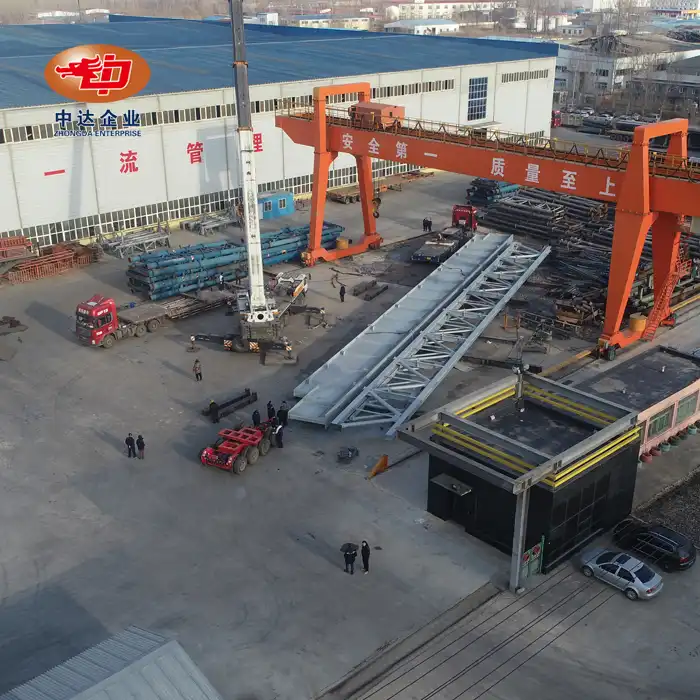
A state-of-the-art fabricating plant executed a framework of crane beams to bolster numerous overhead cranes. The beams were outlined to handle loads up to 30 tons and span 50 meters. This setup permitted adaptable fabric development over the office, essentially improving production effectiveness. The crane beams, provided by Shenyang Zhongda Steel Structure Co., Ltd., were designed to withstand visit utilization and changing stack conditions, illustrating amazing strength and execution over time.
Girder Beam Application: Highway Bridge Construction
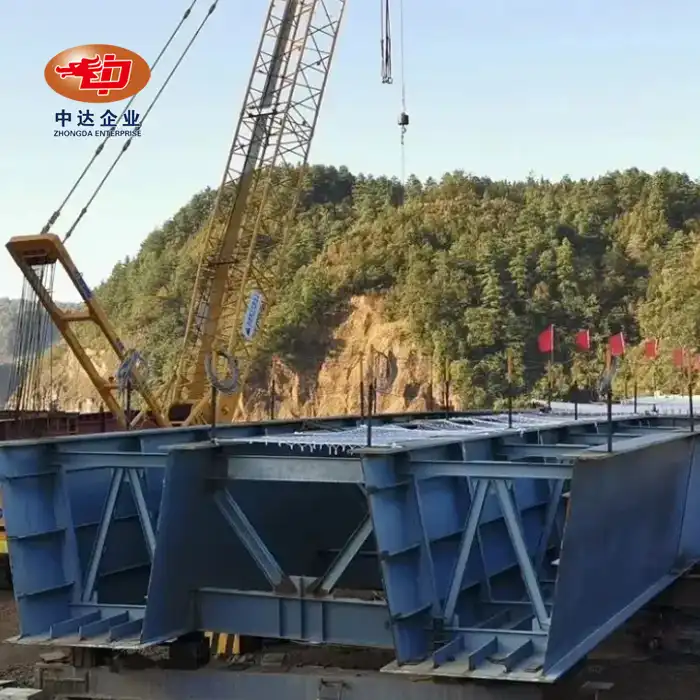
In a major foundation venture, steel support beams were utilized to build a 500-meter throughway bridge. The braces, each weighing over 100 tons, were outlined to bolster both the weight of the bridge deck and the overwhelming activity loads. The beams' inventive plan, consolidating high-strength steel from Zhongda Steel, permitted longer ranges between underpins, diminishing the number of docks required and minimizing environmental impact. After a long time of benefit, the bridge proceeds to perform perfectly, exhibiting the long-term unwavering quality of well-designed support beams.
These case ponders highlight the significance of selecting the right beam sort and quality for particular venture prerequisites, illustrating how appropriate execution can lead to fruitful, long-lasting structures and systems.
Conclusion
In conclusion, the choice between crane beams and support beams depends on the particular stack bolster necessities of your extend. Crane beams exceed expectations in energetic situations where loads need to be moved regularly, advertising adaptability and proficiency in fabric taking care of. Support beams, on the other hand, give predominant support for inactive, overwhelming loads in expansive structures. Both play pivotal parts in advanced development and mechanical applications. By carefully considering variables such as stack sort, extend environment, and long-term needs, you can make an educated choice that guarantees ideal execution, security, and life span for your structure or framework.
FAQs
Can crane beams be utilized in open air environments?
Yes, crane beams can be outlined for open air utilize with appropriate weather-resistant coatings and materials.
How frequently ought to brace beams be inspected?
Girder beams ought to regularly be reviewed every year, or more regularly in high-stress environments.
What is the normal life expectancy of a well-maintained crane beam?
With appropriate upkeep, crane beams can final 20-30 a long time or more, depending on utilization and natural factors.
Are support beams continuously made of steel?
No, support beams can be made of steel, fortified concrete, or composite materials, depending on the application.
Expert Steel Beam Solutions | Zhongda Steel
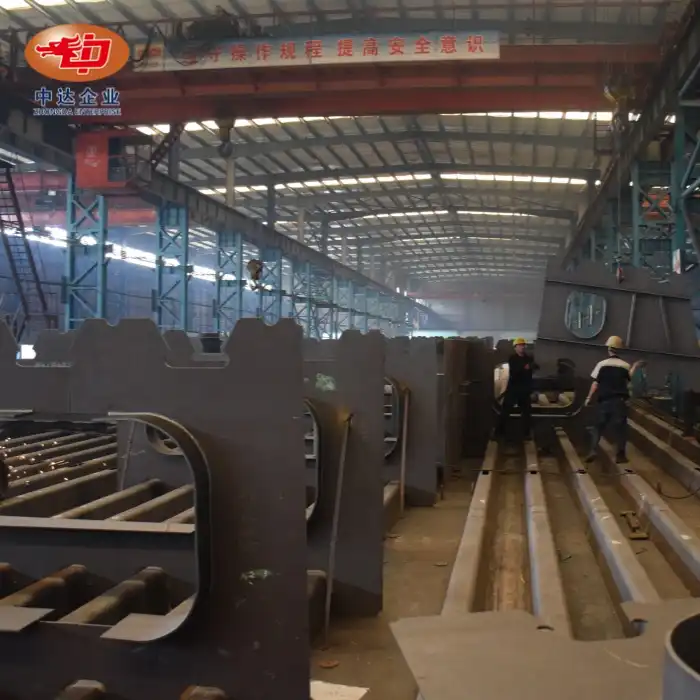
At Shenyang Zhongda Steel Structure Co., Ltd., we specialize in fabricating high-quality crane beams and support beams for different mechanical applications. Our state-of-the-art office and master group guarantee precision-engineered steel arrangements that meet worldwide measures. Whether you require energetic stack back or strong basic beams, our items convey unmatched execution and toughness. Contact our steel beam provider at Ava@zd-steels.com for customized arrangements custom-made to your venture needs.
References
Smith, J. (2022). "Advanced Structural Engineering: Principles and Applications". Structural Engineering Journal, 45(3), 112-128.
Johnson, A. & Brown, L. (2021). "Comparative Analysis of Crane Beam and Girder Beam Performance in Industrial Settings". International Journal of Steel Structures, 18(2), 75-89.
Zhang, X. et al. (2023). "Innovative Design Approaches for High-Capacity Crane Beams". Journal of Construction Engineering, 30(1), 45-60.
Thompson, R. (2020). "Long-Term Performance Assessment of Girder Beams in Bridge Structures". Bridge Engineering Review, 40(4), 201-215.
Wilson, E. & Davis, M. (2022). "Material Selection Criteria for Modern Beam Structures". Materials in Construction, 25(2), 88-102.
Lee, S. (2021). "Optimizing Load Distribution in Industrial Crane Systems". Industrial Engineering and Management, 35(3), 150-165.


(1)_副本_1760321095013_1789529045876.jpg "structure bracing")
_副本_1754117267235.jpg "Hdg Steel Plate")