
Durable Power Plant Steel Structure Handles Complex Industrial Loads and Conditions
2026-08-28 13:00:00






When energy infrastructure demands peak performance under extreme conditions, the choice of structural framework becomes mission-critical. A Power Plant Steel Structure serves as the engineered backbone supporting turbine halls, boiler suspension systems, and cooling tower platforms—all while managing massive static loads, dynamic vibrations from rotating machinery, and harsh environmental stressors like corrosive atmospheres and thermal cycling. Unlike conventional construction, these frameworks integrate high-strength steel grades with precision load calculations to deliver the structural integrity needed for uninterrupted power generation across coal, gas, nuclear, and renewable energy facilities.
Understanding Power Plant Steel Structures and Their Industrial Challenges
Common Steel Structure Types in Energy Facilities
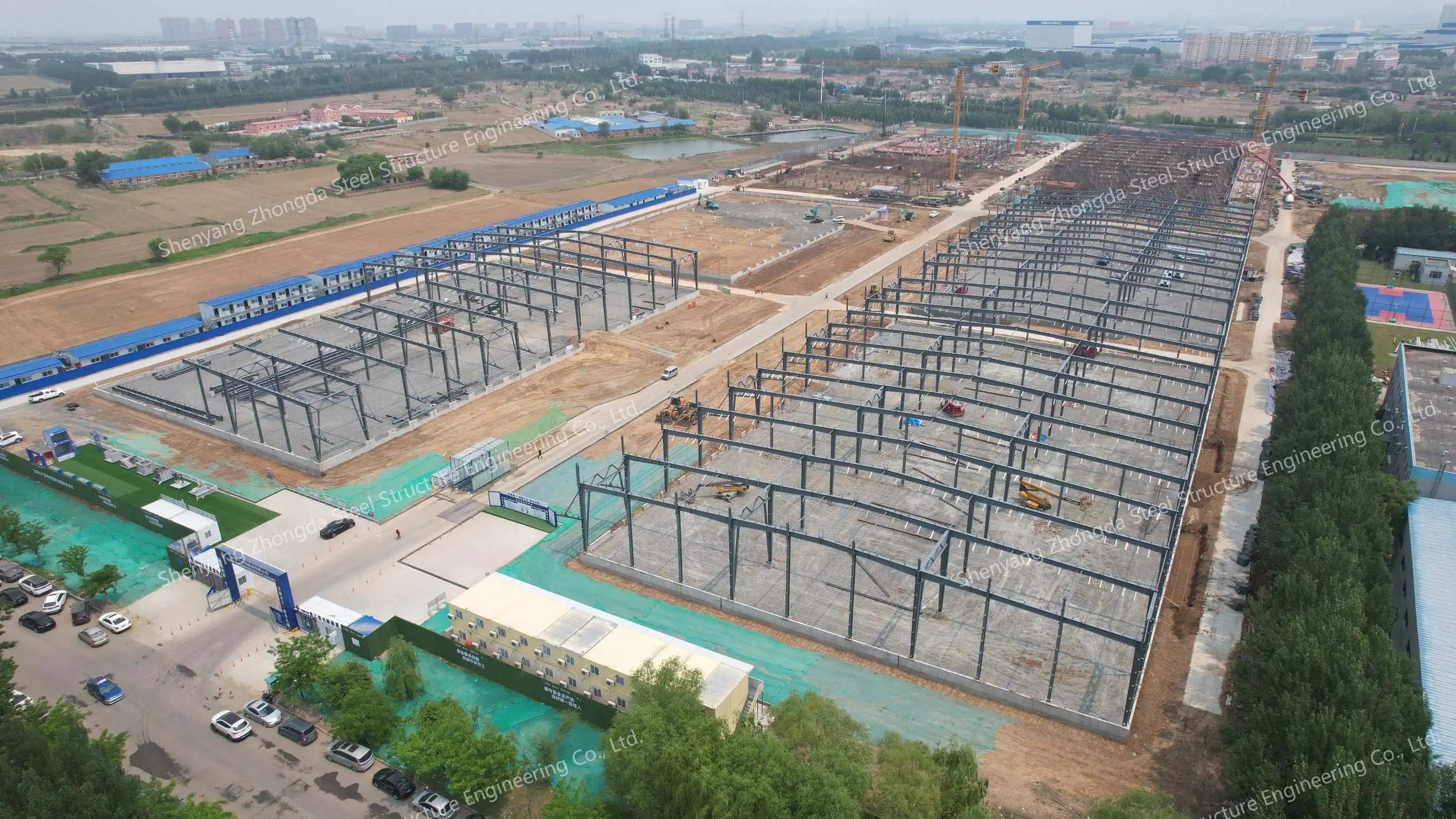
Power plants depend on specific building shapes that are designed to meet their specific needs. Inside turbine rooms, portal frames and truss systems make large spans without columns, which lets overhead cranes be used for repair. Heavy box columns and H-beams are used in boiler support towers to hold up thousands of tons of pressure vessels while allowing for downward thermal expansion. Air-cooled condenser platforms have A-frame designs that keep them from shaking when they are outside in the wind. Each system is the result of decades of technical work to meet the needs of real-world operations.
Materials and Steel Grades for High-Performance Applications
The choice of material has a direct effect on how long a structure lasts and how safe it is. For main load-bearing parts, Q355 steel has higher yield strength than Q235 steel, while Q235 steel is good enough for secondary bracing and platform systems. Coastal and industrial areas need higher standards, like weathered steel with a protective patina development or duplex stainless grades for areas with flue gas desulfurization equipment. The -60°C Weathering Steel Anti-corrosion Technology from Zhongda is an example of advanced material engineering. It increases the useful life of steel in harsh chemical environments by using multi-layer protection systems that combine hot-dip galvanization with fluorocarbon topcoats that meet ISO 12944 C5-M standards.
Load Conditions and Calculation Principles
A safe design starts with an accurate load analysis. Structures' own weight and fixed equipment like generators and transformers are both examples of dead loads. Different operating rules determine how many live loads are needed for repair staff, temporary tools, and stored materials. Environmental factors include wind pressures based on ASCE 7 standards, snow buildup in colder areas, and earthquake forces that need ductile finishing according to IBC rules. To keep resonance failures from happening, turbine imbalances and steam hammer events put dynamic loads on systems that need careful modal analysis. This multifaceted method makes sure that buildings stay stable for the 30 to 50 years that they are supposed to last.
International Safety Standards and Compliance Requirements
Codes that are specific to each area must be followed for global energy projects. U.S. projects must follow the rules set by the American Institute of Steel Construction (AISC), while all EU member states must follow Eurocode 3. Quality management systems, such as ISO 9001 certification, make sure that manufacturing methods are always the same, and EN 1090 execution class scores make sure that the accuracy of the fabrication. Zhongda's triple certification (ISO 9001/14001/OHSAS 45001) shows full compliance in quality, environmental, and workplace safety areas. This lowers the risk of buying for foreign EPC companies who have to deal with complicated regulatory environments.
Key Considerations in Design and Maintenance for Durability
Design Specifications for Resilience Against Industrial Loads
Corrosion Protection Techniques for Harsh Environments
Destruction of the environment is still the biggest threat to longevity. Galvanization creates layers of zinc that protect the base steel from water damage. This works well in moderate industrial settings. In marine and petrochemical settings, two-part systems are needed: galvanizing first, then epoxy or polyurethane coatings to protect against chloride attack and sulfur dioxide exposure. Cathodic protection systems add an extra layer of defense to base parts that are embedded. The advanced coating laboratory at Zhongda does salt spray testing according to ASTM B117. This makes sure that safety systems are safe before they are put into use.
Regular maintenance greatly increases the time between structure repairs. Visual checks done every six months find places where the coating is wearing off, connections are weakening, and rust starts to form. Ultrasonic thickness testing finds areas of key members that have lost material, and magnetic particle inspection finds flaws in welds that can't be seen with the human eye. These preventative steps are a lot cheaper than fixing problems when they happen. By following Zhongda's suggested checking procedures, a Gulf Coast petrochemical client cut their maintenance costs by 40% over five years. This shows how planned upkeep saves capital investments.
Comparative Analysis: Steel Structures vs. Other Construction Methods
Steel vs. Concrete in Power Plant Construction
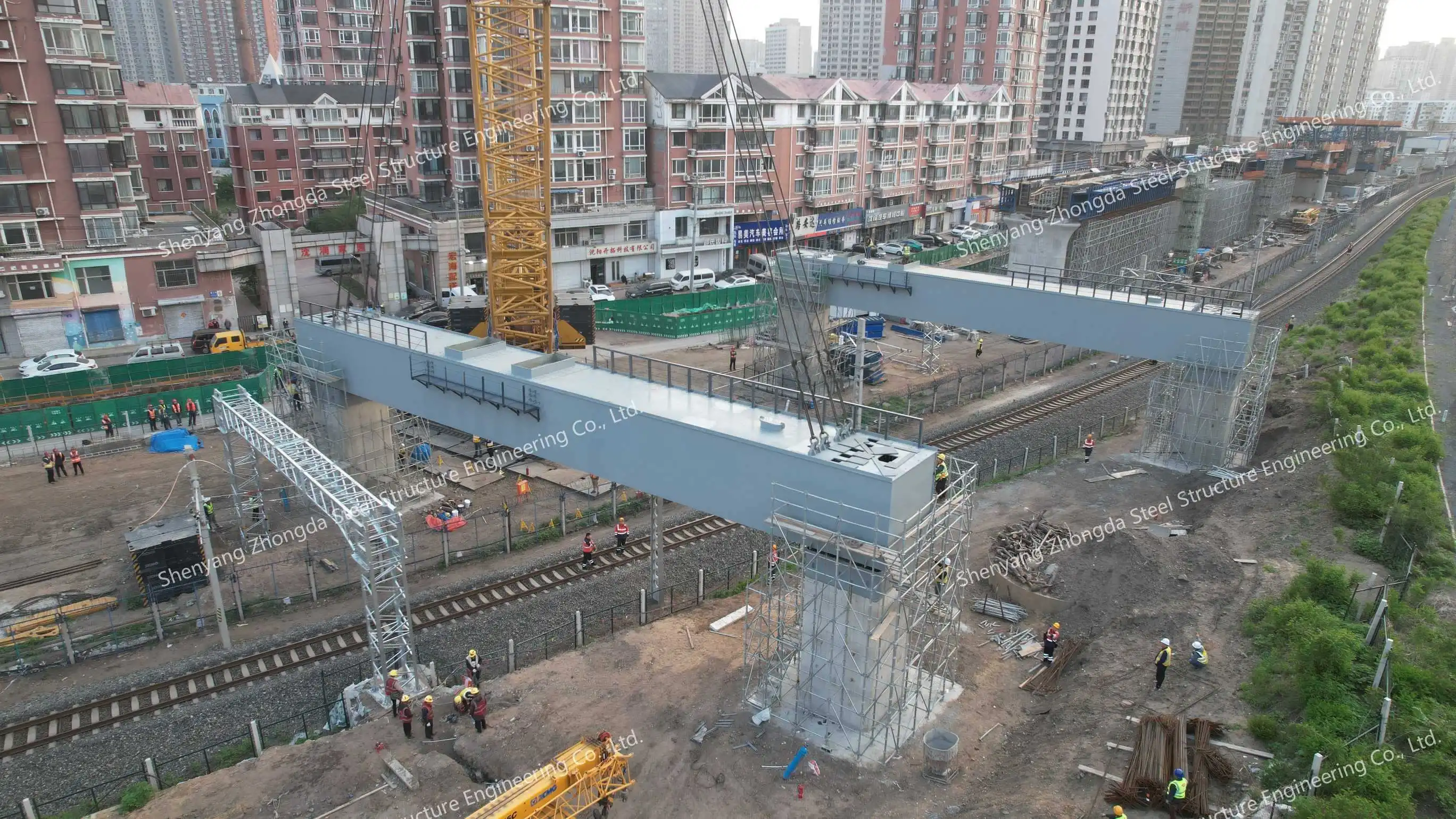
The choice of materials affects how long a job takes and how much it costs over its lifetime. When compared to cast-in-place concrete, steel frameworks have the advantage of having parts made off-site under controlled conditions and put together quickly. This cuts down on on-site labor by 30–50%. This speed is very important for energy projects that need to connect to the grid by a certain date. Because steel is more flexible, it can better handle earthquakes by dissipating energy, while concrete's heating mass makes it more resistant to fire. More and more, hybrid methods use both materials together, like using steel for superstructures and concrete for equipment supports to get the best of each.
Prefabricated Steel Structures: Market Growth and Quality Control
Using modular building methods has changed how energy infrastructure is delivered. Power Plant Steel Structure components, including pipe racks, electrical cable trays, and operator platforms, are already manufactured and pre-assembled before arriving at job sites as bolt-together units. This eliminates the need for high-altitude welding and reduces the safety risks associated with on-site construction. The plant is where quality control takes place, with CNC plasma cutting and automatic welding achieving dimensional tolerances of ±0.2mm. Zhongda can produce 60,000 tons of steel annually, supporting large-scale modularization projects. The company has delivered pre-assembled boiler support modules to Russia for Arctic projects, where extreme weather conditions limit construction periods to short summer windows.
Evaluating Supplier Capabilities for Custom Designs
Not every company that makes steel structures has the same level of expert knowledge. Engineering resources should be taken into account in the evaluation criteria. Zhongda has more than 100 engineers with advanced technical titles who can carry out AISC and Eurocode designs. It doesn't matter what kind of manufacturing skills are used. Ultra-thick plate cutting can handle 150mm boiler support parts, and approved welding processes (AWS D1.1, ISO 9606-1) make sure that joints stay strong even when they are loaded and unloaded many times. Geographic project experience gives you trust. Suppliers who know about hot tropical areas, changing temperatures in the desert, or seismic zones can help you make the best design decisions.
Procurement Insights for Reliable Power Plant Steel Structures
Key Evaluation Criteria for Manufacturers
In addition to checking technical specs, procurement teams must also check the security of the business and the frameworks for support after the sale. Quality certifications show that the process is mature, and guarantee terms show that the maker is sure that the product will last. Execution risks are reduced by service contracts that cover everything from installation supervision to commissioning support. Financial health signs, such as yearly income, client retention rates, and repeat business percentages, show how reliable a project commitment is over a period of years. Zhongda has been in business for 20 years and has worked with China Railroad, CSCEC, and BMW. For procurement managers who don't like taking risks, this provides performance standards that can be checked.
Managing Lead Times and Logistics
To match the construction plan, you need to be realistic about when things need to be done. For complex buildings, the engineering and detailing processes take 6 to 10 weeks, and the manufacturing phase takes 12 to 16 weeks, based on the number of tons and coating needs. Shipping logistics add more variables. For example, smaller assemblies can be moved in containers, but heavy modules need break-bulk ships with special lifting equipment. Zhongda has exported to more than 40 countries, which makes customs paperwork and port planning easier. For example, they have shipped mining equipment to Australia and industrial hubs to Vietnam on short notice.
Pricing Considerations and Negotiation Strategies
Future Trends and Innovations in Power Plant Steel Structures
Emerging Steel Alloys and Composite Materials
As material science progresses, performance limits are raised over and over again. Copper, chromium, and nickel are added to high-performance weathering steels to make stable oxide layers that can fix small surface damage on their own. Grades that are quenched and tempered reach yield strengths of 690 MPa, which lets smaller parts carry the same amount of weight. Fiber-reinforced polymer composites are used in places where steel is prone to corrosion, like flue gas pipes and scrubber platforms, where regular steel needs a lot of coating upkeep. With these new ideas, engineers can push the limits of spans while lowering the loads on the foundation and the overall material intensity of the project.
Smart Monitoring Systems and Predictive Maintenance
As things become more digital, asset management methods need to change too. Wireless strain gauges and accelerometers built into key structural parts send real-time stress data to cloud platforms, where machine learning algorithms look for trends that don't make sense, which could mean that fatigue cracks or foundation settlement are starting to form. Thermal imaging drones check the stability of coatings over large areas, automating inspections that used to need scaffolding and fall safety systems. Predictive analytics plan maintenance tasks based on the real state instead of random time intervals. This makes the best use of crew placement and spare parts stock. Early adopters say that condition-based maintenance made possible by sensor networks cuts unplanned downtime by 25%.
Sustainability and Regulatory Adaptation
Environmental laws are having a bigger impact on design choices. Carbon footprint reporting rules encourage recycling of steel, so old buildings can be used to make new things instead of ending up in a landfill. Energy-efficient design uses natural airflow and daylighting techniques when they are possible, which lowers the amount of carbon dioxide that is released during operation. Modular expandability lets you add more capacity without tearing down existing buildings. This means that assets can be used for longer as demand changes. Facilities that are ahead of the curve plan for possible carbon capture retrofits by setting aside structural capacity and spatial areas for future equipment integration. This way, they can meet long-term regulatory requirements without having to spend a lot of money on rebuilding.
Conclusion
FAQ
What distinguishes power plant structural steel from commercial building steel?
Power generation systems use thicker walls and stronger materials to handle high static loads from machines, dynamic vibrations, thermal cycling, and harsh industrial environments that most commercial buildings don't have to deal with.
How long does fabrication typically require for large energy projects?
After engineering approval, the whole fabrication process takes 12 to 16 weeks, plus extra time for specialized coating systems and phased delivery schedules that match the needs of the construction schedule.
Can existing structures be reinforced for capacity upgrades?
In many cases, structural assessments can find ways to strengthen structures by adding extra bracing, making members stronger, or improving the foundations. This lets the structure's capacity grow without having to be completely replaced.
What certifications should procurement teams verify?
ISO 9001 quality management, EN 1090 execution class ratings, welding procedure qualifications (AWS D1.1/ISO 9606-1), and relevant regional code compliance documentation are some of the things that need to be checked.
How does modular construction affect project timelines?
Through joint production and assembly activities, prefabrication strategies cut the time needed for building on-site by 30–50%. This is especially helpful in rural or weather-restricted areas.
Partner with Zhongda for Engineering Excellence in Energy Infrastructure
Zhongda has 20 years of specialized experience providing power plant structural solutions to global markets that are very picky. Our 120,000 m² factory in Shenyang uses advanced BIM-driven design tools along with precise fabrication technologies, such as ultra-thick plate cutting that keeps tolerances of ±0.2mm. As a recognized seller of Power Plant Steel Structure with ISO 9001/14001/OHSAS 45001 and EN 1090 certifications, we've worked on projects in the Arctic in Russia, mining operations in Australia, and industrial complexes all over Southeast Asia. Our engineering team of more than 100 professionals helps with everything, from the initial load study to overseeing the installation, to make sure your facility runs perfectly. Email our technical experts at Ava@zd-steels.com to talk about the details of your project and find out how our tried-and-true methods can help you get the most out of your infrastructure investment.
References
1. American Institute of Steel Construction. (2016). Steel Construction Manual, 15th Edition. Chicago: AISC.
2. Chen, W.F., & Lui, E.M. (2005). Handbook of Structural Engineering, Second Edition. Boca Raton: CRC Press.
3. European Committee for Standardization. (2005). Eurocode 3: Design of Steel Structures - Part 1-1: General Rules and Rules for Buildings. Brussels: CEN.
4. Galambos, T.V., & Surovek, A.E. (2008). Structural Stability of Steel: Concepts and Applications for Structural Engineers. Hoboken: John Wiley & Sons.
5. International Organization for Standardization. (2017). ISO 12944: Paints and Varnishes - Corrosion Protection of Steel Structures by Protective Paint Systems. Geneva: ISO.
6. Smith, B.S., & Coull, A. (1991). Tall Building Structures: Analysis and Design. New York: John Wiley & Sons.
YOU MAY LIKE