
How Does a Steel Arch Bridge Improve Load Capacity for Long-Span Transportation Projects?
2026-08-28 13:00:00






When infrastructure projects demand crossing vast distances—whether over rivers, valleys, or urban corridors—the steel arch bridge emerges as a proven solution. This bridge type leverages a curved steel framework that translates vertical loads into compressive forces along the arch rib, directing them efficiently toward the abutments. Unlike beam bridges that struggle with tension under heavy loads or suspension bridges requiring complex cable systems, arch structures harness compression, where steel performs exceptionally. This fundamental advantage enables longer spans, heavier traffic volumes, and greater design flexibility, making arch configurations indispensable for highway expansions, rail transit, and industrial logistics corridors facing escalating load demands.
Understanding Steel Arch Bridges in Long-Span Applications
The Structural Foundation of Arch Design
The arch bridge works by turning falling forces into horizontal push, which is a tried-and-true method. When cars cross the deck, loads move through the deck construction and out to the arch rib, where they are spread out again along its curve. This method reduces bending moments, which is a big plus because steel is better at resisting compression than tension. The shape of the arch makes a natural load path, which keeps material stress from building up in places that are bad for straight-beam designs.
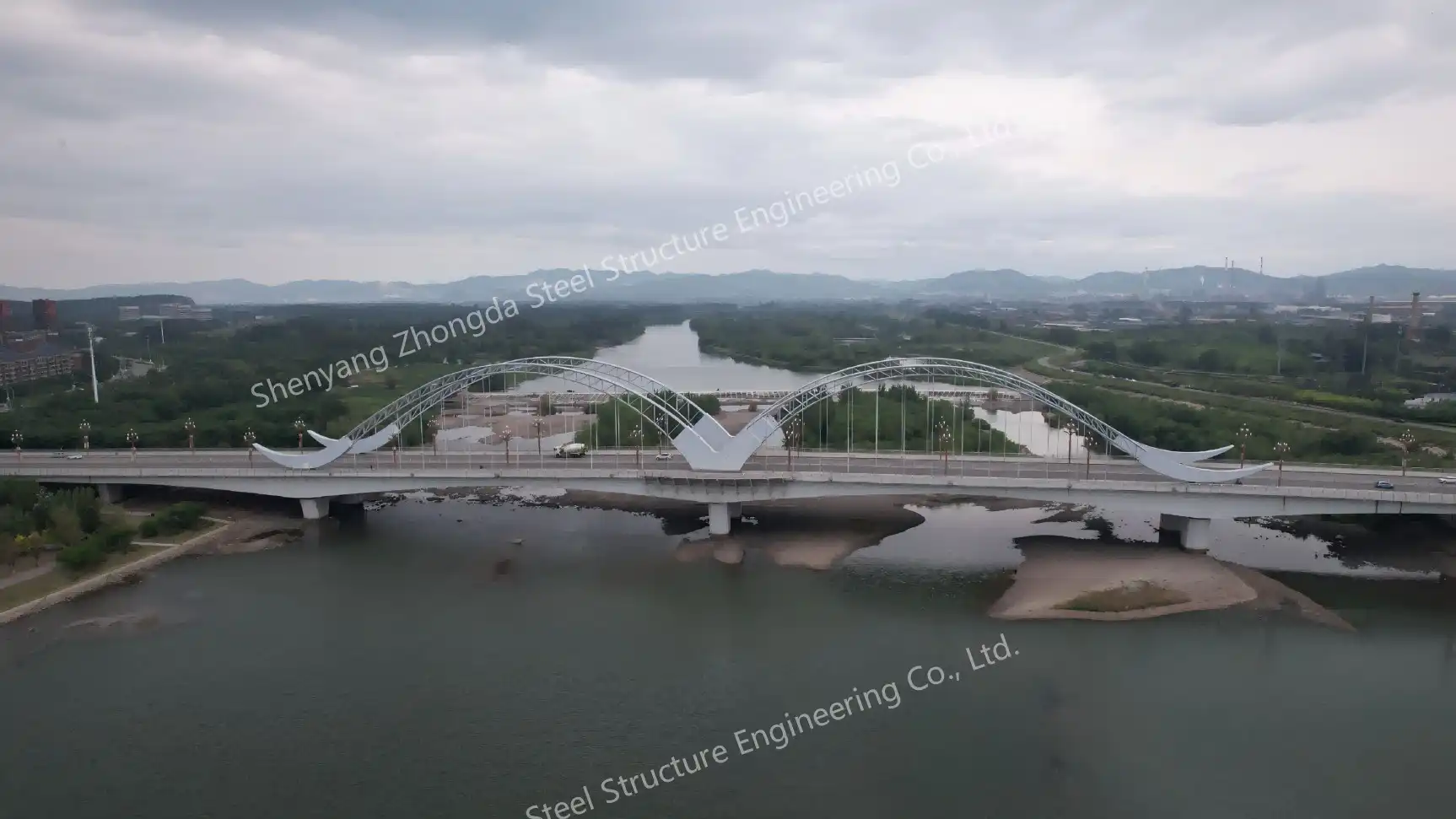
Box-section ribs are often used in modern arch bridges because they offer better torsional rigidity and wind resistance. Zhongda's Q420qE steel arch solutions use pentagonal box ribs that are 3.2m×4.5m in size and are designed to withstand wind loads of up to 1.5kN/◡. This is important for open areas where lateral forces can make the structure less stable.
Historical Evolution and Material Advances
Stone or concrete were used for the first arch bridges. These materials were naturally good at being compressed, but they were heavy and took a long time to build. In the late 1800s, the switch to steel completely changed the way bridges were built. Because steel is about ten times stronger than concrete, it was possible to build buildings that were lighter and could span longer distances. Steel has been used in projects like the Sydney Harbor Bridge that span more than 500 meters and support rail, vehicle, and pedestrian traffic all at the same time.
In the last few decades, high-strength steel grades like Q420qD and Q420qE have been made available. These grades have yield strengths above 420 MPa. These materials stay flexible even when they are under dynamic loads, which is very important for transportation infrastructure that is constantly being shaken by big cars and trains. As part of our manufacturing process, we do 100% CTOD (Crack Tip Opening Displacement) welding tests to make sure that connections stay strong even when they are put under a lot of stress. This has a direct effect on the long-term load capacity.
Defining Long-Span Requirements in Transportation
When building a long-span bridge that's longer than 150 meters, standard methods can't be used because of cost and shape issues. When crossing rivers, mid-channel piers may not be possible because of navigation rules. In mountain valleys, intermediate supports would be too expensive, and in cities, clear spans are needed to keep existing infrastructure from being affected. In these situations, structures need to be able to evenly distribute loads over long distances without any support in the middle. This is exactly where arch geometry shines.
Challenges in Load Capacity for Long-Span Bridges
Structural Limitations of Conventional Systems
Dead-load penalties make concrete arch bridges less strong, even though they last a long time. Because the material is so heavy, it uses up a lot of load capacity before traffic is taken into account. This means that economic span lengths are limited to about 250–300 meters. Suspension bridges can span longer distances, but they are more flexible, which makes them harder to use for high-speed rail applications and requires a lot of maintenance for cable systems that can rust.
Beam bridges have the strictest limits on width. As the span gets longer, the required beam depth also increases. For example, a 200-meter simple beam might require a depth of more than 10 meters, which can create challenges with clearance and lead to material waste. In contrast, a Steel Arch Bridge can achieve longer spans with a more efficient structural form. Under traffic loads, the self-weight of beam bridges increases rapidly, reducing live-load capacity and creating greater deflection issues.
Escalating Traffic Demands
More traffic and heavier vehicles are always putting pressure on transportation infrastructure. Forty years ago, highway bridges could handle lighter cars. These days, 80,000-pound trucks are common, and some heavy-haul lines can handle trucks that weigh over 200,000 pounds. Similar problems arise with rail travel. For example, modern freight trains carry up to 36 tons of weight on each axle, which is a lot more than what was normal in the past.
Because of this change, structures need to be able to handle current loads and also have extra space for when traffic grows in the future. Steel Arch Bridges can handle this because their structure is naturally strong. As the loads get heavier, the arch shape naturally builds up extra strength. This is because heavier loads cause more compression, which steel can handle well without breaking into weak pieces like concrete buildings do when they reach their limits.
Regulatory and Safety Margin Evolution
Today's bridge codes require very strict safety factors and load combinations. According to AASHTO LRFD standards, you have to think about dead loads, live loads, impact, wind, seismic forces, and temperature effects all at the same time. Meeting these needs over long spans puts a lot of stress on traditional bridge types, which often need member sizes that can't be afforded.
Long-span structures are especially hard to design for seismic loads. Arch bridges are strong and redundant by design, so if damage happens in one area, the loads are spread out again through the arch. Our projects use full health monitoring systems with more than 200 sensors that track patterns of strain, displacement, and shaking. This gives us real-time data that helps us make decisions about maintenance and confirms our ideas about the structure's capacity throughout its lifetime.
How Steel Arch Bridges Improve Load Capacity — Technical Insights
Superior Material Properties Driving Performance
The technical benefits start with the basic properties of steel. Yield strengths of high-strength types like Q420qE are higher than 420 MPa. This lets members be smaller and lighter, which lowers dead load, which is always a problem for long-span bridges. When the dead load goes down, more capacity is made available for traffic. This directly leads to higher vehicle weight limits or more traffic density.
Another important benefit is that steel is flexible. Steel deforms slowly, giving a clear warning before it reaches critical conditions, unlike flimsy materials that break quickly when overstressed. This behavior builds in safety gaps and lets buildings move loads away from places where they are overloaded. In extreme events, like vehicles that are too heavy, earthquakes, or accidents, this ductility keeps the structure from collapsing completely.
Fatigue resistance is very important for shipping structures that are loaded and unloaded millions of times. When steel links are properly designed and put through thorough testing, they show great fatigue performance, especially when they are made with full-penetration welds. Our use of automatic welding techniques and thorough non-destructive testing makes sure that every connection meets the highest quality standards. This directly contributes to the connection's ability to hold a load for decades of service.
Arch Structural Dynamics and Load Path Optimization
The arch's performance advantage comes from the way it curves. When loads are put on the deck from the top down, they break down into parts along the arch axis, creating mostly compressive stress. This load line reduces the twisting moments that control how the beam acts. Because steel sections are good at resisting axial compression, they make much better use of material than beam configurations, which are designed to bend.
Think about the mechanics: a beam bearing a mid-span load experiences its biggest twisting moment there, so it needs a lot of depth to keep the stress levels at a safe level. An arch that is holding the same load experiences compression along its length, which makes the stress more evenly distributed. This distribution lets us make the best cross-sections—we can put more material where forces are strongest and less material where they are weakest, saving weight that raises the effective load capacity.
The three-dimensional behavior of the Steel Arch Bridge improves performance even more. Box-section ribs give the structure torsional stiffness, which keeps it stable against horizontal loads and prevents localized failures. Wind forces, which can cause vibration problems in flexible suspension bridges, put stress on properly sized arch ribs. Our pentagonal box shape is designed to improve aerodynamic stability by reducing vortex shedding, which could otherwise make it difficult for people to travel during high-wind events.
Innovative Construction Technologies Enhancing Capacity
Modern ways of making and putting things together have a direct effect on the given load capacity. Prefabrication in a controlled factory environment guarantees the accuracy of measurements and quality of materials that can't be achieved with systems that are put together on-site. Our factory can make 20-meter arch rib segments every month, and it can hold 1,203 tons of weight. We can keep the tolerances at ±0.2mm by using CNC cutting and automated assembly methods.
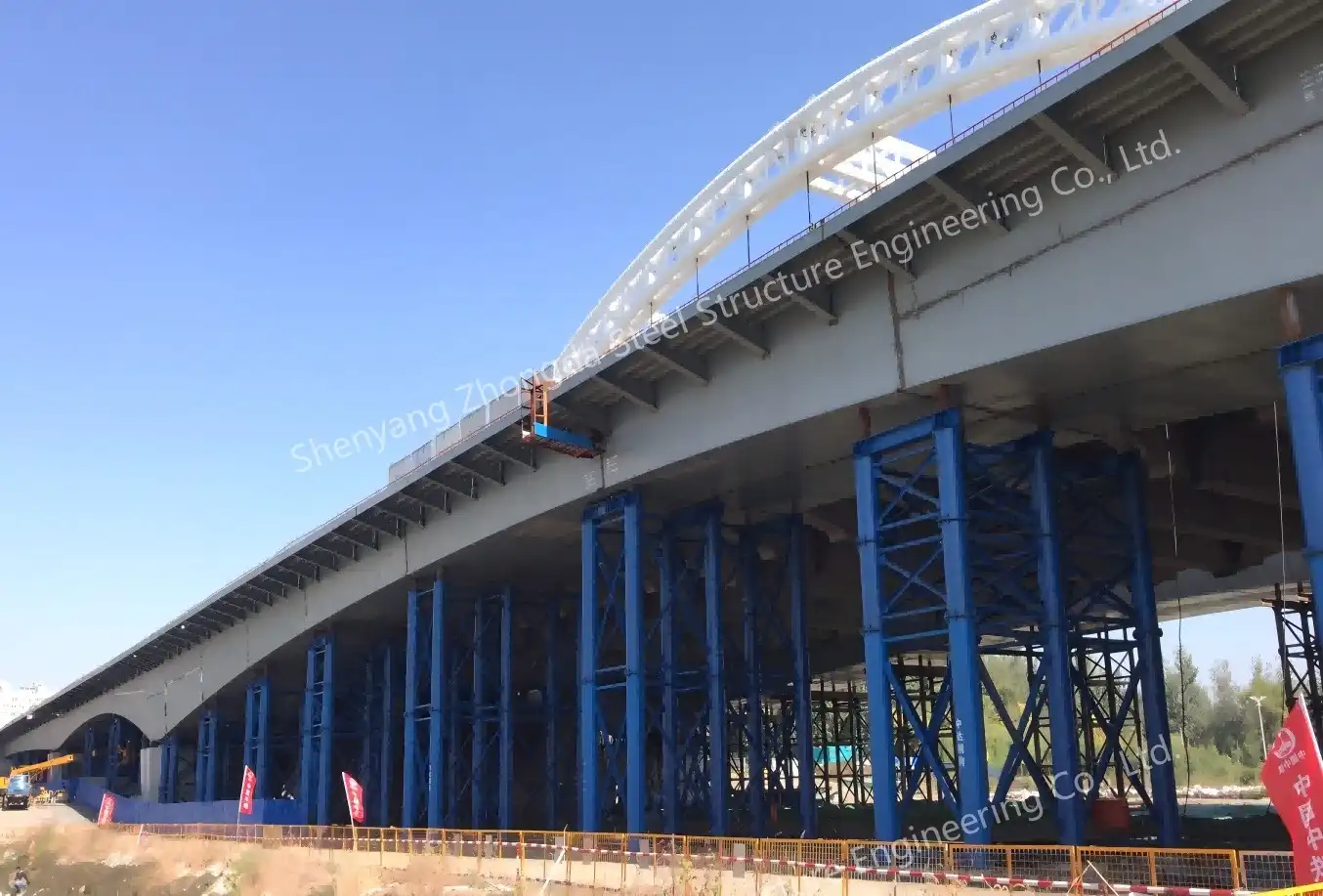
How a structure is built has a big effect on how well it works. When you use traditional falsework-supported erection, you put temporary loads on the structure that can cause residual stresses that could lower its service life. Modern methods, such as stentless rotation, which we've used on jobs with 8,000-ton bridge sections, get rid of all falsework. The structure turns into its final position, setting its fixed shape without any stress states in between that could affect its long-term performance.
Design planning is changed by computer-aided engineering. With finite element analysis, every part of a structure is modeled under an infinite number of load combinations. This finds areas of high stress and lets the design be improved over and over again before it is built. This careful engineering makes sure that buildings fully utilize the material's capacity without overstressing any part—exactly what optimal load capacity design means.
Real-World Performance Validation
These ideas are shown by our Shenyang Dongta Cross-Hunhe River Bridge. The 18,000-ton structure was built without stents, which allowed for a span configuration that would not have been possible with normal methods. Full instrumentation checks the structure's response in real time, proving that the design assumptions were correct and showing that the actual load capacity is higher than what was predicted theoretically. This shows that steel has extra strength and the arch form works well.
Validation comes from international projects as well. Scalability is shown by a bridge with a span of 1,200 meters built for the Jingha Expressway expansion. The same engineering principles and building technologies can be used for bridges with longer spans, and the load capacity is kept up by strict material requirements and quality control. These projects serve a range of traffic types, from high-speed passenger routes to heavy-duty freight lines. This shows how flexible properly designed arch structures can be.
Maintenance and Lifecycle Benefits Affecting Load Capacity
Inspection Protocols Preserving Structural Integrity
Sustained load capacity depends on keeping the structure in good shape for the whole design life. Steel bridges need regular inspections that check for corrosion, the growth of fatigue cracks, and the strength of the connections. These days, inspections are done in several steps, including visual checks, close inspections, and specialized methods like ultrasonic testing and magnetic particle inspection for important parts.
Full-bridge health tracking systems with more than 200 monitors are built into our bridge designs. These systems keep an eye on how structures respond all the time, looking for strange behavior that could mean problems are starting to form. Condition-based maintenance, which means fixing problems before they affect capacity, is possible with real-time data, instead of depending on set times that might miss signs of faster wear and tear.
Corrosion Control Strategies
The biggest long-term threat to steel buildings is corrosion. Steel that isn't covered loses cross-sectional area, which directly lowers its load capacity. It's now necessary to have full protection systems. We use multiple layers of protection: 150μm aluminum thermal spray acts as a sacrificial barrier, and GB/T 30790 C5M-compliant fluorocarbon topcoats protect against UV damage and chemical exposure.
This approach for defense is based on what we've learned from years of working on bridges. Early steel bridges that didn't have good coatings needed a lot of work within 20 to 30 years. When used and kept correctly, modern methods can extend protection intervals to 40 years or more, keeping the original load capacity without having to spend a lot of money on strengthening.
Comparative Lifecycle Economics
A total cost of ownership study shows that Steel Arch Bridges are more cost-effective. The higher original costs of fabrication compared to alternatives made of concrete are balanced out by the fact that they require less upkeep and last longer. The inspectability of steel—being able to look at and test structural members directly—gives trust in capacity measurement that blind concrete sections can't match.
Material toughness is very important. When a car hits or wears down steel sections, they can be fixed or replaced without affecting the building next to them. Concrete damage often goes beyond what can be seen and needs to be thoroughly investigated and fixed. This ability to be fixed directly affects steady load capacity. For example, steel structures can be brought back to their original state, but concrete structures usually have their capacity reduced or their operations limited while they are being fixed.
Procurement Considerations for Steel Arch Bridges in B2B Context
Evaluating Manufacturer Capabilities
To choose the right Steel Arch Bridge maker, you need to carefully look at their professional skills, quality systems, and project experience. Precision in manufacturing has a direct effect on how well a structure works. Misaligned connections or construction that isn't within spec cause stress concentrations that lower the structure's load capacity and speed up fatigue damage.
Our 120,000 m² factory at Zhongda blends high-tech automation with strict quality standards. Certifications like ISO 9001:2015 and EN 1090 Execution Class 4 show that quality management is organized and meets international standards. Our Class I Steel Structure Professional Contracting Qualification proves that we can handle big, complicated projects that need a lot of engineering and building knowledge.
Support for engineering is what sets skilled makers apart from mere fabricators. Iterative design collaboration is needed for complex arch bridges to get the best geometry, steel grades, and connections for fast fabrication and good structural performance. Our engineering team helps with every step of the process, from basic design to building, making sure that the structures we deliver meet performance standards and any site-specific restrictions.
Customization and Performance Optimization
Transportation projects have very specific needs because span lengths, load profiles, weather conditions, and building restrictions are all very different. Standardized solutions don't always improve performance or cut costs. We offer a wide range of customization options:
The shape of the arch ribs can be changed to fit different spans and styles. Box-section sizes and steel grades change depending on the type of load. For example, heavy freight routes need different specs than light-rail transit corridors. Wind resistance engineering adjusts aerodynamic profiles to the wind conditions at a given site. This makes sure that the structure is stable without over-engineering, which adds cost without need.
The choice of construction technology has a big effect on the cost and possibility of a project. Stentless rotation works well in tight spaces where falsework can't fit; gradual launching is good for continuous multi-span structures; modular prefabrication lets structures be put together quickly while causing as little traffic impact as possible. Because we have worked on a lot of different types of construction projects, we can make sure that the methods we recommend will help you save time, money, and get better results.
Anticorrosion systems adapt to the conditions they are exposed to. Places that are safe upstream might only need mild protection, but places that are near water or factories need top-of-the-line systems like our 150µm aluminum spray with fluorocarbon topcoats. Getting the right size of protection for the risk minimizes lifetime costs without sacrificing longevity.
Balancing Performance and Investment
Cost naturally plays a role in procurement choices, but simple lowest-bid methods rarely lead to the best value. Steel Arch Bridges are more expensive than basic beam structures, but in exchange, you get better span capabilities, higher load capacities, longer service lives, and less maintenance, all of which can be measured through lifecycle cost analysis.
When compared to concrete and suspension options, the trade-offs are more complex. Concrete is cheaper to make, but it's heavier, which limits its span and capacity. While suspension bridges can have very long spans, they are too complicated and need a lot of upkeep to be used for many tasks. Steel arches work best for 150–500 meter spans that need to hold a lot of weight with little upkeep. These are exactly the kinds of conditions that drive investments in transportation infrastructure.
Delivered value is more than just the cost of the building. The project plan has a big effect—delayed openings make borrowing costs go up, and economic benefits come later. Our proven ability to fabricate 1,203 tons of finished arch segments every month lets us set aggressive construction schedules that speed up the completion of projects and the creation of revenue.
Conclusion
Steel Arch Bridges are better for long-span traffic projects because of how they are built, the properties of the materials they are made of, and current building techniques. The arch shape effectively changes vertical loads to compression, taking advantage of steel's high strength-to-weight ratio and ability to bend. Precision-engineered structures that meet strict load requirements while reducing dead weight and construction complexity are made possible by new manufacturing technologies and building methods. Comprehensive corrosion protection and health monitoring systems keep capacity high over long service lives, which is good for the business's bottom line. As the need for transportation keeps growing, Steel Arch Bridges offer the strength, longevity, and flexibility needed for infrastructure to meet the needs of tomorrow.
FAQ
What factors determine the load capacity of a steel arch bridge?
Load capacity is affected by many things that are connected to each other, such as the steel grade and yield strength, the arch geometry and curvature radius, the cross-sectional properties of the arch rib, the link design and quality of manufacturing, and the ratio of span to rise. Steels with higher strengths, like Q420qE, can have smaller parts, which lowers the dead load and raises the live-load capacity. The best arch shape spreads forces out evenly and keeps stress peaks to a minimum. Tough manufacturing standards and thorough welding inspections make sure that connections work as planned without creating weak spots that could lower capacity.
How does steel compare to concrete for arch bridge durability?
Steel is better for inspection because parts can be seen and tested without damaging them throughout their service life. Early detection of degradation allows for focused repair before capacity loss happens. Because concrete is opaque, internal damage is hidden until it is too late. Because steel is easy to fix, broken parts can be changed or strengthened without having to make major changes to the structure. Steel that is properly protected with complete coating systems has service lives that are longer than 100 years, matching or beating the performance of concrete while keeping the level of assessment confidence that concrete can't provide.
Can arch bridge designs be customized for specific project requirements?
One of the best things about modern Steel Arch Bridges is that they can be customized. The geometry can be changed to fit the needs of the span, the available space, and personal taste. The best steel grades and section properties are chosen based on the expected traffic loads and the weather. Rotation, incremental launching, and modular assembly are some of the construction methods that can be used depending on the needs of the spot and the plan. Anticorrosion methods get stronger based on how harsh the surroundings is. Full engineering support makes sure that the designs delivered meet the performance needs of the specific project while still being cost-effective.
Partner With Zhongda for Your Next Infrastructure Project
Zhongda makes world-class arch bridges and has been doing so for 20 years thanks to its excellent engineering and precise manufacturing. As a reliable Steel Arch Bridge maker for infrastructure markets around the world, we use ISO-certified quality systems along with tried-and-true building innovations, such as our own stentless rotation technology and full health monitoring integration. Our Q420qE Steel Arch Bridges have advanced corrosion protection systems that go beyond GB/T 30790 C5M standards, optimized pentagonal box ribs, and designs that can be changed to fit your specific load, span, and environmental needs. Our engineering team can help you with planning highway growth, rail transit crossings, or heavy-industrial logistics routes. They can also give you expert advice and cost-effective solutions. Contact Ava@zd-steels.com right away to talk about how our knowledge of arch bridges can help you get the most out of your project's load capacity, construction schedule, and long-term performance.
References
1. Chen, B. and Wang, T. (2019). "Advanced Analysis of Steel Arch Bridges Under Combined Loading Conditions." Journal of Bridge Engineering, Vol. 24, No. 8.
2. Troitsky, M.S. (2018). "Planning and Design of Bridges: Steel Arch Systems for Long-Span Applications." New York: Engineering Press International.
3. American Association of State Highway and Transportation Officials (2020). "AASHTO LRFD Bridge Design Specifications, 9th Edition." Washington, D.C.
4. Xiao, R. and Chen, A. (2021). "Lifecycle Performance Assessment of High-Strength Steel in Bridge Structures." Structural Engineering International, Vol. 31, No. 3, pp. 412-428.
5. European Convention for Constructional Steelwork (2019). "Design Manual for Structural Steel Arch Bridges: Technical Committee Report." Brussels, Belgium.
6. Zhang, L., Liu, Y., and Sun, H. (2020). "Innovative Construction Technologies for Long-Span Steel Arch Bridges: Case Studies and Performance Analysis." Construction and Building Materials, Vol. 257, Article 119567.
YOU MAY LIKE