
How Does a Steel Box Girder Improve Stability for Long-Span Bridge Applications?
2026-08-28 13:00:00






A steel box girder dramatically enhances stability in long-span bridge applications through its closed hollow cross-section, which delivers exceptional torsional rigidity and efficient load distribution far superior to open-section alternatives like I-beams. The fully welded box configuration creates a structural envelope that resists twisting forces under asymmetrical loading—critical when bridges curve horizontally or face eccentric traffic patterns. This inherent stiffness reduces deflection under live loads, while the optimized geometry minimizes structural dead weight, enabling engineers to span greater distances between piers without compromising safety margins or encountering buckling failures.
Understanding Steel Box Girders and Their Role in Bridge Stability
What Defines a Steel Box Girder Structure
The closed-loop cross-section of this structural part is what makes it unique. It is made by welding the top and bottom flanges to the vertical web plates. The sealed shape turns the girder into a torsion-resistant tube, while regular I-beam profiles stay open. If you look at the cross-section, you'll see that the rectangular hollow core channels forces along multiple load paths at the same time. This keeps stress concentrations from happening, which is a problem with single-web designs. For the main parts, Zhongda uses high-strength Q345D steel (with a minimum yield strength of 345MPa), and Q420D grade is used to strengthen key joint areas where stress demands are highest.
Material Standards Ensuring Structural Integrity
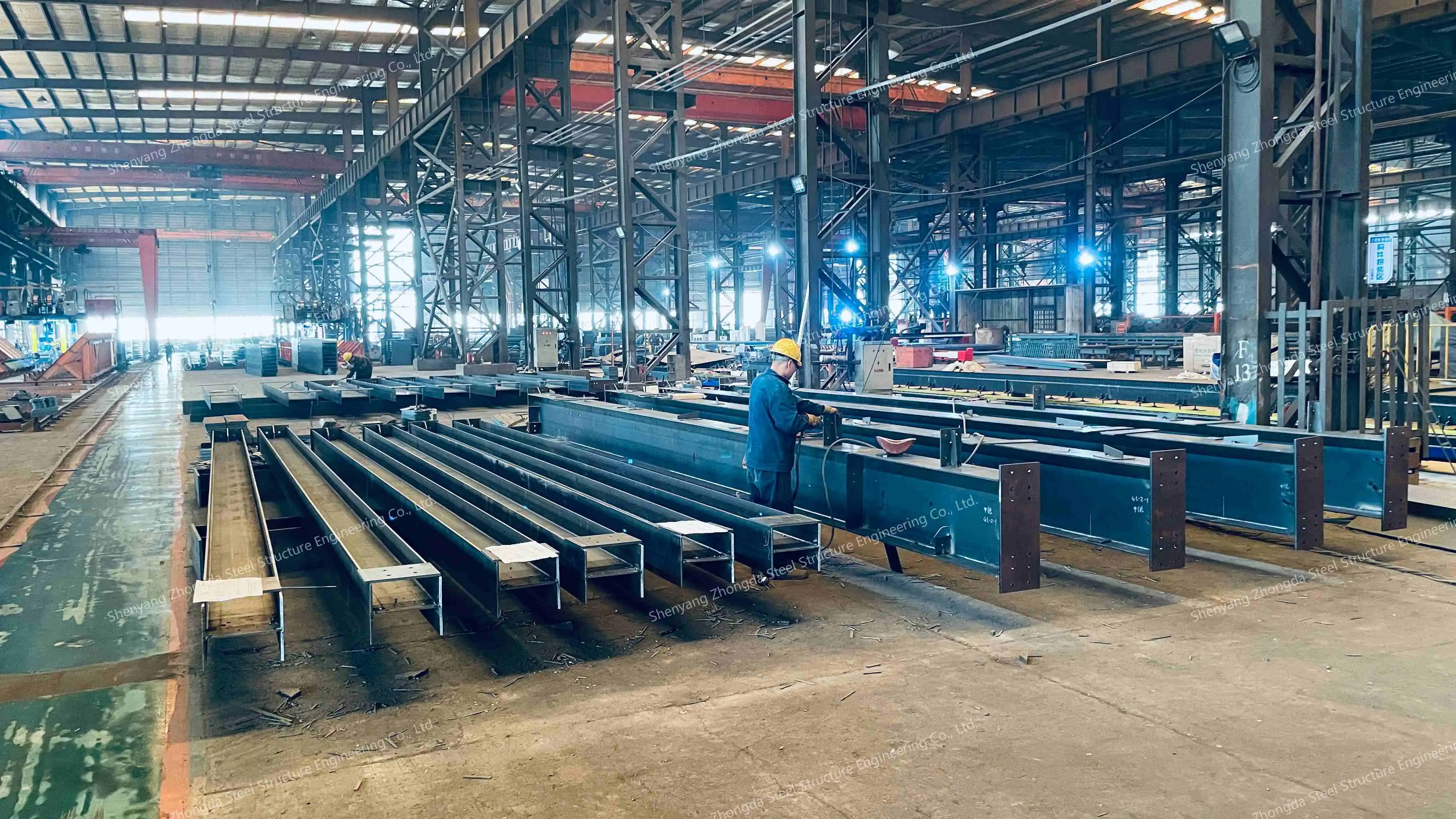
When building a modern bridge, strict rules about the materials used must be followed. Our production process meets both ASTM A709 standards for structural steel used in bridges and EN 10025 standards for projects in Europe. These guidelines set exact limits on the chemical make-up (keeping the carbon equivalent in check to keep weldability) and the mechanical properties (checked through damaging tests). The Q345D type we use is very tough at low temperatures; it stays flexible even at -40°C, which is important for building things that will last in regions ranging from cold Russia to warm North America. Before CNC cutting starts, every steel plate that comes into our 120,000 m² facility is tested with ultrasonic waves to find any flaws inside. This makes sure that the material is reliable from the very beginning.
How Optimized Geometry Enhances Load Management
The rectangular box form isn't just a coincidence; it's the result of decades of engineering work that aimed to balance efficiency with ease of production. The closed section makes what engineers call a "torsion box," where shear stresses move around the outside instead of concentrating at the points where the web and flange meet. This distribution is very important during construction, when cranes have to lift pieces that aren't all the same size, and while the bridge is in use, when wind gusts hit the decks at odd angles. With our variable cross-section, beam heights can range from 1.25m to 8m. This lets builders add depth at support places where bending moments are highest and then taper toward the middle of the span to save weight. When compared to solid-plate options, projects that use corrugated steel webs can achieve a 20% weight reduction. This directly leads to smaller supports and lower earthquake inertia forces.
Challenges of Stability in Long-Span Bridges and How Steel Box Girders Address Them
Buckling Resistance Under Compressive Forces
Torsional Stability in Curved Alignments
In cities, viaducts often have to go around tight horizontal bends to get between buildings and infrastructure routes. Torsional stresses—the tendency for open-section beams with curved shape to twist along their longitudinal axis—are high. This means that they need complex cross-bracing systems, which adds to the cost and difficulty of building. The closed box naturally has tensile strength that is thousands of times higher than I-sections of the same weight. We've successfully provided parts for curved bridge projects that needed this built-in safety because the radius of the curve meant that temporary supports weren't needed during deck concrete pours, which would have stopped traffic below.
Dynamic Load Response and Fatigue Management
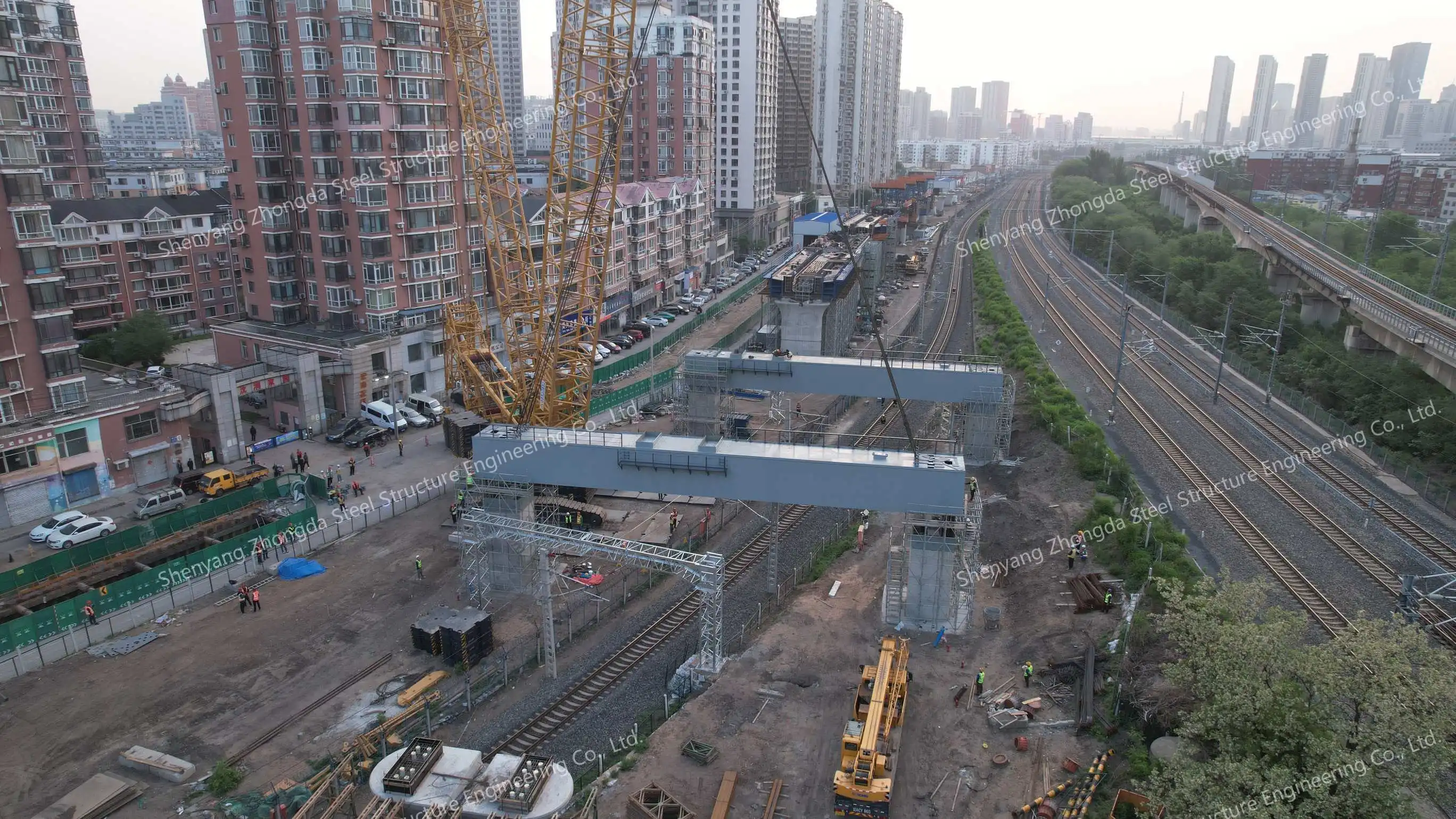
As traffic flows over bridge spans, the decks are loaded and unloaded millions of times. Each heavy truck causes stress changes that cause damage on a microscopic level over decades. Lessening stress ranges and getting rid of minor shapes that make local strains bigger are important for fatigue resistance. When compared to bolted joints, which have natural breaks, our fully welded box pieces have smooth stress flow patterns. The AWS D1.5 Bridge Welding Code tells us how to make things and requires that all primary welds be checked without damaging them and that plates that are too thick must be heated after the weld. This longevity can be seen in projects like the 18,000-ton Shenyang Dongta Cross-Hunhe River Bridge, where our girders have stayed strong even after years of being exposed to heavy traffic in cities.
Construction Process and Fabrication Techniques Enhancing Stability
Prefabrication Precision and Quality Control
The first step in advanced fabrication is BIM-driven design optimization. This is where 3D models find possible conflicts before the steel is cut. Our CNC ultra-thick plate cutting systems can cut plates up to 150 mm thick with a range of ±0.2 mm. This level of accuracy makes sure that parts fit together without putting stress on the field change process. Automated welding robots keep their heat input and movement speed constant, which makes it possible to make welds that are the same all the way along kilometer-long lines. Laser scanning technology is used to check the dimensions of each segment, creating as-built models that show the geometry matches the design intent to within millimeters. This careful method gets rid of the fit-up gaps and forced alignments that cause leftover loads that weaken the structure.
Controlled workplace settings have benefits that go beyond making sure that measurements are correct. Climate-controlled bays keep the metals at the best temperatures for welding, and high cranes move parts without the entry problems that happen on the job site. Prefabricating pieces from 12m to 30m, based on transportation limits, helps the shop work more efficiently while still following weight limits for the highway. Quality inspectors use magnetic particle testing on weld surfaces and radiographic examination of internal fusion zones to find flaws during fabrication, rather than after installation, when it costs a lot to fix them.
Modular Assembly Reducing Construction Duration
For accelerated bridge construction to work, the structure must be stable during all stages of construction, not just the final configuration. Our engineering team creates detailed erection manuals that include lifting points, temporary bracing requirements, and the right order of construction to avoid instability during the most vulnerable stages of assembly. Post-tensioning systems are often built into the inside of boxes. They apply a compressive preload that counteracts the tensile pressures of service and stops micro-cracks before they spread. This improves stability and makes the structure last decades longer than with traditional designs.
Comparing Steel Box Girders with Other Girders on Stability and Performance
Steel Box Versus Concrete Box Girders
The choice of materials has a big effect on both the performance at building and over its lifetime. Some people like concrete box girders because they don't rust and don't catch fire. However, their heavy weight takes up structural space that could be used to support more people or make spans longer. A normal concrete section weighs 2.5 times as much as an equivalent-strength steel box. This means that foundations need to be bigger and there need to be more intermediate piers. This is especially a problem when crossing rivers or slopes that are important for the environment. Our high-strength steel method allows spans of up to 420 meters between supports, which is longer than what is possible for concrete and keeps slenderness ratios that make the structure look better.
Different materials have very different maintenance needs. In coastal areas and northern climates where deicing salts build up, chloride-induced reinforcement corrosion can happen to concrete girders. This usually means expensive cathodic protection systems or deck replacements before they should be. Our two-layer anti-corrosion process, which includes hot-dip galvanizing and high-performance finishes, makes things last longer than 30 years with little maintenance. The inside of the protected box can have dehumidification systems that keep the relative humidity below 40%. This stops the internal corrosion processes that happen in steel structures.
Comparison with I-Beams and T-Beams
Through the middle of the 20th century, bridges were mostly built with open-section designs like I-beams and T-beams because they were easier to make. For short spans under 50 m, where rotational loads can be handled by deck diaphragms and cross-bracing, these designs are still the most cost-effective choice. Beyond this point, the extra weight of bracing systems and the limited bendability of open sections make closed boxes more competitive. Based on our estimates, box girders can handle serviceability deflection limits (usually span/800 for highway bridges) while being 30% lighter than options like braced I-beams when spans go over 80m.
Maintenance, Longevity, and Procurement Considerations for Steel Box Girders
Corrosion Protection Systems Extending Service Life
Multiple layers of defense are needed for durability in tough settings. Our standard calls for thermally sprayed zinc coatings that are at least 85 microns thick, followed by epoxy primers and polyurethane topcoats. This makes a barrier system that is more than 300 microns thick altogether. It protects against cathodic breakdown by the zinc layer, which corrodes before the base steel oxidizes, and it also keeps moisture and chlorides out through organic coatings. Improved systems with fluoropolymer topcoats protect bridges near the coast or in industrial areas where sulfur dioxide is present. These topcoats last for decades without chalking or losing their color.
Inspectors have a harder time recoating interior box surfaces because they can't easily get to those areas. We solve this problem by using hermetic seals along with sacrificial anodes or impressed current systems that stop rust from starting in the first place instead of just slowing it down. At strategic intervals, inspection ports let you look inside with a borescope without damaging the structure, and draining features keep water from building up, which speeds up targeted attack. These preventative steps lower the overall costs of ownership by a large amount. For example, over the 50-year life of our bridges, our protection systems result in 40% lower total ownership costs compared to reactive upkeep methods.
Procurement Strategy for B2B Infrastructure Projects
To choose the right Steel Box Girder provider, you need to look at more than just the price. Government agencies and EPC contractors should give more weight to makers with globally recognized certifications. For example, our ISO 9001, 14001, 45001, EN 1090, and AWS credentials show that our quality management systems meet global standards. Vertically integrated businesses like ours, which do everything from design optimization to field building support, make it easier to keep track of projects and make sure everyone is responsible for their part. When problems happen, single-source responsibility stops people from pointing fingers, which speeds up the resolution of problems during important construction windows.
When companies have to pay liquidated fees for going over schedule, being able to predict lead times is very important. With the ability to produce 60,000 tons of specialty steels every year and well-established supply lines, we can keep our delivery promises. In fact, 70% of our clients come back to buy from us again, which shows how reliable we are, which is something that return customers value. Throughout the lifecycle of a project, technical support includes erection engineering, field troubleshooting, and documentation packages that meet the quality assurance needs of the owner. This all-inclusive service model lowers the risks that buying teams have to handle. This means that projects go more smoothly and there are fewer expensive shocks.
Conclusion
Steel Box Girders are better for long-span bridges because they are more stable, have better material distribution, and can be made with more precision than cast-in-place alternatives. These benefits come from basic engineering principles. These parts solve stability problems like buckling, deflection, and fatigue that limit the performance of regular girders. At the same time, modular building methods shorten plans and keep community disruptions to a minimum. When corrosion protection systems are used correctly, steel solutions last for decades after they were first built, and buying from certified manufacturers makes sure that quality standards meet the needs of the world's infrastructure. As cities need more complicated crossings and transportation networks grow into more difficult terrain, the performance range that box girder technology offers is not only helpful, it's necessary for the success of the project.
FAQ
What Span Lengths Can Steel Box Girders Achieve?
These days, it's possible to make continuous spans up to 420 meters between support piers. This is especially true when variable cross-sections are used to increase depth at high-moment regions. When used in cable-stayed and suspension bridges, the effective spans are even longer because the steel box acts as a stiffening girder to stop aerodynamic flutter and spread the cable forces out evenly. Instead of being limited by the structure itself, practical limits are set by how much a crane can lift and how far the premade pieces can be moved.
How Do You Prevent Internal Corrosion in Enclosed Sections?
Several methods are used to protect interior surfaces that can't be reached. All openings must be hermetically sealed to keep dampness out, and dehumidification systems actively control the internal atmosphere in serious situations. Electrochemical defense is provided by sacrificial zinc coatings or impressed current cathodic protection, and strategic access ports allow regular inspections without affecting the structure's strength. When drainage is set up correctly, water doesn't build up, which speeds up localized corrosion.
What Welding Standards Govern Fabrication Quality?
All main welds must follow the AWS D1.5/D1.5M Bridge Welding Code, which calls for qualified welders, strict non-destructive examination protocols, and qualified welding procedure specifications. Our automatic welding systems make sure that all of the joints follow the same set of rules. Third-party inspectors check for compliance by looking at the connections visually, using ultrasonic tests, and taking X-rays of the most important ones. This makes sure that the strength of the welds matches or beats the strength of the base material throughout the building.
Partner with Zhongda for Your Next Infrastructure Project
Picking the right Steel Box Girder maker has a direct effect on how well your project turns out. Zhongda has 20 years of experience making complex bridge parts for tough situations, like in Russia's Arctic, where our -60°C weathering steel technology is needed, and in fast urban interchange projects, where our prefabrication skills cut down on traffic delays by half. Our 120,000 m² plant uses cutting-edge automation and technical know-how to make precision-machined segments that are ready to be installed as soon as they get to the job site.
We know that infrastructure contractors and government agencies need more than just product specs. They need a supplier that can respond quickly and offer engineering support during the design, fabrication, and installation phases. Our expert team works together to prepare bids, figuring out the best way to set up girders so that performance and cost are balanced. They then stay involved during field construction to deal with any problems that come up. This partnership method is why 70% of our clients stay with us and why China Railroad, CSCEC, and foreign EPC companies trust us with their most important crossings.
Check out all of our Steel Box Girder options at zd-steels.com, or email our project experts at Ava@zd-steels.com to talk about your unique needs. Our team is ready to show you why picky buyers choose Zhongda when project stakes are high, whether you need a custom Steel Box Girder for sale that has to fit specific geometric requirements or standard parts that can be delivered quickly.
References
1. Chen, W. F., & Duan, L. (2014). Bridge Engineering Handbook: Superstructure Design. CRC Press, Boca Raton, Florida.
2. Structural Stability Research Council. (2010). Guide to Stability Design Criteria for Metal Structures, 6th Edition. John Wiley & Sons, New Jersey.
3. American Association of State Highway and Transportation Officials. (2020). AASHTO LRFD Bridge Design Specifications, 9th Edition. Washington, D.C.
4. Taly, N. (2014). Highway Bridge Superstructure Engineering: LRFD Approaches to Design and Analysis. CRC Press, Boca Raton, Florida.
5. Xanthakos, P. P. (1994). Theory and Design of Bridges. John Wiley & Sons, New York.
6. Nakai, H., Kitada, T., & Ohminami, R. (2006). Steel Bridges: Theory and Practice. Japan Society of Civil Engineers, Tokyo.
YOU MAY LIKE