
How Does Steel Truss Girder Improve Load Distribution in Large Bridge Projects?
2026-08-28 13:00:00






Steel Truss Girders revolutionize load distribution in large bridge projects through their triangulated framework, which transforms concentrated loads into distributed forces across multiple members. This interconnected system of top chords, bottom chords, and web members creates multiple load paths, reducing stress concentrations and preventing localized failures. The inherent geometric stability of triangles ensures that loads are efficiently transmitted through tension and compression forces rather than bending, significantly enhancing structural performance while minimizing material usage in spans exceeding 100 meters.
Understanding Steel Truss Girders and Load Distribution Principles
It is very important to understand how load transfer mechanics work when looking at structural options for big bridge systems. Truss systems are brilliant engineering not because they are hard to understand, but because they are elegantly simple.
Components Working in Harmony
A well-designed truss girder has several important parts that work together without any problems. Traffic and external loads put pressure on the top chords, which resist it. The bottom chords, on the other hand, handle tension stresses. Web members, set up in Warren, Pratt, or Howe shapes, connect these main chords and make load lines that spread forces evenly throughout the structure.
Triangulated Framework Advantage
The triangle is the only polygon that is geometrically stable and can't change shape without changing the lengths of its sides. Truss systems can turn complicated bending moments into simpler axial forces by following this basic rule. In solid-web girders, the material across the cross-section doesn't work well, but in a properly designed truss, each member makes a real difference in how much weight it can hold. According to research from the American Institute of Steel Construction, optimized truss designs can cut the amount of material needed by 30 to 40 percent compared to regular plate girders while still holding the same amount of weight.
Load Path Optimization
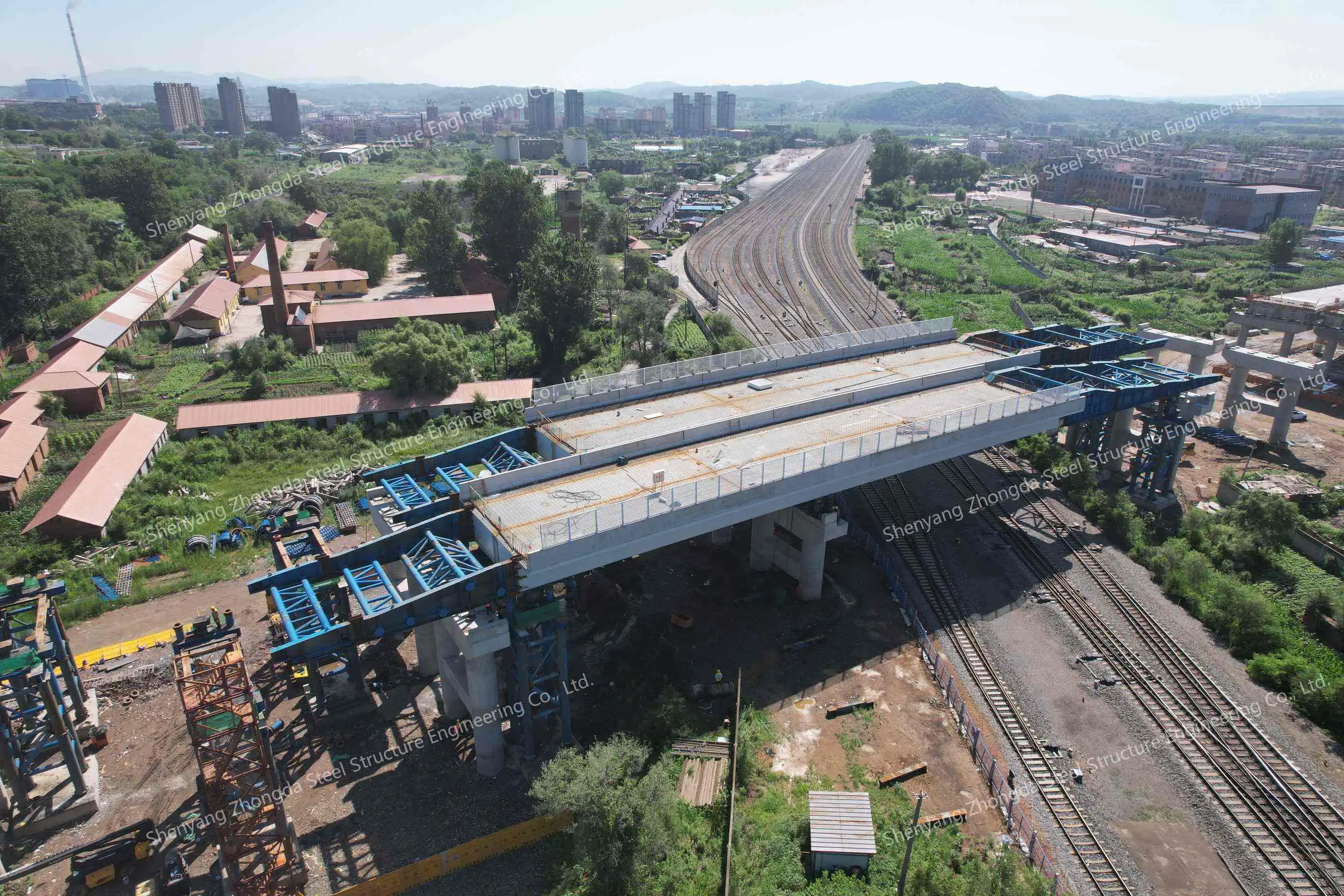
In the middle of rush hour, cars on a major highway bridge create dynamic concentrated loads that need to be safely transferred to support bearings. The truss mechanism spreads these point loads across many nodes and members at the same time, so no single part is overstressed. This extra safety measure increases the service life and makes it safer. This is especially helpful for infrastructure projects that need to work reliably for decades.
Structural Analysis and Calculation Methods for Steel Truss Girders
Dead Load and Live Load Quantification
When engineers figure out dead loads, they take into account the weight of the steel members, deck systems, and fixed fixings. When it comes to live loads, things like car weights, impact factors, and distribution numbers make things more complicated. The AASHTO LRFD Bridge Design Specifications list common load combos that take into account the fact that different types of loads can happen at the same time. A normal highway bridge truss has to be able to safely support HL-93 live load patterns and keep deflection limits below L/800, where L is the span length.
Environmental Force Considerations
When wind blows, it puts pressure on the exposed truss surfaces, which is especially important for long-span bridges near the coast. When designing for seismic events, you have to look at how well the structure can bend and how quickly it loses energy. Changes in temperature cause thermal expansion, which needs to be accounted for with expansion joints and flexible bearing systems. Finite element analysis software makes models of these complicated interactions, which lets engineers check how well the design works in a variety of mixed pressure situations before it is built.
Span Length Impact Analysis
The efficiency benefits of truss systems become clearer as bridge spans get longer. When spans are longer than 150 meters, other types of structures often can't be used because the materials are too heavy or there are concerns about deflection. The open-web design of trusses keeps their high stiffness-to-weight ratios even when they are stretched out over long distances. This makes them perfect for crossing wide rivers, valleys, or transportation routes without the need for piers in the middle.
Comparative Advantages of Steel Truss Girders in Large Bridge Projects
When choosing the best structural system, you need to look at more than just the original cost of building. Throughout the lifecycle of a project, truss girders offer clear benefits.
Material Efficiency and Structural Performance
Concrete girders are strong, but they have a lot of dead weight that makes them less useful for carrying weight. Plate girders made of solid steel are strong, but they use too much material for long lengths. The following benefits show why truss systems are best for building large bridges:
Better Strength-to-Weight Ratio: The open-web design gets rid of extra material in areas with low stress, focusing steel where it's needed most. When compared to similar plate girder bridges, this optimization usually leads to a 25–35% decrease in the overall structure weight.
Better Span Options: The distributed load mechanism of Steel Truss Girder makes it possible to build economical spans from 80 to 250 meters without using falsework or temporary supports during construction. This reduces environmental impact and accelerates project schedules.
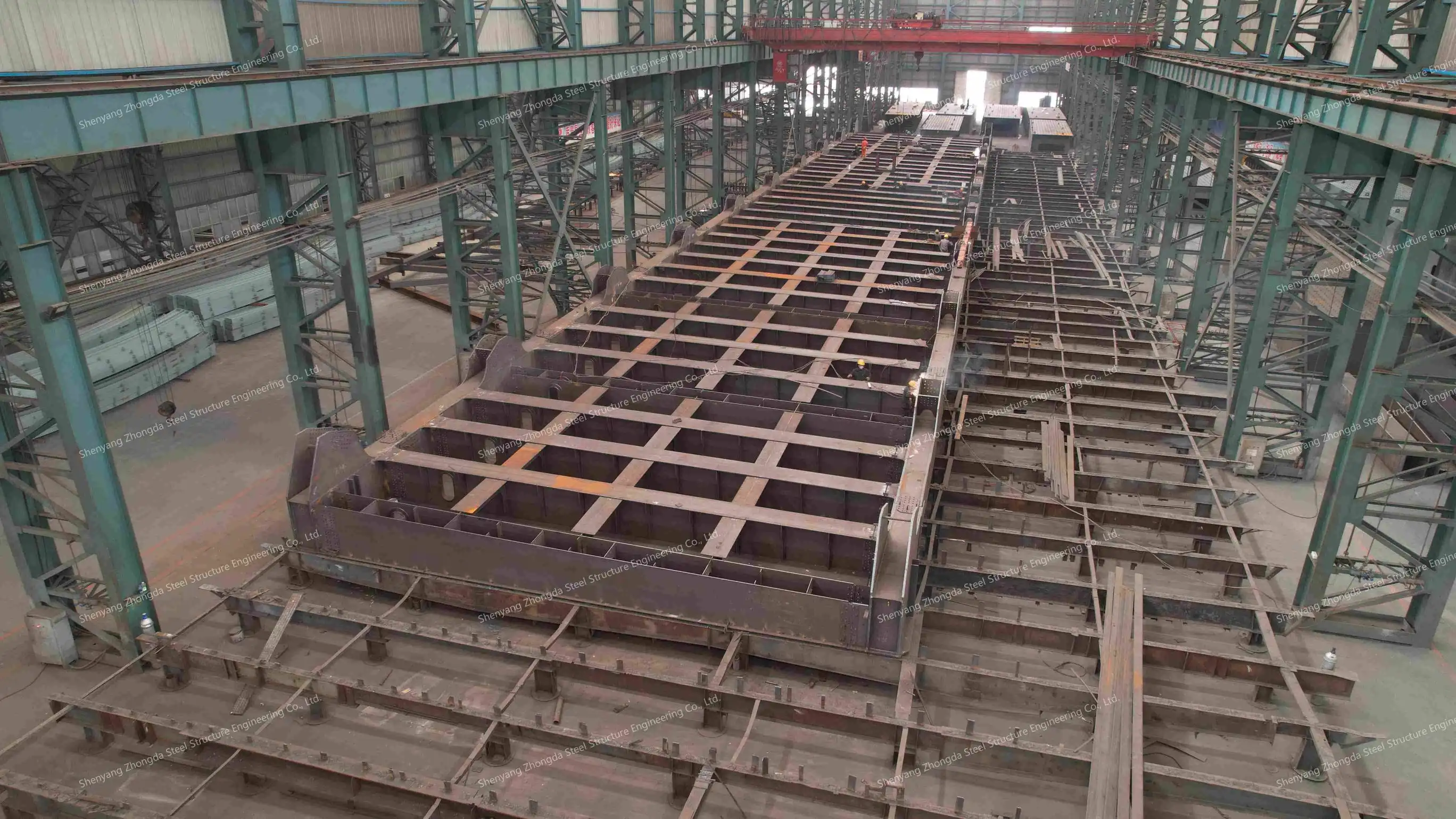
Adaptability to Site Conditions: With modular prefabrication, truss segments can be made in a controlled factory environment and then brought to the site and put together. This method works great in rural areas or places that are sensitive to the environment and don't allow a lot of on-site work.
These structural benefits directly lead to project success by lowering base loads, making the building process easier, and lowering the amount of upkeep that needs to be done over the course of the structure's lifetime. It's also easier for utilities to route and for inspectors to get to, which are things that are often forgotten during the early stages of design.
Advanced Material Integration
Modern weathering steels like A588 and high-strength steels like ASTM A572 Grade 65 make trusses much more useful. As steel ages, it forms a protective oxide layer that means it doesn't need to be painted in many places. This can save up to 40% on maintenance costs over the course of 50 years of use. Heat-treated metals allow members to be smaller while still holding their strength, which is especially helpful for projects with limited shipping options.
Sustainability Considerations
Steel can be recycled, which is in line with the stricter environmental rules that guide public building projects. When they are no longer needed, truss parts still have about 90% of their original value, which can be used to make new structural goods. Studies on carbon footprints show that when transportation, construction time, and maintenance cycles are all taken into account, optimized steel truss bridges can have lower lifetime emissions than concrete alternatives.
Practical Procurement Considerations for Steel Truss Girders
Comparing quoted prices is only one part of successful procurement. Another important part is evaluating suppliers in a wide range of areas.
Quality Certification Standards
ISO 9001 certification makes sure that production methods are always the same, and EN 1090 compliance verifies that structure execution class standards are met. When looking for makers, make sure they have AISC certification for quality control systems and the ability to weld. Third-party inspection procedures give you extra peace of mind, especially for important links and details that are easy to break.
Production Capability Assessment
Realistic delivery plans are based on the facility's ability. A production capacity of 60,000 tons per year means that the company can work on multiple projects at once without sacrificing quality or time. Digital communication between design, manufacturing, and installation teams is made possible by advanced features like BIM-driven prefabrication of Steel Truss Girder structures. This cuts down on mistakes and rework. Cutting ultra-thick plates with accuracy within ±0.2mm standards makes sure that they fit correctly during field assembly, which cuts down on costly delays.
Specialized Technical Capabilities
For projects in harsh environments, you need to know a lot about protection devices. A supplier that offers -60°C weathering steel anti-corrosion technology shows that they are dedicated to long-term performance in harsh environments. Combining hot-dip galvanizing with high-build epoxy topcoats makes duplex coating systems that offer C5-M environmental protection that can be used in both naval and commercial settings.
Logistical and Support Services
Getting a global job done requires a lot of complex business planning. Suppliers who know about international shipping, customs paperwork, and planning delivery times on-site keep projects from being held up, which can cost a lot of money. Support after delivery, such as installation instructions, welding procedure specs, and upkeep routines, adds a lot of value on top of the supply transaction itself.
Case Studies: Successful Application of Steel Truss Girders in Large Bridges
The best proof of truss girders' usefulness in tough bridge uses comes from real-life project results.
Arctic Infrastructure Project
A recent project to build a bridge in northern Russia required crossing 180 meters in temperatures below -50°C. In these harsh conditions, traditional structural systems had to deal with materials that were likely to break easily. The engineering team chose a Warren truss design made from steel plates that had been tested for impact and were guaranteed to have Charpy V-notch toughness at service temperatures. Paying extra attention to the welding supplies and methods used made sure that the material would behave flexibly when heated and cooled. The finished building has worked perfectly through four winters, proving that the way it was designed is the right way to build infrastructure in cold places.
Heavy-Haul Railway Bridge
For moving rock, an Australian mine business needed a railroad bridge that could hold 36-ton axle loads. The 120-meter span went over a gorge that was important to the environment, so building the pier was limited by rules. A parallel chord truss system with strengthened nodes was able to handle the high live loads and meet the deflection requirements for dynamic wheel loads. The project was finished in eight months, half the time it was expected to take for cast-in-place options. The parts were prefabricated at a facility on the coast, then transported by barge and put up by crane.
Multi-Modal Transportation Hub
A city in Southeast Asia built an elevated highway interchange that needed a number of bridges with span lengths ranging from 85 to 165 meters. The architectural standards said that the whole complex had to look the same. Standardized truss modules with different panel lengths made the structure look consistent and worked well. Phased building kept traffic moving during the three-year project, showing how flexible truss systems can work in tight urban spaces.
Conclusion
FAQ
How does thermal expansion affect truss girder bridges?
When the temperature changes, steel parts expand and shrink along their length. Engineers make room for these changes by putting expansion bearings on one support and fixed bearings on the other. This lets the structure expand without putting extra stress on it. A 100-meter steel truss usually grows about 60 mm when the temperature changes from summer to winter.
What connection method works best for field assembly?
High-strength friction-grip nuts are the most common type of field link because they are reliable in all kinds of weather and help with quality control. Shop welding makes parts that are made in controlled settings as hard as possible. Hybrid methods improve both the speed and effectiveness of fabrication and field assembly.
How long does a properly maintained truss bridge last?
Steel truss bridges can last between 75 and 100 years if they get the right protective coatings and are inspected regularly. Some well-known examples are buildings from the early 1900s that are still used today after being fixed up every so often.
Partner with Zhongda for Your Steel Truss Girder Projects
As a globally certified Steel Truss Girder manufacturer for 20 years, Zhongda has a lot of experience with building complex bridges. Our ISO 9001/14001/OHSAS 45001 and EN 1090 certifications show that we are dedicated to quality management, and our 120,000 m² plant provides 60,000 tons of goods every year with precision based on BIM. We were the first to use -60°C weathering steel anti-corrosion technology for harsh environments, and we keep the accuracy of ultra-thick plate cutting to within ±0.2mm. We produce excellent engineering with on-time lead times, and China Railroad, CSCEC, and foreign clients trust us for Arctic bridges, mining infrastructure, and industrial projects. Get in touch with Ava@zd-steels.com to talk about how our professional skills and full range of support services can help you with your next big bridge job. You can look at our list of great infrastructure solutions at zd-steels.com.
References
1. American Institute of Steel Construction. (2016). Steel Construction Manual, 15th Edition. Chicago: AISC.
2. Barker, R.M. & Puckett, J.A. (2013). Design of Highway Bridges: An LRFD Approach, 3rd Edition. Hoboken: John Wiley & Sons.
3. Chen, W.F. & Duan, L. (2014). Bridge Engineering Handbook: Superstructure Design, 2nd Edition. Boca Raton: CRC Press.
4. Kulicki, J.M., Prucz, Z., Clancy, C.M. & Mertz, D.R. (2007). Updating the Calibration Report for AASHTO LRFD Code. Transportation Research Board NCHRP Report 20-07.
5. Salmon, C.G., Johnson, J.E. & Malhas, F.A. (2009). Steel Structures: Design and Behavior, 5th Edition. Upper Saddle River: Pearson Education.
6. Taly, N. (2014). Highway Bridge Superstructure Engineering: LRFD Approaches to Design and Analysis. Boca Raton: CRC Press.
YOU MAY LIKE