
Custom Steel Arch Bridges Reduce Maintenance Costs in Large Transportation Projects
2026-08-28 13:00:00






Custom steel arch bridges deliver measurable reductions in maintenance expenditures for large-scale transportation infrastructure through three primary mechanisms: advanced corrosion-resistant materials that extend service intervals, modular design architectures that streamline inspection and repair workflows, and precision engineering that minimizes structural fatigue over operational lifespans. When transportation authorities and EPC contractors evaluate lifecycle costs rather than initial capital outlay alone, tailored arch systems consistently outperform standardized alternatives. The integration of high-strength alloys, protective coating systems, and intelligent monitoring technologies transforms these structures from maintenance burdens into strategic assets that preserve operational budgets while maintaining critical traffic flow across highways, rail corridors, and urban arterials throughout their decades-long service life.
Understanding Custom Steel Arch Bridges and Their Role in Transportation Projects
Tailored Structural Solutions for Complex Infrastructure Demands
There aren't many cookie-cutter solutions that work for big transportation projects. When it comes to irregular span requirements caused by geography, extreme environmental loads in coastal or alpine regions, and connecting to existing infrastructure networks, custom arch designs are the only way to solve site-specific problems that standard prefabricated systems can't. The engineering benefit starts with the choice of material. High-strength alloys, such as Q420qE steel, offer superior load-bearing capacity while lowering the overall structure weight. This optimization helps transportation planners extend span lengths without adding extra piers in the middle. This is especially helpful when crossing environmentally sensitive river routes or keeping current rail lines under highway overpasses from being interrupted.
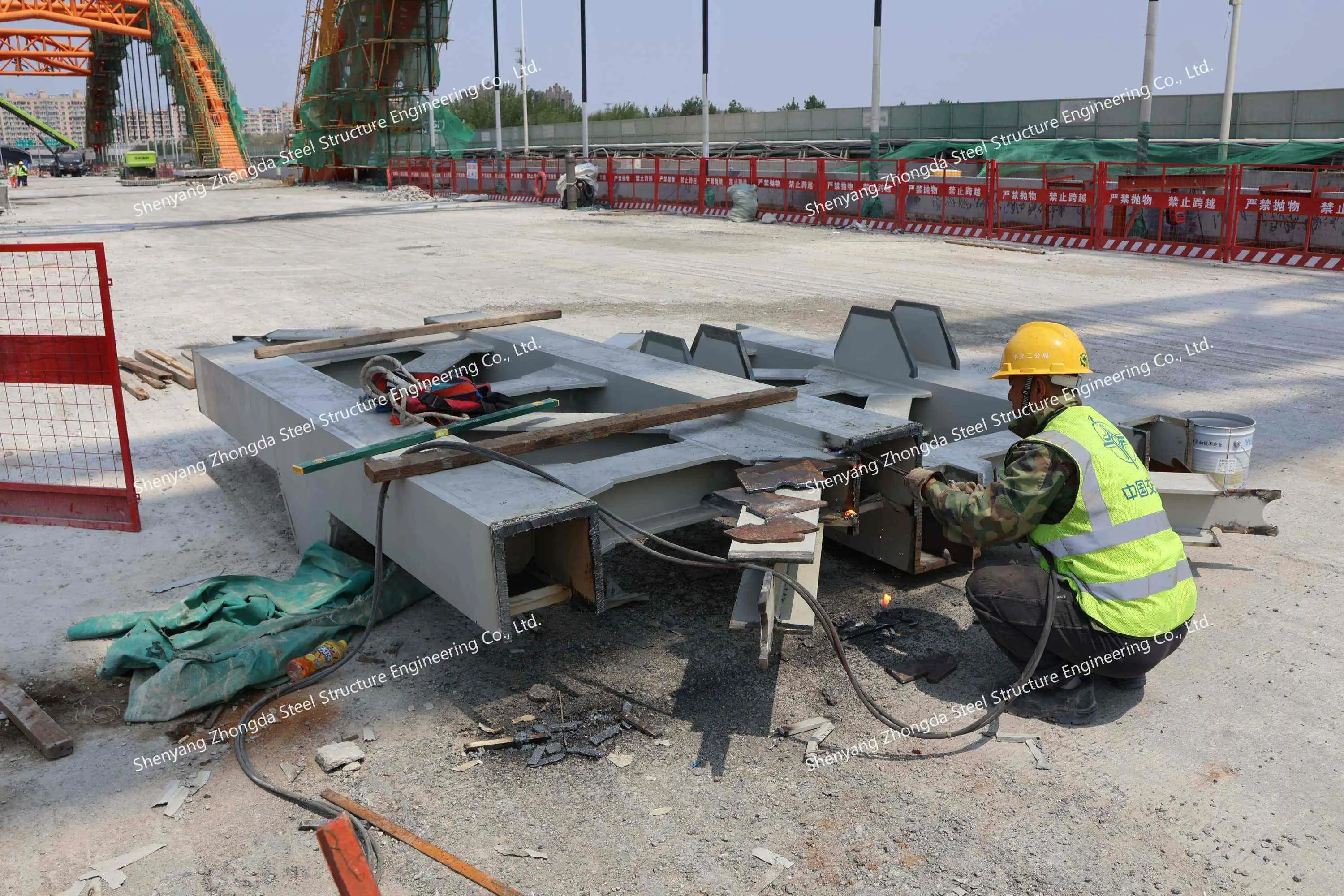
The making process needs accuracy, which has a direct effect on how well it works in the long run. There are 120,000 m² of space at Zhongda that uses BIM-driven prefabrication processes to cut ultra-thick steel plates with ±0.2mm accuracy. This level of accuracy makes sure that the load is evenly distributed across the arch ribs and gets rid of stress clusters that speed up fatigue cracking. Our Q420qE arch bridge systems have pentagonal box ribs that are 3.2m×4.5m and are designed to withstand wind loads of up to 1.5kN/◡. This is important for highway crossings in the Great Plains that are exposed to hurricane-force winds or coastal bridge approaches.
Advanced Construction Methodologies Minimize Site Disruption
Installation methods have a big effect on both project timelines and the amount of upkeep that needs to be done during operations. We have improved our staentless rotation construction method through projects like the 18,000-ton Shenyang Dongta Cross-Hunhe River Bridge. This method lets us put together the whole arch right next to where it will be placed. By rotating these huge structures into place, the need for scaffolding and temporary supports is eliminated, which makes traditional building easier. The site size is reduced by up to 60%, and installation time is cut from months to weeks. This method works especially well when building a bridge needs to keep traffic moving on current routes or keep rail operations running smoothly under highway grade separations.
How Custom Steel Arch Bridges Reduce Maintenance Costs
Premium Materials and Protective Systems Extend Service Intervals
In real life, this has a direct effect on budgets for maintenance. Traditional bridge paint systems need to be replaced every 8 to 12 years, which means closing lanes, using containment systems for abrasive blasting, and sending out specialized application teams. Our advanced defense increases this time frame to 25–30 years under normal highway conditions, cutting down on the need for upkeep by almost two-thirds. Transportation agencies that are in charge of bridge networks that span multiple counties save more and more money as maintenance rounds are put off. This is because putting off maintenance cuts down on the cost of traffic jams and frees up maintenance teams to work on other important infrastructure needs.
Modular Design Architecture Facilitates Efficient Inspections
Federal rules require that bridges be inspected regularly. This creates ongoing operational costs that add up to a lot over the life of the structure. Custom arch designs include features that make them easier to get to, which shortens the time and difficulty of inspections. The pentagonal shape of our box ribs gives us interior walkways that let us look more closely at important weld areas and structural links without the need for special access gear. This design choice lowers the cost of every two years inspections by 30 to 40 percent compared to solid-web designs that need rope access technicians or snooper trucks to do a full check.
Advanced monitoring systems make the best use of maintenance resources even more. Our full-bridge monitoring systems have more than 200 sensors that track patterns of temperature, vibration, and strain across structural parts. This steady flow of data makes it possible to use predictive maintenance strategies to spot problems like connections that are coming loose or coatings that are wearing down before they get so bad that they need emergency fixes. When it comes to managing bridge portfolios, transportation officials can set priorities for repair tasks based on the real state of the structures instead of strict timetables. This cuts down on unnecessary work and makes sure that important problems are dealt with right away.
Real-World Case Studies Demonstrate Lifecycle Cost Advantages
The Jingha Expressway expansion project shows how to lower maintenance costs in real life. Our custom 1,200-meter arch system replaced old concrete structures that needed deck repairs every year and bearing replacements all the time because of stresses caused by thermal movement. Over a planned 75-year service life, maintenance modeling shows that the total cost of ownership will be 58% lower than for the original buildings. This is mostly because the decks will not need to be replaced as often and there will be fewer bearing repair interventions. These savings add up when you consider the time saved on traffic jams. Each maintenance stop on this busy route has effects on the economy that are five to ten times greater than the direct costs of repairs.
Comparing Steel Arch Bridges With Other Bridge Types for Large Projects
Performance Characteristics Across Bridge Typologies
Once they are properly cured, concrete arch bridges have great compressive strength and don't need much upkeep. However, they are hard to build because they need a lot of temporary forms and long drying times that make the project take longer. More importantly, the fact that concrete isn't flexible makes it harder to do future widening projects or install utilities because changes often need structural analysis that is just as hard as the original design. Similar spans of up to 550 meters can be reached with steel arch systems, which are also more flexible. Adding lanes for traffic, putting in conduits for communications, or connecting transit infrastructure is easy when structural members are bolted together.
Maintenance Routine Comparison Reveals Long-Term Advantages
Over many decades of service, the maintenance schedules for different types of bridges are very different. What do suspension bridges need?
- Cable Maintenance: Wrapping replacement every 25-30 years, main cable inspection programs every 5 years, and suspender cable replacement on 40-50 year cycles. These interventions often require full bridge closures lasting weeks.
- Tower Inspection: Detailed examination of anchorage zones demands specialized access equipment and structural evaluation expertise that concentrates maintenance costs in periodic intensive efforts rather than predictable annual cycles.
- Bearing Systems: High vertical loads concentrate on tower bearings, accelerating wear and necessitating replacement interventions that challenge logistics teams with components weighing 15-25 tons requiring precision positioning.
When you maintain a concrete arch structure, you should focus on the deck systems, expansion joints, and drainage infrastructure instead of the main structural elements. However, chloride can get into concrete easily in northern climates. This means that spalling repairs are needed more and more often as rebar corrosion spreads through the structure's interconnected steel networks.
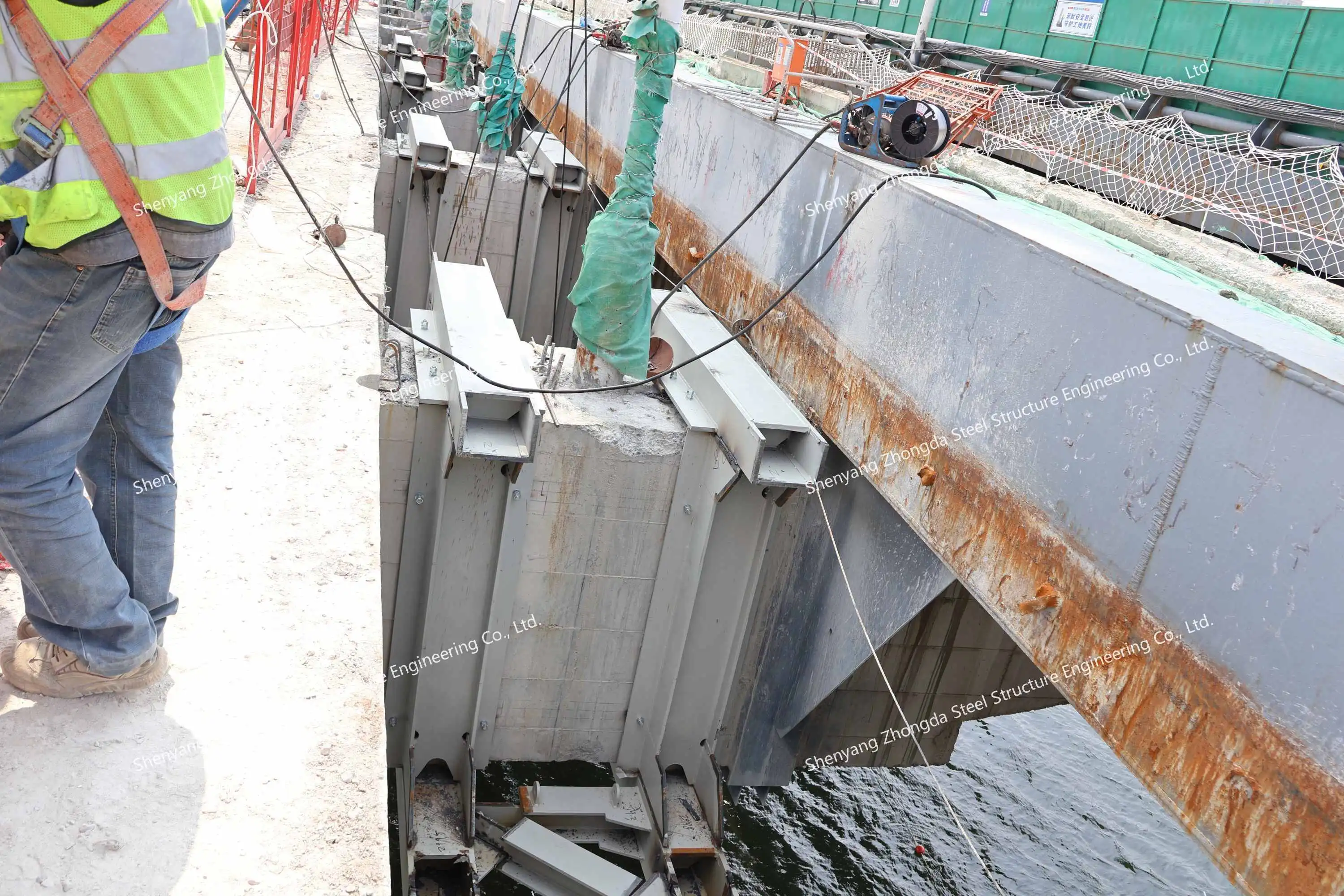
Our arch bridge systems focus repair work on parts that are easy to get to and can be replaced. Bearing checks are done at deck level, so no special tools are needed. The state of a coating is evaluated using simple visible guidelines and adhesion tests. Bolted details in structural links make it possible to replace a single member without affecting nearby parts. This is a very important benefit when damage is limited to one area, like when a car hits something, or debris hits something during a flood.
Procurement Considerations for Custom Steel Arch Bridges
Supplier Evaluation Criteria for Complex Infrastructure Projects
When choosing manufacturers for custom bridge systems, you need to look at more than just prices. You also need to look at their professional skills, which have a direct effect on how the project turns out. Transportation agencies and EPC contractors should give manufacturers extra credit if they show:
Manufacturing Capacity and Quality Systems: Welding facilities must keep up-to-date standards that are right for building bridges, especially EN 1090 Execution Class 4 for important structural parts. Our 60,000-ton annual capacity lets us work on multiple projects at once without affecting delivery dates, and our ISO 9001:2015 certification makes sure that quality management is consistent at all stages of production. We do CTOD (Crack Tip Opening Displacement) testing on all of our important welds, which goes beyond normal sampling procedures and gives us full confidence in the joint's stability under fatigue loading conditions.
Track Record in Similar Applications: Knowing that the maker has worked on projects with similar span ranges, loading conditions, and weather exposures in the past gives you faith in their abilities. Our portfolio includes Arctic bridges in Russia that were built to withstand temperatures as low as -60°C, mining infrastructure in Australia's harsh coastal environments, and urban landmarks that needed to look good while also being strong. These different projects show that we can adapt to the needs of each one.
Cost Components and Budget Forecasting Accuracy
To do a full cost study of a job, you need to know what factors affect the total installed cost. When making capital budgets for transportation projects, planners should think about:
Material prices change with the steel market, but for most arch designs, they make up 35 to 45 percent of the total project cost. High-strength alloys are more expensive than mild steel—for example, Q420qE costs about 15–20% more per ton than Q235B—but they work better, which means that smaller sections and less weight are needed overall. Even though the price per unit is higher, this trade-off usually leads to net material cost savings of 8–12%.
The costs of fabrication and testing include things like cutting, welding, putting things together, and checking the quality. Our automated welding systems and CNC fabrication equipment lower these costs by cutting down on labor hours and rework. We give our clients these benefits by offering competitive pricing. Testing procedures that make sure structures are strong account for 4–6% of the cost of construction. This is an investment that saves money on repairs and time delays that happen when quality problems are found during installation.
Logistics for transportation depend a lot on where the project is located and how big the parts are. Our modular method lets us ship arch ribs in 20-meter sections that are perfect for shipping in containers or as break-bulk. Each month, we can make up to 1,203 tons of these ribs. When compared to bigger field-spliced sections, this segmentation approach cuts shipping costs by 20–30% while keeping erection efficiency high thanks to perfectly machined connection ports that need little field fitting.
Best Practices for Maintenance and Longevity of Custom Steel Arch Bridges
Proactive Maintenance Protocols Maximize Asset Performance
Structured maintenance programs that handle predictable deterioration mechanisms before they damage structural integrity or force reactive fixes are the best way for transportation agencies that manage bridge networks to get the most out of their assets over their entire lifetime. Protocols that work include:
Every two years, there must be thorough inspections because federal rules say so. These checks should go above and beyond the bare minimum to check the state of the coating, the tightness of the connections, and the drainage system's ability to work. Our pentagonal box rib design makes these checks easier by letting inspectors get to the inside and look at key areas where water buildup could start rusting. The results of inspections are fed into maintenance management systems that keep an eye on condition trends and take action at the best time, like fixing small coating problems before they become major and cause section loss.
Maintenance on the drainage system: dealing with water is the best way for bridge workers to keep the metal from rusting. When sinks get clogged, water pools, and even the best protection systems can't handle being exposed to it for a long time. Cleaning the deck's drainage and sink systems once a year doesn't cost much, but it stops water from building up and speeds up the deterioration process by five to ten times in those areas.
Targeted Coating Repairs: Small coating damage found during regular inspections needs to be fixed right away to keep it from getting worse. Our fluorocarbon topcoat systems let you fix small areas with compatible materials without having to recoat the whole surface, which is a big benefit that lowers the cost of maintenance. Transportation maintenance crews can fix coating problems that cover several square feet during normal operations. This work only takes hours, compared to the days or weeks needed to recoat an entire panel while traffic is being controlled.
Advanced Monitoring Technologies Enable Predictive Strategies
When structure health tracking systems are added, maintenance changes from reactive repair programs to proactive management of assets. Our full-bridge tracking systems use more than 200 monitors to record real-time information about how structures behave under different weather conditions, traffic loads, and temperature changes. This constant flow of information has many benefits for operations, including:
Early Warning of Growing Problems: Strain gage patterns that show concentrated areas of stress can mean that connections are weakening or new load paths are appearing as buildings age. Finding these problems through monitoring lets maintenance work be done on time during planned closure times instead of having to make emergency repairs that slow down traffic and add to direct costs through mobilization premiums and faster material procurement.
Validation of Structural Models: Finite element models are used to figure out load ratings and make plans for future changes. Long-term monitoring data is used to calibrate these models. When you measure how a structure responds to known traffic loads, you can often find that the design assumptions were too conservative. This could lead to higher load ratings that make the structure last longer without having to be physically strengthened, which is helpful for when transportation networks are changing and heavier freight vehicles or transit loads need to be accommodated.
Improved Maintenance Scheduling: Instead of time-based plans that might do extra work or put off important repairs, condition-based maintenance driven by sensor data is used. This optimization cuts down on yearly maintenance costs by 15–25% while increasing safety margins by taking action based on real structure needs instead of estimates of how quickly they will break down.
Conclusion
Custom arches, including a Steel Arch Bridge, provide measurable lifecycle value by lowering the number of times they need to be maintained, making inspection processes easier, and making structures last longer. This protects the reliability of the transportation network while keeping operational budgets in check. When you combine high-tech materials, precise construction, and smart tracking, these buildings go from being cost centers that need constant attention to being strategic assets that help connect economies across regions. Transportation agencies and infrastructure builders who want to get the best return on their investments will find that properly designed arch solutions give them the cost-benefit mix they need for long-term infrastructure portfolios.
FAQ
How does the lifespan of custom arch systems compare to other bridge types?
When systems are properly maintained, they can last for 75 to 100 years, which is about the same as concrete alternatives and longer than most suspension bridge deck systems, which need to be replaced every 50 to 60 years. The main benefit is that parts can be replaced separately, so damaged or worn-out parts can be swapped out without affecting the whole structure. This means that the structure can be used for much longer by replacing the parts that wear out the fastest.
What advantages do tailored designs offer over standard prefabricated options?
Custom engineering makes the best use of materials for certain span lengths, load patterns, and weather conditions. Compared to standard designs that are changed to fit the needs of the project, this usually means using 10–18% less steel. This optimization directly leads to lower material costs, lower shipping costs, and easier assembly processes that need less crane capacity. These savings often cover special engineering fees while providing better performance characteristics that meet the needs of the project.
What criteria should guide supplier selection for bridge projects?
Give more weight to manufacturers who have the right quality certifications (ISO 9001, EN 1090), keep up enough production capacity to meet project deadlines without sacrificing quality, and show they can do engineering work by completing similar projects. As important as fabrication skills are, technical support during the design development and construction phases is just as important. Suppliers who work as collaborative partners instead of transactional vendors achieve better project outcomes by proactively solving problems and adding value.
Partner With a Trusted Steel Arch Bridge Manufacturer for Your Next Infrastructure Project
Zhongda has 20 years of experience working with complicated transportation infrastructure. They combine advanced fabrication skills with full engineering support to make sure that projects go smoothly from the initial design stages to the final commissioning. Our Q420qE arch bridge systems use high-quality materials, precise manufacturing, and tried-and-true building methods that make them easier to maintain and make sure they work well in tough situations. North American transportation agencies, EPC contractors, and infrastructure developers all benefit from our ISO-certified quality systems, production capacity of 60,000 tons per year, and technical consultation services that help solve problems that are unique to each site.
Get in touch with our engineering team at Ava@zd-steels.com to talk about your project needs and find out how custom arch solutions can lower lifetime costs while still meeting strict performance standards. You can look at our portfolio of finished projects and find technical information at zd-steels.com, which will help you make an informed purchase decision for your next big transportation infrastructure investment.
References
1. American Association of State Highway and Transportation Officials. (2020). AASHTO LRFD Bridge Design Specifications, 9th Edition. Washington, DC: AASHTO.
2. Connor, R.J., & Fisher, J.W. (2021). "Consistent Approach to Calculating Stresses for Fatigue Design of Welded Rib-to-Web Connections in Steel Orthotropic Bridge Decks." Journal of Bridge Engineering, 26(4), 04021013.
3. Pipinato, A., & Modena, C. (2019). "Structural Analysis and Fatigue Reliability Assessment of the Paderno Bridge." Practice Periodical on Structural Design and Construction, 24(2), 05019001.
4. Sustainable Bridges (2018). Assessment for Future Traffic Demands and Longer Lives: Guideline for Monitoring of Railway Bridges. European Commission Research Programme.
5. Transportation Research Board. (2019). Steel Bridge Design Handbook: Bridge Management. Publication No. FHWA-HIF-16-002-Vol. 22. Washington, DC: Federal Highway Administration.
6. Zhou, Y., & Chen, S. (2021). "Time-Progressive Corrosion Assessment Model for Immersed Tunnel Elements." Tunnelling and Underground Space Technology, 107, 103680.
YOU MAY LIKE