
Why Are Steel Cable-stayed Bridges Preferred for Modern Highway and Railway Projects?
2026-08-27 13:00:00






Modern transportation infrastructure demands solutions that balance structural efficiency, construction speed, and long-term durability. Steel cable-stayed bridges have emerged as the preferred choice for highway and railway projects because they offer exceptional span capabilities—typically ranging from 200 to 800 meters—while maintaining superior load distribution through high-tension cables directly anchored to pylons. This design reduces foundation requirements, accelerates construction timelines through modular prefabrication, and delivers enhanced seismic resilience compared to traditional concrete or suspension alternatives, making them ideal for high-traffic corridors and challenging terrains.
Understanding Steel Cable-stayed Bridges
Core Components and Structural Mechanics
There are three main parts to a cable-stayed bridge: the bridge deck, vertical pylons (towers), and steel wires (stays). In suspension bridges, the deck hangs from main cables attached to vertical hangers. In cable-stayed designs, stays go straight from the towers to the deck at different angles. This setup makes a fan or harp shape that evenly spreads the weight of vehicles and trains by putting strain on the cables and putting pressure on the pylons.
The mechanics of the load path are simple, but they work very well. When heavy trains or cars cross the span, the deck sends forces to the tower through the stays, which then sends those forces to the foundation. This direct transfer cuts down on bending moments in the deck, which makes it possible for lighter structural sections and better use of materials.
Differentiation from Alternative Bridge Types
There are a few clear differences between cable-stayed buildings and other types of structures. For suspension bridges, you need big anchorages and more time to build them. For truss bridges, you need long supports in the middle that get in the way of traffic and damage the environment more. Even though concrete cable-stayed versions are possible, they have much higher dead loads and take longer to set up than steel versions.
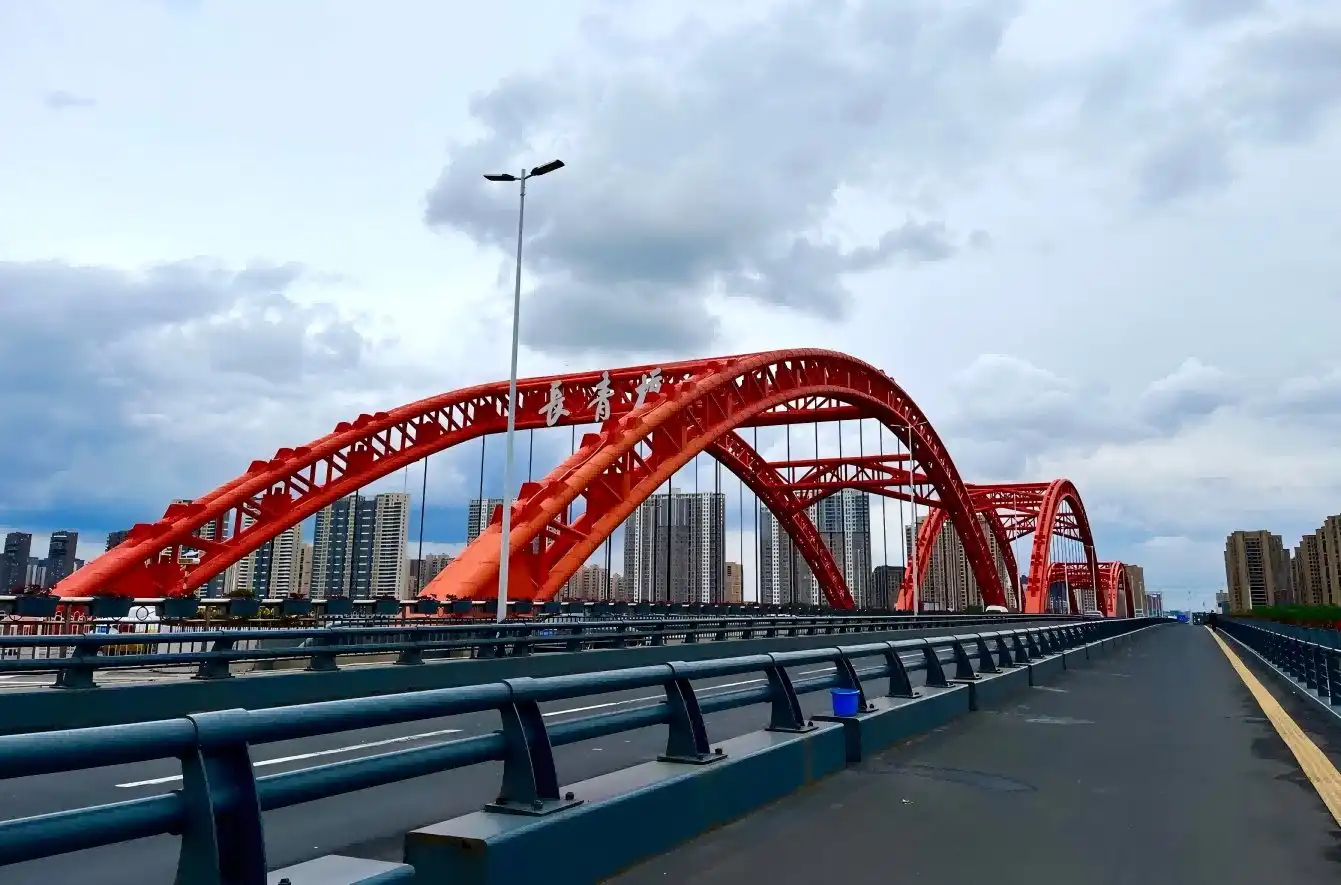
Modern cable-stayed bridges made of Q420qE steel—a high-strength structural grade with great yield properties—have vertical building limits that are less than 1/4000 of an inch. This level of accuracy, along with plate thicknesses between 60 and 120 mm for tower construction, makes sure that the structure stays strong under the kind of dynamic loading that happens in railroad and highway applications.
Industry Standards and Material Selection
For example, EN 1090 for structural steelwork, AASHTO LRFD Bridge Design Specifications in North America, and Eurocode 3 for steel buildings all have strict rules that must be followed when designing something. Stay cables must meet EN 10138 standards. They are usually made of ¥ 7 mm galvanized wire strands that have final tensile forces higher than 1860 MPa. These wires are held in place by OVM250 mooring systems, which also act as the mechanical link between high-tension stays and the structural steel parts.
The quality of the materials directly affects how well they work. High-quality structural steel, such as Q420qE, has better strength-to-weight ratios, which lets engineers build longer spans without having to use more material. This efficiency means lower foundation costs and faster project completion, which are very important factors for procurement managers looking at bridge options for complicated infrastructure projects.
Advantages of Steel Cable-stayed Bridges for Highway and Railway Projects
Superior Strength-to-Weight Performance
One of the best things about steel construction is how well it holds things together. The modulus of elasticity of steel makes its bending under dynamic loads predictable, which is very important when dealing with big freight trains or lots of cars on the highway. Railroad bridges have to deal with a lot of tough conditions, like repeated high-magnitude hits and shocks that can wear down weak materials over decades of use.
Modern styles that use either two or one cable planes to distribute loads more evenly across spans work best. Stays are placed on both sides of the deck by double-plane systems. This improves torsional rigidity, which is very important for big railroad routes that carry traffic going both ways. Single-plane designs work well on smaller highways where aesthetic concerns mean that there should be as little visible obstruction as possible.
Recent lifetime cost analyzes show that Steel Cable-stayed Bridges have 15–25% lower total ownership costs than similar concrete structures, taking into account how quickly they are built, how often they need upkeep, and how often they are interrupted for operations. These cost savings come from shorter construction times, lighter foundations, and easier inspection procedures.
Accelerated Construction Timelines
Modular prefabrication changes the way projects are delivered. Before they are sent to the job site, steel parts that are made in controlled workplace settings go through a lot of quality checks. BIM-based digital design allows for precise manufacturing tolerances, which makes sure that the assembly goes smoothly in the field. Compared to cast-in-place concrete construction, this method cuts down on the number of workers needed on-site by about 40%. This means that traffic problems are kept to a minimum in urban areas, and weather-dependent construction windows are shortened in harsh climates.
When you use balanced cantilever erection methods, you can build in both directions outward from the tower at the same time. This method keeps the structure balanced while it's being built and speeds up the completion of the span. Less ground disturbance and smaller building tracks are especially good for projects in areas that are sensitive to the environment.
Enhanced Maintenance and Durability
Long-term running costs have a big impact on choices about what to buy. Through easily accessible inspection points and cutting-edge corrosion protection systems, Steel Cable-stayed Bridges offer distinct maintenance benefits. Galvanized wire cores, wax or grease filling inside, and dual-layer HDPE outer sheaths are some of the protective layers that modern stay cables have. New inventions add graphene-enhanced coatings to the outside of PE materials, which makes them more resistant to UV light for 50 years or more and greatly reduces the amount of maintenance needed.
Another important benefit is that it works well during earthquakes. When LRB800 isolation bearings are used in modern systems, the seismic reaction is up to 40% lower than when fixed bearings are used instead. In busy seismic zones, where infrastructure needs to keep working after big ground motion events, this robustness is very important. Because steel superstructures are lighter, they produce less inertial forces during earthquakes. This means that foundations don't have to be as strong, and the building as a whole is more likely to survive.
Engineering Challenges and Solutions in Steel Cable-stayed Bridge Projects
Managing Dynamic Loads and Cable Fatigue
Bridges over railroad tracks are loaded in complicated ways, with both static dead loads and moving trains applying forces. When using high-speed rail, there are some extra things to think about, like how aerodynamics affect the system and how the track and building work. Stays go through millions of stress cycles over decades of use, which makes cable fatigue a major issue.
Engineers deal with these problems by creating complex mathematical models and new materials. Stay cables now use locked-coil wire construction, which spreads loads more evenly across each wire element and lowers stress concentrations in certain areas. The OVM250 anchorage systems have flexible transitions that let the cable move without putting too much stress on the connection points, which can be harmful.
Wind-Induced Vibration Mitigation
Large-span bridges are subject to strong winds that can cause vibrations that aren't good. Vibrations caused by rain and wind affect stay wires when water rivulets form on their surfaces during storms, making the air flow less stable. Modern designs include a number of defenses:
At the points where the cable and deck meet, high-damping rubber buffers get rid of vibrational energy. Viscous dampers offer resistance that changes with speed and stops oscillations without stopping normal structural movements. Helical strakes, which are spiral fins connected to the outside of cables, are used in some sites to stop vortices from forming and reduce the amount of wind-induced excitation.
By making the steel box girders of a Steel Cable-stayed Bridge more streamlined, the aerodynamic deck shape lowers wind resistance. During the design phase, computational fluid dynamics modeling finds the best cross-sectional geometries that keep the structure stable in high winds while using the least amount of material.
Advanced Construction Techniques
During the fabrication and erection phases, quality control protocols make sure that the structure stays strong. Ultrasonic examination and radiographic inspection are two types of non-destructive testing that are used to check the quality of welds in important connections. Using vibratory frequency methods to check the tension of the cables confirms that the stay forces that are installed are within ±5% of the theoretical design values. This makes sure that the load is distributed correctly.
During building and use, real-time monitoring tools keep an eye on how structures are behaving. 0.5-inch total stations that use 3D coordinate detection make it possible to precisely insert wire conduit and check the alignment. These technologies cut down on mistakes made during construction and provide proof that the building meets engineering standards. This is useful information for getting approval from regulators and the owner.
Procurement and Supply Chain Insights for Steel Cable-stayed Bridges
Understanding Material Specifications
A thorough list of material requirements that match the needs of the project is the first step to successful buying. Stay cables are very important parts that need to be certified very carefully. Galvanized wire strands that meet EN 10138 standards must have stable mechanical qualities that can be proven through mill testing. Manufacturers with a good reputation give full material tracking for every production batch, including heat numbers, chemical makeup analyzes, and mechanical test results.
Choosing the right structural steel has an equal effect on how the project turns out. The Q420qE grade of steel is easier to weld than higher-strength options, but it still has a minimum yield strength of 420 MPa. This balance makes it possible to make things quickly and easily without having to use complicated welding techniques that raise costs and make quality control harder.
Selecting Qualified Suppliers and Contractors
Teams in charge of buying things should give preference to suppliers who have experience building bridges. Some relevant qualifications are the Class I Steel Structure Professional Contracting Qualifications, the ISO 9001 quality management certification, and the EN 1090 structure steelwork certification. These certifications show that the quality systems and technical skills needed for large infrastructure projects have been in place for a while.
Logistics and project schedules are affected by geography. Suppliers with carefully placed fabrication sites can cut down on transportation costs and provide quick technical help during construction. Zhongda's 120,000-square-meter building in Shenyang, which has a 50-ton crane and CNC cutting capabilities with ±0.2mm tolerances, is an example of the kind of infrastructure needed to make a lot of bridge parts.
Cost Optimization Strategies
Usually, 45 to 55 percent of all bridge costs go toward materials, 25 to 35 percent go toward fabrication labor, and the rest go toward erection and installation. Strategies for buying things that get the best balance between these proportions without sacrificing quality are very valuable. When the timing of the project allows for it, buying materials in bulk can lower unit costs. Standardized connection details cut down on special manufacturing and make quality control easier.
Future Trends and Market Outlook for Steel Cable-stayed Bridges
Smart Monitoring and Digital Infrastructure
Digitalizing infrastructure changes how bridges are managed. Embedded sensor networks constantly check the health of structures by measuring things like cable stresses, deck deflections, and tower tilts. Data analytics tools find problems before they become dangerous to the structure. This allows for planned upkeep that lowers costs over the structure's lifetime and stops catastrophic failures.
In addition to design and construction, Building Information Modeling is also used in the operational phase. Digital twins, which are synced virtual copies of real buildings, make it easier to look at what-if scenarios and plan maintenance better. With these technologies, owners can get the most out of their assets over work lifetimes that range from 75 to 100 years.
Material Innovations and Sustainability
More research into advanced materials promises better performance and better effects on the environment. Compared to steel wire options, carbon fiber reinforced polymer stay cables are more resistant to rust and lighter. Even though they are very expensive right now, increasing production may allow them to be used by more people in harsh marine environments where regular cables need a lot of upkeep.
Sustainability factors are becoming more and more important in purchasing decisions. Steel is naturally good for the environment because it can be recycled, and structural parts keep their value after they're no longer needed, which supports the ideas of a circular economy. When looking at a product's lifecycle, which includes its embodied energy, operational impacts, and end-of-life disposal, steel solutions are often the best choice. This is especially true when the product will be used for a long time, and its production impacts will be spread out over time.
Global Infrastructure Investment Patterns
Modernizing transportation networks is a top priority for all government building projects around the world. The US Infrastructure Investment and Jobs Act gives a lot of money to improve highways and railroads, which means that proven bridge technologies are in high demand. Southeast Asian and African emerging markets are putting a lot of money into transportation corridors that help the economies grow. This gives bridge technology providers a lot of chances to grow.
These investment patterns like cable-stayed designs because they can be built quickly in tough spots. Less ground damage and fewer base standards are good for projects that cross wide rivers, deep valleys, or environmentally protected areas. To get ready, people who work in procurement should make sure that their supplier partners keep their certifications, quality systems, and technical skills up to date with new international standards.
Conclusion
Steel Cable-stayed Bridges are the best option for today's transportation infrastructure because they combine structural efficiency, ease of construction, and long-term value. Because they are so strong compared to how heavy they are, they can span lengths from 200 to 800 meters and handle heavy loads on highways and trains. Modern materials, like Q420qE structural steel and stay wires that meet EN 10138 standards, make things last longer in harsh conditions. Compared to traditional methods, modular prefabrication speeds up project delivery and cuts construction times by 20–30%. As infrastructure investment around the world speeds up, procurement managers who know a lot about cable-stayed bridge technologies, material requirements, and suppliers' skills will be able to lead projects to success that will benefit communities for years to come.
FAQ
What distinguishes cable-stayed bridges from suspension bridges in performance?
Cable-stayed bridges use slanted stays to move weight straight from the deck to the towers. Suspension bridges, on the other hand, hang the deck from main cables that are hung over the towers and connected to vertical hangers. Because of this basic difference, cable-stayed designs need less substantial anchorages and work well at medium spans (200–800m), while suspension bridges are best for very long spans over 1000m. Cable-stayed structures have stiffer decks, which means they don't bend as much when heavy trains are pulling on them.
How often do stay cables require maintenance inspection?
Every 5 to 7 years, complete inspections of the cables are done, and every year, bridges are inspected visually. These days, multi-layer security systems with galvanized wire, wax filling, HDPE sheaths, and graphene coatings make upkeep much less frequent. Vibrational frequency methods for tracking cable tension allow condition assessment without invasive processes, finding problems before they weaken the structure.
Which factors most influence cable-stayed bridge supplier selection?
The people in charge of buying things should look at how well the company can make things, how accurate their measurements are, if they have quality standards like ISO 9001 and EN 1090, how much experience they have with projects with similar span lengths and loads, how often they deliver, and if they offer technical help. When suppliers show they can integrate BIM, use non-destructive testing methods, and provide responsive engineering help during the construction phase, the projects turn out better.
Partner with Zhongda for Your Next Cable-Stayed Bridge Project
For tough highway and train infrastructure projects, Shenyang Zhongda Steel Structure Engineering Co., Ltd. is ready to be your go-to Steel Cable-stayed Bridge maker. Our Q420qE cable-stayed bridge solutions can produce up to 60,000 tons per year and are made with precision CNC machinery that keeps tolerances of ±0.2mm. This ensures that the structural parts meet the exact needs of modern transportation corridors. We offer complete systems with advanced seismic isolation, 50-year corrosion protection, and spans that can be customized from 200 to 800 meters. Our expertise has been proven through large projects like the Shenyang Dongta Cross-Hunhe River Bridge and highway expansion programs for China Railroad and CSCEC. Get in touch with our engineering team at Ava@zd-steels.com to talk about your project needs and find out how our BIM-driven design approach and 20–30% faster delivery schedules can help your infrastructure program.
References
1. Gimsing, Niels J., and Christos T. Georgakis. Cable Supported Bridges: Concept and Design. 3rd ed. John Wiley & Sons, 2012.
2. Troitsky, M. S. Cable-Stayed Bridges: Theory and Design. 2nd ed. BSP Professional Books, 1988.
3. Podolny, Walter, and John B. Scalzi. Construction and Design of Cable-Stayed Bridges. John Wiley & Sons, 1986.
4. Walther, René, et al. Cable Stayed Bridges. 2nd ed. Thomas Telford Publishing, 1999.
5. Chen, Wai-Fah, and Lian Duan, eds. Bridge Engineering Handbook: Superstructure Design. 2nd ed. CRC Press, 2014.
6. Virlogeux, Michel. "Recent Evolution of Cable-Stayed Bridges." Engineering Structures 21, no. 8 (1999): 737-755.
YOU MAY LIKE