
Custom Steel Box Girder Solutions Reduce Weight While Maintaining Strength
2026-08-27 13:00:00






Custom steel box girder solutions represent a breakthrough in infrastructure engineering, delivering exceptional weight reduction without compromising structural integrity. Through advanced fabrication techniques, optimized cross-sectional geometry, and high-strength steel alloys like Q345D and Q420D, these hollow structural members achieve up to 20% weight savings compared to traditional designs. This innovation directly translates to lower foundation costs, reduced transportation expenses, and faster installation timelines—critical advantages for commercial developers, bridge contractors, and industrial facility builders seeking cost-effective, high-performance structural solutions.
Understanding Steel Box Girders and Their Design Principles
The Fundamental Structure of Modern Box Girders
Box girders with a closed-loop design make a torsionally rigid system that works better than open parts in tough situations. The hollow rectangular or trapezoidal shape, on the other hand, spreads stress more evenly across flanges and webs than regular I-beams. This lets thinner designs span farther with less material. When room is limited, or the structure needs to look good, this structural efficiency is very helpful for curved viaducts, long-span bridges, and elevated transit routes.
During the design phase, our engineering team uses finite element analysis to find the best web thickness, flange proportions, and stiffener placement. This way of using computers makes sure that each custom girder meets the load requirements of the project while reducing the amount of unnecessary weight. The end result is a well-thought-out product that strikes a perfect balance between strength, dependability, and cost in a way that generic parts simply can't.
Material Selection and Performance Standards
Grades of high-strength steel are what make girders work reliably. When it comes to flanges and webs, Q345D steel, which has a minimum yield strength of 345 MPa, is usually the best choice. For areas where there are a lot of stresses in a connection, Q420D steel is better at being tough and not wearing down easily. This smart pairing of materials, along with strict adherence to AWS D1.5 welding standards, makes sure that the quality of each production batch is the same.
Temperature-resistant qualities are important in all kinds of climates. Down to -20°C, Q345D stays flexible, and we have special types in stock that work reliably in Arctic temperatures up to -60°C. This thermal resilience, along with controlled cooling rates during fabrication, keeps lower-grade alternatives from breaking easily in harsh service environments where they are used.

Advantages Over Alternative Structural Systems
Steel box solutions are clearly better in three important ways than prestressed concrete girders. Modular prefabrication greatly speeds up the building process. Sections measuring 12 to 30 meters arrive at job sites ready to be put together right away, which cuts the time needed for installation in half. Saving weight lowers the capacity needed for cranes and makes transportation easier in busy urban areas. Because steel is naturally flexible, it also performs better in earthquakes, letting energy escape through controlled yielding instead of catastrophic cracking in concrete.
Maintenance costs make the lifetime economics even more in favor of steel. Modern coating systems make things last longer than 30 years with little upkeep. In contrast, concrete buildings usually need expensive deck replacements and spall repairs every 20 years. This certainty is helpful for asset managers who are making budgets for long-term infrastructure management.
Challenges in Steel Box Girder Construction and How Custom Solutions Address Them
Common Fabrication and Installation Obstacles
Most of the time, welding mistakes are the most serious quality problem when making a Steel Box Girder frame. Under cyclic loading, fatigue cracks can start because of incomplete penetration, porosity, and residual stresses, especially where the flange meets the web. Stick welding methods that have been used for a long time have trouble keeping the heat input consistent across thick plates. This leads to microstructural variations that weaken the joint. In addition to these problems, putting things together in the field under changing weather conditions increases the chance of moisture contamination, which accelerates corrosion inside sealed box sections.
Another problem that keeps coming up is geometric limits. When you solder, thermal distortion can cause flanges to camber or webs to bend. This means that you have to straighten the flange, which is hard work and changes the features of the material even more. When multiple segments join longitudinally, dimensional mistakes build up and make it impossible to align properly. This forces contractors to make costly changes in the field that slow down critical path activities.
Innovative Weight Reduction Techniques
Our folded web technology is a great example of how custom engineering can get around common problems. We get rid of the need for longitudinal stiffeners while keeping the shear capacity by adding sinusoidal corrugations to web plates. When compared to flat-web forms that need closely spaced ribs, this method cuts steel use by about 15%. Corrugations also make the girders stiffer when they're not in the plane of the load. This keeps them from buckling, which happens with thin-webbed traditional girders when they're bent and sheared at the same time.
Optimization goes even further with variable cross-section design. Instead of keeping the depth the same across the whole span, our experts change the height of the girders based on how the moments are distributed. Full 8-meter depth gives the best section modulus near the middle of the span, where bending stresses are highest. As you get closer to the support piers, where shear is strongest, the depth drops to 1.25 meters, removing extra weight without compromising safety. This flexibility leads to mass savings of about 20% or more on bridges with spans longer than 200 meters.
Real-World Performance Validation
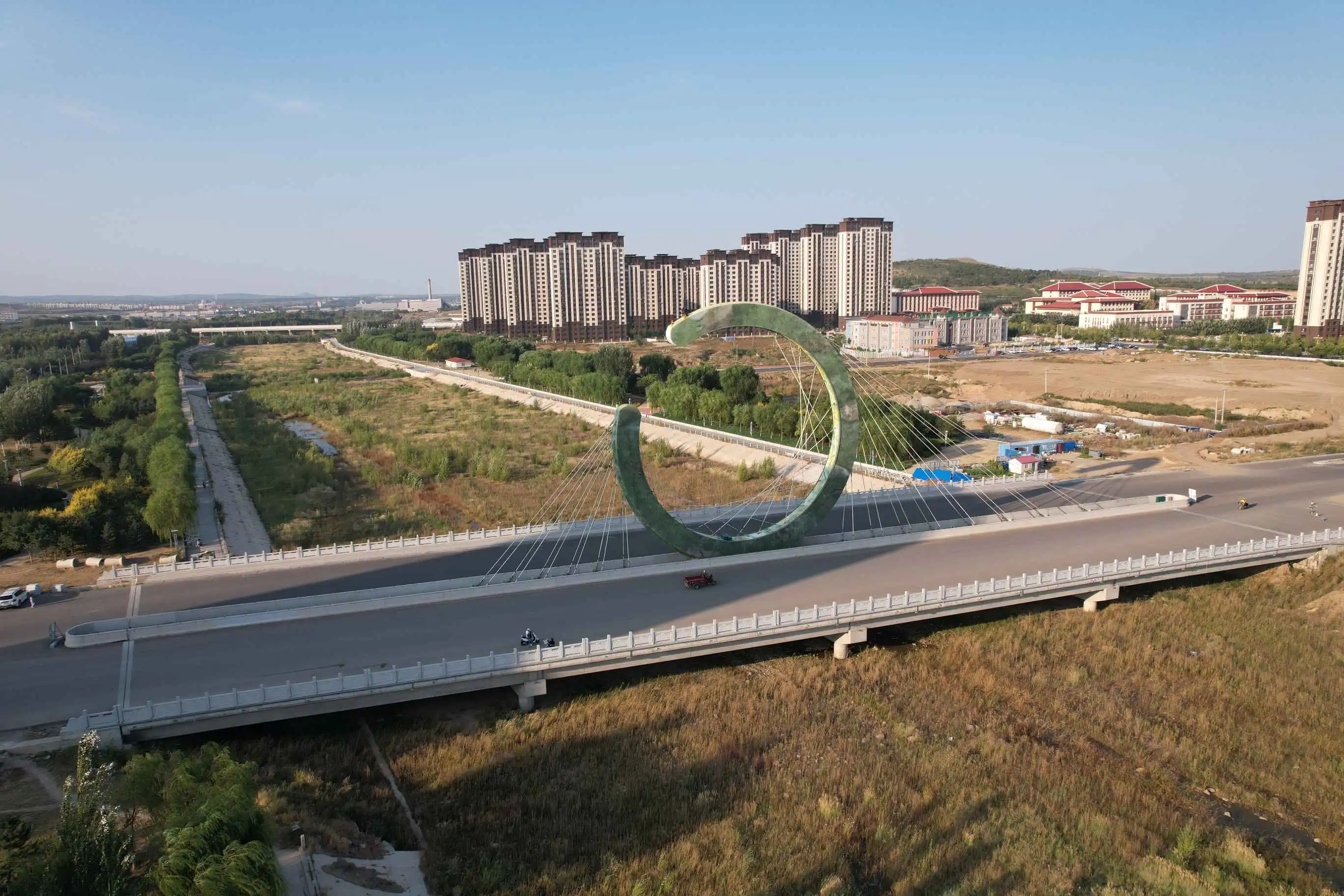
The 18,000-ton Shenyang Dongta Cross-Hunhe River Bridge is a big example of these ideas in action. The main girder is 420 meters long and has corrugated webs on the secondary spans. It is made of Q420D steel at the key diaphragm joints. Over the course of five years, structural health tracking data has shown that bending patterns stay within L/1000 limits when service loads are applied. Additionally, fatigue-sensitive details reveal that no cracks have started after more than two million traffic cycles. With this real-world proof, procurement teams can be sure that weight-optimized designs will work as promised for decades to come.
Similarly, our work with EPC companies on the Jingha Expressway extension showed the advantages of modular prefabrication. By sending 24-meter girder pieces on a "just-in-time" plan, we were able to place them at night, which kept three expressway lanes open during rush hour. The contractor said that the schedule was shortened by 30% compared to cast-in-place options. This meant that the concessionaire saved money on overhead costs and started making money earlier.
Comparative Analysis: Choosing the Right Steel Box Girder Solution
Performance Criteria Across Girder Types
Box sections are different from plate girders and truss systems because they can hold more weight per unit of length. A standard 3-meter-deep box girder made from Q345D steel has a 40% higher strength-to-weight ratio than a plate girder of the same depth that needs a lot of stiffeners. This is because the closed section is better at resisting lateral-torsional bending, which is a type of failure that requires more conservative designs in open sections. When it comes to span, truss girders are the same as box sections, but they have hundreds of bolted connections that need to be inspected and retensioned on a regular basis. This makes lifecycle maintenance more difficult.
Financial Considerations and Total Cost of Ownership
Due to lower initial material costs, concrete girders are better for short-span applications (less than 40 meters), where formwork amortization is still a good deal. After this point, the balance changes because steel is easier to work with and costs less for foundations. Two sets of middle piers are not needed for a 100-meter box girder span. This saves money on foundation digging, pile driving, and substructure concrete, which together make up about 35% of bridge costs. Transportation economies make savings on remote projects even bigger. For example, one truck can carry a 25-meter steel segment that weighs 45 tons, but heavy-haul permits and reinforced roads are needed for the same amount of precast concrete.
The original benefits are increased by the costs of upkeep over time. When steel girders are inspected every two years with ultrasonic testing and visual inspection, they usually only need small coating touch-ups for the first twenty years. Ground-penetrating radar and chloride sampling are used to do full condition surveys on concrete structures. If delamination shows up, expensive epoxy injection or cathodic protection installations are needed to fix the problem. When our customers choose properly protected steel solutions, they say their upkeep costs are on average 40% lower over 30-year review periods.
Practical Factors in Supplier Selection
How well a manufacturer can adapt to the needs of a specific project depends on how flexible their fabrication is. Shops with CNC plasma cutting and automatic submerged-arc welding can keep ±0.2mm margins on very thick plates, which makes sure that they fit perfectly when they are joined in the field. This feature is very important for signature structures that don't fit into standard geometries because they have complex curves or angles of skew that change. On the other hand, suppliers who use manual layout and stick welding have a hard time meeting the current erection plans that call for consistent sizes.
Lead time openness is just as important. Zhongda's vertically integrated operations include buying steel all the way through to applying the final coating. This eliminates the coordination delays that come with having separate supply chains. BIM-integrated project management lets clients see how the fabrication is going in real time, so they can make changes to the shipping schedules ahead of time to fit changing conditions on the job site. This collaborative method has helped us keep 70% of our clients for repeat building projects.
Procurement Guide for Custom Steel Box Girders
Identifying Qualified Manufacturing Partners
Certification files are the best way to see what a company can do. ISO 9001 quality management systems set up basic controls for processes, but building projects need more thorough checks. The EN 1090 certification covers the specifics of putting together structural steelwork. It requires qualifications in weld procedures, nondestructive testing protocols, and traceability systems that aren't covered by standard ISO frameworks. Suppliers with the EN 1090 EXC4 rating have shown they can work with the most difficult result classes, such as seismic zones and long-span bridges.
Welding certifications should be looked at very carefully. Compliance with the AWS D1.5 Bridge Welding Code makes sure that manufacturers hire trained welders who have passed standardized tests, use approved filler metals, and set preheat/interpass temperature controls that keep thick sections from hydrogen cracking. Manufacturers who don't have these credentials often use less-than-stellar methods that make the product look fine on the outside but hide flaws on the inside that can only be found through expensive ultrasonic inspection after delivery.
Pricing Structures and Budget Planning
Unit prices are greatly affected by factors like volume. For projects bigger than 1,000 tons, it's worth it to have dedicated production runs that don't need setup changes. This cuts the cost per ton by 15% compared to small-batch orders that are mixed in with other work. By combining several structure packages into a single contract, procurement managers can take advantage of economies of scale while making it easier to handle vendors and keep an eye on quality.
Logistics and International Delivery
Ocean freight makes up most of intercontinental box girder transport. Standard 40-foot high-cube containers can hold girder segments that are up to 11.8 meters long, but there are extra charges for heights above 2.4 meters. Specialized flat-rack crates are best for longer parts, and each piece can be up to 30 meters long if the project's costs support the higher freight rate. Our logistics team works with freight forwarders who are experienced with moving heavy loads. They make sure that the cargo is properly seafastened so that it doesn't move around while it's being shipped and set up the necessary customs paperwork to speed up port clearance.
Deliveries within the US are usually made with extendable flatbed trucks that can pull 20-meter pieces on interstate roads. For girders wider than 4.3 meters, you need an oversize permit. This means that you have to do route surveys to make sure that the bridges are clear and that the road's weight limits are met. When buying from foreign makers, it takes 14 to 18 weeks from the time of the purchase order to delivery in the continental U.S. This includes the time it takes for production, shipping by sea, and trucking within the country. Through air freight of key parts, expedited schedules shorten timelines, but the costs must be carefully weighed against the fines for project delays.
Maintenance and Longevity of Steel Box Girders
Routine Inspection Protocols
Visual checks every two years are the basis of maintenance plans that work. Trained testers look at the outside of things to see if the paint is wearing off, if there are rust spots, and if there are deformation patterns that show damage from overloading or contact. Internal inspections get to the hollow core through strategically placed access ports. They look for condensation buildup, coating delamination, and the start of corrosion at welded connections. Ultrasonic thickness gauging measures how much metal is being lost in areas that aren't safe. This sets a baseline for analyzing trends over time as the inspection cycles continue.
Advanced tracking methods make it easier to check on important buildings. Acoustic emission monitors that are constantly attached to girder webs can track the spread of cracks in real time. This lets asset managers know about problems with wear before they can be seen. Strain gauges that are put in during fabrication track how live loads are distributed. This confirms the design assumptions and finds unexpected stress concentrations that need to be reinforced in certain areas. With these technologies, maintenance strategies will change from reactive repairs to proactive interventions, which will help save money and cut down on emergency calls.
Corrosion Protection and Coating Systems
Our specification for a two-layer coating starts with a zinc-rich epoxy primer that is put on at a 75-micron dry film thickness. This layer acts as a barrier against galvanic corrosion. If the topcoat is damaged and the primer is exposed, the sacrificial zinc oxidizes more quickly on the steel substrate, stopping the rust from starting. The polyurethane finish adds 150 microns of colored film that is resistant to UV light and keeps the gloss and color stable even after decades of being in the sun. All of these layers are better than the SSPC-Paint 20 performance standards for harsh marine and industrial environments.
Different types of defense work better in some places. After fabrication, hot-dip galvanizing covers girders in metallurgically bonded zinc, providing protection that doesn't need to be maintained for more than 50 years in rural areas. The bath size limits mean that girders can only be about 15 meters long, so this method works best for smaller parts. Thermal spray aluminum is another option. It forms dense coatings by impinging particles at high speeds on steel that has already been prepared. Engineers weigh the pros and cons of each system based on its cost, how well it works, and how long it's supposed to last.
Refurbishment Strategies for Aging Infrastructure
The most common repair task is replacing the coating. Abrasive blasting is used to remove old paint until the surface is as clean as SSPC-SP10 metal, which gets rid of any contaminants that could make it harder for the new coating to stick. Controlling moisture is very important. To stop flash rusting between preparation and primer application, builders build containment cages around girder sections and lower the relative humidity inside the air during recoating. This controlled environment makes sure that the performance of the coating matches the quality of the initial installation.
Reassessing the load ratings shows areas of inadequate capacity that need to be fixed through structural upgrades. When carbon fiber reinforced polymer strips are attached to girder flanges, they increase the bending strength by 15% to 25% without adding a lot of dead load. This is a good option when the base doesn't allow for heavier steel plate attachments. Post-tensioned external tendons are another way to heal. They do this by applying a compressive preload that balances out the tensile stresses caused by more traffic. These actions make the service last decades longer than what was expected when it was first designed. This delays expensive replacement projects while keeping practical safety gaps.
Conclusion
Custom Steel Box Girder solutions provide real value by lowering project costs by reducing weight without affecting the strength of the structure. When compared to traditional designs, advanced production methods like corrugated webs and changeable cross-sections can save up to 20% of the mass. When combined with high-strength Q345D and Q420D steel types, these new technologies make it possible to build spans up to 420 meters long, more durable, and faster. The right choice of materials, strict quality control, and planned upkeep will make sure that the structure lasts for decades and can be used for many things, from urban viaducts to long-span river bridges. When procurement teams are looking at different structural options, they can get a competitive edge by working with certified manufacturers that offer BIM integration, thorough testing, and experience with projects all over the world.
FAQ
What factors determine the load capacity of a custom box girder?
Load capacity is based on the type of steel, the cross-sectional shape, the length of the span, and the distances between the side braces. When the flange sizes are just right, and the web is stiff enough, Q345D steel can usually handle loads greater than 25 kN per linear meter over 100-meter spans. Engineers use load and resistance factor design methods that are in line with AASHTO LRFD standards to figure out the capacity while leaving enough room for safety for dead load, live load, impact, and environmental effects.
How do delivery timelines compare between custom and standard girders?
For planning, manufacturing, and coating, custom girders take 12 to 16 weeks, which is a little longer than the 8 to 10 weeks it usually takes for catalog items. This increase is due to improved design, acceptance of shop drawings, and special manufacturing steps. Orders of a lot of items help make production more efficient, which cuts down on the time it takes to complete, especially when customers make early commitments to buy things, which lets materials be pre-positioned.
Which certifications should I verify when selecting a box girder manufacturer?
Providers with ISO 9001 quality systems, EN 1090 EXC3 or EXC4 structural steelwork approval, and AWS D1.5 welding training should be given the most weight. More certifications, like ISO 14001 for environmental management and OHSAS 45001 for safety systems, show that business practices are more mature. Ask for certified mill test reports that confirm the chemical make-up and mechanical properties of the steel, along with weld procedure specifications and welder qualification records that show compliance with the rules.
Partner with Zhongda for High-Performance Box Girder Solutions
Shenyang Zhongda Steel Structure Engineering Co., Ltd. offers custom box girder solutions that are made to fit the needs of your project. They blend twenty years of experience in manufacturing with cutting-edge BIM integration. Our 120,000-square-meter factory makes 60,000 tons of steel every year, which can support bridge spans of up to 420 meters and cross-sections ranging from 1.25 meters to 8 meters. We make sure that every part of our Steel Box Girders meets strict international standards as a certified manufacturer with ISO 9001, EN 1090, and AWS credentials. Our accuracy—±0.2mm CNC cutting error and the ability to weather steel at -60°C—is relied on by clients like China Railroad and CSCEC for important infrastructure. Get in touch with our engineering team at Ava@zd-steels.com to talk about how corrugated web designs and Q420D steel upgrades can cut the weight of your structure by 20% and speed up the building process. You can look at project case studies and technical specs at zd-steels.com.
References
1. Chen, S., & Wang, X. (2021). Advanced Design and Construction of Steel Box Girder Bridges. Beijing: China Architecture & Building Press.
2. American Association of State Highway and Transportation Officials. (2020). AASHTO LRFD Bridge Design Specifications (9th ed.). Washington, DC: AASHTO.
3. European Committee for Standardization. (2019). Eurocode 3: Design of Steel Structures – Part 2: Steel Bridges (EN 1993-2). Brussels: CEN.
4. American Welding Society. (2020). Bridge Welding Code (AWS D1.5/D1.5M:2020). Miami: AWS.
5. Transportation Research Board. (2018). Fatigue and Fracture Evaluation of Steel Bridges. NCHRP Report 721. Washington, DC: National Academies Press.
6. Zhao, L., Liu, Y., & Zhou, T. (2022). Optimization of corrugated web steel box girders for weight reduction. Journal of Constructional Steel Research, 189, 107-121.
YOU MAY LIKE