
High-Performance Steel Cable-stayed Bridges Provide Durable Solutions for Urban and Marine Crossings
2026-08-30 13:00:00






Modern infrastructure demands bridges that combine exceptional strength with elegant engineering. A Steel Cable-stayed Bridge represents a sophisticated structural solution where the deck connects directly to vertical towers through high-tension cables, creating an efficient load-transfer system. This design excels in urban corridors and coastal environments where long spans, reduced foundation requirements, and rapid construction timelines prove essential. Unlike traditional beam bridges or suspension systems, cable-stayed configurations utilize Q420qE high-strength steel and advanced anchorage technology to deliver superior performance across challenging terrains and heavy traffic conditions.
Understanding Steel Cable-Stayed Bridges: Design and Functionality
Core Structural Components and Load Transfer Mechanics
Cable-stayed bridges are built around three linked parts that work together to hold the bridge up. The 60–120 mm thick Q420qE steel plates that make up the tower are the main vertical support, and they keep the vertical error range at 1/4000 or less. This level of accuracy makes sure that the cable geometry and load distribution are perfect across the whole span.
Stay cables are the most important connection between the tower and the deck. They are made up of OVM250 type anchorages and 7mm stainless steel wire that meets EN 10138 standards. Because these cables use direct tension to move both live and dead loads, they don't need any middle piers and can have main spans of 200 to 800 meters. The cable system is connected to the deck through carefully planned connection points that spread traffic loads evenly across the structure.
Design Configurations: Fan, Harp, and Semi-Fan Arrangements
How the cables are arranged has a big effect on how well the structure works and how nice it looks. The fan design, in which cables radiate out from a single place on top of the tower, makes the best use of materials and provides excellent stiffness for high traffic loads. Parallel cables in harp arrangements make the profiles look great and make the geometry of the deck connections easier.
Semi-fan designs take the best parts of both systems and place cable anchor points along a clear section of the tower. This mixed method finds a good balance between how well the structure works and how easily it can be built. It works especially well for projects that need to meet specific span requirements or have limited site space. When choosing the best design for their infrastructure project, procurement teams should look at these configurations based on span length, expected traffic volume, and environmental exposure.
Site-Specific Adaptations for Urban and Marine Environments
There are some problems that are only found in urban crossings, like limited building zones, current utility networks, and strict rules for managing traffic. By using flexible prefabrication and faster assembly methods, cable-stayed systems get around these problems. When working in marine environments, you need to protect against corrosion better and think about things like wind exposure, navigational clearances, and seismic activity.
Zhongda's Q420qE Steel Cable-stayed Bridge systems have LRB800 type isolation bearings that lower seismic response by 40%. This makes them perfect for areas near the coast that are prone to earthquakes. The advanced PE outer sheathing and graphene-enhanced inner coatings give the product 53 years of UV resistance. This makes it last longer in harsh marine environments where salt spray and moisture speed up material degradation.
Advantages and Performance Benefits of Steel Cable-Stayed Bridges
Superior Durability and Load-Bearing Capacity
With the direct cable-to-deck connection method, there aren't as many structural parts in the middle of the bridge that are needed in standard designs. This simplified load path makes the structure work better and lessens the number of places where it could fail. Bridges that use this technology can easily handle heavy commercial traffic, rail transit systems, and changing loads from wind and earthquakes without any damage to the structure.
Environmental and Economic Advantages
More and more, buying teams that care about sustainability see that steel is good for the environment. Green building efforts and business responsibility goals are met by the material's ability to be recycled, lower carbon footprint during fabrication, and lower amount of construction trash. Steel Cable-stayed Bridges need about 30% less material volume than comparable concrete structures, which directly lowers embodied carbon and transportation emissions.
There are economic benefits throughout the whole lifetime of a project. Prefabrication and modular assembly speed up the building process, which lowers the cost of labor on the job site and keeps traffic moving as smoothly as possible in cities. Maintenance needs are much lower than for concrete bridges, which need to be checked for cracks, spalling, and rebar rust on a regular basis and fixed if they are found. When steel parts are properly maintained, they can last for many more years—often over 100 years—which means that the money spent on infrastructure is better used.
Performance Comparison with Alternative Bridge Types
When choosing a bridge, people have to think about how much it will cost, how long it will take to build, how much it will cost to maintain, and how much it will cost over its entire life. Even though suspension bridges can have very long spans, they need huge anchorages and a lot of base work, which makes them unsuitable for many urban areas. Traditional beam bridges have limited spans and need a lot of support piers that make it harder to navigate waterways and hurt the environment.
Cable-stayed designs are the best of both worlds because they can span up to 800 meters without needing the huge supports that suspension bridges do. The structure system has built-in redundancy, so if one wire fails, the bridge as a whole is still stable. Because they are safer and have better torsional rigidity thanks to steel box girders, cable-stayed bridges are the best choice for high-traffic urban areas and important sea ports where dependability is key.
Engineering and Construction Processes for High-Performance Bridges
Integrated Planning and BIM-Driven Design
Modern bridge projects use digital design methods that make them more accurate and easier to coordinate. Building Information Modeling (BIM) lets you see detailed diagrams of complicated cable layouts, connections, and the order of construction work for a Steel Cable-stayed Bridge before it starts. This technology makes it easier for engineers, fabricators, and contractors to communicate with each other, reduces design conflicts, and ensures the best use of materials.
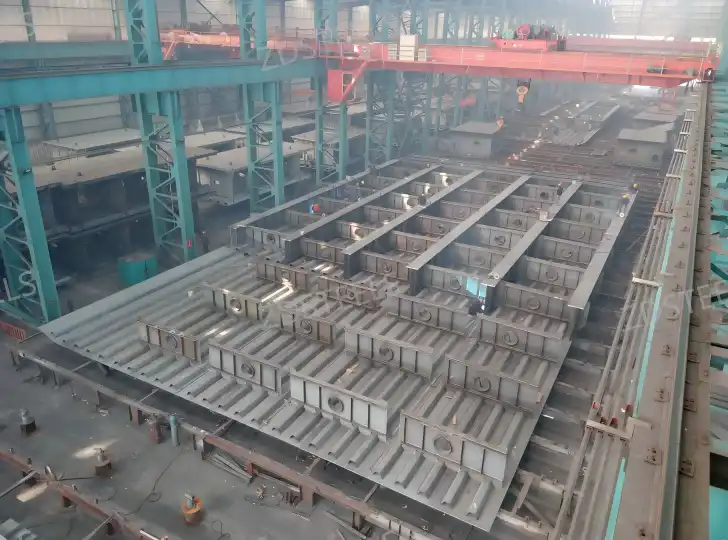
At Zhongda, our 120,000 m² production plant uses BIM-based digital design to make sure that every part meets all the requirements before it leaves our workshop. Our CNC cutting tools can keep ±0.2mm limits on very thick plates, so there are no fit-up problems when they are put together in the field. Compared to traditional methods, this approach to accurate manufacturing cuts down on building times by 20 to 30 percent.
Fabrication, Quality Control, and Assembly
The building process starts with careful material selection, like finding Q420qE steel that has the right mechanical qualities and chemical makeup. At every step of the way, advanced fabrication techniques like automated welding, non-destructive testing, and 3D coordinate detection make sure that the structure stays strong.
The most important part of building is installing the cables, which needs to be done carefully so that the load is distributed as planned. For pre-embedding cable conduit, our systems use 3D coordinate recognition with 0.5′′ total station accuracy. This makes sure that the cables are in the right place and that the structure works at its best. This careful method gets rid of stress points in the wire that could cause it to break before it's time.
Balanced cantilever methods are used to build the deck because they reduce the need for temporary supports and the damage that building can do to existing infrastructure. Before being put together, each section is carefully checked to make sure it fits correctly and that the coating is intact. The quality of the connections is also checked. This methodical quality control makes sure that the finished structure works the way it was meant to for as long as it is used.
Maintenance Best Practices and Lifecycle Management
Proactive maintenance makes bridges last longer and costs less over their whole life. Protocols for regular inspections look at the state of the cables, the strength of the connections, and how well the protection coatings work. Advanced tracking systems with pressure gages, accelerometers, and corrosion monitors give real-time information on the health of structures. This lets repair plans catch problems early, before they become unsafe or unusable.
Cable replacement procedures follow set rules that keep traffic moving while maintenance work is being done, even though they are rarely needed with the right protection systems in place. Because cable-stayed systems are flexible, specific parts can be replaced without having to close the whole bridge. Combining PE outer sheathing with graphene-enhanced inner coatings is Zhongda's new rust protection technology. It greatly extends the time between repair visits, which lowers working disruptions and long-term ownership costs for infrastructure owners.
Procurement Guide: Selecting the Right Steel Cable-Stayed Bridge Solutions
Evaluating Suppliers and Contractor Capabilities
For bridge projects to go well, the partners must have proven engineering skills, the ability to make things, and project management skills. Purchasing teams should give more weight to sellers who have globally known certifications like ISO 9001, ISO 14001, and EN 1090 compliance. These credentials make sure that the company follows the standards for quality management systems, environmental responsibility, and structural steelwork that is needed for important infrastructure.
The power to manufacture has a direct effect on how long a job takes and how much it costs. The resources needed for big bridge projects can be seen in suppliers who run large factories that can produce a lot of goods every year, like Zhongda's 60,000-ton capacity. Heavy-lifting capabilities, such as a 50-ton crane, are necessary to move huge tower sections and girder segments without having to deal with complicated logistics off-site.
Custom Fabrication and Turnkey Project Management
Standard bridge designs don't always work perfectly with the conditions of a specific site. Leading suppliers offer a wide range of customization options that take into account span needs, seismic requirements, corrosion environments, and personal preferences. When Zhongda does OEM and ODM work, they can customize cable towers with different plate thicknesses, make stay cable systems stronger, and support both double- and single-cable plane designs for span configurations.
Turnkey project management makes it easier for the phases of design, fabrication, logistics, and installation to work together. This unified method lowers the risks at the interface, speeds up the resolution of problems, and gives one person responsibility for the whole project. When procurement teams work with providers who offer full project solutions, it's easier for them to communicate, keep track of schedules, and do less paperwork.
Transparent Cost Analysis and Budget Planning
When making decisions about infrastructure investments, it's important to know how much the whole project will cost, including materials, fabrication, transportation, installation, and maintenance over the project's lifetime. The higher price of high-quality Q420qE steel is justified by its better performance and longer service life. When comparing quotes from suppliers, you should look at all of their services, including engineering support, quality assurance measures, guarantee coverage, and service access after the installation.
Opportunities for value engineering appear when procurement teams work together with experienced suppliers. Different wire designs, improved cross-sections, and advanced protective coatings may lower costs at first or raise value over time. Suppliers can come up with solutions that meet technical and legal requirements and maximize the return on infrastructure investment when project limits and performance goals are made clear.
Future Trends and Innovation in Steel Cable-Stayed Bridges
Advanced Materials and Enhanced Corrosion Protection
Materials science keeps making steel bridge technology better by creating ultra-high-strength alloys and high-tech safety systems. Next-generation weathering steels have improved alloy mixes that create stable, self-healing oxide layers that stop rusting from the weather without the need for extra coats. It is especially helpful to have these new ideas in marine settings where getting to repair areas can be hard and cost a lot.
Nanotechnology inclusion in coating technology has made it last longer than ever before. Graphene-enhanced protective systems, like the ones in Zhongda's cable protection specification, stop water and chloride from getting in at the molecular level. These advanced coatings make maintenance intervals longer while lowering the environmental impact over the course of a product's life by getting rid of the need for frequent recoating and the volatile organic compound emissions that come with it.
Smart Monitoring and Predictive Maintenance Technologies
Through sensor connectivity and data analytics, digital transformation changes the way infrastructure is managed in a big way. More and more modern cable-stayed bridges have structural health tracking systems that keep an eye on things like deck deflection, vibration, cable stress, and the weather. This real-time data lets advanced analysis find patterns of degradation before they hurt the safety of the public or the performance of the structure.
Algorithms that use artificial intelligence process tracking data to make maintenance needs predictions that are more accurate than ever before. Infrastructure managers improve inspection schedules, make better budgets for upkeep costs, and increase the useful life of assets by handling specific processes of degradation at the right time. With these technologies, bridges go from being inactive buildings to smart assets that give useful information about their performance over the course of their useful lives.
Sustainability Innovations and Market Outlook
More attention being paid to reducing climate change is leading to new ideas in sustainable building methods. Steel is naturally recyclable, which makes it a good choice in a regulatory environment that is changing to prioritize circular economy principles and lower carbon intensity. Improvements to the manufacturing process, such as the use of electric arc furnace technology and green energy, are continuing to lower the environmental impact of steel production.
Market forecasts show that there will be a steady need for cable-stayed bridge solutions due to population growth, the need to replace old infrastructure, and the need to adapt to climate change. Coastal towns need more and more resilient crossing options that can handle rising sea levels and stronger storms. When business-to-business clients invest in modern Steel Cable-stayed Bridge technology, they get a leg up in this growing market and build important infrastructure that meets both current performance standards and future goals for sustainability.
Conclusion
FAQ
What site conditions prove most suitable for cable-stayed bridge designs?
Cable-stayed designs work best in places that need lengths between 200 and 800 meters and where installing intermediate piers would not be possible or would not be cost-effective. Ideal places for them to be used are deep water crossings, navigable rivers that need clear pathways, and urban areas with little base room. Steel's flexibility and lower weight compared to concrete make it a better choice for seismic areas.
How does maintenance compare between steel and concrete bridge systems?
Steel Cable-stayed Bridges with good corrosion protection need a lot less upkeep than concrete buildings. While cracks and corrosion in concrete bridges need to be checked for and fixed on a regular basis, protected steel systems keep the structure strong with little work. Zhongda's graphene-enhanced security and other advanced coating methods make upkeep much less frequent, which lowers costs and downtime.
What certifications should procurement teams verify when selecting suppliers?
Some important certificates are ISO 9001 for managing quality, ISO 14001 for environmental systems, and EN 1090 for constructing steel structures. Extra credentials, like an AWS welding license or a Class I Steel Structure Professional Contracting Qualification, show that you are technically competent. Check the supplier's track record with big contractors and finished projects to make sure they can deliver complicated infrastructure on time and on budget.
Partner with a Trusted Steel Cable-stayed Bridge Manufacturer
For infrastructure to be at its best, it needs partners with technical know-how, precise manufacturing, and a strong dedication to quality. For 20 years, Zhongda Steel has been specialized in building complex bridges for clients around the world, such as China Railroad, CSCEC, and engineering firms from Russia, Australia, and Southeast Asia. Our Q420qE Steel Cable-stayed Bridge solutions use high-tech materials, precise fabrication, and full project support to make sure that your infrastructure investment gives you the most value for the whole time it's working.
Send an email to Ava@zd-steels.com to talk to our engineering team about your specific project needs and find out how our custom bridge solutions can help you meet tight deadlines and budgets. Visit zd-steels.com to learn more about all of our services and to read lengthy case studies that show how well they work in a variety of settings.
References
1. Chen, W. F., & Duan, L. (2014). Bridge Engineering Handbook: Superstructure Design (2nd ed.). CRC Press.
2. Gimsing, N. J., & Georgakis, C. T. (2012). Cable Supported Bridges: Concept and Design (3rd ed.). John Wiley & Sons.
3. Troitsky, M. S. (1988). Cable-Stayed Bridges: Theory and Design (2nd ed.). BSP Professional Books.
4. Walther, R., Houriet, B., Isler, W., & Moïa, P. (1999). Cable Stayed Bridges (2nd ed.). Thomas Telford Publishing.
5. Xanthakos, P. P. (1994). Theory and Design of Bridges. John Wiley & Sons.
6. Yoshida, O., & Okuda, M. (2002). "Aerodynamic Stability of Cable-Stayed Bridges Under Erection." Journal of Bridge Engineering, 7(5), 270-279.
YOU MAY LIKE