
Prefabricated Bridge Steel Structure Speeds Up Installation for Large Projects
2026-08-29 13:00:01






Large-scale infrastructure development demands efficient construction methodologies that balance speed, quality, and safety. Prefabricated bridge steel structures represent a transformative solution for project managers and civil engineering contractors facing tight deadlines and complex site conditions. By shifting fabrication off-site, these modular systems reduce installation timelines by 30–50% compared to traditional methods, while delivering superior structural integrity through factory-controlled manufacturing processes. Understanding how prefabrication works and its strategic advantages enables procurement decision-makers to optimize project outcomes.
Understanding Prefabricated Bridge Steel Structures
What Defines Prefabricated Steel Bridge Systems
Prefabrication is the process of making steel bridge parts like girders, trusses, deck sections, and connection assemblies in a controlled factory setting and then moving them to building sites to be put together quickly. This method is very different from traditional on-site production, which is often slowed down by things like bad weather, lack of room, and differences in quality. Using CNC cutting and 3D laser scanning in the factory makes sure that the dimensions are accurate to within ±0.2mm, which guarantees a perfect fit when installed in the field. For tough jobs, structural steel grades like ASTM A709 and weathering steel (A588) are the best choice because they are strong and don't rust.
Bridge Types Suited for Modular Steel Construction
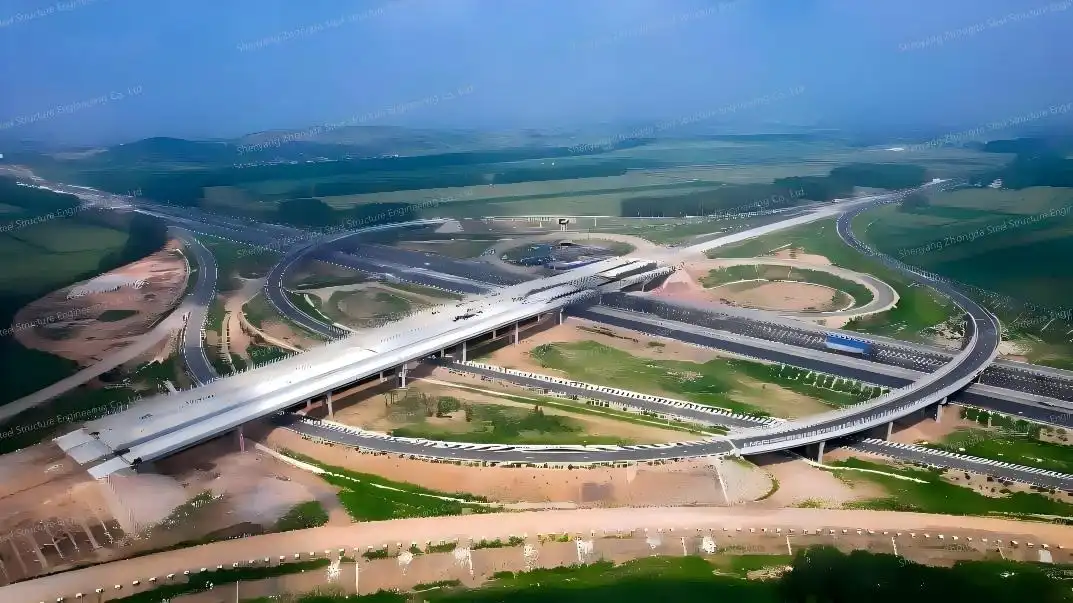
Different types of bridge designs can benefit from methods for prefabrication. Prefabricated parallel wire strands (PPWS) with 5.2 mm cables rated at 1770MPa tensile strength are used in suspension bridges, especially those with main spans between 300 and 2000 meters. Using 3D laser scanning to place cable clamps gives you an accuracy of ±2mm, which is important for spreading load over very long distances in a Bridge Steel Structure. Truss bridges are more structurally efficient because their triangulated members are welded at the factory and are ready to be bolted together when they get to the site. Modular steel box girders, which are usually 12 meters long and used in arch and beam bridges, can be put up in hours by building teams using mobile cranes.
Material Properties and Performance Characteristics
High-strength low-alloy (HSLA) steels are used to build most modern bridges because they are strong for their weight and don't wear down easily. Steel parts with yield values between 345MPa and 690MPa allow for longer spans with less self-weight, which lowers the cost of the base. When steel is exposed to the weather, it forms a protective oxide layer that means it doesn't need to be painted over and over again in many places. Modern corrosion protection systems, such as main cable dehumidification and S-type galvanized wire wrapping, make the service life longer than 75 years, even in coastal or industrial settings. These actual benefits directly lead to lower costs over the life of the infrastructure.
How Prefabrication Accelerates Installation for Large Projects
Comparing Traditional Versus Off-Site Manufacturing Methods
Step-by-Step Modular Assembly Process
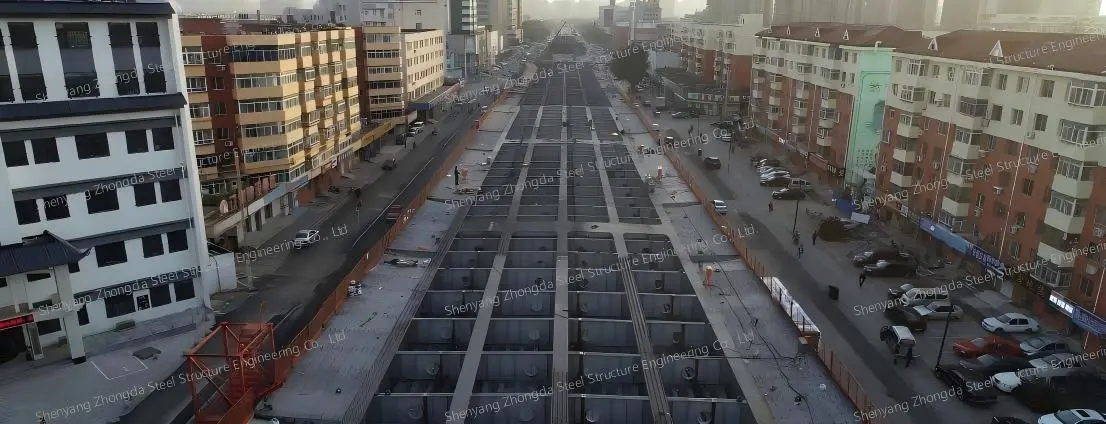
Once the supports are solid and the anchor bolts reach their original strength, the installation can begin. Transportation logistics send pre-built modules on special trailers or barges that are timed to fit with the order of assembly. Crane operators put segments on temporary supports, and connection crews tighten high-strength bolts to specified torque values that are checked using tension-control methods. For suspension systems, workers thread the main wires through precisely made saddles before attaching hangers to pre-made deck parts. At each stage, quality checks are done, and non-destructive testing (NDT) is used to make sure the weld is strong, as required by the AWS D1.5 Bridge Welding Code. When compared to traditional ways, this method cuts field work hours by 40%.
Real-World Timeline and Cost Reductions
A recent project to expand a highway showed how useful prefabrication can be: our team supplied 18,000 tons of structural steel for the Shenyang Dongta Cross-Hunhe River Bridge, which cut the time it took to build from 24 months to 16 months. The faster plan cut down on the costs of traffic delays and let toll money be collected early. Similar benefits have been reported by clients in other countries. For example, Australian mining operations got support structures for crushing stations made of -60°C weathering steel that arrived at the site ready to be put together right away, even though they were in remote areas. Our proven 20–30% shorter wait time comes from manufacturing and construction happening at the same time, which is something that standard sequential building can't do.
Decision Factors for Choosing Prefabricated Steel Structures Over Alternatives
Steel Versus Concrete: Performance and Economic Comparison
The choice of materials has a big impact on how feasible a project is and how much it will cost in the long run. Because steel is about 10 times stronger than reinforced concrete, it can have longer lengths with smaller cross-sections. This means that foundations are not needed and drilling costs are lower. Prefabricated steel members come with all the information you need to join them. On the other hand, putting up concrete forms, placing rebar, waiting for the concrete to cure, and taking down the forms all take a lot of time and work. When it comes to maintenance, steel is also better than concrete because modular parts make it possible to fix or replace specific parts without tearing down nearby ones. Concrete buildings, on the other hand, often need major repairs that affect whole spans.
Lifecycle Cost Analysis and Value Engineering
Even though high-performance steel may cost more than concrete at first, a full lifetime study shows that Bridge Steel Structure solutions are much more cost-effective in the long run. Financing costs, worker overhead, and the social and economic effects of long site shutdowns can all be reduced by accelerating construction. Steel is 100% recyclable, so it retains value after its service life, lowering decommissioning costs. Our value engineering approach identifies the most suitable steel grades and cross-sections for each load requirement. We can produce 800 tons of 12-meter box girders every month, balancing structural performance with budget limitations. Material waste is reduced by 15–20% in projects using BIM-driven prefabrication, further improving overall cost efficiency.
Selecting Appropriate Steel Grades and Fabrication Approaches
When selecting steel grades, procurement teams have to think about how the steel will be used, how heavy it will be, and how easy it will be to do upkeep. In coastal or industrial settings, weathering steel or better coating methods are appropriate. For most other uses, normal structural grades with hot-dip galvanizing are sufficient. High-traffic bridges need features that don't wear out easily, with smooth weld shapes and good stress flow. Our engineering team works with clients to figure out whether standard modular designs or custom fabrication are best for the project's shape, the limitations of the site, and the client's aesthetic needs. This consultative method makes sure that technical requirements and operational needs are perfectly aligned.
Procurement Considerations for Prefabricated Bridge Steel Structures
Evaluating Supplier Capabilities and Certifications
To choose a good steel bridge manufacturer, you need to do a lot more than just compare prices. Meeting the requirements of ISO 9001:2015 for quality management shows that the process is being controlled in a planned way, and meeting the requirements of EN 1090 shows that the company is skilled at making structural steel. The FHWA-NHI-07-096 suspension bridge design standards and the AASHTO LRFD Bridge Design standards must be followed for U.S. projects. Check the production capacity—facilities that can safely meet tight deadlines can handle 800 tons of bridge-quality steel every month and use cutting-edge CNC equipment for ultra-thick plates. Our Class I Steel Structure Professional Contracting Qualification and 70% client return rate show that we have delivered 60+ major projects consistently.
Managing Logistics and Installation Coordination
For prefabrication projects to go well, they need to be able to combine production schedules with logistics for transportation and field assembly processes. To get around weight and clearance restrictions, heavy steel modules need special handling equipment and route planning. Our global logistics solutions organize ocean freight, inland transport, and just-in-time delivery so that you don't have to store as much on-site. Delays that cost a lot of money can be avoided by making sure that manufacturing teams, logistics providers, and erection workers all know how to talk to each other. We offer full erection instructions, connection drawings, and on-site expert help to make sure that installation goes smoothly. This cuts down on questions and rework that happen in the field and get in the way of important tasks.
Quality Assurance and Regulatory Compliance
Tough quality control starts with being able to track down the materials used in a Bridge Steel Structure. This is done by having certified mill test reports that list the chemical make-up and mechanical properties of each steel heat. As part of fabrication reviews, 3D laser scanning is used to check the dimensions, full-penetration welds are tested with ultrasound, and protective coats' dry film thickness is measured. Third-party inspection agencies watch over important operations and confirm that they are done according to the project's requirements. Our quality management system keeps a lot of records that help with the processes of owner acceptance and regulatory approval. As required by ASCE 7, seismic design compliance and wind load resistance to 12-level wind speeds make sure that buildings meet life-safety standards in the worst situations.
Maintenance and Longevity of Prefabricated Steel Bridges
Common Defects and Preventive Strategies
Advanced Corrosion Protection Technologies
Modern coating methods use more than one protection that is adapted to the level of contact. When you hot-dip galvanize something, 75-micron layers of zinc cover it, providing decades of protection in moderate environments. Duplex systems, which include galvanizing and epoxy or polyurethane topcoats, can last more than 100 years in coastal or chemically exposed areas. Our -60°C weathering steel technology is used in Arctic installations where normal coatings don't hold up to changing temperatures. Closed box girders have humidity control systems that keep the levels of moisture below a certain level. This stops internal corrosion that can't be seen from the outside. When compared to reactive painting plans, these technologies cut upkeep costs over the life of a building by 30–40%.
Modular Design Benefits for Repairs and Upgrades
Maintenance and changes can be made quickly and easily with prefabricated buildings. Bolted links let you change parts without needing a hot work permit or closing down traffic. During overnight maintenance windows, crews can unbolt damaged members and install pre-made replacements. Modular deck sections allow for gradual restoration, which keeps some of the bridge's capacity while it's being built. As-built 3D models are included in our planning paperwork, which makes it easier to add utilities, widen roads, or make seismic repairs in the future. This ability to change keeps infrastructure investments from becoming useless, making sure that bridges can meet changing traffic needs for as long as they are built.
Conclusion
FAQ
What are the primary advantages of choosing prefabricated steel over traditional methods?
Prefabricated steel bridge systems cut down on building times by 30–50% by allowing work to be done on-site and in the factory at the same time. They also provide better quality by being made in controlled settings with ±0.2mm exact tolerances. Other advantages include fewer workers needed on-site, better worker safety by limiting dangerous tasks in the field, and lower lifecycle costs due to better maintenance and part replacement options.
How does prefabrication impact project budgets and schedules?
Faster installation cuts down on the costs of hiring a worker, getting finance, and the negative effects on society and the economy caused by traffic jams. When compared to traditional building, projects that use premade steel usually get done 20–30% faster while keeping or lowering total costs. Predictable factory production schedules get rid of the need for weather delays, and doing multiple things at once in the factory stops the delays that happen one after the other and make traditional project timelines longer.
Which certifications should buyers verify when selecting suppliers?
FHWA-NHI-07-096 suspension bridge specifications, AASHTO LRFD design standards, and AWS D1.5 welding codes must all be followed for U.S. infrastructure projects. Some certificates that are accepted around the world are ISO 9001:2015 for quality management, EN 1090 for structural steel fabrication, and ISO 14001/45001 for environmental and safety management systems. Material approvals that follow ASTM A709 or similar standards make sure that the steel types meet the requirements for design strength and toughness. Third-party inspection skills and Class I business qualifications are two more ways to prove that a supplier is qualified.
Partner With a Trusted Bridge Steel Structure Manufacturer
Zhongda offers certified prefabricated steel suspension bridges that are designed to be easy to install and last a long time. Our factory can make 60,000 tons of parts every year that meet U.S. standards for FHWA-NHI-07-096. The main wires have PPWS with a tensile strength of 1770MPa and improved corrosion protection systems. We are a widely certified steel bridge provider that works with clients in the energy, industrial, building, and infrastructure sectors. Our process includes BIM-driven design, ultra-precision manufacturing, and proven project delivery for everything from Arctic bridges to mining installations. Get expert help with your next big infrastructure project by emailing Ava@zd-steels.com right now, or go to zd-steels.com to learn more about our full range of steel structural options.
References
1. American Association of State Highway and Transportation Officials (AASHTO). LRFD Bridge Design Specifications, 9th Edition. Washington, DC: AASHTO, 2020.
2. Federal Highway Administration. Suspension Bridge Design Manual FHWA-NHI-07-096. U.S. Department of Transportation, 2007.
3. Connor, Robert J., et al. Manual for Design, Construction, and Maintenance of Orthotropic Steel Deck Bridges. Federal Highway Administration, 2012.
4. Troitsky, M.S. Planning and Design of Bridges. New York: John Wiley & Sons, 1994.
5. American Welding Society. Bridge Welding Code AWS D1.5. Miami: AWS, 2020.
6. Kulicki, John M., et al. Guidelines for Evaluation and Repair of Prestressed Concrete Bridge Members. Transportation Research Board, National Cooperative Highway Research Program Report 654, 2010.
YOU MAY LIKE