
What Are the Advantages of Steel Truss Girder for Long-Span Structures?
2026-08-29 13:00:01






Steel Truss Girder systems provide unmatched structural efficiency for long-span applications through their triangulated framework design, which optimizes load distribution while minimizing material consumption. The inherent geometry creates superior strength-to-weight ratios, enabling spans exceeding 100 meters without intermediate supports—crucial for industrial warehouses, bridge infrastructure, and large commercial facilities. These engineered frameworks reduce foundation loads by 30-40% compared to solid-web alternatives, translating to lower overall project costs while maintaining structural integrity under dynamic loading conditions.
Understanding Steel Truss Girders: Design and Functional Principles
When we design long-span buildings, the hardest part is figuring out how to balance the weight limits with the load capacity. Steel Truss Girders solve this problem with exact geometric arrangements, most often Warren, Pratt, or Howe configurations. Members that are linked to each other make rigid triangular units that spread forces evenly throughout the system.
Triangulated Framework Engineering
The triangle shape is what makes truss performance work. Each node point moves axial forces between members, which gets rid of the twisting moments that can happen in rigid beams. Engineers can accurately predict load paths using this principle, which makes sure that every steel part works at its best. The open-web design fits MEP systems at the same time, which lowers the total building height and makes construction easier.
Material Optimization Through Geometry
High-strength steel grades from ASTM A572 Grade 50 to Q420 are used in modern truss design. These grades can reach yield strengths of up to 420 MPa. Because it's modular, it's possible to selectively add reinforcements to areas that are under a lot of stress while leaving lighter sections in other places. When compared to regular plate girders that span the same lengths, this strategic placement of materials cuts the amount of tonnage needed by 25–35%.
Load Distribution Mechanics
By learning how trusses handle loads, you can see why they are better for long-span needs. Live and dead loads move through the chord members, but shear forces are resisted by the tension and compression of the web members. This splitting up of work makes the structure very efficient, which is especially helpful in situations like overhead crane systems where heavy moving loads need to be bent as little as possible while in use.
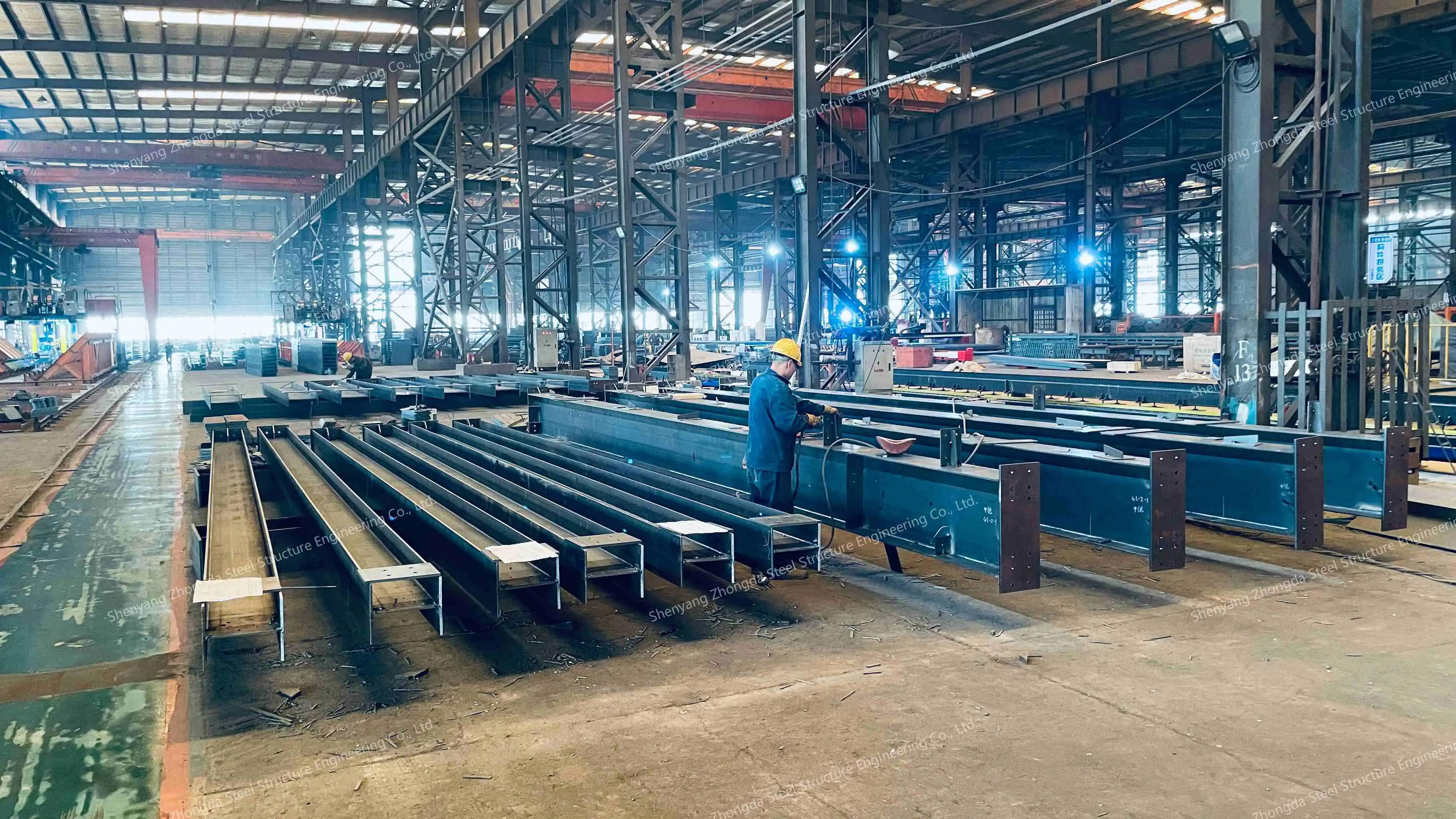
Advantages of Steel Truss Girders for Long-Span Structures
When we look at performance data across different types of projects, it's clear that truss systems are technically better. These benefits have a direct effect on choosing what to buy, how long a job takes, and how much it costs over its whole life.
Superior Structural Efficiency
The load-carrying ability is very high thanks to the way the members are arranged. A normal truss girder with a 40-meter span and a weight of 18 tons can hold loads that are spread out over 500 kN, with deflection ratios of L/500 when it is fully loaded. The high flexural rigidity keeps serviceability problems that happen with other systems to a minimum. This is especially important for buildings that house sensitive electronic infrastructure or precision manufacturing equipment.
Reduced Foundation Requirements
When the self-weight is lower, the base costs go down immediately. When compared to concrete options, projects that use truss systems report 30–40% less base material. The weight advantage is especially important in places with difficult soil, like coastal areas, seismic zones, or places that need deep pile foundations, because every ton of dead weight makes the project costs go up by a factor of ten.
Accelerated Construction Timelines
Prefabricated Steel Truss Girder parts come to the job site ready to be put together, which drastically shortens the time it takes to build. Using pre-engineered truss systems, a warehouse roof structure covering 10,000 square meters can be put up in 15 to 20 working days, while cast-in-place alternatives take 45 to 60 days. This advantage in terms of timing cuts down on financing costs, speeds up the production of income, and reduces delays caused by bad weather—all of which procurement managers regularly list as important factors in making decisions.
Enhanced Durability and Longevity
Modern protective coats make things last longer than 50 years, even in places where corrosion is common. When you combine hot-dip galvanizing with high-build epoxy systems, you get C5-M environmental protection that meets the strict needs of chemical plants, mining operations, and coastal ports. Truss members are easy to inspect and maintain because they are easy to get to. This lets you find corrosion or fatigue early, before the structure's strength is lost.
Architectural Flexibility
The clear-span feature makes spaces without columns, which increases the amount of useful floor space and operating freedom. It is possible for distribution centers to set up their warehouses so that automatic storage systems and material handling equipment can work at their best without any structure problems. Sports arenas and airplane hangars need clear sight lines and equipment gaps that solid buildings can't afford to provide.
These performance traits directly address problems that builders, real estate developers, infrastructure contractors, and people who run manufacturing facilities have. When it comes to functionality, cost-effectiveness, and speed of building, truss systems are the best choice for challenging long-span projects.
Comparative Insights: Steel Truss Girder vs Other Girder Types
To make a purchase choice, you need to be able to compare different structural systems objectively. Figuring out the relative benefits helps make sure that the technology requirements match the performance goals and project limits.
Steel Truss Versus Concrete Girders
A steel truss system usually weighs 60–70% less than a similar concrete building that spans the same distance. This is a huge advantage for steel. This weight benefit cuts down on the prices of shipping, the size of the crane needed, and the cost of the foundation. Without extra protection, concrete girders are better at resisting fire than steel ones, but current intumescent coatings make steel rates similar.
Differences in construction timelines are big. Steel beams come already made and can hold their full weight as soon as they are installed. Concrete, on the other hand, needs 28 days to cure, which adds time to the critical path. The responsibility for maintenance also changes. For example, concrete needs to be checked regularly for cracks and rust in the reinforcements, while steel that is properly covered only needs coating maintenance every so often.
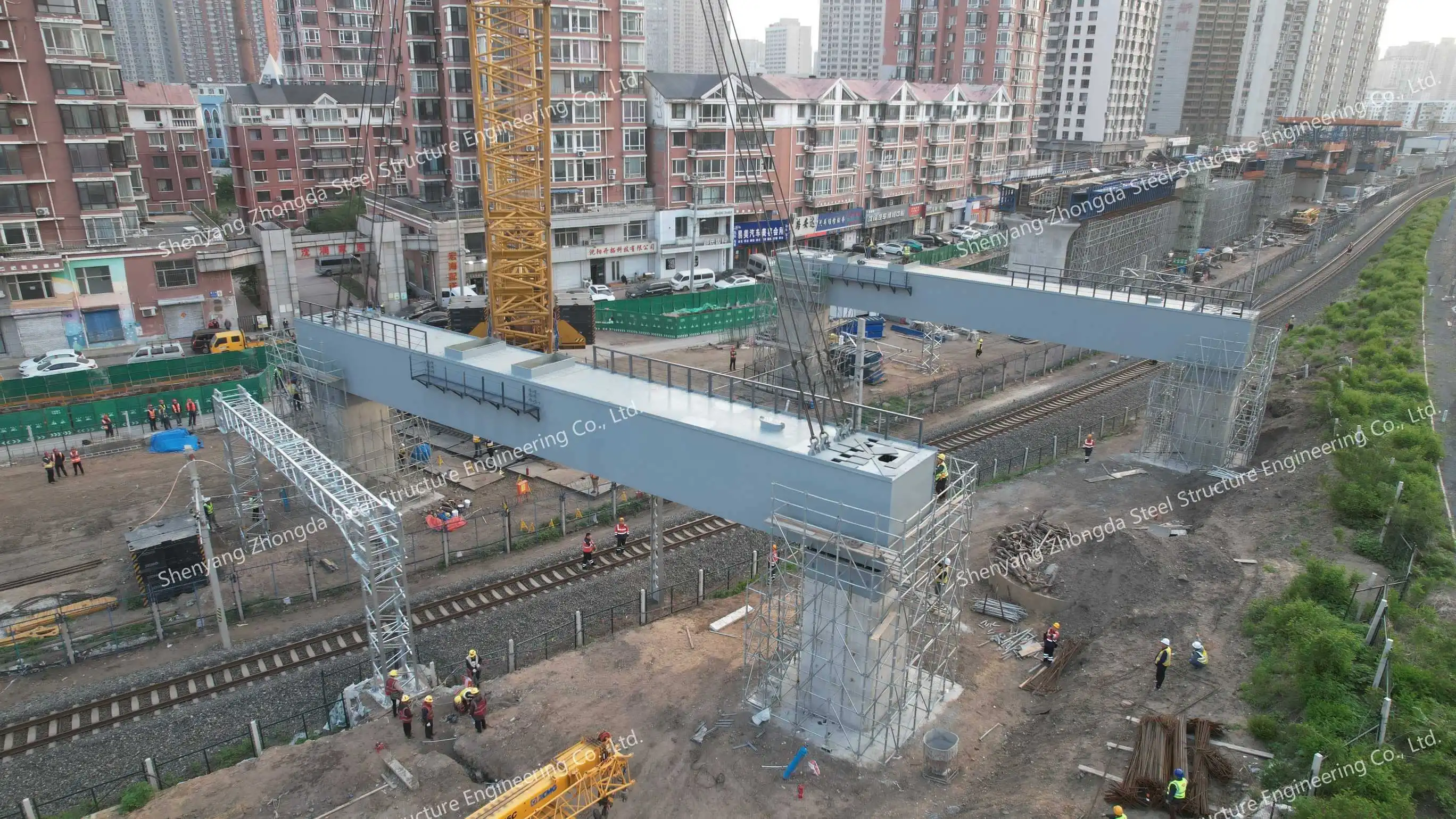
Prefabricated Versus Custom Truss Systems
Standardized prefabricated trusses save money because they can be made in larger quantities, and lead times are cut down to 4 to 6 weeks for common configurations. Custom-engineered systems can be made to fit specific design needs or unusual loading conditions, but they take 8–12 weeks to make and cost 15–25% more per unit, based on how complicated they are.
The choice framework involves looking at factors that are specific to the project. For example, projects with short deadlines should use prefabricated solutions, while projects with unique performance needs, like long spans, strange loading patterns, or merging with existing structures, should consider investing more in custom-engineered Steel Truss Girder solutions.
Procurement Guide for Steel Truss Girders: What B2B Clients Should Know
Technical requirements, quality assurance, and business concerns must all be balanced for buying to go well. Understanding the most important evaluation factors makes choosing a provider easier and makes sure the project is a success.
Certification and Quality Standards
Manufacturers with a good reputation keep welding certifications like EN 1090 or AWS D1.1/D1.5 along with ISO 9001 quality management certification. These qualifications make sure that the manufacturing method and weld quality are always the same, which are important factors that affect how well the structure works and how long it lasts. Ask for proof that the material can be tracked back to its source by Mill Test Certificates that show the chemical and mechanical properties of the steel meet the design requirements.
Manufacturing Capabilities Assessment
Lead time reliability and scalability are based on production capacity. Facilities with CNC plasma cutting systems can achieve measurement accuracy of ±0.2mm, which makes sure that field assembly goes quickly and there are no fit-up delays. Automated welding stations keep production rates high while producing uniform welds. This is especially helpful for projects that need a lot of similar units.
The coating application's features should be carefully looked at. Outsourcing finishing isn't as good for quality control as having your own blast cleaning and coating facilities. Automated spray systems can achieve a constant Dry Film Thickness that can't be matched by hand application. This has a direct effect on how well rust protection works.
Commercial Considerations
Prices change from one seller to the next, but ordering in bulk usually saves you 8 to 12 percent compared to buying in small amounts. Transportation costs a lot, especially for projects that span international borders. This makes FOB vs. CIF terms an important point to negotiate. Lead times vary from 6 to 14 weeks from the time of the purchase order until the product is shipped. They depend on production schedules, material availability, and the time needed for the coating to cure.
Case Studies: Successful Applications of Steel Truss Girders in Long-Span Structures
Real-life examples show how truss systems can be used to meet difficult construction needs in a wide range of businesses. These examples show how procurement managers can expect similar projects to perform better.
Arctic Bridge Infrastructure
In Russia, a project to build a railroad bridge needed 85-meter clear spans across permafrost land, which made foundation work very difficult. The engineering team asked for Warren-type truss girders made of weathered steel that could work in temperatures as low as -60°C. The 40% lighter weight compared to concrete options reduced the amount of weight that had to be put on the base, which saved 180 tons of piles over the 450-meter length of the bridge.
Because the buildings were premade, the construction window was shrunk to fit the short Arctic summer. Truss segments came by rail, and crane assembly finished putting up the structure in 28 days, which would not have been possible with cast-in-place concrete because of the conditions at the site. The project showed how truss systems can be used to build infrastructure in harsh environments where normal building methods don't work.
High-Bay Logistics Facility
An e-commerce distribution center in the US needed 60-meter clear spans so that the automatic storage system could work as efficiently as possible and so that a 25-ton overhead crane could carry loads. Custom-designed Pratt trusses that ran the width of the building got rid of interior columns that would have gotten in the way of robotic material handling equipment.
The structural system achieved L/600 deflection performance under a mix of live, dead, and crane loads, which was higher than what the equipment manufacturer recommended. The open-web design allowed for a lot of HVAC pipes, electrical conduit, and fire protection systems to be installed without making the building taller. The building was finished in 14 months, from the first stone being poured to the building being turned over to the owners. This was the tight schedule that was set because of expected market demand.
Mining Equipment Support Structure
Australian miners needed conveyor support structures that would span 45 meters between existing buildings and be able to handle 150-ton moving loads and constant heat expansion. The engineering solution used galvanized truss girders with sliding bearings to let the temperature change without creating extra stresses.
The two-layer coating system (hot-dip galvanizing and polyurethane topcoat) protected against corrosion in a way that was good for the harsh industrial environment along the coast. Field assembly was finished during a planned shutdown window, which kept operations as smooth as possible. The building has been up and running for seven years without any upkeep, proving the lifetime cost estimates that were used to make the original purchase decision.
Conclusion
Steel Truss Girders are the best structural option for long-span projects that need high strength-to-weight ratios, quick construction, and long-term durability. The triangulated framework effectively spreads loads while reducing the amount of material needed. This results in lower base costs and shorter project timelines. These engineered systems offer performance benefits that concrete and wood alternatives simply can't match in terms of cost. They can be used to span industrial buildings, bridge infrastructure, or business projects. When you choose to buy truss systems, the projects always turn out better because the structures are more efficient, the buildings are built faster, and they last longer. This is especially important for infrastructure contractors, commercial developers, and industrial facility operators who have to manage complicated projects with strict technical requirements.
FAQ
What span lengths can steel truss girders economically achieve?
Truss systems can span 30 to 120 meters for a reasonable price, but this depends on the load and the way the system is set up. Most bridge uses need spans of more than 100 meters, while most industrial sites need spans of 40 to 80 meters. When the depth-to-span ratio is 1:10 to 1:15, the cost-effectiveness of the material is balanced against the difficulty of making the part. Continuous multi-span systems work better than single simple spans for projects that need longer spans.
How do engineers prevent corrosion in harsh environments?
Preparing the surface and using layered covering systems rated for specific exposure conditions are both parts of corrosion protection. In C5-M environments, like marine or industrial settings, parts must be blasted clean to the Sa 2.5 standard and then hot-dip galvanized or covered in 250–300 micron epoxy systems. Service life is increased beyond 50 years with duplex systems that use both galvanizing and organic topcoats. Every 5 to 7 years, regular inspections let you fix problems early, before they damage protection systems.
What quality inspections verify structural integrity?
Comprehensive quality checks include measuring the size of the part to make sure it fits within the allowed range, checking important welds for ultrasound and magnetic particles, using Mill Test Certificates to track the material, and using electromagnetic gauges to measure the thickness of the coating. During the prototype phase, load testing verifies theoretical predictions. However, process quality control is usually used instead of destructive testing in production units. When project requirements or insurance requirements call for extra oversight, third-party inspection services can provide it.
Partner with Zhongda Steel for Engineering Excellence
Zhongda offers top-notch Steel Truss Girder options, backed by 20 years of experience in making and working on projects around the world. Our BIM-driven prefabrication capabilities guarantee dimensional accuracy within ±0.2mm, and our own -60°C weathering steel technology works in the harshest environments, from Arctic infrastructure to mining operations on the coast. With ISO 9001/14001/OHSAS 45001 and EN 1090 certifications, we can handle jobs of any size with our 60,000-ton yearly capacity. China Railroad, CSCEC, and BMW all trust us to provide them with Steel Truss Girders. We do this by combining cutting-edge manufacturing technology with quick expert support. Get in touch with Ava@zd-steels.com to talk about your long-span structure needs and find out how our engineering team turns complicated plans into cost-effective reality. Visit zd-steels.com to learn more about all the things we can do.
References
1. American Institute of Steel Construction. (2016). Steel Construction Manual, 15th Edition. Chicago: AISC.
2. Chen, W.F., & Duan, L. (2014). Bridge Engineering Handbook: Construction and Maintenance, 2nd Edition. Boca Raton: CRC Press.
3. Dowling, P.J., Owens, G.W., & Knowles, P.R. (1988). Structural Steel Design. London: Butterworths.
4. European Convention for Constructional Steelwork. (2010). Eurocode 3: Design of Steel Structures - Part 1-1: General Rules and Rules for Buildings. Brussels: CEN.
5. Salmon, C.G., Johnson, J.E., & Malhas, F.A. (2009). Steel Structures: Design and Behavior, 5th Edition. Upper Saddle River: Prentice Hall.
6. Trahair, N.S., Bradford, M.A., Nethercot, D.A., & Gardner, L. (2017). The Behaviour and Design of Steel Structures to EC3, 4th Edition. Abingdon: Taylor & Francis.
YOU MAY LIKE