
Bridge Steel Structure Supports Long-Span Infrastructure with Reliable Performance
2026-08-29 13:00:01






When planning major infrastructure projects that span hundreds or even thousands of meters, the choice of structural system becomes critical to long-term success. A Bridge Steel Structure represents a high-performance engineering solution where primary load-carrying components are fabricated from high-strength steel alloys, typically conforming to ASTM A709 or AASHTO M270 standards. This approach addresses fundamental challenges: reducing dead load in extended spans, accelerating construction timelines to minimize public disruption, and delivering superior seismic resilience through inherent ductility. Modern steel bridge systems enable complex geometries—from cable-stayed to suspension configurations—while maintaining predictable performance throughout their design life.
Understanding Bridge Steel Structures: Types, Design, and Materials
Fundamental Components and Structural Types
Steel bridge systems are made up of parts that are connected to each other and work together to move weight from the deck to the foundation. Based on span length and site factors, the main kinds of structures are used for different things. Truss designs work best for lengths between 100 and 500 meters because they spread forces evenly among three-sided members that make the best use of materials. Arch bridges use compression strength, which makes them perfect for crossing canyons where the abutments can stop horizontal thrust. For spans longer than 1,000 meters, suspension systems are most common. These use high-tensile cables to hold up deck sections with few intermediate supports. For spans between 200 and 800 meters, cable-stayed bridges use slanted cables that connect towers directly to the deck, balancing cost and style. Each type is designed to meet the unique needs of large-scale civil engineering projects in terms of load requirements, weather risks, and buildability issues.
Steel Grades and Material Selection Criteria
Material choice has a direct effect on how well a structure works and how much it costs over its lifetime. Carbon steel types like ASTM A36 are cheap options for medium-duty uses, while high-strength low-alloy (HSLA) steels like ASTM A709 Grade 50W have a higher yield strength of up to 345 MPa and are better at resisting rust in the environment. As steel weathers, it forms a protective oxide layer that makes it less likely to need care in places other than the sea. For projects that need to perform at their best, like suspension bridges with main spans longer than 1,500 meters, advanced alloys with tensile strengths close to 1,770 MPa are used. One example is Prefabricated Parallel Wire Strands (PPWS) with a 5.2mm diameter. The environment affects the choice: installations near the coast need duplex coating systems or stainless steel cladding, while bridges in the middle of the country can use standard epoxy-polyurethane treatments. The end material specs are affected by things like load capacity, wear resistance, weldability, and Charpy V-notch impact values at service temperatures.
Modern Design Methodologies and International Standards
Modern bridge engineering relies on complex computer programs and strict rules for following them. Building Information Modeling (BIM) combines data from design, manufacturing, and construction, which lets you find clashes and make improvements before putting the building together in the field. Finite element analysis models how stresses are distributed under changing factors like wind and temperature, making sure the structure is strong enough. Load factors, resistance standards, and serviceability limits are set by design codes like the AASHTO LRFD Bridge Design Specifications and Eurocode 3. Prefabrication improves quality control; parts made in controlled environments go through non-destructive testing (NDT) like ultrasound and x-ray inspection before they are shipped. Modular construction speeds up the building process; 12-meter box girder pieces can be put up one after the other to keep traffic moving as smoothly as possible. These methods help build structures that meet strict safety standards and keep project schedules and budgets as low as possible.
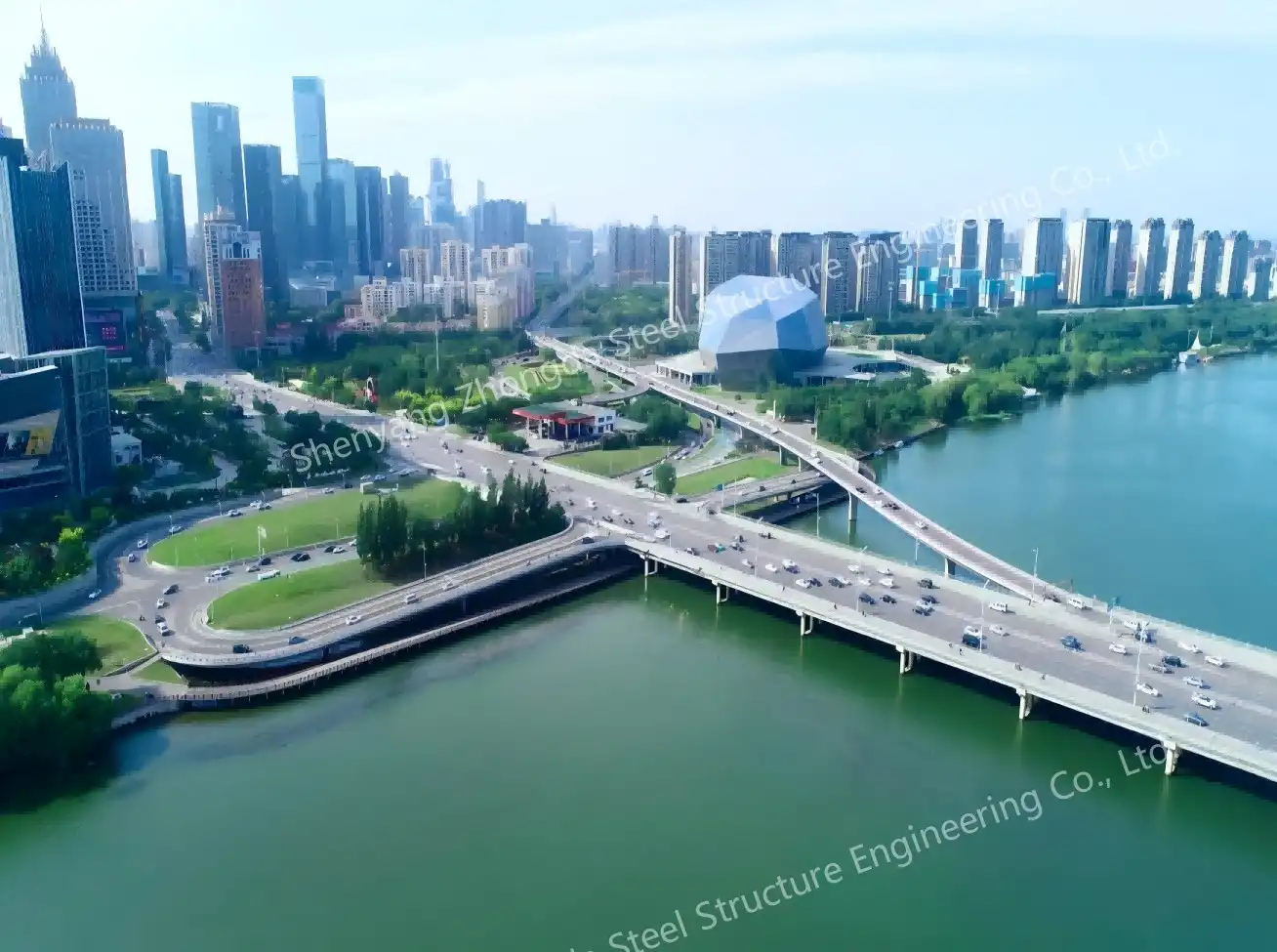
Advantages of Steel Bridge Structures for Long-Span Infrastructure
Superior Strength-to-Weight Ratios and Structural Efficiency
Because steel is relatively dense, it has a high tensile strength. This lets builders make buildings that are lighter and put less stress on the foundations and substructures. This benefit stands out more in long-span situations where self-weight controls the design. A 1,200-meter Bridge Steel Structure may weigh 40% less than a similar concrete bridge. This means that the roots are deeper, the piers are smaller, and the seismic forces are lower. The material's consistent stretchy behavior makes it easier to analyze and confirm designs. Advanced manufacturing methods, such as CNC plasma cutting with a tolerance of ±0.2mm and 3D laser scanning for accurate cable clamp positioning to ±2mm, ensure precise measurements that make field assembly go quickly. All of these things make it possible for infrastructure to cross difficult terrain and navigate complicated urban corridors with few extra supports.
Accelerated Construction and Cost Optimization
When compared to cast-in-place concrete methods, prefabricated steel parts cut project timelines by a huge amount. When modular parts get to the job site, they are already put together, which cuts down on delays caused by bad weather and staff costs. Our 60,000-ton annual fabrication capacity lets us do both manufacturing and site preparation at the same time, which shortens the critical path. Large building projects can keep going as long as 800 tons of 12-meter steel box girders are delivered every month. Getting the job done faster often makes up for higher material costs by cutting down on secondary costs like managing traffic, temporary works, and finance fees. We regularly cut lead times by 20 to 30 percent, which means that toll sites can start making money earlier and have less of an effect on the economy and society. Over the structure's 75–100-year planned life, steel's ability to be recycled at the end of its useful life gives it recovery value that can't be matched by other materials. This improves the structure's overall economic performance.
Enhanced Corrosion Resistance and Environmental Sustainability
Modern protective systems make things last longer and require less maintenance. Our two-layer anti-corrosion technology stops moisture from getting into the main cable and S-Type galvanized steel wire wrapping, which speeds up the deterioration process. Pull-off adhesion tests according to ASTM D4541 shows that thick-film epoxy coats have a dry film thickness (DFT) of more than 300 microns. In the right conditions, weathering steel gets rid of the need to paint, which lowers volatile organic compound (VOC) pollution and the environmental impact of the whole lifecycle. Up to 90% of steel made in electric arc furnaces is recycled, which lowers the amount of carbon that is actually in the steel. Because the material can be recycled over and over again, it has value at the end of its life and keeps trash out of landfills. Lifecycle studies show lower greenhouse gas emissions when longer service lives, less frequent upkeep, and material recovery are taken into account. This makes sure that investments in infrastructure are in line with sustainability rules.
The Bridge Steel Structure Construction Process: From Procurement to Installation
Strategic Procurement and Certified Manufacturing Partnerships
Choosing skilled suppliers who meet foreign quality standards is the first step to a successful project. If a company is certified to ISO 9001, EN 1090, AWS D1.5, and the FHWA-NHI-07-096 U.S. Suspension Bridge Design Specifications, you can be sure that they have good quality management and professional skills. Execution risk can be reduced by looking at things like manufacturing capacity, the complexity of the equipment, and how similar projects have done in the past. For tailored component fabrication to work, our engineering teams have to work directly with clients to make sure that designs are best for the spot, the load needs, and the ease of construction. Material tracking systems keep records of the chemical make-up, mechanical qualities, and heat treatment of steel, which lets full compliance be checked. Third-party inspections and witness testing at key stages of fabrication add extra oversight and make sure that all parts meet the required tolerances before they are shipped.
Fabrication, Logistics, and On-Site Assembly Workflow
Bridge Steel Structure has a fabrication and installation sequence that requires both precision manufacturing and coordinated field operations. The first step in fabrication is CNC cutting of very thick plates. Next, automatic welding is performed using submerged arc or gas metal arc methods to create full-penetration joints. Non-destructive testing is conducted to verify weld quality, with ultrasonic testing detecting internal cracks and magnetic particle testing identifying surface defects. Abrasive blasting is used to clean the surface to a level of 2.5, followed by the application of multi-layer protection systems. Custom packaging prevents damage during transportation, while heavy-haul trucks or barges are used for oversized components that cannot be transported by standard vehicles. High-capacity cranes support on-site assembly, and our facility’s 50-ton lifting capacity ensures smooth handling of heavy-duty steel components. Temporary supports maintain segment stability during sequential assembly. High-strength bolted connections or field welding connect individual sections to form continuous load paths. Real-time measurement systems ensure alignment remains within specified tolerances, maintaining accurate geometry across the entire span.
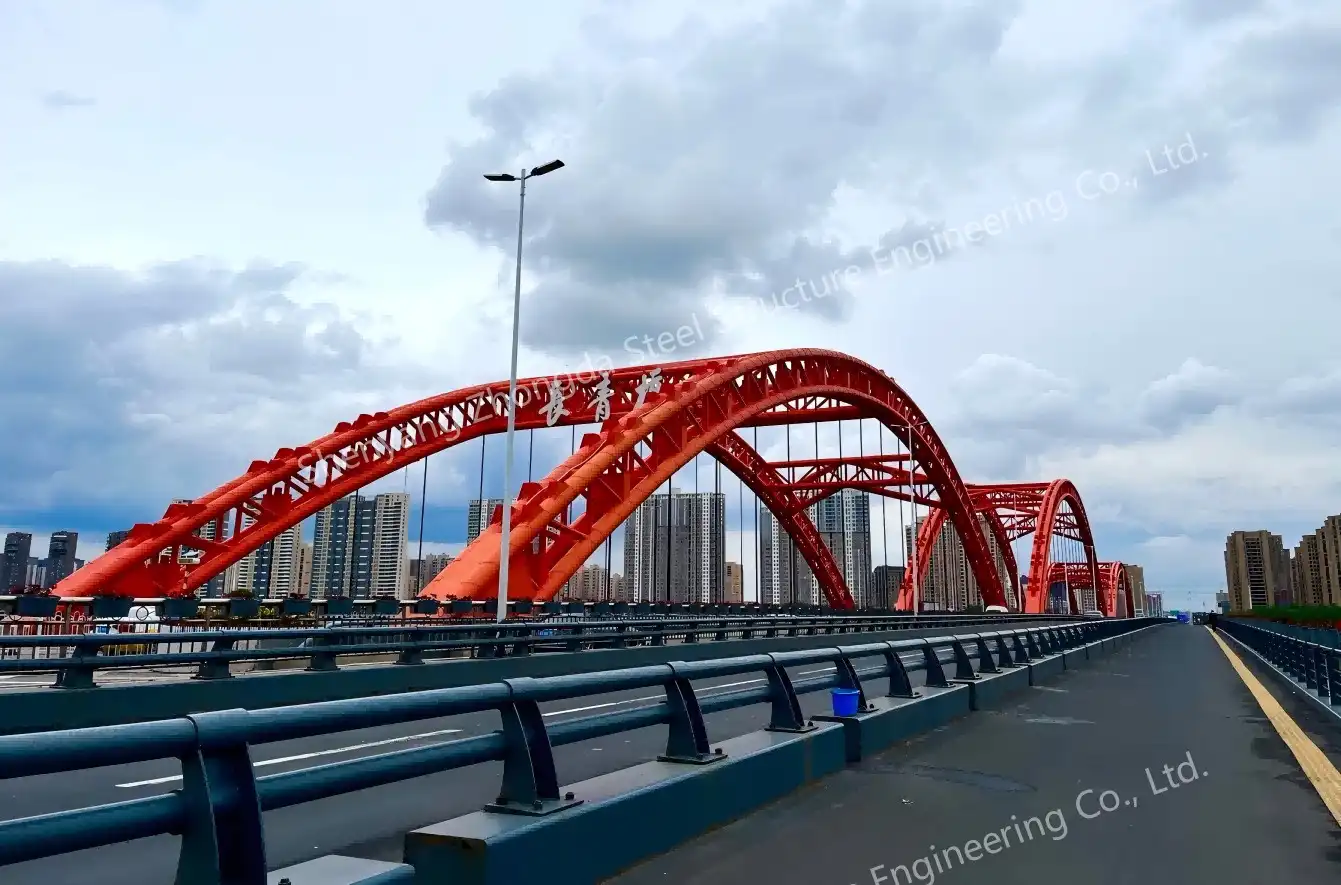
Quality Control Protocols and Maintenance Strategies
Strict inspection programs protect the performance of structures during building and their entire useful life. During manufacturing, 3D laser scanning is used to compare shape to BIM models and find any differences before the parts are put together. Calibrated torque wrenches or tension control bolt methods are used for bolt tension verification. This makes sure that friction-type connections create the necessary clamping forces. Post-erection load testing makes sure that the structure will work as expected in real life. As part of ongoing repair programs, eye checks are done every two years to look for signs of coating wear, section loss, or connection problems. Ultrasonic thickness gaging and magnetic particle testing of details that are likely to wear out quickly are two non-destructive evaluation methods that can find damage before it becomes dangerous. Protective coatings should be replaced at intervals suggested by the maker, which are usually every 15 to 25 years for high-performance systems. Structure health tracking systems with built-in sensors give real-time information on things like strain, movement, and vibration. This lets you do condition-based maintenance, which chooses the best time to fix things and makes them last longer.
Making Informed Decisions: Choosing the Right Steel Bridge Structure Solutions
Evaluating Structural Requirements and Budget Constraints
For a project to be successful, the structure solutions must be in line with the operating goals and budget. Basic configuration is based on span length, clearance needs, and expected traffic volumes. Aerodynamic design is based on wind exposure, which is measured by site-specific meteorological data. Our suspension bridges can withstand wind speeds of up to 12 mph thanks to their optimized deck cross-sections and tuned mass dampers. According to AASHTO seismic rules, ductility requirements and connection details are based on earthquake danger estimates. A budget analysis looks at more than just the original costs of building something. It also looks at the long-term costs of upkeep and how the building might be able to grow. Value engineering workshops find ways to cut costs—like improving the grade of materials, making connections more consistent, and improving the order of assembly—without lowering the quality of the work. Transparent cost modeling helps people make smart decisions about where to put their money by letting them weigh the initial investment against the long-term value.
Sourcing from Certified Suppliers with Global Capabilities
Comparing prices isn't the only factor when choosing a supplier; technical expertise, quality systems, and delivery reliability are equally important. Our Class I Steel Structure Professional Contracting Qualification and compliance with EN 1090, AWS, and JIS standards demonstrate our commitment to strict international regulations. With a 70% client return rate, we have built long-term trust through consistent performance, which is why companies like China Railroad, CSCEC, and BMW continue to work with us. More than 60 completed projects, including the 18,000-ton Shenyang Dongta Cross-Hunhe River Bridge and Arctic Bridge Steel Structure projects in Russia, highlight our ability to deliver reliable solutions across diverse climates and challenging environments. Our global logistics capabilities enable efficient delivery to remote locations, including supplying critical components to Australia's mining crushing stations and Vietnam's industrial hubs. Partnering with a manufacturer that provides complete OEM and ODM services allows you to customize every aspect of your Bridge Steel Structure, from structural design and appearance to integration with smart tracking systems, ensuring it meets the unique requirements of your project.
Prefabrication versus On-Site Fabrication Trade-Offs
Choosing the right construction method requires balancing quality control, time limits, and spot limitations. Precision is highest when prefabrication takes place in controlled environments. Automated processes and regular inspections lead to better dimensional accuracy and weld quality. Weather independence means that production rates can be predicted no matter what time of year it is. When moving big units to remote places with little infrastructure or weight limits, it can be hard to make things work. While on-site fabrication makes shipping easier, it also comes with some risks, such as weather delays, varying quality of welding in the field, and limited access to specialized tools. Our 120,000 m² modern building, which is full of advanced CNC machines and 3-axis drilling systems, makes the most of the benefits of prefabrication by making parts that don't need much change in the field. Each project needs a unique evaluation. Hybrid techniques sometimes combine subassemblies made in a shop with joining in the field, taking advantage of the pros of both methods while minimizing their cons.
Future Trends and Innovations in Bridge Steel Structures
Advanced Materials and Protective Coating Technologies
New steel alloys are pushing the limits of what is possible. Ultra-high-strength steels with yield strengths above 690 MPa allow for thin sections that have less of an effect on the environment and use less material. Better toughness grades keep the steel's flexibility at freezing temperatures. This means it can be used in more places, like the Arctic, where our -60°C weathering steel anti-corrosion technology is already the best. Corrosion-resistant alloys with chromium and nickel make things last longer in harsh environments without being protected. New coatings are focusing on making them last longer and be more environmentally friendly. For example, fluoropolymer topcoats protect for 30 years with little upkeep, and water-based formulations lower VOC emissions during application. Self-healing qualities of nano-enhanced coatings fix tiny harm that would normally cause corrosion. These important improvements lower the costs and damage to the environment over the course of a building's life. They also make the building more in line with changing rules and expectations from stakeholders.
Digital Modeling and Prefabrication Automation
Industry 4.0 technologies change how design and production work. Generative design programs look at thousands of possible combinations and find the best ones that balance how well the structure works, how cheap the materials are, and how easy they are to build. Digital twin platforms combine sensor data with analytical models to allow maintenance that predicts when parts will break down. Robotic welding cells make it possible to repeat steps that can't be done by hand, which improves quality while lowering the need for human labor. Tracking parts from receiving raw materials to final assembly is done by automated material handling systems. This makes sure that parts can be found and handling damage is kept to a minimum. Augmented reality tools help field teams by putting digital models on top of real buildings to help with assembly and quality control. These technologies shorten schedules, make workplaces safer by cutting down on dangerous manual labor, and deliver structures with precision that has never been seen before.
Real-Time Structural Health Monitoring and Smart Infrastructure
Asset management is changing a lot because of embedded sensor networks. Fiber optic strain gages placed in key parts of the structure keep an eye on stress patterns all the time, looking for changes that could mean damage or overloading. Accelerometers record the dynamic response during earthquakes or heavy traffic, which helps to confirm design assumptions and make decisions about retrofitting. Corrosion monitors check for moisture and chloride levels in protective layers. If they find either, they alert maintenance workers before section loss happens. Machine learning algorithms are used by data analytics tools to find trends and guess how long the service will last. Remote tracking lowers the cost of inspections and raises safety standards because workers don't have to go to dangerous areas to do regular checks. Smart infrastructure helps people make decisions based on facts, which means that maintenance budgets are optimized and asset life is extended through timely interventions based on actual condition rather than arbitrary schedules.
Conclusion
Steel bridge systems are the best for long-span infrastructure because they have better strength-to-weight ratios, can be built faster, and can be adjusted to fit different site conditions. Bridge Steel Structure solutions provide enhanced structural reliability and flexibility for complex bridge projects, supporting various engineering requirements through optimized designs and advanced fabrication methods. Improvements in materials, precise manufacturing, and digital technologies keep raising capabilities while lowering costs and harm to the environment over time. Strategic relationships with approved makers who have technical know-how, strict quality systems, and proven global delivery skills are key to making projects successful. As the need for infrastructure grows due to population growth, economic growth, and adapting to climate change, steel structures offer strong solutions that meet today's needs while also being able to adapt to future changes. When organizations make decisions based on structural performance, budget realities, and sustainability goals, they are better able to build infrastructure assets that will serve communities reliably for generations.
FAQ
What is the typical design life of a modern steel bridge?
Modern steel bridges built to AASHTO LRFD standards usually last between 75 and 100 years if they are well taken care of. Protective coatings and steel grades that don't rust make things last longer, and tracking the health of structures lets you do condition-based care that makes things last even longer.
How does steel compare to concrete for long-span bridges?
Steel is stronger than most other materials its weight, so it doesn't need as much of a base and can hold longer spans with fewer supports. When compared to cast-in-place concrete, prefabrication speeds up the building process. Even though the cost of the materials may seem higher at first, steel is often better in the long run because it requires less upkeep, can be finished faster, and can be recycled when it's no longer needed.
What maintenance does a steel bridge require?
Maintenance checks the state of the connections and the stability of the protected cover. Inspections every two years look for signs of coating wear, the start of corrosion, or fatigue cracking. Depending on how much contact there is, the coating needs to be replaced every 15 to 25 years. Advanced systems, such as cable dehumidification, reduce the need for maintenance, which lowers overall costs while keeping the structure safe and useful for as long as it was designed to last.
Partner with Zhongda for Your Next Long-Span Bridge Project
Picking the right Bridge Steel Structure provider affects the success of a project from the beginning to the end of its decades-long service. At Zhongda, we bring more than 20 years of experience making precise steel parts, quality systems that are ISO-certified, and the ability to send products all over the world to every job. Our 60,000-ton yearly capability, BIM-driven processes, and cutting-edge corrosion protection technologies build structures that work very well and cost very little over their whole life. Our experienced team works together to make sure that designs and implementation plans are the best they can be, whether you need 2,000-meter suspension bridges or custom solutions for problems that only happen on your site. Visit zd-steels.com or email Ava@zd-steels.com to talk about how our steel bridge structure maker skills can help you speed up your building plans without sacrificing quality or dependability.
References
1. American Association of State Highway and Transportation Officials. (2020). AASHTO LRFD Bridge Design Specifications, 9th Edition. Washington, DC: AASHTO.
2. Federal Highway Administration. (2007). Cable-Stayed Bridges: Engineering Guidelines and Best Practice, Publication No. FHWA-NHI-07-096. U.S. Department of Transportation.
3. Zhao, X., & Zhang, L. (2019). Advanced Steel Materials for Long-Span Bridge Construction: Properties, Performance, and Applications. Journal of Constructional Steel Research, 162, 105-118.
4. European Committee for Standardization. (2006). Eurocode 3: Design of Steel Structures - Part 2: Steel Bridges, EN 1993-2. Brussels: CEN.
5. Liu, M., & Frangopol, D.M. (2018). Life-Cycle Cost Analysis and Maintenance Optimization of Steel Bridge Structures with Corrosion Protection Systems. Structure and Infrastructure Engineering, 14(6), 761-778.
6. Japan Steel Construction Corporation. (2021). Prefabrication and Modular Construction Technologies for Large-Scale Steel Bridges: Case Studies from Global Infrastructure Projects. Tokyo: JSCC Technical Report Series.
YOU MAY LIKE