
High-Performance Steel Workshop Structures for Modern Manufacturing
2026-09-03 13:00:01






Modern manufacturing demands infrastructure that matches the pace of innovation and production intensity. High-performance steel workshop structures deliver precisely that—engineered buildings designed to optimize workflow, enhance safety, and support heavy-duty operations across diverse industries. A Steel Workshop is far more than a simple enclosure; it's a specialized industrial building system constructed from precision-engineered load-bearing steel frameworks, typically utilizing Q235 or Q345 grade steel for columns and rafters. These pre-engineered building solutions integrate advanced design principles to create column-free interiors that accommodate large-scale equipment, automated production lines, and overhead crane systems while maintaining structural integrity under demanding operational conditions.
Understanding Steel Workshop Fundamentals for Modern Manufacturing
Cutting, welding, fabrication, assembly, and component maintenance are just a few of the crucial tasks that Steel Workshops support in modern manufacturing ecosystems. These structures are very different from regular buildings because they focus on functional design, load capacity, and making the best use of space.
Defining Modern Steel Workshop Architecture
Portal frame construction is the main feature of modern Steel Workshops. It gives great mechanical performance while making the best use of materials. Spans are usually between 12 and 36 meters, which makes for huge, clear floor spaces that make it easy to move equipment around and set up production lines in different ways. The heights range from 6 to 12 meters, which is enough room for overhead cranes, air systems, and moving things up and down. The choice of material is very important. For example, Q235 steel works well in general-purpose situations, while Q345 steel is better for heavy equipment installations that need higher yield strength and load resistance. This strategic material specification makes sure that standards for mechanical properties are met while keeping construction costs low.
Core Equipment Categories and Workflow Integration
High-performance workshops have a lot of different kinds of tools that work together to make production go smoothly. Cutting machines with plasma, laser, or waterjet systems take raw materials and turn them into exact parts. These parts are put together in assemblies by welding bays that can do MIG, TIG, and submerged arc. Finishing work is done by CNC machining centers, and moving materials around the facility is made easier by 5- to 100-ton overhead bridge cranes. The structural design has to take into account both the static weight of the equipment and the dynamic loads that are created when the crane is in use. These dynamic loads create stress patterns that need reinforced runway beams and special bracket connections. This unified method turns separate machines into well-coordinated production systems that boost output while lowering the time needed for moving materials.
Strategic Value for B2B Procurement
Manufacturers know that the framework of their workshops has a direct effect on their ability to make things, their ability to be flexible, and their long-term success. Prefabricated steel parts made in a controlled factory environment guarantee accuracy in measurements and stability of materials that can't be achieved with options that are built on-site. Because of this accuracy, the parts can be put together more quickly; the time it takes to build them is cut by 30 to 50 percent, and production can start earlier, which speeds up the return on investment. Because steel construction is naturally scalable, it can be expanded in stages as production needs rise. This protects initial capital investments and allows for future growth paths. Because of these factors, Steel Workshops are seen as strategic assets rather than just facilities, giving companies a competitive edge through better operational infrastructure.
Designing an Efficient Steel Workshop Layout for Optimal Productivity
Workshop structure has a big effect on how much work gets done, how safe workers are, and how much it costs to run the business in a Steel Workshop. Thoughtful spatial organization cuts down on the distances needed to move things, gets rid of bottlenecks, and makes it easier to follow workflow patterns that boost productivity.
Workflow Optimization Through Strategic Placement
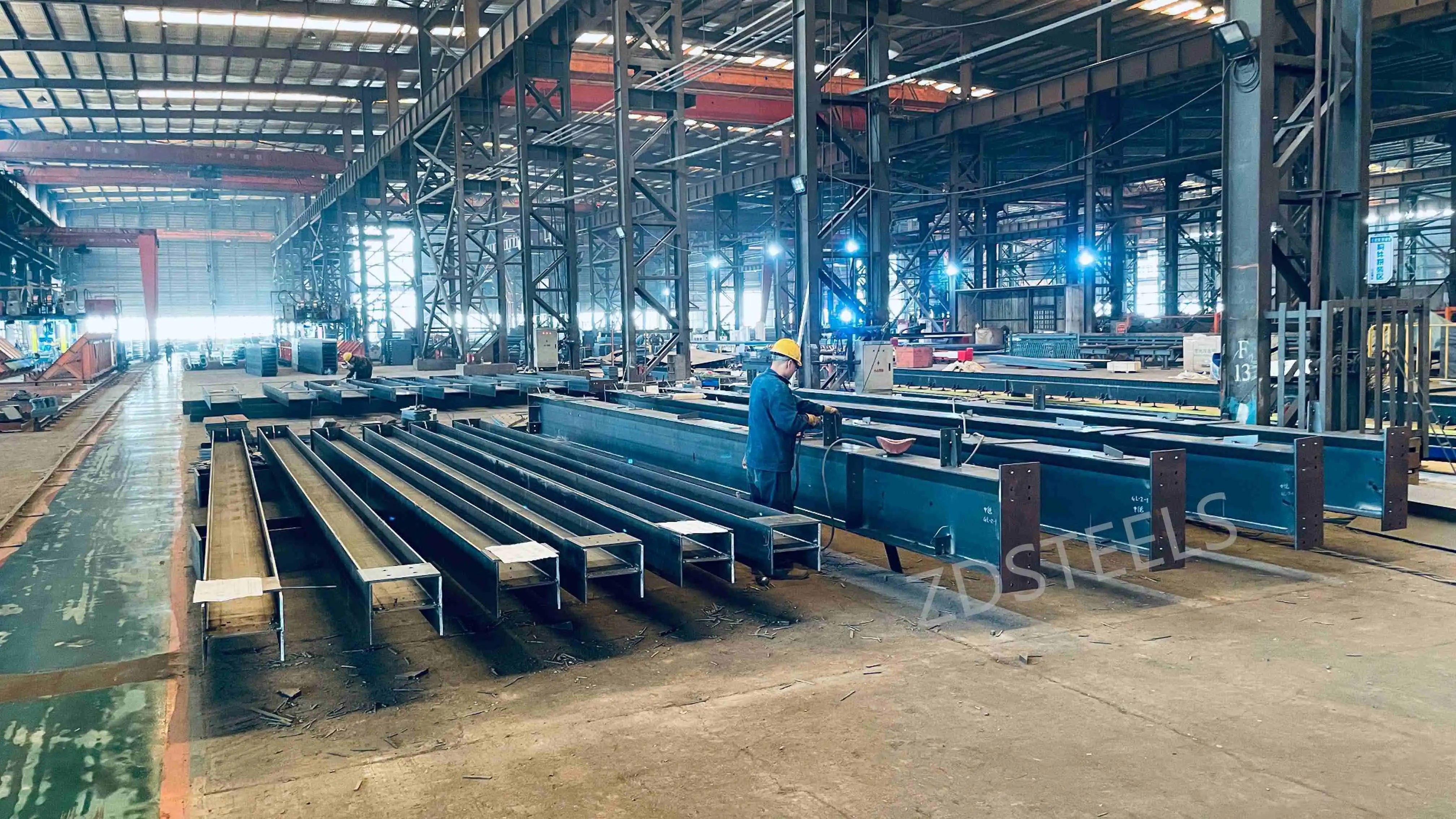
A good layout design starts with a detailed process map that shows how materials move from being received to being shipped after production. By putting tools in sensible production processes, you can cut down on transportation costs and avoid doing the same things over and over again. Crane coverage zones must match the needs for moving heavy parts, making sure that the crane's lifting power reaches all important work areas without having to move equipment. Clearance areas around each machine allow operators to get to them, do repair work, and stage materials while keeping things from getting crowded during busy production times. It's important that aisle widths are easy for people to get to and don't take up too much room. For forklift traffic, aisle widths should be between 3 and 5 meters, and places that serve multiple production cells at once should be wider.
Safety Standards and Hazard Mitigation
Industrial safety rules required by OSHA and similar foreign standards have a big impact on how workshops are designed. Fire-rated walls keep welding operations away from areas where flammable materials are stored. When there is an emergency, emergency egress routes are clear paths that meet minimum width requirements and travel distance limits. People are safe from moving equipment dangers thanks to overhead crane warning systems, safety barriers, and marked paths. Work areas should have enough lighting, between 300 and 500 lux, to allow for clear vision for precise jobs and lower the risk of accidents. Ventilation systems get rid of fumes from welding, dust from grinding, and heat buildup. This keeps the air quality within safe levels for long shifts.
Automation Considerations and Scalability
More and more, workshop plans are adapting to automated systems like robotic welding cells, automated guided cars, and integrated networks for moving materials. When compared to manual tasks, these technologies need different layouts in terms of space—bigger equipment areas, separate power supplies, network infrastructure, and buffer zones for sensor operation. To choose between manual and automated methods, you need to carefully look at production numbers, product range, labor access, and capital limits. Automated systems are great for high-volume, repeated production tasks, but they cost a lot to buy up front. Manual layouts give you more freedom for custom fabrication and faster development of prototypes. Many businesses that are successful use a mix of automated and manual processes to fix bottlenecks in certain areas while keeping human freedom in other areas. This makes it possible to move toward full automation as the business grows and makes the necessary investments.
Selecting and Procuring Steel Workshop Equipment: A B2B Buyer's Guide
Buying equipment has a big effect on how well the workshop works, how much maintenance it needs, and how much it costs to run in the long run. For informed buying, you need to carefully look at a lot of different factors, not just the price.
Performance Metrics and Reliability Assessment
Before you can evaluate equipment, you need to know the key performance indicators that are important for your production needs. Actual operational value is based on cutting speed, accuracy tolerances, duty cycles, and the cost of consumables. With reliability measures like mean time between breakdowns and maintenance intervals, you can guess how much maintenance will be needed and how long the system might be down. Ratings for energy economy have a direct effect on working costs, especially for equipment that is used a lot. Warranty terms and service access protect investments and make sure problems are fixed quickly. Leading manufacturers set themselves apart by constantly improving technology, such as by adding new control systems, making consumables more efficient, and being able to connect to digital manufacturing systems.
Supplier Evaluation and Partnership Development
Companies like Zhongda are good examples of this supplier relationship method because they have a lot of experience helping factories all over the world. These well-known manufacturers have been serving industrial clients for more than 18 years and have certifications in ISO 9001:2015 Quality Management, ISO 14001:2015 Environmental Management, and OHSAS 18001 Occupational Safety Standards. You can trust these manufacturers because they have a track record of success. Their ability to provide custom-engineered solutions that are made to fit specific production needs, along with full after-sales support, makes procurement valuable in ways that go far beyond just equipment specifications.
Total Cost of Ownership Analysis
The price of buying something is only one part of how much it really costs to run over its lifetime. Over years of use, the costs of energy use, consumables, upkeep work, and replacement parts add up to a lot. When you buy high-quality equipment at the beginning, it usually pays for itself in the long run with lower running costs, longer service life, and higher resale value. Options for financing, tax issues, and plans for depreciation all affect financial research in other ways. Professionals in procurement create detailed models that include all cost factors and the expected lifespans of equipment. This lets them make accurate comparisons that show real differences in economic performance rather than just price differences.
Enhancing Steel Workshop Performance through Safety and Maintenance
To be operationally excellent, you have to always follow safety rules and do preventative repairs that keep people safe and make tools last as long as possible.
Comprehensive Safety Protocol Implementation
Effective safety programs do more than just make sure people follow the rules; they also create cultures that put worker safety first. As processes and tools change, new risks are found through regular danger assessments. Lockout-tagout measures keep power from being turned on while repair work is being done. Requiring the right personal protective equipment for each danger—for example, respirators in welding areas, earplugs near loud machines, and impact-resistant shoes everywhere in the production area—lowers the chance of getting hurt. Emergency response plans for things like fires, chemical exposure, and medical emergencies make sure that the right steps are taken quickly when they happen. Recording systems keep track of accidents and close calls, showing trends that help stop major injuries before they happen.
Proactive Maintenance Strategies
Regular maintenance keeps equipment working well and stops major breakdowns that stop production without warning. Small problems like loose fasteners, worn belts, and fluid leaks are caught every day before they get worse and need major repairs. Periodic servicing that follows the manufacturer's instructions keeps the warranty valid and makes sure that the machine is properly oiled, aligned, and parts are replaced at the right times. Predictive maintenance technologies, such as vibration analysis, thermal imaging, and oil analysis, can find problems that aren't visible to the naked eye. This lets condition-based interventions happen at the best time for maintenance.
Measurable Performance Improvements
When manufacturing companies use structured maintenance programs, they consistently get great results. Within the first year of switching from reactive to preventive maintenance, a Midwest Steel Workshop cut unplanned downtime by 40%. The availability of equipment went up from 82% to 94%, which directly added more output capacity, the same as adding another shift without spending any money on new equipment. Even though planned service visits went up, maintenance costs went down by 25% because expensive emergency repairs and secondary damage were avoided early on. These measurable gains show that investments in safety and maintenance pay off in the form of higher dependability, longer asset life, and more efficient operations.
Future Trends and Innovations Shaping Steel Workshops
The foundation for manufacturing is changing quickly because new technologies are making it possible to do new things and competition is pushing for constant growth.
Digital Manufacturing Integration
Internet of Things sensors built into workshop equipment create constant data streams that show trends in operations, measures of efficiency, and problems with performance. This data is processed by cloud-based analytics platforms, which give insights that help improve production scheduling, predict the need for maintenance, and find ways to make the process better. Digital twins, which are virtual copies of real workshops, let you test layout changes, new equipment, and process changes before spending money and time on real implementations. This lowers the risk of failure and speeds up the improvement cycle. When fabrication data is combined with building information modeling, information flows smoothly from design to production to installation. This eliminates transcription errors and allows for just-in-time delivery of parts, which lowers the cost of keeping inventory.
Robotics and Automated Systems
Working safely with human operators, collaborative robots combine the consistency of automation with the adaptability of humans, making them perfect for situations where a medium amount of work needs to be done. Autonomous mobile robots move things from one workstation to another without using set infrastructure. This makes it possible to handle materials in a flexible way that is easy to adapt to changes in the plan. Robotic welding cells with vision systems and adaptable controls can handle differences in parts that needed to be fixed by hand before, making automation useful for smaller run sizes. These technologies help with the ongoing lack of skilled workers while also making quality more consistent and speeding up production.
Sustainability and Resource Efficiency
Environmental stewardship is having a bigger impact on how buildings are designed and how they are run. Energy-efficient LED lighting uses 60–70% less electricity than traditional systems. It also improves light quality and lowers maintenance costs by making lamps last longer. High-performance insulated covering systems reduce the amount of energy needed for heating and cooling, which is especially important for climate-controlled activities. Steel can be recycled, which supports the ideas of a circular economy. When a building's structural parts reach the end of their useful life, they are usually repurposed into new steel goods instead of being thrown away. Installing solar panels on large workshop roofs creates clean energy that balances out the energy needed for operations. Any extra energy can be sold back to the grid, which brings in extra money. These sustainability projects combine caring for the environment with making money, making strong business cases that aren't tied to government rules.
Conclusion
High-performance Steel Workshop structures are long-term investments that make industry more competitive by making better use of space, deploying structures quickly, and allowing for greater operating flexibility. By optimizing workflow, putting safety first, and making sure that the building can grow in the future, thoughtful design can create facilities that are both more productive and safer for the people who work there. Buying equipment based on a total cost analysis instead of just the purchase price is more valuable in the long run. Cultures of proactive maintenance and continuous improvement get the most out of assets and make operations more reliable. Forward-thinking manufacturers are ahead of the competition thanks to new technologies like robotics, digital integration, and environmentally friendly methods. By choosing partners with proven experience, you can be sure that these complicated projects will give the performance results you want while also providing ongoing support throughout the operating lifecycles.
FAQ
What determines the appropriate span width for manufacturing operations?
Span choice is mostly based on the size of the tools and the layout of the production line. Wider spans—usually 24 to 36 meters—help operations that use big machines, overhead cranes, or large staging areas for materials because they get rid of the need for columns in the middle that get in the way of work. Smaller fabrication shops with small tools might be able to work well in 12 to 18-meter spans at lower structural costs.
How do steel workshops compare to traditional concrete buildings regarding construction timelines?
When compared to cast-in-place concrete options, prefabricated steel construction usually cuts project times by 30 to 50 percent. Making parts and getting the site ready happen at the same time, and fast bolt-together assembly needs smaller teams and shorter schedules on-site. This speeding up lets production start earlier and investment return faster.
What maintenance requirements should operators anticipate?
As long as the corrosion protection is checked regularly and re-coated if damage is found, structural steel doesn't need much maintenance. Different types of production equipment have different maintenance needs. For example, cutting systems need to replace their consumables, welding equipment needs to have its gas system and electrical connections checked, and cranes need to have their wire rope and brake systems serviced. Full repair plans made just for your equipment keep it working longer and stop it from breaking down when you least expect it.
Partner with Zhongda for Your Steel Workshop Manufacturer Needs
After 20 years of specialized experience, Zhongda can design and build unique Steel Workshop structures that are perfect for your industrial needs. Our BIM-driven design process makes sure that the layouts of spaces are perfect, and our 60,000-ton production capacity gives us the ability to make parts with ±0.2mm precision tolerances every year. Our ISO 9001:2015-certified quality systems and full after-sales support, which includes regular performance reviews and quick maintenance responses, help every project. Manufacturing leaders in the heavy, energy, building, and transportation industries trust our solutions for projects in all kinds of climates, from the Arctic to the tropics. Find out how our excellent engineering can help your production—email Ava@zd-steels.com or go to zd-steels.com to talk to our technical team about your unique workshop needs.
References
1. American Institute of Steel Construction. (2022). Design Guide 7: Industrial Buildings—Roofs to Anchor Rods. Chicago: AISC.
2. Birkeland, H.W. & Murray, T.M. (2021). Steel Design for the Civil PE and Structural SE Exams. Professional Publications, Inc.
3. Chen, W.F. & Lui, E.M. (2019). Handbook of Structural Engineering (2nd Edition). CRC Press.
4. Galambos, T.V. & Surovek, A.E. (2020). Structural Stability of Steel: Concepts and Applications for Structural Engineers. John Wiley & Sons.
5. Salmon, C.G., Johnson, J.E. & Malhas, F.A. (2021). Steel Structures: Design and Behavior (6th Edition). Pearson.
6. Trahair, N.S., Bradford, M.A., Nethercot, D.A. & Gardner, L. (2020). The Behaviour and Design of Steel Structures to EC3 (5th Edition). CRC Press.
YOU MAY LIKE