
Power Plant Steel Structure Ensures Stable Support for Heavy Industrial Equipment
2026-09-03 13:00:01






Power plant steel structures represent the engineering backbone of modern energy infrastructure, providing stable support for turbines, boilers, and generators weighing hundreds of tons. A robust power plant steel structure guarantees operational safety through advanced load-bearing frameworks designed to handle extreme static and dynamic forces generated by rotating machinery. Unlike conventional buildings, these specialized steel frameworks accommodate massive clear spans, heavy-duty crane systems, and complex thermal expansion patterns, making them indispensable for facility commissioning and long-term reliability. The structural performance directly impacts maintenance accessibility, equipment longevity, and overall plant efficiency, which is why procurement managers prioritize precision-engineered steel solutions from certified manufacturers.
Understanding Power Plant Steel Structures and Their Design Specifications
Modern energy plants need more than just simple protection from the structure. The steel parts that hold up turbine rooms and boiler houses have to be able to stand up to shocks, changes in temperature, and corrosive atmospheres for decades while still staying the same size.
Common Structural Types in Power Generation Facilities
When building a power plant, there are three main types of structures: rigid frame systems, modular truss assemblies, and hybrid grid structures. Heavy H-beams and box shafts set up in portal shapes are used in rigid frame designs to give turbine supports great lateral stiffness. Modular truss systems can span long lengths without any supports in the middle. This makes clear areas for installing equipment and high cranes. Hybrid grid designs use both methods by spreading loads over several paths to get the most out of the materials. Which one to choose relies on how the equipment is set up, how seismic the spot is, and how easy it is for repair workers to get to.
Design Principles for Load Capacity and Stability
When structural engineers figure out dead loads, they take into account the building's own weight, fixed equipment, and extra systems like cable boxes and pipe racks. Maintenance workers, temporary tools, and crane hook loads during machine overhaul rounds are all examples of live loads. Through careful finite element analysis, environmental factors like wind pressure, snow accumulation, and seismic accelerations are carefully taken into account. The design process finds the best column grid sizes, beam height-to-span ratios, and bracing arrangements to make sure the structure is stable under all possible load combinations while using the least amount of steel possible.
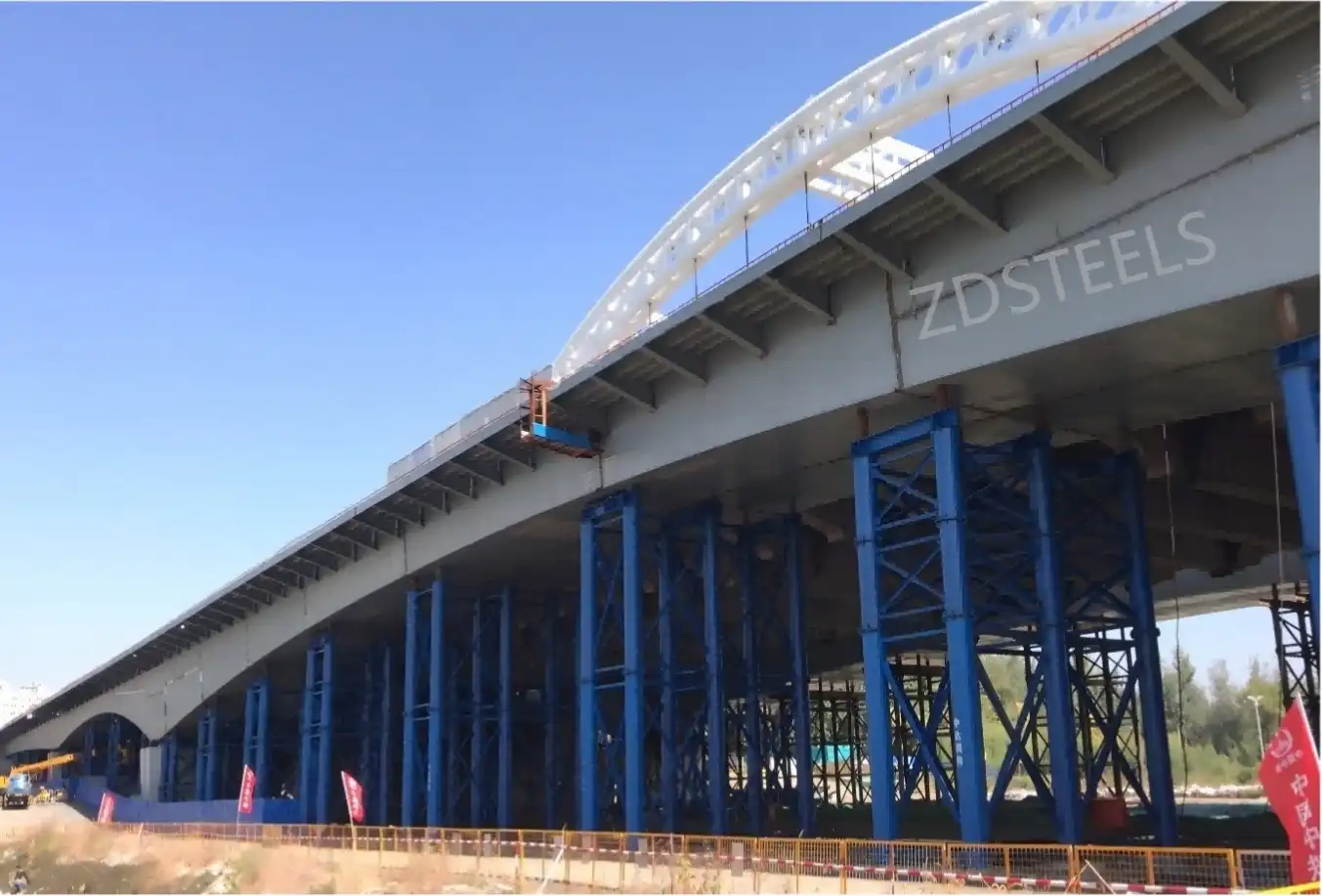
Engineering Specifications Meeting International Safety Standards
For projects going to the U.S. market, they need to meet the AISC 360 standards for structural steel buildings. These include minimum material qualities, link design methods, and manufacturing tolerances. European installations follow EN 1090 execution standards, which include rules for welding, inspections, and keeping records that can be used to track materials. When choosing a material, most people choose Q355B or ASTM A572 Grade 50 steel, which has yield strengths above 355 MPa and controlled carbon equivalent values below 0.45% for better weldability. These requirements make sure that buildings work properly for their entire 50-year design life, even if they are constantly hit by heat and machinery shaking.
Corrosion Resistance Through Advanced Materials and Coatings
Steel in power plants is exposed to water, chemicals, and temperature changes that speed up the rusting process. Coastal sites have to deal with especially rough conditions, so they need C5-M marine-grade protection devices. We use multi-layer finishing techniques that start with preparing the surface to Sa 2.5 standards for a near-white metal blast. Galvanic protection is provided by inorganic zinc-rich primers at the base layer, and then micaceous iron oxide is added to epoxy intermediate coats for barrier properties. Polyurethane topcoats are resistant to UV light and last a long time. For smaller parts, hot-dip galvanizing according to ISO 1461 norms can be used instead. This method guaranties trouble-free service for at least twenty years.
Comparing Steel Structures to Alternative Materials in Power Plant Construction
Decisions about which materials to use have a big impact on the costs, plans, and success of a project. Concrete has been used for building projects for a long time, but Power Plant Steel Structure offers many benefits for power production facilities that need to be set up quickly and remain adaptable for future changes.
Structural Integrity and Flexibility Advantages
Because steel is naturally flexible, it performs better in earthquakes than hard concrete because it absorbs energy through controlled bending instead of sudden failure. This trait is very important for important infrastructure that needs to keep working after natural disasters. Because it is strong for its weight, it doesn't need as much of a foundation. This lowers the cost of site preparation by reducing the amount of digging and concrete that needs to be done. Steel frames can be changed more easily than cast-in-place ones, so plants can grow or equipment can be upgraded without having to be rebuilt from scratch. Because the material's behavior under stress can be predicted, engineers can make accurate calculations that lower safety factors and find the best member sizes.
Durability and Lifecycle Cost Considerations
The initial cost of materials is only one part of the total costs of ownership. When properly covered, steel buildings can last 50 to 70 years with little upkeep, which is the same or longer than the lifespan of concrete structures. Factory-controlled fabrication eliminates the variations in quality that come with curing concrete that was poured on-site. When you order modular parts, they come already finished and ready to put together. This cuts down on delays caused by bad weather and seasonal building restrictions. The main goal of maintenance work is to replace the finish instead of fixing the structure. It's cheaper to do inspections because the connections are easy to get to and the member profiles are clear. All of these things work together to make the lifecycle economics favorable, even though the initial investment is higher.
Benefits of Modular and Prefabricated Components
Off-site fabrication changes the process of building and the quality of the results. Our 120,000 m² factory makes complicated parts in a controlled environment. With modern CNC plate processing, they can achieve precision tolerances of ±0.2mm. Before being shipped, components are put together for the first time in the factory to make sure they fit correctly. This prevents expensive rework in the field. This method cuts down on the time needed for installation on-site by 20–30% compared to traditional methods. This helps project owners make more money faster. Containerized shipping makes it possible to send prefabricated modules to remote areas, which opens up opportunities in difficult terrains. Using BIM to coordinate during the design phase helps find clashes early on, which keeps the erection schedule from getting thrown off.
Optimal Steel Grades for Power Plant Applications
Material specifications balance the need for strength with the ability to be fabricated and with resistance to the environment. Q235 grades are good enough for secondary buildings that don't carry a lot of weight, like stair towers and equipment platforms, and they can save you money in some cases. To keep cross-sections as small as possible and dead weight as low as possible, primary load-bearing parts need grades of Q355B or higher. Charpy V-notch impact testing is needed for low-temperature service in northern climates, and Q355D materials stay tough at -40°C. Different types of weathering steel that contain copper, chromium, and nickel form protective patinas that don't need to be painted in dry places. Our engineering team chooses grades that are best for the load lines and exposure conditions, which saves money on both material and safety reserves.
Construction and Maintenance Processes for Power Plant Steel Structures
For implementation to go smoothly, it needs to be carefully planned from the initial idea to decades of use. To build structures that meet strict performance standards, each phase needs a different set of skills.
Design and Fabrication Workflow
At the start of a project, a full site survey and data collection on equipment loads are conducted to determine the foundation conditions and any space limitations. For a Power Plant Steel Structure project, our engineering team uses advanced 3D modeling software to develop structural plans and performs repeated optimization to achieve the best balance between minimizing material usage and ensuring ease of construction. Through detailed design, fabrication drawings are created to clearly define every connection, welding process, and bolt grade. Before production begins, shop drawings are submitted to the client for approval to ensure they meet specific project requirements. Fabrication is carried out according to documented welding procedures, which are verified through physical testing and performed by welders with valid AWS D1.1 certifications. Before components leave the plant, strict quality inspections are completed, including coating thickness measurement, laser scanning for dimensional accuracy, and non-destructive testing of critical joints.
Transportation and On-Site Erection Strategies
Logistics planning matches the size of parts with transportation rules, making the best use of truck loads to cut down on freight costs while still following the rules for road clearance. Heavy sections are transported on special trailers designed for large cargo, and route surveys are used to find obstacles in the air. When choosing a crane, the maximum piece weight, reach requirements, and site access issues must all be taken into account. For turbine hall construction, this often means using lattice boom crawlers. Engineered plans are used to make sure that the structure stays stable at all times during the erection process. Temporary bracing is added as needed. High-strength friction-grip bolts hold connections in place in stages, letting them be perfectly lined up before they are tightened all the way. All lifting is done according to safety rules, and each pick is led by qualified riggers and signal staff.
Maintenance Best Practices for Extended Service Life
Regular checks are the most important part of keeping assets in good shape. Every year, walkdowns are done to record the condition of the coating, find places where corrosion can start, and make sure that all connections are tight. Thermal imaging finds areas of high stress that show the start of fatigue cracks before they become visible. Coatings should be replaced every 15 to 25 years, but this depends on how harsh the environment is. In between full system changes, small repairs can be made to fix damage in specific areas. Monitoring equipment for vibrations records how structures react to machinery running, letting site managers know about strange situations that need to be looked into. As a way to help lifecycle managers make decisions, we suggest keeping digital records of inspection results, repairs, and performance trends.
Addressing Engineering Challenges
In power plants, where equipment works at hundreds of degrees Celsius, thermal expansion is a unique problem. Differential movement between hot and cold structural zones is made possible by expansion joints and sliding bearing details. This keeps stress from building up. In coastal or earthquake-prone areas, bracing systems are designed to dissipate energy through controlled yielding mechanisms. These systems pay extra attention to wind and seismic forces. Heavy crane loads add dynamic amplification factors that mean runway beams and supporting columns need to be analyzed for fatigue. Our team uses tried-and-true methods that have been improved over hundreds of installations. They use their knowledge from working with China Railroad, CSCEC, and foreign energy companies to get around problems that are unique to each site.
Procurement Guide: How to Source Reliable Power Plant Steel Structures
As much as the quality of the engineering, strategic sourcing determines the success of a project. To find partners who can deliver complex industrial setups on time, procurement managers need to look at more than just price.
Criteria for Identifying Reputable Manufacturers
Supplier qualification starts with getting the right certifications. Process discipline is shown by ISO 9001 quality management systems, and safety and environmental commitments are shown by ISO 14001 and OHSAS 45001 credentials. EN 1090 certification is very specific about how well someone can build steel structures. It needs documented welding procedures, qualified workers, and systems for keeping track of things. Production capacity is very important—facilities that can handle 60,000 tons per year keep economies of scale and machine purchases that help with big projects. Having worked on projects in a variety of locations in the past shows that you can adapt to different building codes and weather, and references from well-known EPC companies back up your performance history. As an example, Zhongda has built Arctic bridge structures for Russian clients, mining equipment supports in Australia, and industrial complexes all over Southeast Asia. This shows that they can handle a wide range of difficult tasks.
Custom Fabrication and Ordering Process
The engagement process starts with in-depth technical talks that make clear the load requirements, site limitations, and expected schedule. Our engineers conduct feasibility studies for different building plans and provide options with clear cost-benefit analyses for your Power Plant Steel Structure project. Design development incorporates client feedback through iterative reviews to create final configurations that balance performance with cost. Once the design is approved, the materials are purchased. For each heat of steel, mill certificates verify its chemical composition and mechanical properties. Fabrication sequences are coordinated with project schedules to ensure production capacity is utilized to meet key milestones along the critical path. Regular progress updates include photos and dimensional inspection reports, allowing you to monitor the manufacturing process.
Evaluating Lead Times and Warranty Provisions
For most power plant structures, the time it takes from engineering to delivery is between 16 and 24 weeks. This includes validating the design, getting materials, building the structure, and testing its quality. Premium material sourcing and overtime production make it possible to meet tight deadlines, but prices may go up as a result. The warranty usually lasts between 12 and 24 months after the product is put into service and covers any material flaws or problems with the workmanship that are found during the first use. Extended protection choices that cover the performance of the coating for 5–10 years give you even more peace of mind, and the terms make it clear what care you need to do to keep the coverage in effect. Understanding these parts of the contract during negotiations keeps disagreements from happening and makes sure that everyone knows what to expect.
Professional Installation Services and After-Sales Support
Complete solutions include more than just manufacturing. They also include expert advice and control of the erection process. During installation, our field engineering teams work with local workers to check connections and make sure that alignment standards are met. People who work in client maintenance get information from training programs that cover things like how structures behave and how to best keep an eye on them. Technical support is available for as long as the building is used, and questions can be answered during renovations or when equipment is changed. This continuity makes sure that buildings keep meeting performance standards decades after they were built, which protects the value of assets and ensures they work properly.
Why Choose Steel Structures for Power Plants - Benefits and Future Prospects
As energy projects need faster deployment, environmental responsibility, and operational flexibility, the industry is moving more toward steel solutions. Figuring out these factors helps people making decisions make sure that investments in infrastructure are in line with long-term goals.
Superior Strength-to-Weight Ratio and Sustainability Advantages
Steel buildings can hold more weight per unit of mass, so they use less material than similar concrete structures. Because of this efficiency, carbon footprints are smaller during the manufacturing and shipping stages. Recyclability makes something even more environmentally friendly. Steel keeps all of its properties through an infinite number of reprocessing cycles, while concrete loses some of its properties when it's used for aggregate applications. New low-carbon production methods using electric arc furnaces and hydrogen reduction processes say that steel with almost no emissions will be available by the end of the decade. Steel frames easily fit with green building certification programs and business sustainability goals for projects that care about the environment.
Faster Project Delivery and Future Expansion Flexibility
Time-to-revenue factors are very important in power project pricing. Steel's natural speed advantages add up at every stage of construction: foundation work is shortened because of lighter loads, fabrication can happen off-site while the site is being prepared, and the structure is quickly put together with little need for weather protection. Bolted links make it easy to take parts apart and make changes, even decades after the system was first put into service. Upgrades to equipment technology fit easily into steel frames that were made to be flexible in the future. This ability to adapt keeps things from becoming obsolete, giving them more useful life than rigid options that don't like change.
Innovations Shaping Industry Trajectory
Digital fabrication technologies change how precise and quick things can be made. Robotic welding cells make uniform entry patterns, so there is no room for error. Automated material handling lowers the amount of work that needs to be done. Graphene nanoparticles are used in advanced coatings that make things last longer by making them less likely to rust. Putting in structural health monitoring systems during construction gives real-time information on performance, which lets maintenance plans be planned ahead of time. With these improvements, steel structures are now at the forefront of smart infrastructure development, giving facility owners real operational benefits.
Real-World Case Studies and ROI Insights
Steel's value was shown by a 500MW combined-cycle plant it built for a Southeast Asian developer. Compared to the concrete option that was thought about during planning, building the modular turbine hall cut the timeline by seven months. Foundation costs were cut by more than 18% because of fewer dead loads, and plans for future growth allowed for the addition of another power unit. After five years of use, maintenance costs that were 30% less than planned proved that lifecycle cost models were correct. The results are the same in a wide range of situations, from green energy sites that need to be set up quickly to petrochemical buildings that need to be resistant to corrosion in harsh environments. These results give buying teams trust as they look at structural plans.
Conclusion
Because they are stronger, last longer, and are easier to build, Power Plant Steel Structures are the best choice for big industry uses. Every step, from the initial design that includes careful load analysis and material choice to the precise production that uses advanced manufacturing techniques, makes the structure strong enough to last for generations. The advantages over other materials—shorter lead times, lighter foundations, and easier changes—produce measured economic gains over the lifecycles of buildings. As the world's energy infrastructure grows and gets more modern, steel frameworks built to exacting standards will continue to be the base for reliable power production.
FAQ
What corrosion protection methods work best in coastal power plants?
For installations near the coast, you need C5-M marine-grade protection systems that prepare the surface to Sa 2.5 standards and apply multiple layers of coating. We use zinc-rich primers to protect against galvanic corrosion, epoxy middle coats with micaceous iron oxide to keep water out, and UV-resistant polyurethane topcoats. Smaller parts can also be protected by hot-dip galvanizing according to ISO 1461. Regular inspections every 24 to 36 months find early signs of coating degradation so that repairs can be made before substrate corrosion starts.
How do steel structures handle vibrations from turbines and generators?
Certain types of bracing and connections are used in structural design to reduce the movements of machinery. Heavy H-beam columns and box sections give the structure mass and stiffness that stop it from moving. Friction-grip nuts with high strength keep the link from coming loose even when it's moving back and forth over and over again. When vibration levels are too high, foundation separation systems keep equipment mounting points away from main structure parts. During the construction process, finite element analysis suggests resonance frequencies. This makes sure that the natural periods of structures don't coincide with the speeds of operational machinery.
What inspections ensure long-term structural reliability?
Comprehensive inspection programs include eye surveys done once a year to record the state of the coating, the status of the connections, and the patterns of distortion. Every five years, nondestructive testing with ultrasonic or magnetic particle methods checks important welds to find fatigue cracks before they spread and threaten the capacity. Dimensional surveys make sure that alignment errors stay within acceptable ranges, especially for systems with crane runways. Thermal imaging can find areas of high stress that show overloading. Digital records keep track of findings across inspection cycles, showing patterns of wear and tear that need immediate attention.
Partner With Zhongda for Your Power Plant Steel Structure Needs
Zhongda has twenty years of specialized knowledge and state-of-the-art manufacturing tools to make Power Plant Steel Structures that meet the strictest industry standards. Our BIM-driven design process makes sure that coordination doesn't fail, and our 60,000-ton production capacity each year means that projects of any size can be completed. Our technical skills are as complicated as today's energy infrastructure. We can do everything from ultra-precision plate cutting with ±0.2mm limits to -60°C weathering steel technology that has been used successfully in the Arctic. Whether you're an EPC contractor, a government project developer, or the owner of an industrial facility, our team can help you with everything from the first feasibility studies to decades of service. Email us at Ava@zd-steels.com right away to talk about your project needs with experienced engineers who know how to deal with structural problems in power plants. As a qualified maker of Power Plant Steel Structures that serves markets around the world, we can give you the stable, long-lasting frameworks that your important equipment needs.
References
1. American Institute of Steel Construction. (2016). Specification for Structural Steel Buildings (ANSC/AISC 360-16). Chicago: AISC.
2. British Standards Institution. (2018). Execution of Steel Structures and Aluminum Structures - Technical Requirements for Steel Structures (EN 1090-2:2018). London: BSI.
3. Chen, W.F., & Lui, E.M. (2019). Handbook of Structural Engineering: Steel Frame Structures in Power Generation Facilities (2nd ed.). Boca Raton: CRC Press.
4. International Organization for Standardization. (2011). Hot Dip Galvanized Coatings on Fabricated Iron and Steel Articles (ISO 1461:2011). Geneva: ISO.
5. Salmon, C.G., Johnson, J.E., & Malhas, F.A. (2020). Steel Structures: Design and Behavior - Emphasizing Load and Resistance Factor Design (6th ed.). Upper Saddle River: Pearson Education.
6. American Welding Society. (2015). Structural Welding Code - Steel (AWS D1.1/D1.1M:2015). Miami: AWS.
YOU MAY LIKE