
Why Choose Commercial Steel Structure for High-Load Commercial Facilities?
2026-09-02 13:00:01






When designing facilities that must bear heavy machinery, dense inventories, or sustained operational stress, the choice of building material becomes mission-critical. Commercial steel structure systems have emerged as the preferred solution for high-load environments because they deliver unmatched strength-to-weight ratios, predictable performance under extreme conditions, and rapid deployment timelines. Unlike traditional concrete or timber frameworks that struggle with span limitations and lengthy curing periods, engineered steel components—fabricated from Q345 or Q355 grade structural steel—provide verified load-bearing capacities exceeding 250 PSF while maintaining design flexibility. This combination of structural reliability, speed-to-occupancy, and lifecycle cost efficiency makes steel frameworks indispensable for warehouses, manufacturing plants, distribution centers, and energy infrastructure projects across North America.
Understanding Commercial Steel Structures and Their Key Benefits
Materials that won't break down under pressure are needed in high-load facilities. This assurance is provided by steel frameworks thanks to their natural properties and advanced manufacturing methods. Carbon steels like Q235 are used in most modern structural steel buildings. Low-alloy high-strength steels like Q345 are used in places where better load protection is needed. The molecular make-up of these metals gives them great flexibility and compressive strength. This means that structures can handle dynamic loads without permanently changing shape.
Superior Load-Bearing Capacity for Demanding Applications
Steel is better for engineering because its tensile strength is much higher than that of other materials. It is possible for a standard I-beam made of Q355 steel to support heavy loads that would normally need much bigger concrete columns or laminated wood assemblies. This efficiency saves money right away because it means less base work and better use of materials. Steel is strong enough to resist bending moments and shear forces over large clear-span areas, which is especially useful in buildings with high cranes, big processing equipment, or multi-level racking systems.
Accelerated Construction Timelines Through Prefabrication
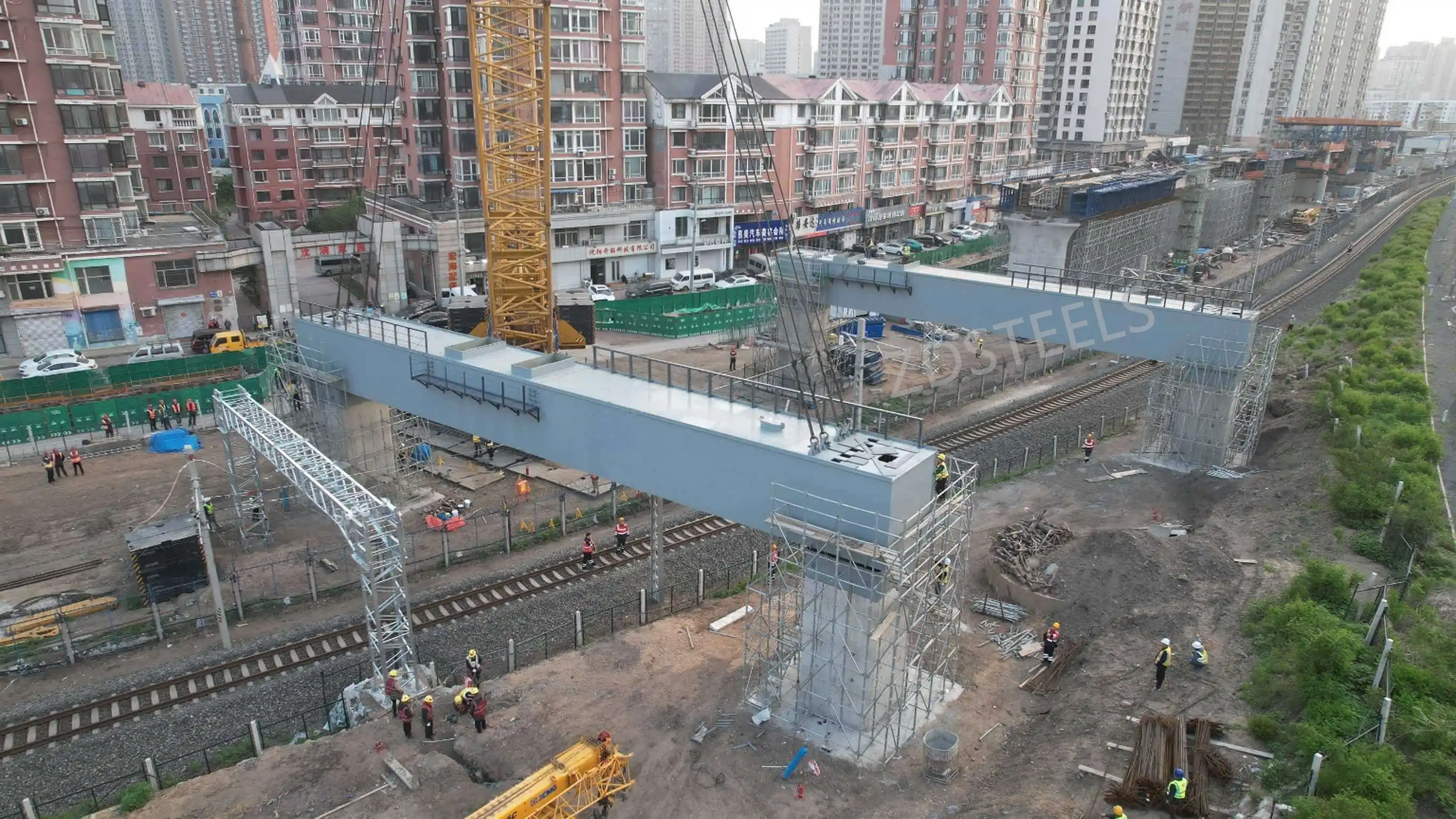
Traditional on-site construction methods have changed a lot since factory-controlled fabrication came along. Computer-aided design systems make parts that are precisely cut and have tolerances of ±0.2mm at places like Zhongda's 120,000 square meter production center. When these prepared parts get to the job site, they are ready to be bolted together. This means that there are no delays caused by bad weather for setting concrete, and up to 40% less work is needed than with traditional builds. Using pre-engineered steel systems, projects that would normally take 18 months can often be up and running in 10 to 12 months.
Long-Term Value Through Durability and Adaptability
Even though the beginning prices of materials may look about the same as those for reinforced concrete, steel has a much lower total cost of ownership. Hot-dip galvanized coatings with zinc layer thicknesses that meet ASTM A123 standards protect against corrosion for decades without the need for regular maintenance. It is possible to adjust fire-resistant intumescent coats so that they meet fire-resistance standards for one to four hours. Steel structures not only protect, but they can also be easily changed in the future. For example, adding more upper floors, improving crane runways, or expanding a facility can all be done without the structural problems that happen with hard concrete systems.
Comparative Analysis: Commercial Steel Structure vs. Alternative Building Solutions
To choose the best structural system, you need to objectively evaluate it across a number of performance factors. Each type of material comes with its own set of trade-offs that affect the viability of the project and how well it works.
Steel vs. Concrete: Speed and Flexibility Advantages
Concrete construction has been shown to last, but it takes a long time to finish and costs a lot. Setting up the forms, putting in the rebar, pouring the concrete, and waiting for it to cure all take weeks for each level of the structure. In contrast, Commercial Steel Structure construction keeps the project moving regardless of outside temperatures, with crane teams installing dozens of connections every day. Seismic performance also favors steel because it can effectively control energy dissipation during ground motion, while concrete requires extensive reinforcement and shear wall systems to achieve similar performance. When combined with continuous insulation strategies, energy efficiency measures provide steel structures with even greater advantages by reducing thermal bridging.
Steel vs. Wood: Fire Safety and Lifespan Considerations
Engineered lumber products are becoming more popular in mid-rise buildings, but they can't be used in high-load industrial settings because of basic problems. Because wood is easily burned, it needs a lot of fire protection equipment, and insurance rates go up. Moisture absorption causes changes in dimensions, which can be a problem in temperature-controlled buildings or humid seaside areas. Steel is non-combustible, so it meets strict fire codes without the need for more sprinklers. Its resistance to biological degradation also means that structures will stay strong for 50 years without having to be replaced.
Steel vs. Modular and Aluminum Systems: Precision and Strength
Rapid deployment is what modular building systems promise, but customization is often given up for standardization. Lightweight aluminum frames don't rust in salty seas, but they can't hold a lot of weight for heavy industrial use because their yield strength is only 35 to 45 ksi, while structural steel's is 50 to 65 ksi. Precision in manufacturing is what sets good steel fabricators apart. BIM-driven workflows at certified facilities ensure dimensional accuracy, which gets rid of field-fit problems that are common with imported modular units that don't have proper engineering oversight.
Specific suggestions for each building type make it easier to choose the right material: warehouses that are bigger than 100,000 square feet can use steel's column-free spans; shopping centers that need architectural features can use steel's ability to bend and shape; and factories that process loads higher than 150 PSF need steel's verified capacity documentation for permit approval.
Core Considerations for Procurement and Construction of Commercial Steel Structures
Comparing prices isn't the only thing that goes into procurement choices; suppliers' skills, quality control procedures, and project delivery skills are also important. Strategic sourcing reduces the chances of problems that could delay or ruin the project.
Evaluating Supplier Credentials and Manufacturing Standards
Reliable suppliers of structural steel keep certifications that prove their technical skills and quality management systems. Getting ISO 9001:2015 approval shows that you have control over the whole process, from designing to making to delivering. Compliance with EN 1090 shows respect to European execution class standards that are being used more and more in North American specs. Check that the manufacturers have the right credentials from the building authority. For example, Zhongda's First-Class Steel Structure Engineering Qualification from China's Ministry of Housing and Urban-Rural Development is the highest level of technical authorization and is needed for complicated projects with advanced connection types or seismic design categories.
Prefabrication Benefits and Customization Options
Standardized framing designs in pre-engineered steel building systems save money, but many high-load sites need custom solutions. Leading manufacturers offer hybrid approaches that combine standard, efficient parts with custom-engineered Commercial Steel Structure solutions that meet specific needs for load paths, equipment interfaces, or architecture. Value engineering decisions can be well-informed when engineering documentation clearly separates base building costs from modification premiums. Detailed manufacturing drawings reviewed during procurement help prevent expensive changes in the field. Specifications should require shop drawings to be submitted within four weeks of the contract start date, with clear modification processes.
Installation Expertise and Safety Compliance
Even high-quality steel parts don't work as well if they aren't put together correctly. Installers who are qualified show their AISC licensing, OSHA 1926 Subpart R compliance training, and project files that show they have worked on similar buildings and sites before. The performance of a structure depends on the quality of its connections. Welding processes must use AWS D1.1 prequalified joint details, and important welds must be documented by certified welding inspectors. To install bolts correctly, you need calibrated torque wrenches and a system for checking that the proper pretension is being met. Skipping steps during installation can invalidate engineering assumptions and lower the long-term reliability.
So that there is competitive bidding and technical accountability, procurement specialists should ask for itemized quotes that separate the supply of materials from the installation services. Warranty terms that cover both defects in the materials and errors in the installation work for 2 to 5 years offer more risk protection than standard one-year builders' warranties.
Maintenance and Safety: Ensuring Longevity of Commercial Steel Structures
Longevity depends on preventative maintenance plans that take into account natural factors and changing building codes. Steel buildings that are well taken care of often last longer than 50 years while keeping their value.
Corrosion Prevention and Inspection Protocols
Even if protective coatings were used during production, environments with a lot of humidity and chemical exposure weaken them over time. Every year, the coating should be checked in places that are likely to get damaged, like column bases, connection points, and places where water pools. If a coating failure is found early, it can be fixed on the spot before it starts to eat away at the base metal. Facilities that use Zhongda's -60°C Weathering Steel Anti-corrosion Technology have better protection in harsh conditions. This is especially useful for cold storage operations or places in the northern tier that experience freeze-thaw cycles.
Structural Health Monitoring and Code Compliance
Building rules change over time to take into account what we've learned from earthquakes, wind disasters, and operating accidents. Structures that are already there might need to be checked against new standards for load combinations or link details. Modern monitoring systems that use strain gauges and accelerometers give real-time information on how structures respond while they are being used. This lets engineers find problems before they become unusable. Professional engineering reviews should be done on a regular basis, ideally every 5 to 7 years, to make sure that the building is still up to code and to keep track of any unfinished repair tasks that need to be paid for.
Real-World Performance Documentation
Projects that are finished by skilled fabricators show measurable performance benefits. Arctic bridges in Russia built with Commercial Steel Structure solutions using special weathering steel continue to work effectively after 15 or more winter rounds. After ten years of nonstop use, Australian mining facilities with equipment that processes rock and is subject to a lot of shaking have no signs of fatigue-related cracking. This proves that the connections were properly designed and the equipment was well made. Vietnamese industrial complexes that received their occupancy permits eight months after breaking ground are a good example of how reliable schedules are in well-run steel construction projects.
Why Commercial Steel Structures are the Preferred Choice for B2B High-Load Facilities
When it comes to technical performance, cost-effectiveness, and environmental friendliness, designed steel systems are the best choice for businesses that want to move forward.
Risk Mitigation Through Proven Reliability
Procurement managers are responsible for improving performance over the course of decades of operations. Because steel's behavior can be predicted under known loading conditions, it takes away the doubt that comes with other materials that don't have long performance records. Quality assurance systems that aren't possible with concrete or wood construction include third-party engineering certifications, material test reports that can be linked to heat numbers, and shop inspection records. This ability to be checked lowers the risk of professional responsibility and makes it easier to get insurance at good rates.
Scalability for Future Operational Needs
As a business grows, it often needs to expand its facilities or make its operations more complex. Steel structures can adapt to these changes because they are naturally flexible. For example, adding more cranes, more storage space, or better process equipment can all be added without having to completely rebuild the structure. Bolted connection systems make it possible to take parts apart and put them back together again, which is not possible with cast-in-place concrete. Steel can be moved easily, which is good for businesses that rent out space. Structures that are properly recorded can be treated as personal property instead of real estate improvements, which keeps the capital equipment tax classification.
Environmental Responsibility and Circular Economy Benefits
As companies commit to carbon reduction goals, sustainability requirements have a bigger impact on the purchases they make. Steel can be recycled over and over again without losing any of its quality. This supports the ideas of the circular economy, which says that old buildings should be used to make new ones instead of being thrown away. Compared to older buildings, energy-efficient designs that use daylight harvesting, high-performance insulation, and better HVAC integration cut operating emissions by 20 to 30 percent. When you choose manufacturers with ISO 14001 environmental management certification, you can be sure that all of your supply chain partners will share your commitment to sustainability. This will improve your company's reporting on corporate responsibility and build trust among stakeholders.
Working with manufacturers that are certified internationally ensures consistent production and reliable supply, which is important for programs that use more than one site. Zhongda has a history of working with big infrastructure builders like China Railroad and CSCEC, as well as global corporate clients like BMW. This shows that they have the organizational depth to handle complicated, time-sensitive projects. Having dedicated engineering support during design development, value engineering reviews, and building administration makes sure that there is good technical teamwork, which avoids the problems that happen when design and fabrication tasks are split up among several vendors.
Conclusion
Choosing structural systems for high-load business buildings is a long-term commitment that has big effects on how well the building works, how much it costs, and how flexible the company is. Commercial Steel Structure solutions provide measurable benefits in all areas of evaluation, from proven load capacity and faster construction times to lower lifecycle costs and environmental responsibility. Modern steel fabrication is very advanced, combining precise manufacturing with high-tech safety systems. This gives procurement professionals confidence that the infrastructure of a building will be able to adapt to changing business needs without becoming outdated too quickly. When businesses work with reputable steel structure manufacturers, they can get access to engineering knowledge, quality control standards, and execution skills that turn building a facility from a risky necessity into a strategic competitive advantage.
FAQ
What load capacities can steel structures reliably support in warehouse environments?
Engineered steel frameworks can usually handle live loads ranging from 125 PSF for light assembly tasks to 250 PSF or more for dense pallet racking or heavy machinery installations. When needed for specific uses, custom designs with stronger connection details and optimal member size can increase capacities above 300 PSF. A building's load rating is based on its span lengths, column spacing, and framing configuration. To make sure the building meets building codes and works well for a long time, experienced structural engineers do calculations that are special to the site.
How do steel structures perform in seismic zones and high-wind regions?
Steel works well in dangerous places because it is strong and flexible. When moment frames and braced configurations are properly designed, seismic energy is released through controlled yielding instead of catastrophic failure. The best connection details and structural redundancy make wind resistance possible. Projects in a range of conditions, from seaside areas prone to typhoons to earthquake zones, show how reliable steel is when engineers take into account the risks that are unique to each site.
Can existing steel structures be expanded without compromising the original building?
One big benefit of steel construction is that it can be expanded without any problems. Bolt-together assembly lets new bays fit in perfectly with the old frames by using connection details that are compatible. When structural engineers look at the original capacity documentation, they make sure that the foundations are strong enough and that the load paths stay connected. They then design the expansion elements so that the whole building meets the same performance standards.
Partner With a Trusted Commercial Steel Structure Manufacturer
Zhongda Steel has been serving demanding industrial, infrastructure, and commercial clients around the world for 20 years. Our advanced BIM integration, strict quality standards, and 60,000-ton annual production capacity make sure that your high-load facility meets the strictest performance requirements and stays on schedule for your project. We've provided tried-and-true solutions to global giants like China Railroad, CSCEC, and BMW, on projects that ranged from Arctic regions to tropical industrial zones. Our engineering team works together to make sure that the structure is as efficient as possible and that the project is cost-effective, whether we're building automated distribution centers, heavy manufacturing plants, or specialized energy infrastructure.
Get in touch with our technology experts to talk about your unique needs. Contact Ava at Ava@zd-steels.com to set up a meeting and find out why reputable Commercial Steel Structure suppliers pick Zhongda for projects where quality must not be compromised. Visit zd-steels.com to learn more about all of our services and to read case studies that show how dedicated we are to engineering excellence and client success.
References
1. American Institute of Steel Construction. (2016). Steel Construction Manual, 15th Edition. Chicago: AISC.
2. Fisher, J.M. & Kloiber, L.A. (2006). Base Plate and Anchor Rod Design, 2nd Edition. Steel Design Guide Series No. 1. Chicago: American Institute of Steel Construction.
3. Geschwindner, L.F., Disque, R.O., & Bjorhovde, R. (2017). Load and Resistance Factor Design of Steel Structures. Upper Saddle River: Pearson Education.
4. Salmon, C.G., Johnson, J.E., & Malhas, F.A. (2009). Steel Structures: Design and Behavior, 5th Edition. Upper Saddle River: Prentice Hall.
5. Tamboli, A.R. (2016). Handbook of Structural Steel Connection Design and Details, 3rd Edition. New York: McGraw-Hill Education.
6. Tide, R.H.R. (2010). Beam and Girder Design. Steel Design Guide Series No. 25. Chicago: American Institute of Steel Construction.
YOU MAY LIKE