
How Does Commercial Steel Structure Improve Large Building Safety and Space Utilization?
2026-08-30 13:00:00






Commercial Steel Structure technology fundamentally transforms large building performance by delivering unmatched safety through advanced fire-resistant coatings, seismic resilience, and engineered load distribution systems, while simultaneously maximizing usable space via high strength-to-weight ratios that eliminate unnecessary support columns. This dual advantage stems from steel's inherent material properties—Q345 and Q355 grades provide exceptional load-bearing capacity while maintaining structural integrity under extreme conditions, enabling architects and engineers to design expansive, column-free interiors that optimize every square foot without compromising occupant protection or regulatory compliance.
Understanding Steel Structures and Their Critical Role in Modern Construction
The way we do big building projects has changed a lot because of steel-framed buildings. Unlike traditional alternatives like concrete or wood, steel frameworks use carbon structural steels like Q235 and low-alloy high-strength versions like Q345. These are materials that are designed to be strong while still being flexible. This mix lets structures bend a little when they're under a lot of stress instead of breaking, which is very important for safety during earthquakes or high winds.
The Material Science Behind Steel's Superiority
The precise manufacturing method used by Zhongda makes sure that these material benefits are used to their fullest. Ultra-thick plate cutting with a ±0.2mm tolerance is used at our facility. This makes sure that connection points line up perfectly during assembly. This level of accuracy is important because even small misalignments in structural steel can lead to stress concentration spots that weaken the building as a whole.
Prefabrication: Factory Quality Meets Field Efficiency
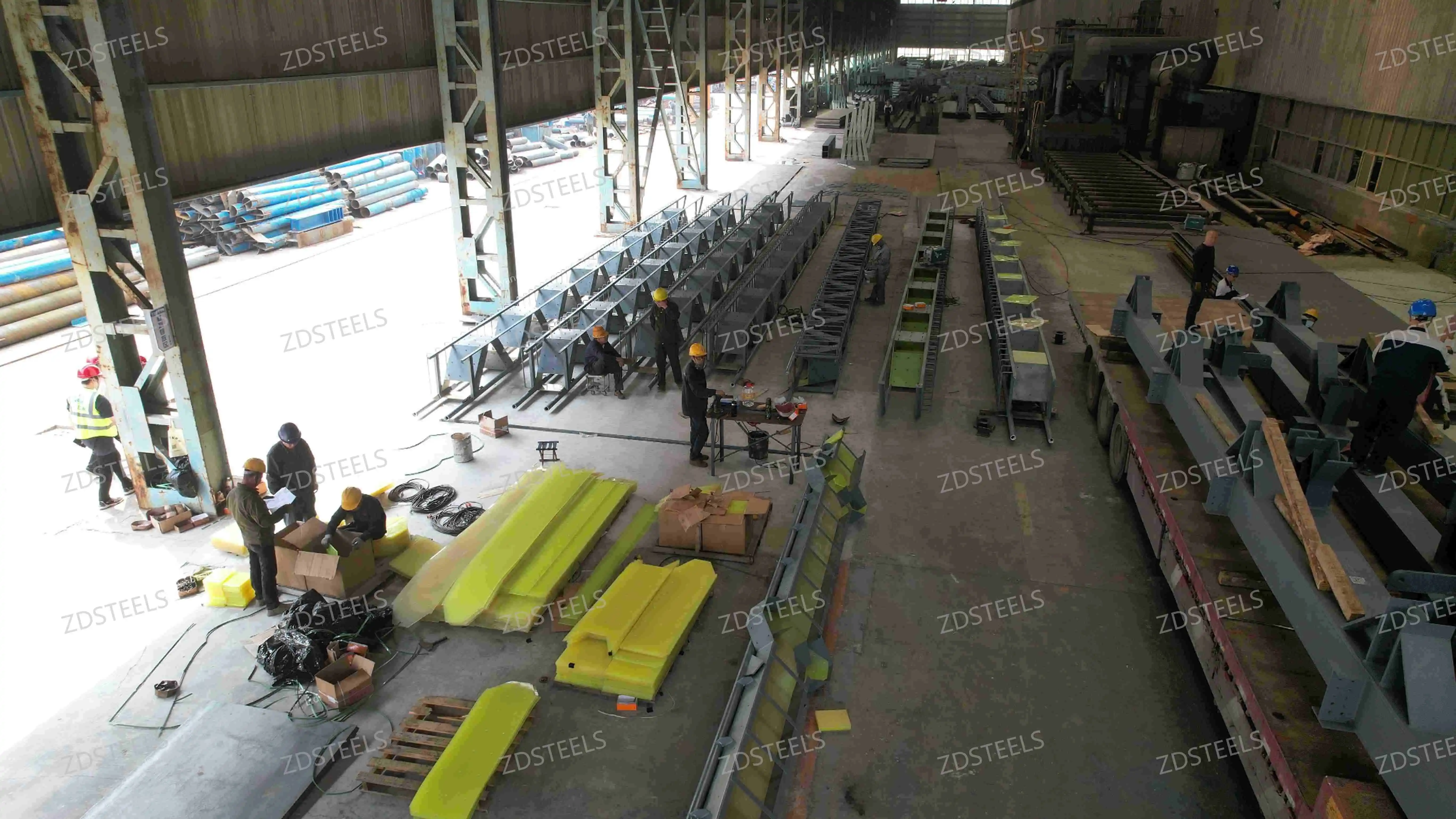
The variables that make on-site building so hard are taken care of in factory-controlled production settings. Before getting to your project site, steel parts have already been through a number of quality checks, such as measuring to make sure they are the right size, checking the soundness of the welds, and looking over the surface treatment. The American Institute of Steel Construction says that this controlled manufacturing method cuts down on mistakes in the field by about 60% compared to traditional building methods.
The real-world effects are important. If you use steel framing, you can finish a 50,000-square-foot warehouse in 10 to 12 months instead of 18 months if you use concrete. This shortening of the timeline does more than just save money on labor; it also speeds up your return on investment by getting facilities up and running more quickly.
How Steel Frameworks Enhance Building Safety Standards
There is more to safety in big buildings than just following the rules. It includes keeping people safe in situations, making sure the structure will last for decades, and making sure the building will work as expected in harsh circumstances. In every area, steel buildings do better than others thanks to the way the material is made and the protection systems that are built into them.
Fire Protection Through Advanced Coating Systems
Zhongda uses fire-protective treatments based on the fire-resistance ratings of each building. The thickness of the coatings is checked against international standards like ASTM E119 and ISO 834. In harsh industrial settings where temperature changes and corrosive atmospheres threaten exposed steel, our -60°C Weathering Steel Anti-corrosion Technology protects against more than just fires. It also keeps structures intact.
Seismic and Wind Load Performance
Because steel is flexible, it can save lives during earthquakes. Steel frames receive and release energy through controlled deformation, while fragile materials break in terrible ways. This behavior lets buildings move during shocks without falling down, which is an important safety feature that keeps people safe while they are leaving.
Engineering calculations show this benefit in a measurable way. Modern seismic codes say that a steel-framed building can withstand ground accelerations of up to 0.4g in high-risk areas while still keeping people safe. Comparable concrete structures need a lot more mass and reinforcement to work as well, which raises the cost and makes construction more difficult.
Similar ideas apply to wind load resistance. During storms, large buildings are hit by strong side forces that can reach more than 50 pounds per square foot on open areas. Steel has a high strength-to-weight ratio, which lets builders make frames that can withstand these forces without using too much material. This keeps safety margins while improving the efficiency of the structure.
Corrosion Prevention for Long-Term Structural Integrity
Commercial Steel Structure that aren't shielded oxidize when it comes in contact with air and water. This is a fact that needs to be managed to prevent corrosion. Hot-dip galvanizing protects steel surfaces well by covering them with zinc layers that are usually 85 to 100 microns thick. Corrosive substances can't get to the base steel because of this metal shield. This makes the service life longer than 50 years in most settings.
Metallurgists call the zinc coating's willingness to give itself when small damage reveals the underlying steel "cathodic protection." This ability to heal itself is what sets galvanizing apart from paint systems that fail totally once they are broken. Regular checks, focusing on high-stress connection points and environmental exposure zones, make sure that protective systems keep working well for as long as the building is used.
Maximizing Space Utilization Through Intelligent Structural Design
How well you use space has a direct effect on running costs and the ability to do different things. Every square foot that support beams take up means less work gets done in warehouses, businesses can't arrange things the way they want to, and public buildings can't hold as many people. Steel's structural benefits make these space limitations less of a problem and allow designs that would not be possible with other materials.
Column-Free Interiors and Clear-Span Design
Think about a transportation center that's 200,000 square feet. In traditional construction, there might need to be a grid of columns every 30 feet, which would mean that there would be about 200 columns inside the building. A steel-framed option with long-span trusses can cut this down to just the outer supports, freeing up room inside for more storage and automatic systems. This freedom of space means that the useful floor area goes up by 15 to 20 percent while the building's size stays the same.
During the planning step, Zhongda's BIM-driven prefabrication method makes these clear-span designs work better. Before cutting the first plate, our team digitally looks at load paths, connection details, and fabrication sequences to make sure that big architectural ideas become structures that can be built and meet building codes.
Vertical Expansion and Adaptive Reuse
Existing buildings often have vertical space that isn't being used. Because steel is so light, it can be used to add floors to buildings that were originally only meant to grow so much. In a concrete building, an extra floor might be able to be added before the base needs to be strengthened. But in a steel building, two or three levels can be added without affecting the load limits.
This power to expand vertically greatly increases the value of a building over its entire life. Businesses don't have to move when they need more space; they can just build higher on existing sites, keeping the benefits of their current location and avoiding disruption. Even more options are available with steel mezzanine systems, which can be used to add middle floors to high-bay areas without changing the main structure. These frames can be used to support offices, equipment rooms, or extra storage for a lot less money than building something from scratch.
Integration with Modern Building Systems
Structure, mechanical equipment, fire protection, and electricity exchange all have to work well together in modern buildings, which are like complex systems. Through strategic design coordination, steel frameworks can meet these needs. Wide-flange beams make it easy to run pipes and cable trays, and open-web joists make sure that utilities can move around without any problems.
These benefits of integration are amplified by prefabricated modular construction. Off-site assembly of mechanical rooms, electrical closets, and even whole office modules is possible. All systems can be installed and tested ahead of time, and the modules are then lifted into place within the steel framework. This method shortens the time it takes to build something while also making it safer, since important system connections happen in a controlled factory setting instead of an open field.
This combination is also good for energy economy. High-performance insulation systems, air barriers, and improved envelope structures that reduce heating and cooling loads can be easily installed in Commercial Steel Structure buildings. The building's framework supports solar panels on the roof and wind-resistant siding without the need for extra support. This allows for environmentally friendly design features that lower the building's operating costs over its lifetime.
Procurement Insights: Strategic Decision-Making for Steel Building Projects
Steel building projects that go well start with smart buying choices that weigh the short-term costs against the long-term benefits. B2B buyers have to think about a lot of things, such as the specifications of the materials, the capabilities of the suppliers, the need for customization, and the logistics of installation. By understanding these factors, you can negotiate in a way that gets the best results for your job.
Cost Analysis Beyond Initial Price Points
The costs of building with steel include the supplies, the work to make them, the finishes, the shipping, and the installation. If you only look at price per ton or per square foot, you miss important changes in value between providers. A lower cost of materials doesn't mean much if poor fabrication quality delays work in the field or if corrosion protection isn't good enough and repairs have to be done early.
Lifecycle cost analysis helps you see things more clearly. Compared to wood or regular concrete buildings, steel structures usually don't need as much upkeep. Steel frameworks that are properly protected can last 50 to 75 years with only regular checks and small coating touch-ups. When spread out over this service life, steel's overall purchase cost often comes in lower than other options, even though it costs more at first.
Project costs are also affected by how the money is financed. Some sellers offer leasing plans that help businesses keep their cash for more important tasks while still getting the tools they need. These methods match the prices of running a business with the money it makes, which makes managing cash flow easier during growth stages.
Evaluating Supplier Capabilities and Certifications
Steel companies with good reputations have the manufacturing capacity, technical know-how, and quality standards to set themselves apart from those with poor reputations. The ISO 9001:2015 certification shows that you are dedicated to maintaining consistent processes and making them better all the time. EN 1090 certification specifically checks how skilled someone is at working with steel. It covers things like how to weld, how to track materials, and how to control production.
Customization options for specific projects are what set apart common steel providers from real engineering partners. Can the maker make the connection details work better for the way you're installing them? Do they offer value engineering ideas that keep performance high while cutting costs? Most of the time, these joint features are worth more than small price differences.
Turnkey Installation and Technical Support
Complex steel structures need trained construction teams that know the right way to put them together, the right amount of force for each link, and how to check the quality of the work. With turnkey installation services, you don't have to coordinate between different manufacturers and erectors. Instead, you only have to worry about one contract, which includes both scheduling and quality issues.
Technical support goes beyond the initial setup. Reliable suppliers offer as-built documentation, maintenance instructions, and service availability for a long time. When changes or improvements need to be made in the future, this historical knowledge speeds up the engineering process and makes sure that the new structures fit in perfectly with the old ones.
Future Trends and Sustainability in Steel Construction
There is a turning point in the construction industry where environmental responsibility and new technology meet. This coming together is shown by steel structures, which can be recycled naturally, work with new safety technologies, and are compatible with smart building systems that make operations more efficient.
Advanced Protection Systems and Smart Integration
The next generation of fire protection is not just passive coatings, but also active systems that change based on the environment. Intumescent paints now have humidity-activated parts that make them last longer in harsh environments. Corrosion tracking systems built into structural members let you know right away when protective barriers start to break down. This lets you plan ahead for maintenance that stops expensive failures before they happen.
Integration of smart buildings uses the structural properties of steel as a base for monitoring networks and automatic systems. Distributed monitoring checks the health of the structure, finding connection loosening or sudden deflections that could mean the structure is overloaded. This approach, which is based on data, extends the life of assets and saves money on maintenance by focusing on the areas that really need it.
Better insulation materials fix problems with thermal bridging that used to be a challenge for Commercial Steel Structure construction. With aerogel-based insulation and thermally broken connection details, R-values are now on par with wood-framed systems, while the structural benefits of steel are still maintained. These improvements allow Commercial Steel Structure systems to be used for high-performance building envelopes that meet strict energy codes.
Circular Economy and Material Reuse
Steel is different from composite materials and concrete that end up in landfills because it can be recycled over and over again. When steel buildings are taken apart, the valuable scrap metal is sent back to steel mills to be used as raw materials. This closes the material loop without lowering the quality of the steel. This feature fits building projects with the circular economy ideas that are becoming more popular in business sustainability plans.
More advanced methods include not only recycling but also reusing things. When operating needs change, whole steel buildings can be taken apart and moved thanks to bolted connections. Because of this, buildings can be changed from permanent fixed assets to movable resources that can change with the needs of the business. Reusing an old steel structure saves 90% of the carbon emissions that come with building something new, which is very good for the earth.
Leasing and repair methods take advantage of this ability to reuse. Businesses can get to the facilities they need without having to permanently deploy capital, and specialized service providers can manage the structure's lifecycle through multiple deployment cycles. This method keeps building usage and ownership separate, which gives businesses with changing room needs more freedom.
Sustainability Certifications and Corporate Goals
The LEED and BREEAM standards clearly recognize steel's environmental benefits by giving it multiple point categories. Recycled content, local products, managing building trash, and innovation credits are all good for steel construction as long as they are properly recorded. For projects that want to get these certifications, steel frameworks make it easier to get points in more than one category at the same time.
Sustainability commitments made by companies are having a bigger effect on procurement decisions. Companies that want to cut down on carbon emissions look closely at the stored energy in building materials and choose choices that have less of an impact on the environment over their whole life. Steel is good for these kinds of analyzes because it can be recycled, lasts a long time, and is easy to make ahead of time, especially when suppliers show clear environmental accounting.
There's no doubt about it: sustainable building is no longer a niche business; it's now the norm. This is what people expect from steel buildings because the basic properties of the material are good, and protection systems, assembly methods, and lifecycle management practices are always getting better.
Conclusion
Because of engineered material properties and advanced fabrication techniques, Commercial Steel Structure solutions offer measurable benefits in both safety performance and space utilization. High strength-to-weight ratios, resistance to earthquakes, fire protection systems, and rust resistance all work together to make buildings that keep people safe while making the most of their useful space. The quality of prefabrication, the ability to work with clear spans, and the possibility for vertical growth give operations a level of flexibility that isn't possible with traditional building. As the need for sustainability grows and smart building technologies improve, steel frames provide solutions that can change to new needs while keeping their structural integrity for many years. For projects ranging from warehouses to complex industrial facilities, these benefits can be unlocked by making smart purchasing decisions that put supplier expertise, lifecycle value, and technical support capabilities at the top of the list.
FAQ
What load capacities can steel frameworks support compared to concrete structures?
In industrial settings, high-strength structural steels like Q345 and Q355 can handle loads greater than 250 PSF because their yield strengths are between 345 and 355 MPa. This ability is the same as or greater than reinforced concrete, but it uses a lot less material. The exact load capacity relies on the size of the members, the length of the spans, and the design of the connections. However, steel always has the best strength-to-weight performance. Engineers make the most of these features by carefully choosing which members to use. This lets them build structures that can hold heavy equipment, a lot of storage, or extra floors within smaller spaces than concrete alternatives would allow.
How does galvanized coating thickness affect long-term durability?
Standard hot-dip galvanizing puts on zinc layers that are 85 to 100 microns thick. In normal commercial settings, this protects against corrosion for 50 years or more. The thickness of the coating directly affects how long it lasts—every extra 10 microns adds about 7 to 10 years of protection. Heavy coatings up to 150 microns may be needed for longer toughness in harsh places like chemical processing plants or seaside areas. The zinc layer gives up its own security to shield the base steel, which means that thicker coatings last longer before they need to be fixed. Regular checks find any damage to the layer quickly so that it can be fixed in place and the structure doesn't fall apart.
Can existing steel buildings accommodate future vertical expansions?
Most steel-framed buildings have extra space that can be used for tall adds if they are checked out by structural engineers. How possible it is relies on the original plan loads, the capacity of the foundation, and the stress levels in the current members. Steel's light weight is a big plus—adding steel-framed floors puts a lot less stress on the structure than adding concrete floors of the same size. Steel mezzanine systems can be added to buildings that were designed with minimal reserve, making it possible to add intermediate levels without changing the main structure. A professional evaluation figures out how much space is available and what kind of extra help is needed. This lets people make smart choices about whether or not to expand and how much it will cost.
Ready to Optimize Your Next Project with a Trusted Commercial Steel Structure Manufacturer?
Zhongda has more than 18 years of experience designing and building steel frames that are safer than required and make the most of every square foot of your building. Our 120,000 m² ISO-certified production facility combines advanced protection technologies with BIM-driven precision to make sure your structure can withstand harsh conditions ranging from -60°C Arctic environments to corrosive industrial environments. Our team can help you with every step of the planning process, from the initial design to the final installation of a transportation hub, manufacturing plant, or infrastructure project. Get in touch with our experts at Ava@zd-steels.com to talk about how our flexible options can fit your project's needs and schedule.
References
1. American Institute of Steel Construction (2021). Steel Construction Manual, 15th Edition. AISC Publications.
2. Bjorhovde, R. (2018). "Development and Use of High-Performance Steel in Structural Engineering." Journal of Constructional Steel Research, Vol. 154, pp. 295-310.
3. Chen, W.F. & Lui, E.M. (2019). Handbook of Structural Engineering, Second Edition. CRC Press, Boca Raton.
4. Engelhardt, M.D. & Sabol, T.A. (2017). "Seismic-Resistant Steel Moment Connections: Developments Since the 1994 Northridge Earthquake." Progress in Structural Engineering and Materials, Vol. 8, No. 2, pp. 68-77.
5. Papadopoulos, A.M. (2020). "Life Cycle Assessment and Environmental Impact of Building Materials: A Comparative Analysis." Building and Environment, Vol. 186, Article 107345.
6. United States Green Building Council (2020). LEED v4.1 Building Design and Construction Guide. USGBC Publications, Washington D.C.
YOU MAY LIKE