
What Steel Structure Design Works Best for Heavy-Duty Power Plant Buildings?
2026-08-30 13:00:00






Power Plant Steel Structure represents the engineered backbone of modern energy facilities, designed to support massive turbine generators, boiler systems, and auxiliary equipment under extreme operational demands. The optimal design integrates heavy-duty column-and-beam frameworks, specialized truss systems, and modular components that collectively address thermal expansion, vibration dampening, and long-span requirements. This comprehensive approach ensures your facility achieves operational uptime, regulatory compliance, and lifecycle cost efficiency critical to energy sector success.
Introduction
Steel frames are the structural base of heavy-duty power plants. They support equipment that weighs thousands of tons and keep the building stable even when working forces change. Picking the correct steel design has a direct effect on the safety margins, building timeline, and upkeep needs over many years of use. This article talks about tried-and-true design methods, criteria for choosing materials, and buying things that can help EPC contractors, power plant developers, and infrastructure builders make choices that meet technical requirements and stay within their budgets. If you want to build a new coal-fired station, combined-cycle gas facility, or green energy plant, making sure you follow these rules will help the project run smoothly for a long time.
Understanding Steel Structures in Power Plants
Heavy-duty power plants need structural systems that are engineered to go above and beyond what is normally expected in commercial construction. These frameworks have to be able to handle heavy loads from turbine-generator sets that weigh more than 200 tons, high-temperature steam lines that heat and cool, and shocks from working machinery.
Core Structural Components
Material Specifications and Standards
Because they have better yield strengths to weight ratios, steel types Q355 and ASTM A572 Grade 50 are most often used in power plants. These materials have a yield strength of 345 to 355 MPa, which lets you make sections that are the right size while still being flexible enough for seismic performance. Controlled rolling processes and impact testing at service temperatures are needed for thick-plate parts, which are often 40 to 80 mm in critical connections. The welding process is based on the AWS D1.1 structural welding rules, and ultrasonic testing is used to check full-penetration welds on the main load routes.
Load-Bearing Principles
The steel framework's own weight is one type of dead load. Other types include permanent equipment installations, piping systems, cable trays, and insulation layers. Live loads include maintenance workers getting to work, temporary equipment being used when power goes out, and snow building up on roofs. Environmental factors include wind pressure profiles that are changed depending on whether the site is near the coast or in the middle of the country, seismic design categories that are based on the rock of the area, and the effects of temperature gradients from process heat sources. Correct load combination analysis according to ASCE 7 makes sure that the structure is strong enough for all possible uses.
Knowing these basic things helps procurement teams evaluate vendor proposals and participate in design reviews in a useful way, making sure that technical specs match up with how things work in the real world.
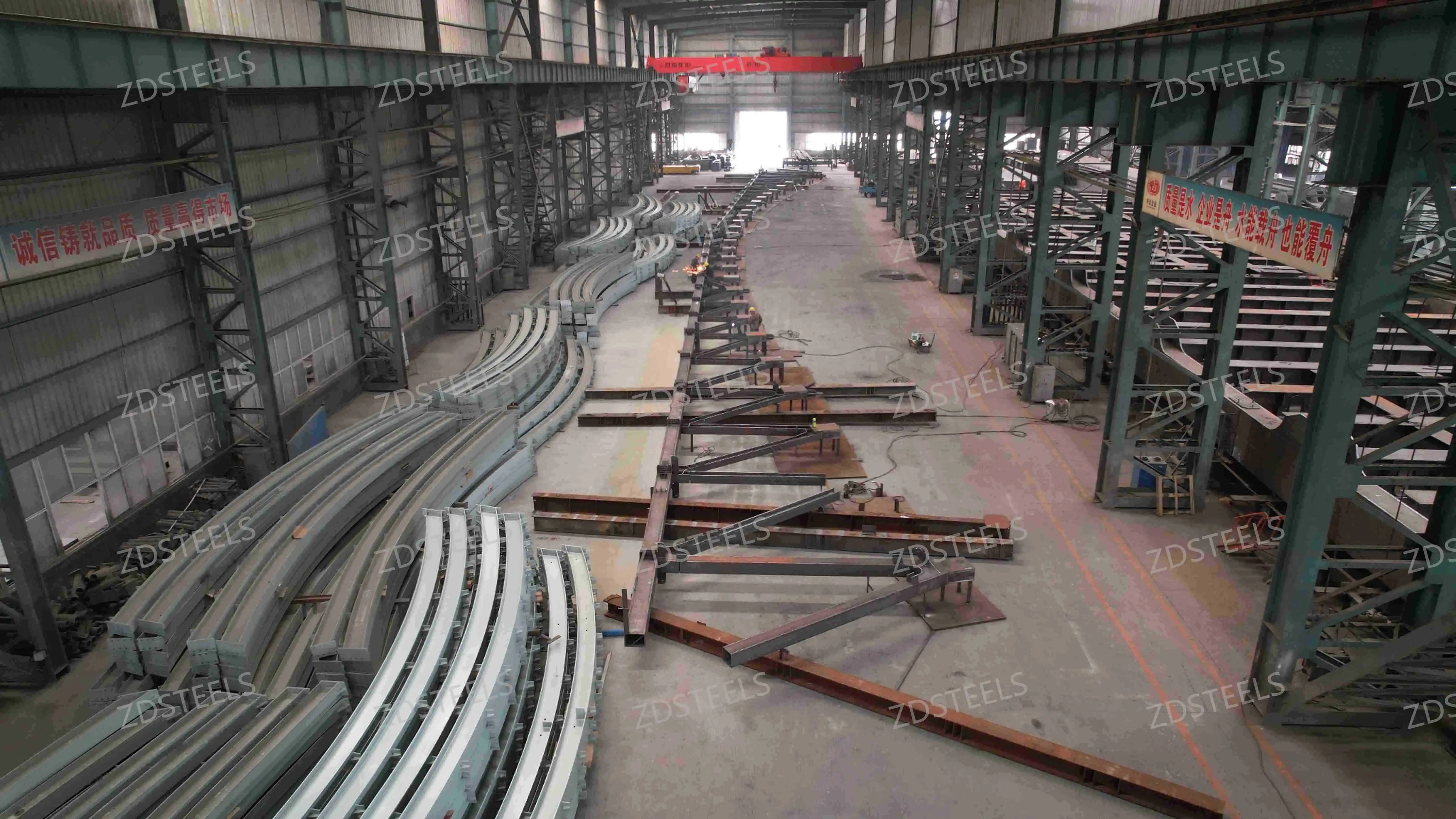
Key Advantages of Steel Structures for Power Plants
Steel frameworks offer many performance benefits that directly address the operational problems energy facilities face over the course of their useful lives.
Durability Under Harsh Conditions
Simplified Maintenance and Inspection
Because steel behaves in a predictable way, it is easy to use simple inspection methods like visual inspection, ultrasonic thickness measurement, and magnetic particle testing. In concrete buildings, damage that happens on the inside stays hidden, but corrosion or wear cracks on the surface of steel sections show that they are failing. Bolted connections let you replace parts without tearing them down, which lets you do targeted repairs that cause as little downtime as possible. When the soil is very acidic, cathodic protection systems built into the base links add extra safety.
Sustainability and Lifecycle Economics
Steel can be recycled over and over again, and Power Plant Steel Structure solutions align with companies' environmental goals while preserving steel’s value at the end of its useful life. When compared to cast-in-place methods, prefabrication cuts down on waste generated on-site by 60%. Even though fabrication uses more energy than concrete at first, faster installation and more efficient transportation more than make up for it. Lifecycle cost analyses consistently show that over 40 years of operation, owners can save between 15% and 20% of their original investment through lower construction costs, faster returns, and reduced maintenance expenses.
These benefits directly lead to better project ROI and operating stability, which are very important for B2B executives considering structural options.
Comparing Steel Structure Designs: Finding the Best Fit
To choose the right structural system, you have to weigh the technical performance against the limitations of the project and the needs of the operations.
Steel Versus Concrete: Performance Comparison
Steel frames can be built 40% faster because they can be made off-site and put together quickly in the field. This speeds up the times when they can be used for business. Steel's ductility makes it better for seismic performance because it lets earthquake energy escape through controlled yielding instead of brittle failure. The clear-span can go up to 60 meters without any supports in the middle, which gives operators the freedom to change the layout of their equipment. In as-built situations, concrete systems are more fire resistant than other options, but they need longer curing times and building schedules that depend on the weather.
Modular Design Advantages
Material Grade Selection Strategy
Standard Q235 steel is good enough for secondary framing that doesn't have to hold a lot of weight and other non-critical uses. Primary load-bearing parts are made of Q355 or a similar high-strength grade, which cuts down on section widths and base loads. For certain uses, like boiler support towers that are exposed to temperatures of up to 400°C, creep-resistant alloys that meet ASTM A387 standards are needed. Corten steel, which doesn't rust, doesn't need to be painted in areas that are exposed to the weather, which lowers the cost of maintenance over its lifetime.
When evaluating a supplier, people in charge of buying things should ask for thorough material certifications, mill test results, and instructions on how to weld in order to make sure that the grade is met and that the materials can be tracked.
Procurement and Fabrication: Ensuring Quality and Reliability
If you work with skilled steel frame suppliers, your project will be able to meet technical requirements, meet deadlines, and meet quality standards.
Evaluating Supplier Qualifications
Manufacturers with a good reputation have ISO 9001 quality management certification, which shows that they control their processes in a planned way. The EN 1090 certification covers welding coordinator skills, non-destructive testing methods, and dimensional inspection routines. It is specific to steel fabrication expertise. Check the supplier's portfolios for similar power plant projects like cooling tower platforms, boiler support frames, or turbine hall structures to see if they have experience with heavy-section welding and large-span parts.
Our First-Class Steel Structure Engineering Qualification from China's Ministry of Housing and Urban-Rural Development, along with our ISO 9001/14001/OHSAS 45001 certifications, shows that Zhongda is dedicated to engineering excellence on all of our international power sector projects.
Fabrication Quality Control
Installation Coordination and Logistics
Heavy-haul hauling and crane rigging plans are needed for large power plant units that weigh more than 80 tons. Successful suppliers work with site builders to schedule steel deliveries so that the foundations are ready before the deliveries. This keeps things running smoothly during the busiest times of building. Planning the erection sequence makes sure that the structure is stable at every stage of construction, leaving safety margins before installing permanent bracing. Field engineers from experienced suppliers help with installation by fixing interface problems and giving their approval on connection procedures.
Effective buying weighs the original cost against the supplier's abilities, knowing that high-quality makers are worth the extra money because they guaranty quality and stick to the schedule.
Engineering Standards and Load Calculation for Power Plant Steel Structures
Regulatory compliance and strict engineering ensure that structures work safely and reliably for the entire life of a building.
Applicable Design Codes
In North American projects, AISC 360 (Specification for Structural Steel Buildings) controls how members are designed and how much weight they can hold when connected. ASCE 7 (Minimum Design Loads) sets requirements for wind, seismic, and snow loads based on the area and level of risk. Power plants are usually in Risk Category III or IV, which means they need higher safety standards and tighter drift limits. For international projects, Eurocodes (EN 1993 for steel design and EN 1998 for seismic provisions) or national standards that are based on these frameworks are used.
Load Calculation Fundamentals
Power Plant Steel Structure is designed by considering comprehensive load combinations, where the self-weight of the structure (using the real section properties), the masses of permanent equipment (from vendor data sheets), the architectural finishes, and the fixed building services are all added up in dead load estimates. Live loads for repair access platforms are based on the type of occupancy, such as 5 kPa for catwalks and 10 kPa for general operating areas. Vertical wheel responses, horizontal surge forces, and impact factors are all considered as parts of crane loads that meet CMAA standards. For complex shapes, environmental loads require site-specific wind tunnel studies or the use of code-required velocity profiles and exposure categories.
Seismic Resistance and Dynamic Analysis
Power plants in areas with a lot of earthquakes use special moment frames or braced frames with ductile details. This lets them deform in a controlled way during earthquakes of a certain level. Response spectrum analysis checks the effects of dynamic amplification, which is especially important for equipment bases that are high up. Base isolation systems, which use elastomeric bearings or friction pendulum isolators, keep sensitive technology safe from ground motion and are becoming more and more important for protecting key infrastructure.
The engineering team at Zhongda uses advanced analysis tools and our large project database to make the best structural systems. They do this by giving our customers designs that meet all the rules and are as cost-effective as possible.
Conclusion
To choose the best Power Plant Steel Structure design for heavy-duty power plant uses, you have to balance technical performance, fabrication quality, and cost-effectiveness over the structure's lifetime. Portal frames and truss systems are needed for turbine halls and boiler support structures because they can span long distances and hold a lot of weight. Modular prefabrication speeds up the building process and improves quality control. Focusing on high-strength types like Q355, strong rust protection systems, and meeting international standards when choosing materials guarantees decades of reliable service. Partnering with qualified suppliers who can show they have engineering knowledge, fabrication skills, and project management experience will help your power generation facility run smoothly from the time it is first put into service until it is shut down.
FAQ
Why do power facilities prefer steel over concrete for main structural systems?
Prefabricating steel frames speeds up construction by 40%, protects equipment better during earthquakes, and allows for large clear spans (up to 60 meters) without the need for intermediate columns. This adaptability is important for changing the layout of the turbine hall and making changes to the equipment in the future.
How do you protect steel structures in coastal power plants from corrosion?
We use two types of protection systems: hot-dip galvanizing (85 microns at the very least) and high-performance epoxy/polyurethane coatings that meet ISO 12944 C5-M marine environment standards. With this method, there are service intervals of 25 years or more between maintenance cycles.
What certifications should I require from power plant steel structure suppliers?
Ask for quality management certifications like ISO 9001, EN 1090 approval for steel fabrication, and AWS welding skills. Check their past projects to see if they've done similar work in the power sector, and make sure that third-party review methods are followed to keep track of materials and record weld quality.
Can steel structures accommodate thermal expansion from high-temperature equipment?
Controlled movement is possible with special expansion joints, slotted bolt connections, and sliding bearing supports. These don't put stress on the structure. Boiler support towers have special suspension systems that let heat rise downwards while keeping the tower stable on the sides.
Partner with a Trusted Power Plant Steel Structure Manufacturer
Heavy-duty power sector projects around the world are helped by Zhongda Steel's 20 years of specialized technical knowledge. Our 120,000 m² manufacturing plant in Shenyang uses BIM to coordinate design, ultra-thick plate cutting with ±0.2mm accuracy, and -60°C weathering steel technology that has been used on Arctic bridges and in tough industrial settings. With a capacity of 60,000 tons per year and world certifications such as ISO 9001/14001/OHSAS 45001 and EN 1090, we offer complete solutions, from basic design to on-site installation support. Our team of more than 100 engineers makes sure that your Power Plant Steel Structure meets strict performance standards while also minimizing costs and shortening the time it takes to build. This is why China Railroad, CSCEC, and international energy developers trust us. Get in touch with Ava@zd-steels.com right away to talk about your project needs and find out how Zhongda's superior engineering can help your facility run smoothly. You can look at all of our services and ask for a full project review at zd-steels.com.
References
1. American Institute of Steel Construction. (2016). Specification for Structural Steel Buildings (ANSI/AISC 360-16). Chicago: AISC.
2. American Society of Civil Engineers. (2017). Minimum Design Loads and Associated Criteria for Buildings and Other Structures (ASCE/SEI 7-16). Reston: ASCE.
3. European Committee for Standardization. (2005). Eurocode 3: Design of Steel Structures—Part 1-1: General Rules and Rules for Buildings (EN 1993-1-1). Brussels: CEN.
4. Salmon, C.G., Johnson, J.E., & Malhas, F.A. (2009). Steel Structures: Design and Behavior (5th ed.). Upper Saddle River: Pearson Prentice Hall.
5. Chen, W.F., & Lui, E.M. (2005). Handbook of Structural Engineering (2nd ed.). Boca Raton: CRC Press.
6. Dowling, P.J., Harding, J.E., & Bjorhovde, R. (1992). Constructional Steel Design: An International Guide. London: Elsevier Applied Science.
YOU MAY LIKE