
Power Plant Steel Structure Reduces Installation Challenges in Large Energy Projects
2026-09-01 13:00:00






When energy contractors break ground on a new power generation facility, they immediately confront a sobering reality: installation timelines can stretch beyond projections by months, and safety incidents can halt progress entirely. Power Plant Steel Structure solutions directly address these pain points by transforming how turbine halls, boiler frames, and auxiliary buildings come together. Rather than assembling thousands of components onsite under unpredictable conditions, prefabricated modular steel frameworks arrive ready for rapid deployment. This approach cuts installation time by 20-30% compared to traditional concrete methods while reducing workforce exposure to hazardous elevated work. For procurement managers overseeing multi-million dollar energy infrastructure projects across the United States, understanding how advanced steel frameworks minimize installation complexity isn't just helpful—it's essential to delivering projects on schedule and within budget.
Understanding Installation Challenges in Power Plant Steel Structures
Large-scale energy projects have to deal with problems that smaller industrial projects never have to. The sheer size of the parts makes logistics a nightmare, and heavy machinery alignment needs to be done with complete accuracy, leaving no room for error.
Complex Site Logistics and Oversized Components
Power plants need structural parts that are much bigger than normal building materials. The main support columns can be more than 20 meters long, and truss systems can span more than 50 meters to make the column-free areas that are needed around rotors. Transportation needs special heavy-haul permits, and the size of the crane becomes a limit that defines the project. Access roads to the site must be able to handle loads of up to 100 tons per truck, and staging areas need to be carefully planned out so that there aren't any delays when multiple deliveries come at once. These problems are made worse by delays caused by bad weather. One storm can make access roads impassable for days, which can lead to expensive schedule slippage.
Assembly Tolerances and Safety Risks at Height
It is very dangerous to connect thousands of high-strength nuts while hanging 30 meters above the ground. When welding important parts at a high level, you need special fall protection systems and constant safety checks. To make sure the load is transferred correctly, alignment tolerances must be within ±2mm. However, even experienced teams find it hard to reach this level of accuracy while also dealing with the sun's thermal expansion and planning multiple crane pulls. Concrete building, on the other hand, needs a lot of formwork, curing time, and post-tensioning operations, all of which put workers in dangerous situations for longer periods of time.
Coordination Inefficiencies Between Fabrication and Execution
In traditional buying, the steps of planning, manufacturing, and installation are kept separate. When engineers find changes while cutting steel, it's not easy for them to get to the foundation crews who are already pouring anchor bolt templates. When shop drawings are weeks behind schedule, erection teams have to wait while costs rise. Environmental permits may limit noise levels or working hours, which forces contractors to schedule tasks in ways that aren't the best for the environment. This division is why energy projects often take longer than planned, even when they are carefully planned.
How Steel Structures Help Overcome Installation Challenges
When you switch to modular steel frameworks, the way you install them is completely different. We've seen this change happen on dozens of power plant projects where prefabrication moved complicated work from the field to a controlled factory.
Offsite Prefabrication and Precision Engineering
When you make big structural parts for a Power Plant Steel Structure in a fabrication plant, you don't have to worry about the weather and can use fine tools that you can't get on-site. Plasma blades that are controlled by a computer can cut plate edges with an accuracy of ±0.2 mm, and automatic welding cells can make consistent penetration over thousands of linear meters. Instead of just depending on field verification, quality checks are done at several different places. By putting together complex connection nodes in the factory first, fit-up problems can be found before the parts are shipped, saving a lot of money on rework. Parallel workflows are also possible in this controlled environment. For example, while foundation work is going on site, steel fabrication is going on at the same time, shortening the total project duration.
Weight Advantages and Installation Speed
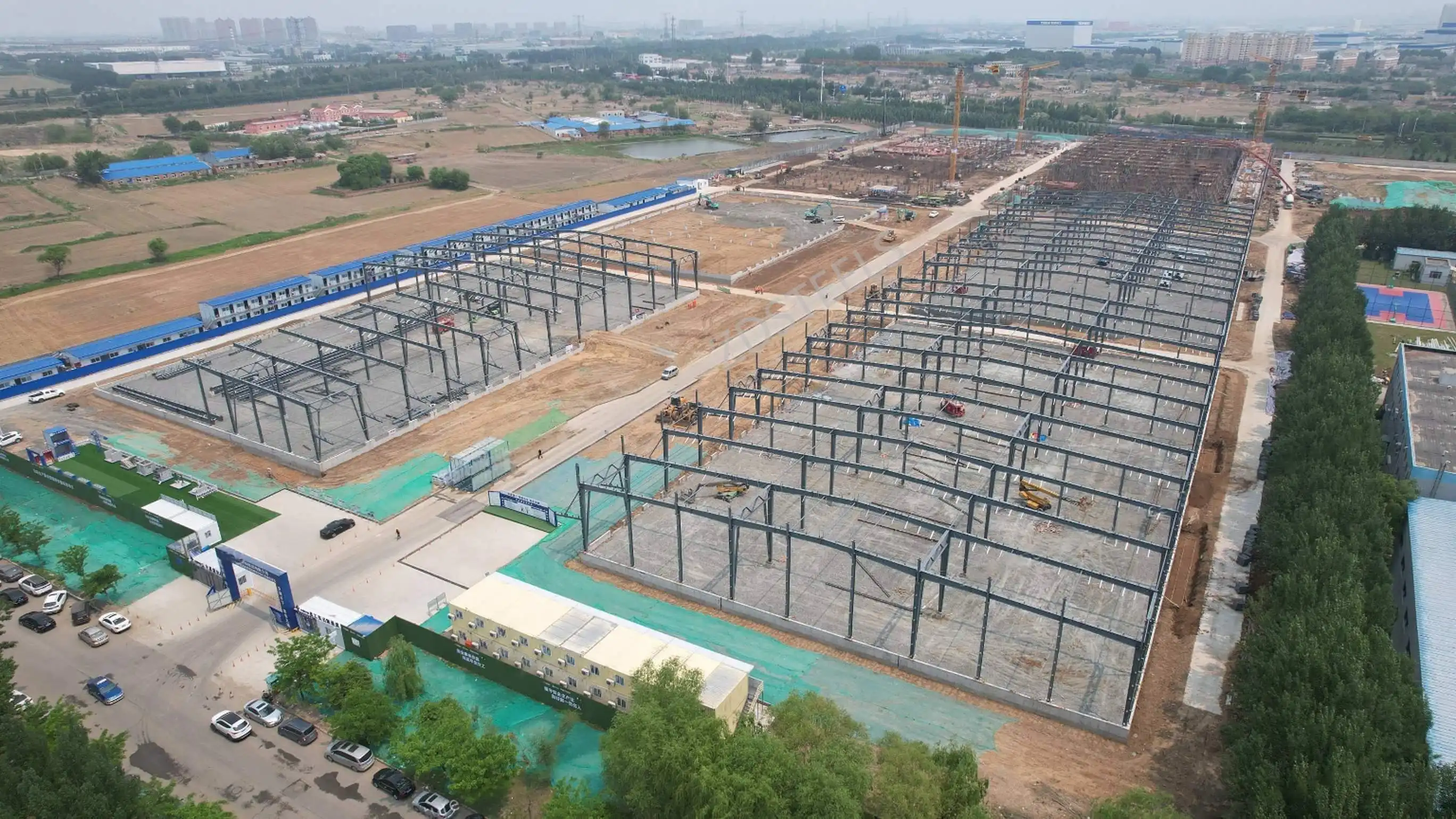
Because steel is stronger than most other metals, it can be used for faster building processes. A structural steel beam with the same load capacity as a reinforced concrete pier weighs 60% less, which lets cranes move things that they couldn't move with heavy materials. Bolted connections let construction crews attach members right away, instead of having to wait days for the concrete to harden. Cast-in-place concrete takes 20 to 24 weeks to finish, but a typical turbine hall steel frame can be finished in 8 to 12 weeks. This speeding up gets rid of dependencies on the key path, which lets electrical and mechanical companies start their work earlier.
Compliance with International Design Standards
Adopting well-known engineering rules gives buying teams faith that buildings will work as planned. We make sure that all of our power plant frameworks meet the requirements set by AISC 360. This way, we can be sure that the connections can withstand the forces of earthquakes and adjust to the heat from high-temperature process equipment. Using steel types like Q355B or ASTM A572 Gr.50, which have a confirmed yield strength of more than 355 MPa, makes sure that structures stay strong when rotating machinery puts dynamic loads on them. The welding processes and NDT requirements are governed by EN 1090 execution standards. This makes quality paperwork that can be tracked and meets the needs of insurance companies and regulatory bodies.
Before we get into specific ways to buy things, it's important to note that the way suppliers are chosen will determine whether these supposed benefits show up in real projects.
Procurement Strategies to Minimize Installation Risks
Comparing unit prices is only one part of smart buying. People who want to buy energy projects need partners who know the whole value chain, from the metals to the final bolt-up.
Evaluating Supplier Certifications and Turnkey Capabilities
When looking for steel manufacturers, don't just look at those who have basic ISO 9001 certification. Suppliers with EN 1090 certification have proven they know how to do welding procedures and are qualified to be inspectors. Facilities that can do both planning and construction can make sure that the sizes of members are the best for manufacturing while still keeping structural performance. Our production plant covers 120,000 m² and has ultra-thick plate cutting systems and automatic beam assembly lines. This lets us keep an eye on quality from the time we receive the raw materials until the final coating is applied. This vertical integration gets rid of the delays and gaps in responsibility that happen when projects buy from a lot of different vendors who are not connected to each other.
Balancing Customization Against Lead Time
Different power plants have different needs because of things like different foundation heights, different equipment interfaces, and different wind loads in the area. Custom-engineered solutions can work with these kinds of differences, but they take longer to get than catalog products. Suppliers with a lot of experience keep engineering teams that can do project-specific calculations in two weeks and work with installation contractors to make sure that the order of the steps is correct. Coordinating with Building Information Modeling (BIM) finds problems between structural steel and piping systems before they are built. This keeps costly changes from having to be made in the field.
Supply Chain Coordination and Delivery Scheduling
These basic buying rules set the stage for a safe and effective installation. Even though the last bolt is torqued, the story doesn't end there. For long-term success, ongoing care is needed.
Maintenance and Safety: Ensuring Long-Term Structural Integrity
Power plants run nonstop for decades, putting structural steel in situations that speed up damage if it is not handled properly. Preventative maintenance protects the large capital investment and stops outages that weren't planned.
Corrosion Prevention in Harsh Energy Environments
Power plants near the ocean have to deal with salt spray, and plants that burn high-sulfur fuels make acidic condensation on cooler surfaces. We use multi-layer coating systems that are designed to protect against these threats. They start with inorganic zinc-rich primers that offer 75–100 microns of cathodic protection, then epoxy intermediate coats with micaceous iron oxide barriers, and finally UV-resistant polyurethane topcoats. In C5-M coastal settings, the total dry film thickness often goes over 300 microns. For smaller parts, hot-dip galvanizing according to ISO 1461 standards is an option. This process creates a zinc coating that is metallurgically bonded and can heal itself of small scratches.
Addressing Thermal Expansion and Vibration
When equipment foundations hold up steam turbines that are turning at 3,600 RPM, they send a lot of dynamic forces into the structure they support. The connection details need to be able to withstand these movements without coming free. To do this, we use high-strength friction-grip nuts that are torqued to exact values that keep the clamping force forever. Because equipment that is working at high temperatures expands, it needs expansion joints and slotted links that let it move freely without putting too much stress on the parts. Continuous condition monitoring with vibration sensors and regular bolt tension surveys find new problems early on, before they hurt the structure's performance.
Compliance Audits and Worker Protection Protocols
Regulatory frameworks for power plants require regular inspections of the buildings' structures. At set times, engineers from a third party check the integrity of the connections, the condition of the coatings, and the continuity of the load paths in the Power Plant Steel Structure. If any problems are found, they are fixed with written plans that are sent to the government for review. Comprehensive fall protection systems and confined space entry methods keep workers safe when they are on elevated platforms or in enclosed areas inside the structure's framework during repair work.
These ideas become clearer when you look at examples from real life. They show how theory can be turned into measurable project results.
Case Studies: Successful Implementation of Steel Structures in Large Energy Projects
We've worked with EPC contractors and power plant developers on a wide range of projects, from renewable energy projects to combined-cycle gas facilities. These stories show trends that separate commissioning that goes smoothly from companies that have trouble.
Accelerated Timelines Through Modular Prefabrication
A 500 MW natural gas power plant in the Midwest needed an 85-meter-long turbine building with room for a 200-ton overhead crane. In a normal concrete building, it would have taken 18 months from the time the foundation was laid to the time the mechanical equipment was set up. The structural phase was finished in just 11 months, 39% less time than planned, thanks to a premade steel framework with factory-assembled roof beams and pre-welded column sections. This speeding up let the owner connect to the grid before a busy summer demand season. They made enough money from the sale to more than cover the cost of the steel framework.
Cost Control Through Quality Assurance
Because the processes around the industrial cogeneration facility that served a petrochemical complex were so dangerous, they set very high quality standards. Instead of just inspecting the work in the field, we tested all of the key welds with ultrasonic waves in our fabrication shop and put together a test set of major link nodes before sending them out. This upfront investment in quality found and fixed three fit-up problems that would have caused a week of delays on-site. Even with stricter quality control measures, the project was finished 5% cheaper than planned because almost no extra work had to be done.
Safety Performance in Challenging Conditions
During building, a solar thermal power plant in the desert Southwest had to deal with big changes in temperature and strong winds. The plan for putting up the steel included pre-engineered tie-off points, modular access platforms, and limits on the order of the steps during times of high wind. By doing more shop welding and less high-elevation hot work, the project had no lost-time accidents during the 47,000 hours of structure installation. This safety record met the strict HSE standards of the owner and kept the schedule from being thrown off.
These case studies show that careful planning, a supplier's ability, and a constant focus on quality basics are what lead to good results.
Conclusion
Power Plant Steel Structure solutions turn installation problems that used to be project-defining problems into engineering problems that can be solved. Prefabrication moves complicated tasks to controlled areas where accuracy is naturally achieved, and modular delivery speeds up installation in the field by a large factor compared to traditional methods. Using smart buying methods that put supplier skills above just price results in projects that are finished on time and safely, without lowering safety standards. As the US's need for energy infrastructure grows—from replacing old coal plants with combined-cycle gas plants to adding more green production capacity—engineered steel frames' benefits in terms of installation speed become more valuable. Advanced coating systems and proactive tracking are used in maintenance to protect these investments over many decades of service, making sure that the structure stays strong so that power production can continue.
FAQ
How do you ensure steel structures withstand the dynamic loads from turbines and generators?
Dynamic load factors based on the specs of rotating tools are used in structural analysis. We use high-strength steel grades with known mechanical properties to make the main support members, and we specify friction-grip bolted connections that don't come loose when the structure vibrates. The details of the connections allow for thermal expansion from hot surfaces while keeping the ability to transfer load. Before fabrication starts, calculation methods are checked by a third party, and after installation, vibration tracking makes sure that the expected behavior fits the real performance.
What fire protection measures apply to structural steel in power plants?
Ratings for fire resistance depend on the building zone and the rules in that area. Structures in turbine rooms that house gas-powered equipment usually need fire ratings of two to three hours. Depending on the needs of the building, we either use cementitious spray systems or intumescent coverings that grow when heated and insulate the steel. Important escape routes and support structures in the control room are better protected. The performance of a material has been tested to meet ASTM E119 standards.
Can existing concrete power plant structures be retrofitted with steel components?
Of course. For many building expansions or machine upgrades, the structure needs to be able to hold more weight, which is hard for concrete structures to do. We often design steel mezzanines, platforms for supporting equipment, and crane runway systems that can be built on top of concrete foundations that are already there. Details about the connections add new loads to the original structure without putting too much stress on the parts that are already there. This mixed method makes the building last longer without having to be rebuilt from scratch.
Partner with Zhongda for Your Next Power Plant Steel Structure Project
Zhongda has more than 20 years of experience delivering engineered steel frameworks for energy infrastructure around the world. We are a certified supplier of Power Plant Steel Structures with ISO 9001, ISO 14001, and EN 1090 certifications. We can support projects of any size with our advanced BIM-driven design tools and 60,000-ton annual fabrication capacity. Our engineering team, which is made up of more than 100 highly skilled pros, has built important buildings for harsh environments, from the Arctic to marine sites. We know that energy project procurement managers need more than just cheap quotes. They need partners who can help them with complicated tasks, keep quality control tight, and change with the needs of the project without breaking their promises. Get in touch with our team at Ava@zd-steels.com to talk about how our integrated design-fabrication-delivery method can speed up your next power production project and lower the risks of installation. You can learn more about our technical skills and see more case studies on zd-steels.com, which show our track record in a wide range of energy applications.
References
1. American Institute of Steel Construction. (2016). Specification for Structural Steel Buildings (AISC 360-16). Chicago: AISC.
2. European Committee for Standardization. (2018). EN 1090: Execution of Steel Structures and Aluminum Structures - Part 2: Technical Requirements for Steel Structures. Brussels: CEN.
3. International Energy Agency. (2021). World Energy Outlook 2021: Infrastructure Investment Requirements for Global Energy Transition. Paris: IEA Publications.
4. Peterson, R.L., & Martinez, K.J. (2019). Modular Construction Methods in Industrial Power Plant Design: A Comparative Analysis. Journal of Construction Engineering and Management, 145(8), 04019054.
5. Thompson, D.W., Chen, S., & Bradford, M.A. (2020). Seismic Performance of Steel Structures in Critical Energy Infrastructure Applications. Engineering Structures, 207, 110234.
6. Zhang, Y., Williams, T.P., & Kumar, V. (2022). Prefabrication and Supply Chain Optimization in Large-Scale Energy Projects: Best Practices and Lessons Learned. International Journal of Project Management, 40(2), 156-171.
YOU MAY LIKE