
Steel Arch Bridges: Span, Load Path, and When to Build Onearance Errors
2026-11-02 13:00:01






Steel Arch Bridges: Span, Load Path, and When to Build One
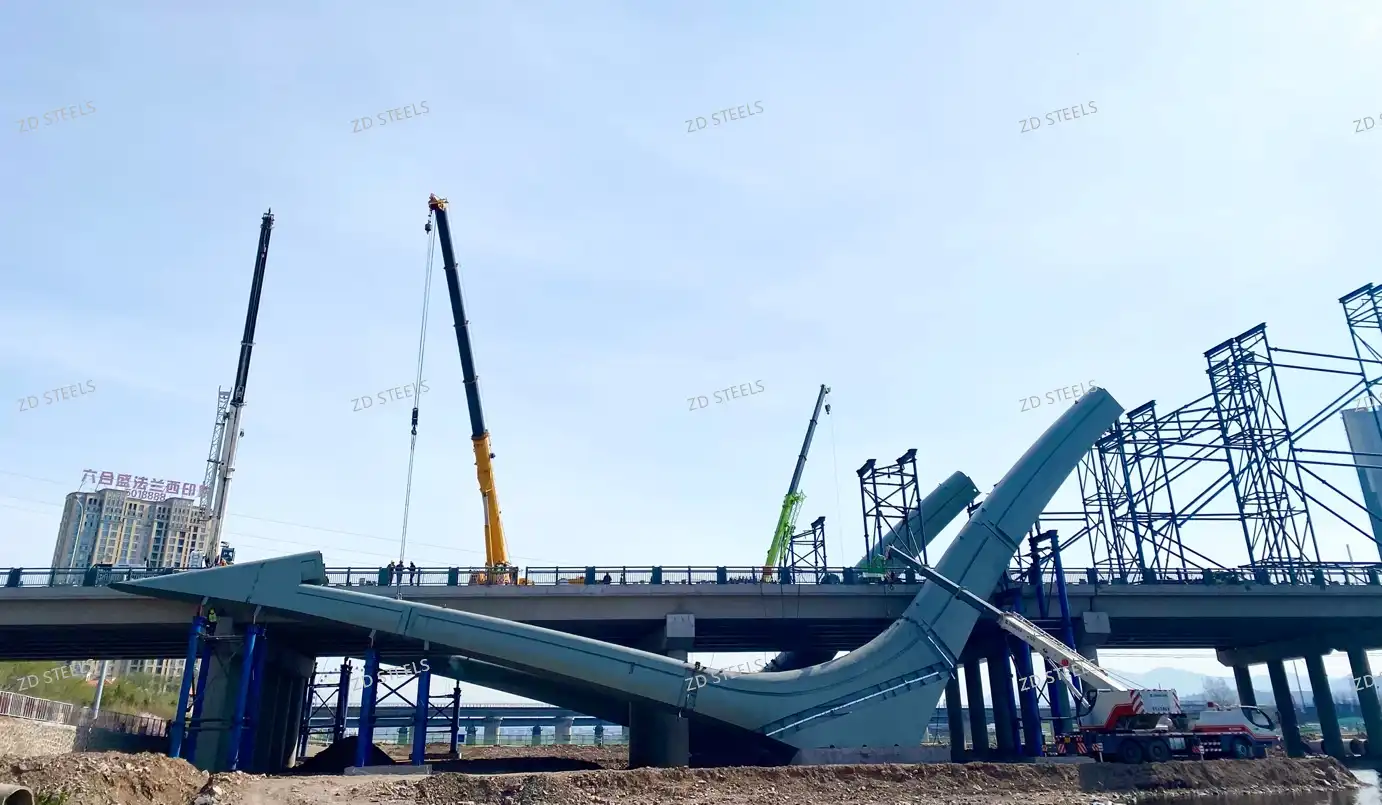
Title: Steel Arch Bridges: Why They Carry More for Less — Design, Pros & Cons
Overview
A steel arch bridge transfers load to its foundations through compression along a curved arch rib. The deck either sits on top of the arch or hangs below it on hangers. Because the arch pushes down and outward instead of bending like a beam, it can span distances that a girder bridge of the same steel weight cannot.
This guide covers how the arch works, where it beats other bridge types, and where it does not.
How the Arch Works
Under load, the arch rib goes into pure compression. That compression force exits the arch at the springing points and must be resisted by the abutments or tie-downs. This is the defining condition of an arch bridge: it demands strong foundations or a tied arch (bowstring) that absorbs the horizontal thrust internally.
Two configurations:
表格
| Type | Deck Position | Horizontal Thrust | Typical Span |
|---|---|---|---|
| Deck arch | Deck on top of rib | External — needs strong abutments | 50–200 m |
| Through arch | Deck hangs below rib on hangers | External — needs strong abutments | 100–300 m |
| Tied arch (bowstring) | Deck tied to rib ends | Internal — self-balanced | 40–150 m |
| Network arch | Inclined hangers, dense mesh | Internal or low | 60–200 m |
Advantages
Long spans with less steel — compression uses the full section efficiently. A 200 m arch can be lighter than a 200 m girder of equivalent capacity.
Iconic appearance — the curved rib is visually distinctive; arch bridges are often landmarks and tourist attractions.
Low maintenance for the main rib — members are in compression, which is less fatigue-prone than tension members and welded girder details.
High clearance underneath — a through arch gives unobstructed navigation clearance for ships and large equipment.
Good seismic behavior in tied arches — a tied arch is self-balanced; no horizontal force is imposed on the foundation during an earthquake.
Disadvantages / Limitations
Foundation demand is high — a deck arch without a tie pushes large horizontal forces into the ground. Poor rock or soft soil means expensive abutments or piling.
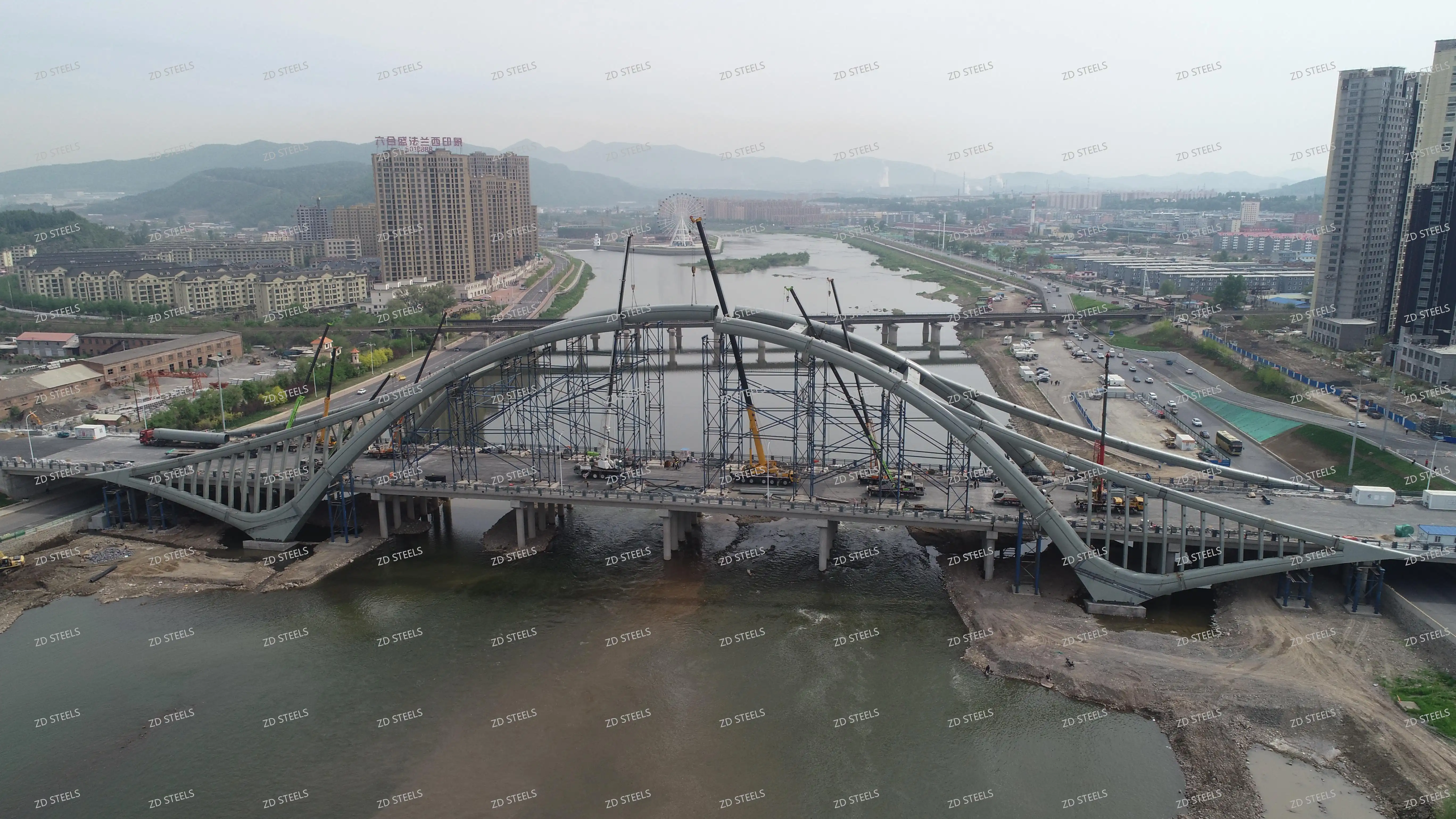
Erection is complex — arch ribs cannot simply be lifted into place like girders. They need temporary supports, cable-stayed erection, or incremental launching. Site work is slower.
Higher fabrication cost per ton — curved ribs, stiffening girders, and hanger nodes cost more to cut, bend, weld, and fit than straight plate girders.
Hangers need periodic replacement — on through and network arches, hangers are tension elements with fatigue life; they must be inspected and replaced on schedule.
Limited short-span economy — below about 40–50 m, a plate girder or rolled beam bridge is cheaper and faster.
Typical Use Cases
River and canyon crossings (100–300 m): Through and deck arches where navigation clearance or landscape requirements rule out piers.
High-speed railway bridges: Network arches give high stiffness and low deflection, suitable for 250–350 km/h lines.
Urban landmark bridges: Tied arches over highways, rivers, and rail yards — visual identity with self-balanced foundations.
Pipeline and conveyor crossings in industry: Steel arch pipe bridges carry pipelines across rivers and roads without midspan supports.
Pedestrian and cycle bridges: Small tied arches and network arches span 40–120 m with slender, attractive profiles.
Design and Fabrication Notes
China: GB 50017, JTG D64 — arch bridges follow bridge-specific seismic and fatigue rules.
US: AASHTO LRFD Bridge Design Specifications.
Europe: EN 1993-2 (steel bridges), EN 1991-2 (traffic loads).
Common steel grades: Q355qD/Q370qE (China, per GB/T 714), A709 Gr 50 (US), S355 (Europe).
Rib sections: box sections for torsion resistance on wide bridges; I-sections for light spans; truss ribs for very long spans.
Hanger cables: locked-coil or spiral strand ropes; replaceable socket connections are specified for network arches.
Bottom Line
Build a steel arch when the span is long, the clearance below is precious, or the bridge is meant to be seen. Make sure the foundations can take the horizontal thrust — or use a tied arch to make the structure self-balanced. Below 50 m, a girder bridge will win on cost and speed. Above 150 m, an arch can beat both girders and trusses on steel weight.
**WhatsApp**: +86‑13889862778, +86‑18242444407
**Email**: eddie@zdsteels.com, wells@zdsteels.com
YOU MAY LIKE