
Steel Bridge Material Analysis: Which Grade to Specify?
2026-10-30 13:00:01






Steel Bridge Material Analysis: Which Grade to Specify?
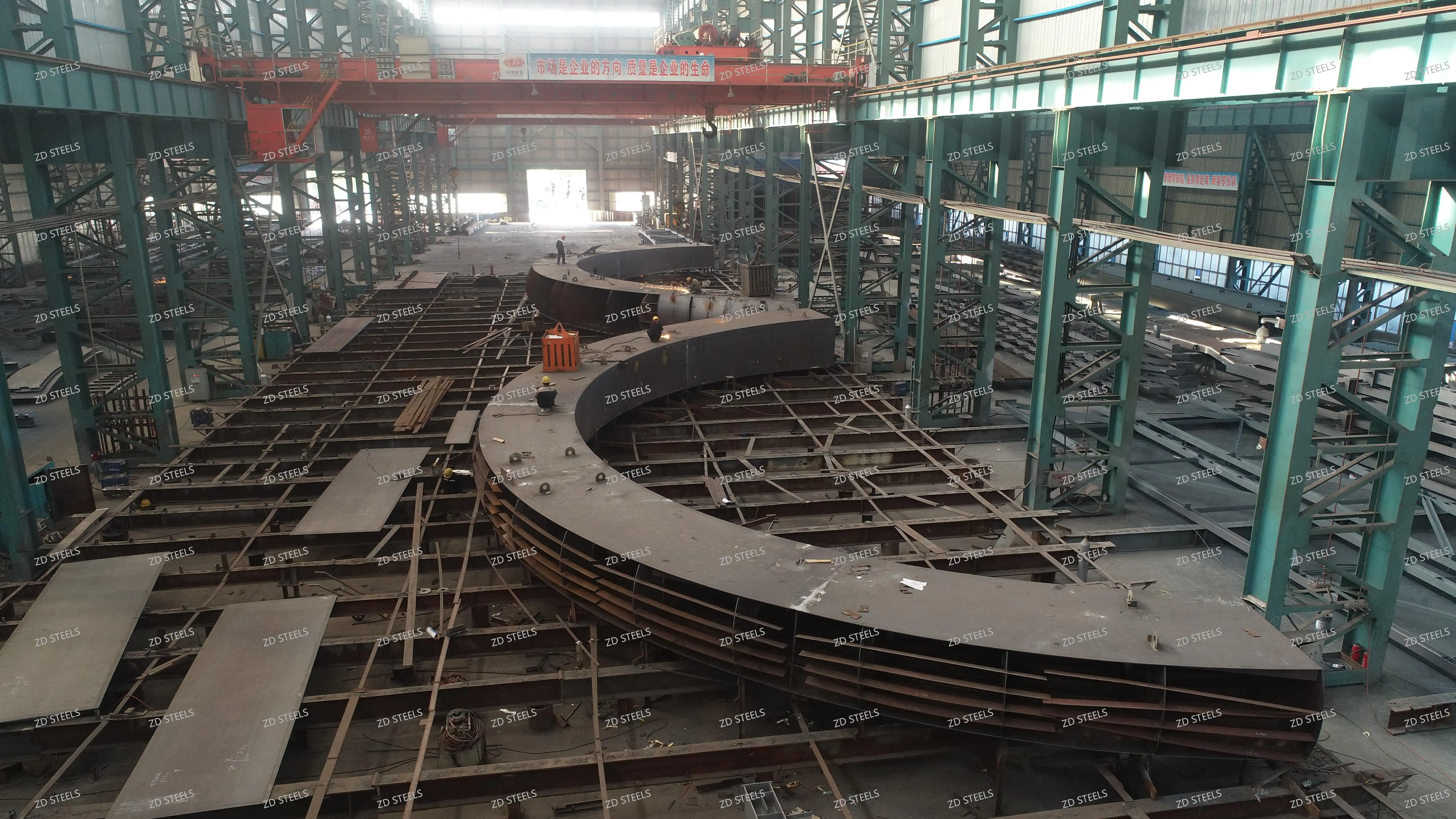
Title: Bridge Steel Grades Explained: Q355qD, Q370qE, ASTM A709 — A Buyer's Guide
Overview
Bridge steel is not ordinary structural steel. It must carry dynamic traffic loads, resist weathering and corrosion, and survive 70–100 years in service. This guide compares the three most specified bridge steel grades — Q355qD, Q370qE, and ASTM A709 Gr 50/50W — by yield strength, toughness, weldability, and cost, so engineers and fabricators can pick the right grade without over-specifying.
Material Specifications
| Grade | Standard | Yield (MPa) | Tensile (MPa) | Charpy V-notch | Applications |
|---|---|---|---|---|---|
| Q355qD | GB/T 714 | ≥355 | 490–690 | –20°C, 120 J | Medium-span highway/railway bridges |
| Q370qE | GB/T 714 | ≥370 | 490–690 | –40°C, 120 J | Long-span, cold-region bridges |
| ASTM A709 Gr 50 | ASTM A709 | ≥345 | 450–620 | –20°C, 27 J | US-standard road bridges |
| ASTM A709 Gr 50W | ASTM A709 | ≥345 | 450–620 | –20°C, 27 J | Weathering (Corten) bridges |
| S355J2 | EN 10025 | ≥355 | 470–630 | –20°C, 27 J | European pedestrian/road bridges |
Key Properties That Matter
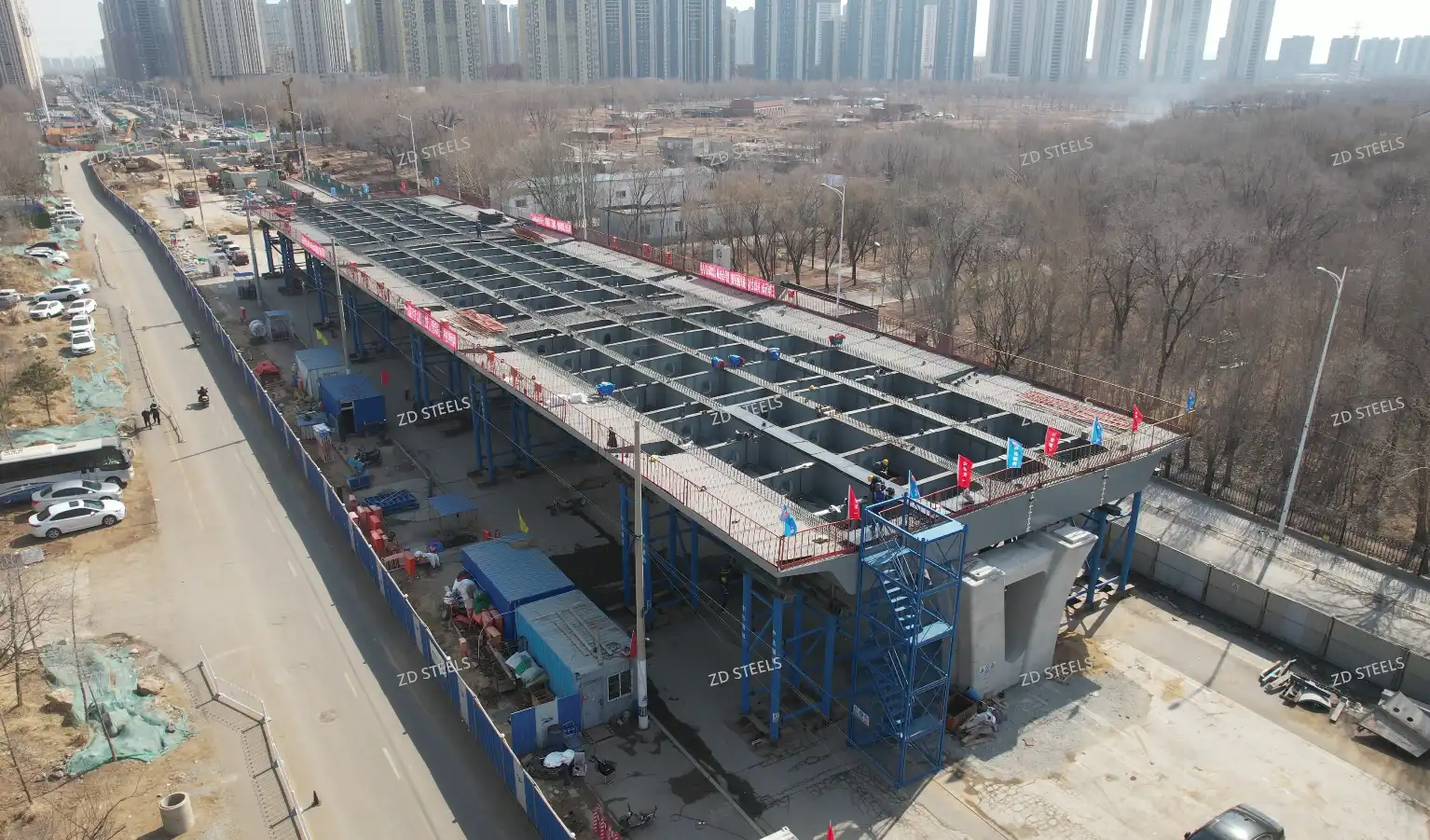
Yield strength vs. weight: Q370qE offers ~5% higher yield than Q355qD. For a 50 m box girder, that can reduce dead load by roughly 8–12% — directly cutting foundation and steel costs.
Low-temperature toughness: The "D" (–20°C) and "E" (–40°C) suffixes are non-negotiable for bridges in northern China, Northeast Asia, or any region where winter temperatures drop below –15°C. Q370qE's –40°C Charpy value prevents brittle fracture in cold climates.
Weldability: All three grades are low-carbon (Ceq ≤ 0.43%) and suitable for submerged-arc and flux-cored welding. Preheat is typically 20–50°C for sections under 40 mm; thicker plates (60–100 mm) require 80–120°C preheat and post-weld inspection per NB/T 47013.
Pros and Cons
Advantages
Q355qD: Widest mill availability in China; lowest cost per ton; proven in over 20,000 highway bridges.
Q370qE: Higher strength-to-weight ratio; essential for long-span (>100 m) or seismic zones.
A709 Gr 50W: Weathering oxide patina eliminates paint — saves 30–40% on lifecycle maintenance.
All grades meet fatigue criteria for 2 million+ load cycles.
Limitations
Q355qD: Not rated for –40°C service; avoid in extreme cold.
Q370qE: 10–15% premium over Q355qD; limited mill supply in some regions.
A709 Gr 50W: Cannot be painted or galvanized (corrodes the patina); needs open-air exposure to form the protective layer.
All bridge steels require ultrasonic testing (UT) for thicknesses over 50 mm — adds QC cost.
Typical Use Cases
Highway overpasses (30–60 m span): Q355qD box girders — cost-optimized, readily available.
Long-span railway bridges (>100 m): Q370qE — handles heavy dynamic rail loads and cold temperatures.
Pedestrian/cycle bridges: A709 Gr 50W weathering steel — no painting, aesthetic rust patina.
Seismic zone bridges (China zone 7–8): Q355qD with through-thickness plates (Z15/Z25) — resists ductile fracture.
Coastal bridges (salt spray): Q355qD + epoxy coating + cathodic protection — weathering steel fails in chloride environments.
Fabrication Tips
Specify mill certificates (EN 10204 3.1) with every plate batch.
Ultrasonic testing per GB/T 2970 for plates ≥ 40 mm.
Welding procedure qualification per GB 50661; Charpy V-notch test on weld metal.
Surface blast to Sa 2.5, then apply zinc-rich epoxy primer (≥80 μm DFT).
Bottom Line
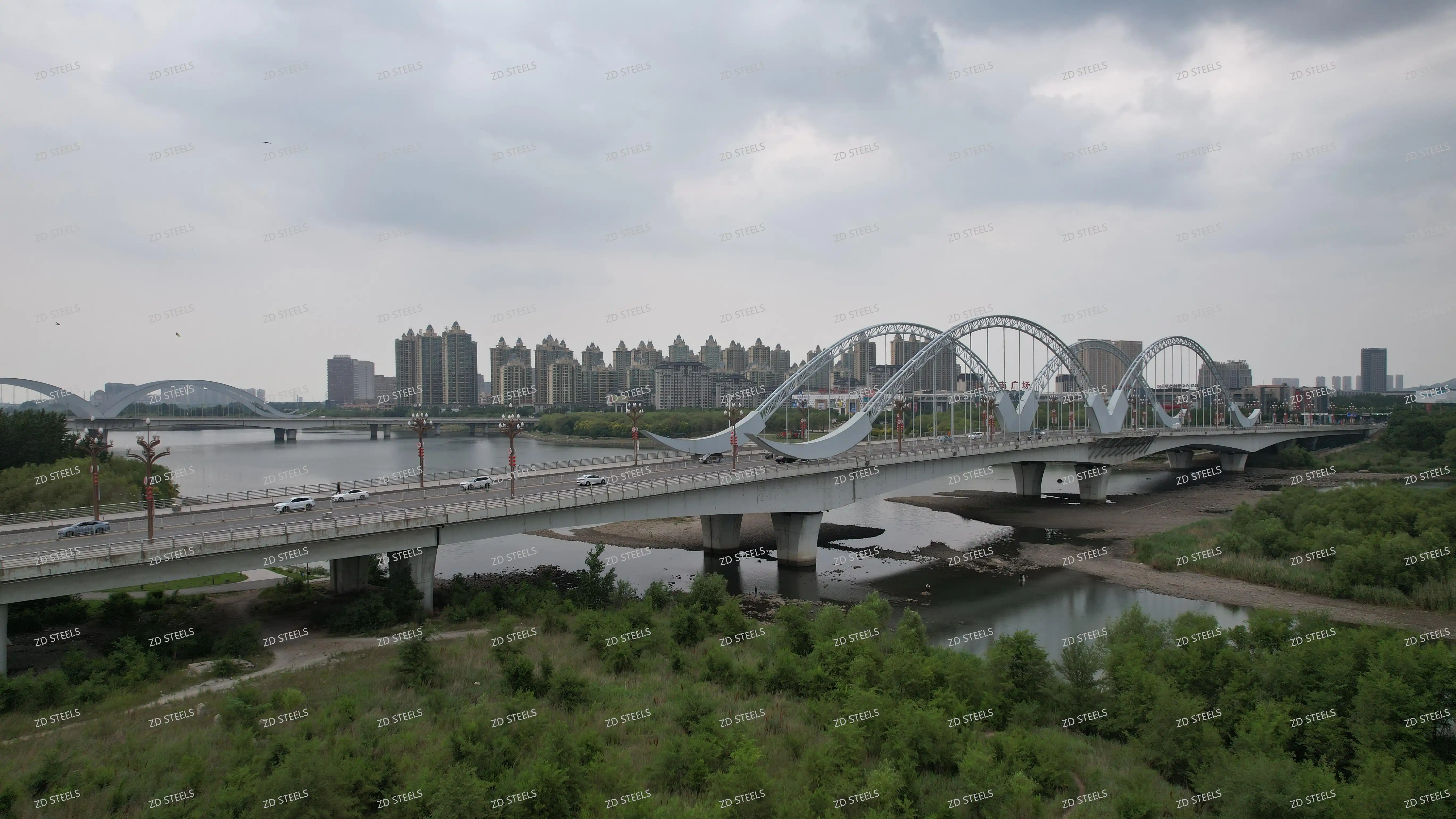
For most Chinese highway and railway bridges, Q355qD is the default — it meets code, costs less, and is available domestically. Upgrade to Q370qE only when span exceeds 100 m, winter service drops below –30°C, or seismic demands push beyond Q355qD limits. Specify A709 Gr 50W only on unpainted pedestrian or rural bridges in non-coastal climates. Over-specifying wastes money; under-specifying risks brittle fracture.
**WhatsApp**: +86‑13889862778, +86‑18242444407
**Email**: eddie@zdsteels.com, wells@zdsteels.com
YOU MAY LIKE