The Arch Bridges and Cantilever Bridges
2026-05-09 15:59:29






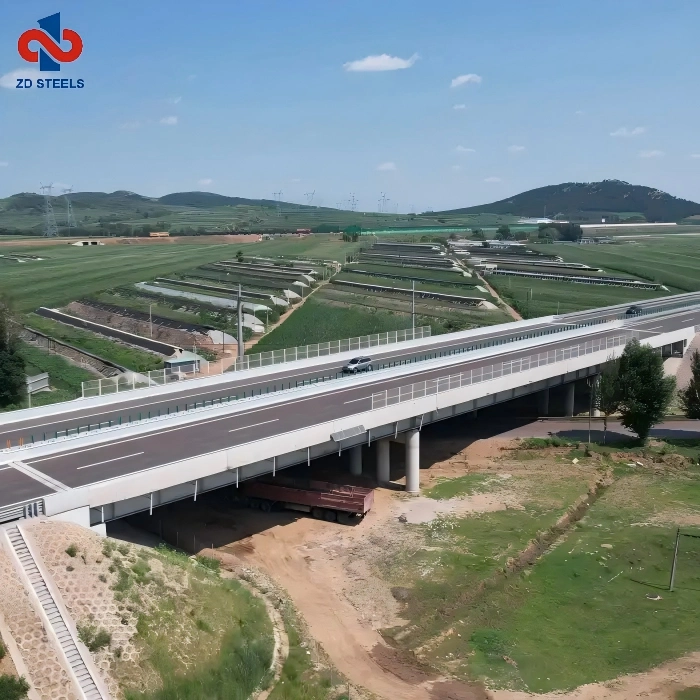
When it comes to crossing rivers, gorges, or roads, arch bridges and cantilever bridges are always the first two that come to mind for building planners and builders. Out of these, the long-span steel arch bridge stands out because it can hold a lot of weight and looks beautiful. Curved steel ribs in these buildings turn vertical loads into horizontal thrust, spreading weight effectively through compression forces. This basic mechanism lets arch designs reach lengths of more than 400 meters while keeping better vertical stiffness than suspension options. This makes them especially useful for heavy rail uses and navigable rivers that need clear space.
Understanding Long-Span Steel Arch Bridges
Core Structural Principles
Steel arch bridges use a method that goes back to Roman engineering and has been improved by current materials science. Whether it's a deck-arch, through-arch, or half-through form, the arch rib directs both live and dead loads along its curved shape, turning them into compressive forces that are sent toward the abutments. Tensile strains, which are common in cable-supported systems, are kept to a minimum by this efficient load path.
At Zhongda Steel, we've created arch rib systems with pentagonal box sections that are 3.2m × 4.5m and can withstand wind pressures of up to 1.5kN/◡. This shape gives the suspension system great rotational stiffness, which stops the aerodynamic instability that happens with flexible suspension systems during bad weather. The closed-box design also makes it easier for repair teams to get inside, which extends the structure's useful life.
Material Innovation and Performance
Choosing the right high-performance weathering steel is a very important choice for buying teams. We use Q420qD steel, which is a low-alloy metal with yield strengths above 420 MPa and great weldability and notch toughness at temperatures as low as -40°C. This standard matches the requirements set by AASHTO for parts that are likely to break, and it is better at resisting corrosion than regular carbon steel.
As part of our quality control procedures, all important welds must be tested for 100% CTOD (Crack Tip Opening Displacement). This non-destructive testing method finds tiny crack start points before they get worse and cause problems with the structure's ability to do its job. With our arc-sprayed aluminum finish (150μm thickness) and fluorocarbon topcoat that meets GB/T 30790 C5M standards, these bridges are designed to last more than 100 years in both naval and industrial settings.
Construction Technology Advancements
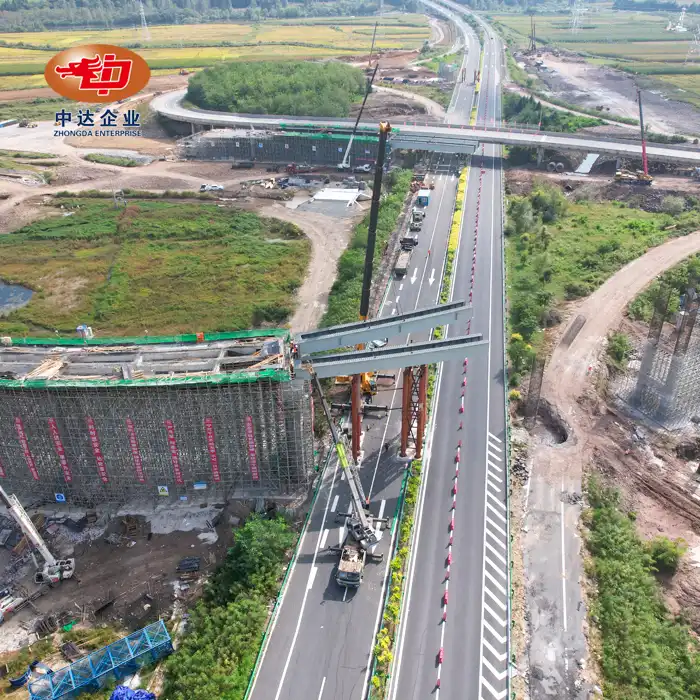
In the past, building an arch bridge required a lot of falsework, which was temporary support that took a lot of time and money and caused problems in the area below the span. Modern ways of spinning without stents have changed this process a lot. Our own rotation system can move structures that weigh up to 8,000 tons and precisely pivots premade arch pieces into place to within a millimeter of accuracy.
This method works especially well when crossing busy shipping lanes or areas that are important for the environment. The rotation sequence happens when traffic is supposed to be closed, so it doesn't affect current systems too much. GPS-guided hydraulic jacks make sure that the arch has the right shape at the exact temperature that was predicted to eliminate thermal stresses. This is very important because steel grows by about 12 mm for every 10°C change in temperature over a 100-meter span.


Engineering Challenges and Construction Methods
Structural Stability Under Dynamic Loading
Bridges over roads and trains, like a steel arch bridge, have to be able to handle more than just static dead loads. They also have to be able to handle impact forces from moving traffic, earthquakes, and winds that can reach hurricane force. The task gets tougher as the span length goes up—if the arch rib isn't properly strengthened, doubling the span makes the bending moments four times as big.
Finite element analysis (FEA) is used in our engineering process, and it has been proven to work through wind tunnel tests. Our team modeled more than 200 different load situations for the 18,000-ton Shenyang Dongta Cross-Hunhe River Bridge. These included multi-lane truck convoys, weather gradients, and base settlement scenarios. The pentagonal box section had a safety factor higher than 4.0 against elastic buckling. It had internal diaphragms placed every 3 meters to stop plate bending between stiffeners.
Seismic Resilience Strategies
Structures that can release energy without causing catastrophic failure are needed for infrastructure projects in areas that are prone to earthquakes. Arch bridges are better in this situation because their shape lets the abutments rock in a controlled way, and the arch rib stays flexible. We put in seismic isolation bearings that let the structure move horizontally up to 400 mm. This keeps the upper part of the building from being affected by base accelerations during big earthquakes.
Our full-bridge tracking systems have more than 200 sensors built in to track how structures are responding in real time. Accelerometers, strain gauges, and tilt sensors send data to cloud-based analytics systems. This lets predictive maintenance programs find signs of wear and tear before they become dangerous. Compared to reactive repair schedules, this proactive method cuts costs by 30 to 40 percent over the life of the product.
Quality-Driven Fabrication Processes
Material tracking starts at the steel mill and goes through all stages of production. Our 120,000 m² building has CNC laser cutting tables that keep margins to within ±0.2mm. This level of accuracy is needed for quality fit-up during field assembly. Robotic welding cells use multi-pass submerged arc techniques on horizontal seams, which can reach entry depths of more than 50 mm for connecting very thick plates.
Trial assembly checks for geometric accuracy before parts leave our plant. We bought laser scanning equipment that creates point clouds with sub-millimeter accuracy. These clouds let us compare the real sizes of things to the BIM (Building Information Modeling) design purpose. Any difference more than 1 mm causes corrective machining, which makes sure that field teams only have to deal with expected fit-up situations and not expensive rework situations.
Strategic Comparison: Arch Bridges vs Cantilever Bridges
Fundamental Structural Differences
A very different way of moving loads is used by cantilever bridges. Cantilever systems don't use compressive arcs. Instead, they use horizontal beams that are anchored at piers and extend outward to meet in the middle of the span or hold up a center part that is suspended. This method is best shown by the Forth Bridge in Scotland, which has steel truss arms that stretch evenly from huge masonry towers.
When choosing between arch and cantilever designs, procurement managers need to carefully look at factors that are unique to each place. When there are strong rock supports at both abutments, arch systems work best because they can withstand horizontal thrust forces that can be as high as 40 to 60 percent of the vertical reaction. On the other hand, cantilever designs work well in places where the soil isn't always stable because the balanced cantilever arrangement reduces the weight on the base during building.
Application-Specific Selection Criteria
Because they are more rigid in the vertical direction, arch designs like long-span steel arch bridge are preferred for railway building projects. Tolerances for high-speed rail allow only 3 mm of movement per 25 meters of width. Suspension and some cantilever bridges find it hard to meet this cost-effectively. The arch's natural stiffness keeps the track shape stable at speeds of 250 km/h or more, which stops the dynamic amplifications that make passengers uncomfortable and speed up wheel-rail wear.
When used on a highway, there are different things to think about. When building needs to be done in stages, cantilever bridges are helpful because they let traffic go in one way while the other cantilever is being built. During the critical construction phases of an arch bridge, the site usually needs to be completely accessible. However, our stentless rotation method has drastically cut these closing windows from months to days.
Lifecycle Economics and Sustainability
An study of material usage shows some interesting trade-offs. Because the arch rib has a continuous cross-section, a 400-meter arch bridge usually needs 15–20% more steel mass than a cantilever span of the same length. But the tension bands of the cantilever need higher-grade steel and stricter fatigue detailing, which makes the manufacturing more difficult and raises the cost per ton.
Over the 100-year planned life, the maintenance schedules are very different. More of a cantilever bridge's surface is exposed to rust from the air, and the tension rods need to be replaced on a regular basis, which requires closing lanes and using special rigging. The deck and abutments are where most of the upkeep work on an arch bridge is done. The arch rib itself only needs to be coated every so often. Our fluorocarbon finishing systems make it possible to paint every 25 to 30 years instead of every 12 to 15 years like regular alkyd systems do.
Procurement Insights for Long-Span Steel Arch Bridges
Supplier Qualification and Certification Standards
When purchasing professionals look at makers of big steel buildings, they have to check more than one level of approval. Quality management based on ISO 9001:2015 is a good start, but more specific guidelines are needed. In Europe, structural steelwork must have EN 1090 approval. This shows that the plant has production control systems that can keep tolerances and trackability throughout complex manufacturing sequences.
Our Class I Steel Structure Professional Contracting Qualification at Zhongda for steel arch bridge lets us build bridges with any length or level of difficulty that are allowed by Chinese law. This title requires proven technical skills, stable finances, and the successful finishing of major projects. These requirements weed out rivals who aren't as good. The Jingha Expressway Expansion and foreign projects that provide mining infrastructure to Australian operations are in our portfolio. This shows that we can work in a variety of legal settings.
Evaluating Technical Capabilities and Capacity
Evaluations of production ability go beyond just counting tons. Our 60,000-ton annual fabrication capacity includes advanced skills like cutting through very thick plates and putting together big things that slow down rivals with less equipment. Critical path plan performance is based on how fast 20-meter arch rib sections can be made at 1,200 tons per month. This is a factor that can either shorten or lengthen project timelines by six months.
Digital planning tools built on BIM are now required for all complex structures. Three-dimensional models lets you see if structural, mechanical, and architectural systems will fight before they are built. We've used BIM workflows to cut the number of RFIs (Requests for Information) by 60% and get rid of 80% of field changes. These saves have helped us stick to our schedules and stay within our budgets.
Transparent Cost Structures and Value Engineering
Understanding the different parts of a cost makes bargaining tactics stronger. 45–50% of the cost of making weathering steel arch bridges goes to the raw materials. Another 30–35% goes to labor and overhead, and the last 15-20% goes to surface treatment methods. Steel prices that change a lot on the market create buying risks that smart buyers reduce by using price adjustment terms that are linked to public indices.
During the whole design-build process, there are chances to use value engineering. Our engineering team works with owners to find the best ways to arrange spans, lowering the number of piers needed when ground conditions allow it. By using Q420qD instead of Q345qD in places that aren't important, for example, 10-15% less weight can be saved without affecting performance. These improvements need early input from the seller, which shows how important it is to choose makers who can help with design rather than just fabrication contractors.
Conclusion
In conclusion, building up infrastructure needs buildings that strike a mix between technical excellence, cost-effectiveness, and environmental responsibility. Arch and cantilever bridges are both useful for different situations and purposes. long-span steel arch bridge configurations are especially good for places with a lot of weight, high seismic risk, or a desire for a more aesthetically pleasing look. Modern technologies for making things, like robotic welding and weathering steel metallurgy, have raised quality standards. New technologies for building things, like stentless spinning, have sped up projects and cut costs. To be successful with procurement, you need to choose production partners with clear technical skills, all the necessary certifications, and a history of completing a wide range of projects successfully. When predictive repair systems and environmentally friendly practices are combined, steel arch bridges become strong structures that can serve communities well into the 21st century.
FAQ
What span ranges favor arch over cantilever bridge designs?
When the right base bedrock is found, arch bridges can be used for spans between 150 and 550 meters without breaking the bank. Cantilever systems are better when the span is longer than 600 meters or when the foundations can't handle horizontal thrust reactions without spending a lot of money to improve the dirt. In the transition zone (400–500 m), the costs of materials and foundations need to be weighed against each other in a site-specific study.
How do you prevent thermal expansion issues in steel arch structures?
Large-span steel bridges have modular expansion joints at the ends of the decks that allow moving along a length of 400 to 1000 mm. At the abutments, pot bearings or friction pendulum bearings let you control the spinning and rolling while also blocking wind and earthquake forces. The arch rib closing section is put in place at neutral temperatures that have been estimated to keep locked-in thermal stresses to a minimum.
What maintenance intervals apply to arch bridge components?
Every year, there are visual checks, and every five years, there are more in-depth exams that include ultrasonic testing of important links. Depending on how long they are exposed to the elements, coating systems usually need to be touched up every 15 years and completely replaced every 25 to 30 years. Every 30 to 40 years, bearings need to be replaced. These intervals are longer because more advanced monitoring systems can find damage before planned checks.
Partner with Zhongda for Your Next Long-Span Steel Arch Bridge Project
For infrastructure projects to go smoothly, they need manufacturing partners who can offer well-thought-out solutions on time and on price. Zhongda Steel has been working with steel structures for 20 years and uses cutting edge manufacturing technology and strict quality control systems. Our pentagonal box arch ribs, stentless rotation, and full-bridge monitoring integration give government contractors, EPC firms, and business developers all over North America complete options. We are an ISO-certified long-span steel arch bridge maker with a track record of completing projects across the globe. We take difficult technical problems and turn them into iconic structures. Get in touch with our team at Ava@zd-steels.com to talk about your needs and find out how our BIM-driven design process and 60,000-ton annual capacity can speed up your project while keeping the highest quality standards.
References
Chen, B.C., & Wang, T.L. (2018). "Design and Construction of Long-Span Steel Arch Bridges." Journal of Bridge Engineering, American Society of Civil Engineers, Vol. 23, Issue 9.
Hayashikawa, T., & Watanabe, N. (2017). "Structural Performance and Seismic Design of Steel Arch Bridges." Steel Construction: Design and Research, Ernst & Sohn Verlag, Vol. 10, No. 3, pp. 182-195.
Menn, C. (2015). "Prestressed Concrete Bridges: Design and Construction." Birkhäuser Architecture, Basel, Switzerland, Chapter 8: Comparison of Bridge Types.
Troitsky, M.S. (2014). "Planning and Design of Bridges: Steel, Concrete, and Composite Structures." John Wiley & Sons, New York, pp. 267-312.
Xu, Y., & Ko, J.M. (2019). "Health Monitoring and Fatigue Assessment of Long-Span Steel Bridges." Structural Health Monitoring Journal, SAGE Publications, Vol. 18, Issue 4, pp. 1245-1268.
Zhang, J., Liu, Y., & Li, Q. (2020). "Advanced Construction Technologies for Steel Arch Bridges: Rotation and Cantilever Methods." Engineering Structures, Elsevier, Vol. 215, Article 110672.
YOU MAY LIKE
_副本_1762415806774.jpg "hangar structure")
_副本_1754289134653.jpg "Prefabricated Steel Structure Exhibition Hall")