
Top 5 Reasons to Procure a Steel Box Girder Bridge
2026-05-09 15:59:27






More and more, procurement professionals are looking at steel box girder bridge systems as building options for difficult transportation projects because they work so well. Compared to standard I-beam or concrete options, these hollow box-shaped structural elements offer better torsional rigidity, load distribution efficiency, and design freedom. When engineers and builders plan highway interchanges, railway overpasses, or long-span viaducts, knowing the strategic benefits of box girder technology helps them make choices that balance technical needs, lifecycle value, and project timelines. This guide looks at the strong reasons why these building systems are becoming more popular in the energy, infrastructure, construction, and manufacturing industries around the world.
1. Exceptional Structural Strength and Load Capacity
Unmatched Torsional Rigidity for Complex Loading Scenarios
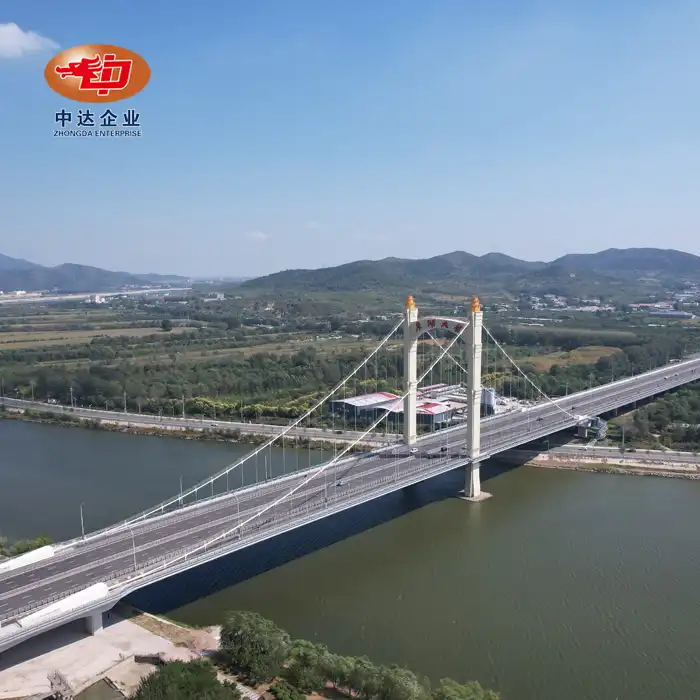
A cross-section in the shape of a closed box naturally fights bending forces hundreds of times better than an open section. This torsional stiffness is very important for curved highway ramps, skewed crosses, and eccentrically loaded decks, where lateral forces and tipping moments make it hard for regular beam designs to work. During the Shenyang Dongta Cross-Hunhe River Bridge project, our 18,000-ton steel structure showed how box geometry gets rid of the need for complex cross-bracing systems. This makes the building and assembly processes easier while still keeping the structure strong in uneven traffic conditions.
Advanced Metallurgy for Demanding Environments
Our box girders have yield strengths of more than 345 MPa and great toughness at low temperatures because they are made from high-performance structural steel grades that meet ASTM A709 standards. These include weathering steel types and high-strength low-alloy compositions. The PPWS main wire system has a 5.2mm diameter and a tensile strength of 1770MPa. It can handle super-long span configurations from 300 to 2000 meters and can withstand 12-level wind resistance. This new development in metals makes it possible for infrastructure builders to build over longer lengths with less structural depth. This reduces both the impact on the environment and the cost of the foundations.
In difficult seaside, industrial, or Arctic settings, corrosion problems can be fixed with protective measures like dehumidification systems and special S-type wire wrapping tape. Our -60°C weathered steel anti-corrosion technology has been used on Russian bridge projects and makes the steel last a lot longer than protection systems. Internal dehumidification keeps the relative humidity below 40%, which stops rusting processes in the sealed box parts that are hard to get to for regular maintenance and inspection.


Real-World Load Performance Validation
Our box girders are built with an orthotropic steel deck system that can handle the concentrated wheel loads of big industrial trucks. The system also uses longitudinal and transverse stiffening ribs to efficiently distribute stresses. Our 120,000 m² site has the ability to test full-scale loads to make sure that design assumptions are correct before the bridge is put into service in the field. This makes sure that it meets the standards set by AASHTO LRFD Bridge Design Specifications and FHWA-NHI-07-096. This strict evaluation process gives buying teams faith that the load ratings given are based on real-world performance and not just theoretical figures.
2. Cost-Effectiveness in Construction and Maintenance
Accelerated Project Delivery Through Modular Fabrication
Making box girder pieces in a factory under controlled conditions gives them a level of accuracy that can't be matched by making them on-site. Our high-tech CNC machines can cut ultra-thick plates and drill in three dimensions with a range of ±0.2mm. This makes sure that the segments fit up correctly and avoids having to make expensive changes in the field. The 12-meter steel box girder pieces can deliver 802 tons per month and can be used with Accelerated Bridge Construction (ABC) methods, in which big prefabricated sections are brought to the site and put together quickly.
Compared to cast-in-place concrete options, this prefabrication method for steel box girder bridge cuts the amount of work that needs to be done on-site by about 60%. This directly lowers the project's extra costs. Using modular building methods cut down on traffic jams and lead times by 20 to 30 percent during the Jingha Expressway's highway growth projects compared to traditional sequencing. We take advantage of our prime position in the Shenyang Economic-Technological Development Zone, which has good train and highway connections that make it easy to ship goods across the country and around the world.
Lifecycle Value Beyond Initial Investment
When looking at base needs, the weight edge becomes even more important. Steel box girder bridge components usually weigh only one-fifth as much as similar concrete buildings. This lowers the structure's seismic mass and makes it possible to use smaller, less expensive foundation elements. This cost-saving effect is felt in the number of piles, the size of the piers, and the general scope of the base. These savings often make up for the higher material costs of the superstructure.
It is expected that maintenance costs will stay cheap as long as safety systems are built correctly. Our built-in inspection walks inside the box give you safe access to important connection points that aren't exposed to the weather. Non-destructive testing methods, such as ultrasound examination and magnetic particle inspection, find problems before they damage the structure. Our company has a 70% client retention rate, which means that customers are happy with both original service and long-term performance.
3. Versatile Design and Adaptability to Complex Environments
Customizable Configurations for Diverse Applications
Box girder shape can be easily changed to fit the needs of any project thanks to its single-cell, multi-cell, and composite layouts. Single-cell designs work well for highway overpasses with a middling span, where ease and cost are important. For major arterial routes and train uses, multi-cell configurations spread loads over bigger deck widths. Composite systems combine steel box girder bridge components with concrete deck slabs. This combines the strength of steel with the crushing strength of concrete to make the structure as strong as possible.
With span lengths ranging from 100 to 300 meters, the structure can be used in a variety of site conditions and doesn't need any extra supports that could get in the way of traffic flow, travel, or environmentally sensitive areas. Box forms have an aerodynamic design that reduces wind drag coefficients. This eliminates problems with flutter and galloping that come up with open-section options on exposed sites. Working with mining companies in Australia showed us how these structure systems can be used in rural areas where it's hard to get to and the weather is harsh, making it hard to use traditional building methods.
BIM-Driven Precision Engineering
Our engineering team can improve every geometric parameter before manufacturing starts thanks to their advanced 3D modeling and structure analysis tools. Integration of Building Information Modeling (BIM) coordinates structural elements with design features, utility routing, and construction sequencing. It finds possible problems in the virtual world instead of finding them when the building is put together in the field. When used for cable clamp positioning, 3D laser scanning technology gets ±2mm accuracy, making sure alignment tolerances that can't be regularly reached with hand layout methods.
When designing urban interchanges, the curvature needs are given a lot of thought. The torsional stiffness of a steel box girder bridge determines its performance. Its performance lets it make horizontal bends with tight arcs while still providing enough safety against tipping. Vertical alignment flexibility allows grade separations in crowded urban areas where limited headroom limits the depth of the structure. Steel box girder bridge components are the best choice when site constraints mean that custom methods are needed instead of standard beam plans because they can be changed geometrically.
Sustainable Material Innovation
When drainage and air are built into steel surfaces to keep them from getting wet, weathering steel choices get rid of the need to paint them over their lifetime. The protected oxide patina that forms on its own resists rust without the need for regular upkeep. This cuts down on the costs and environmental damage of covering systems. The ISO 14001:2015 environmental management license for our building shows that we are committed to using sustainable methods throughout the whole manufacturing process, from getting the materials to delivering the finished product.
4. Reliability Supported by Trusted Global Manufacturers and Suppliers
Comprehensive Manufacturing Capabilities
When choosing a steel box girder bridge provider, you need to look at more than just prices. You need to look at their technical ability, quality systems, and project management skills. With a 50-ton crane that can handle huge structural parts, our 60,000-ton annual precision fabrication capacity makes us one of the biggest steel fabrication sites in Northeast China. This investment in infrastructure directly leads to capability—the actual ability to make, assemble, and test bridge parts that smaller operations can't.
The first step in production is collaboration between design and engineering. Our technical team works with client engineering experts to make sure that standards are optimized for production without sacrificing performance. Getting materials is easier when you already have connections with certified steel mills that make types that meet international standards. During the processing steps, CNC cutting and manufacturing keep an eye on the dimensions. Next, assembly and welding are done according to the AWS D1.5 Bridge Welding Code. Surface treatment is applied in controlled settings that make sure the coating sticks well and is the same thickness all over. After that, a quality check makes sure the product meets the requirements.
Quality Assurance Throughout Production
Our quality management system, which is ISO 9001:2015 approved, sets up written rules for every part of output. Ultrasonic testing checks the quality of the weld using phased array technology, which finds cracks in the material that can't be seen with the naked eye. Magnetic particle analysis finds surface-breaking flaws in important weld areas, especially where wear worries are highest, like where the orthotropic deck ribs connect to the plates. Pull-off tests according to ASTM D4541 shows that the coating adheres to the minimum requirements, and measures of the dry film width ensure that there is enough protection against corrosion.
Following widely accepted standards is shown by having EN 1090 certification for compliance with European market requirements and AWS approved fabricator status. These qualifications give procurement professionals independent proof that manufacturing processes meet strict quality standards no matter where the project is located. After completing more than 60 important projects in a wide range of climates and locations, we use our experience to guide ongoing efforts to make things better for future clients.
End-to-End Project Support
For steel box girder bridge projects to be successful, they need more than just great manufacturing. They also need organized supplies, expert support, and clear communication throughout the procurement cycle. Our OEM and ODM services include custom design services that meet the needs of the specific site, advanced structural analysis that confirms performance estimates, and the combination of parts or systems chosen by the client. This way of working together makes sure that the end products exactly meet the needs of the project, instead of making clients change their ideas to fit standard product lines.
The gap between the plant gate and the final installation is filled with transportation and on-site building support services. Our expert representatives help in the field during important assembly steps, fixing any problems with fit-up and making sure that installation methods keep the structure's integrity. This all-encompassing service model explains why buying teams at China Railway, CSCEC, BMW, and other foreign clients keep working with our company on a variety of projects.
5. Proven Longevity and Risk Mitigation
Historical Performance Validation
Steel box girder bridge technology has decades of field performance data that backs up how they were designed and how they should be maintained. Properly built and protected structures usually have 75-year work lives, and many of them last longer than expected if maintenance guidelines are followed consistently. The closed box section keeps important parts inside safe from direct weather exposure, so repair work can be focused on easy-to-reach external surfaces and connection points.
When designing something, fatigue resistance is given a lot of thought because repeated traffic loads cause stress ranges at welded joints. Modern ways of making things stress full-penetration welds in high-stress areas. They are backed up by strict quality control that finds places where defects might start before they weaken the structure. In orthotropic deck systems, U-shaped rib shapes better spread loads than older detail designs. This makes the fatigue life longer and lowers the need for long-term upkeep.
Proactive Risk Management Strategies
More and more, structural health monitoring systems use sensor networks to track things like temperature, sound, strain, and other factors that show how well a structure is doing. These real-time data streams make it possible for condition-based maintenance methods to be used, which deal with new problems before they become obvious. Corrosion tracking tools inside the boxes let you know early on when protective barriers are breaking down, so you can fix the problem before a lot of section loss happens.
Advanced composite finishes are another technical improvement that makes things last longer. These multi-layer systems use zinc-rich starters to stop galvanic corrosion, epoxy middle layers to make a shield, and polyurethane topcoats to protect against weather and make the system look good. When used correctly and kept up, these coating systems greatly increase the time between upkeep tasks compared to regular paint systems. This lowers the overall cost of ownership while maintaining the look that is necessary for high-visibility infrastructure.
Modern box girders are built with full viewing access that lets you check the state of the structure without having to set up complicated staging or close traffic. Permanent lights, air ports, and paths inside boxes make them safe places for inspection staff to work, making sure that thorough checks happen at regular times. This ease immediately leads to better maintenance results, as problems are fixed quickly instead of being put off because of access issues.
Conclusion
When buying steel box girder bridge systems for big building projects, you have to balance technical performance, cost, and long-term dependability in a variety of working conditions. Closed box sections are very good at torsional stiffness, structural efficiency, and load capacity. These properties make them useful for design problems that other types of sections can't fix as well. Precision in manufacturing, faster building times, and less need for maintenance all add up to lifecycle value that lasts long after the initial purchase choice. Flexible design meets complicated physical needs, and eco-friendly material technologies reduce damage to the environment. When you work with well-known makers that have a wide range of skills, quality certifications, and a track record of completing projects on time, you lower the risks of procurement and make sure you have access to technical knowledge throughout the lifespan of a project. Steel box girder bridge technology is the best choice for challenging bridge uses around the world because it has been used for decades and is still getting better.
FAQ
What are the most useful span lengths for steel box girder bridge systems?
For highway and train bridges, standard applications run from 100 to 300 meters. However, main spans can be extended from 300 to 2000 meters with special cable-stayed and suspension configurations. The best width depends on the limitations of the site, the weight that needs to be carried, and economic factors such as the cost of the foundation. During the early stages of planning, our engineering team compares and contrasts different structural systems to find the most cost-effective answer for each project's unique needs.
What kind of performance does weathering steel have in seaside areas?
When steel is exposed to cycle wet-dry conditions, it forms a protective oxide layer. However, it needs to be carefully designed so that it doesn't get stuck in water or stay wet all the time. Coastal uses can benefit from first coating methods on important surfaces while letting a natural patina form on less sensitive areas. We use dehumidification systems and S-type wire wrapping to protect our products even more in harsh environments. This way, they will last for a long time, even in harsh sea settings where salt spray speeds up the corrosion process.
How long should buying teams expect deliveries to take?
Standard 12-meter-long box girder pieces ship at a rate of up to 802 tons per month from our plant. From signing the contract to delivering the finished bridge can take anywhere from 6 to 12 months, based on the length of the span, the complexity of the design, and the length of the manufacturing queue. Getting involved early on in the design process helps keep delivery times as low as possible. This is because collaborative engineering finds ways to make production more efficient and modular plans that speed up both the manufacturing and field assembly processes.
Partner with Zhongda for Your Next Steel Box Girder Bridge Project
As the best steel box girder bridge maker, Shenyang Zhongda Steel Structure Engineering offers accuracy, quality, and dependability that can't be beat. We can handle the most difficult infrastructure needs thanks to our 60,000-ton annual capacity, AWS certification, and track record of 60 major projects around the world. Our BIM-driven fabrication, strict quality processes meeting FHWA-NHI-07-096 standards, and full project support make sure that all of our projects are successful, whether they are building highway interchanges, railway crossings, or long-span viaducts. Email our technical team at Ava@zd-steels.com to talk about how our unique box girder options can help you with your project. Find out why business leaders trust Zhongda to make important investments in infrastructure and engineering.
References
American Association of State Highway and Transportation Officials. AASHTO LRFD Bridge Design Specifications, 9th Edition. Washington, DC: AASHTO, 2020.
Connor, Robert J., et al. Manual for Design, Construction, and Maintenance of Orthotropic Steel Deck Bridges. Federal Highway Administration Report FHWA-IF-12-027, 2012.
Troitsky, M.S. Orthotropic Bridges: Theory and Design, 2nd Edition. Cleveland: James F. Lincoln Arc Welding Foundation, 1987.
Wolchuk, Roman. "Steel Plate Deck Bridges: An Overview." Journal of Bridge Engineering 8, no. 5 (2003): 268-277.
Zhang, Qilin and Bu, Yizhi. "Fatigue Performance of Orthotropic Steel Bridge Decks: Review of Design Parameters and Research Needs." Structural Engineering International 26, no. 4 (2016): 349-360.
European Committee for Standardization. Eurocode 3: Design of Steel Structures - Part 2: Steel Bridges. Brussels: CEN, 2006.
YOU MAY LIKE
_1746242605579.webp "Hard Rock TBM Shield Casing")