What Is a Cross Column in Structural Steel Construction?
2026-05-29 16:01:55






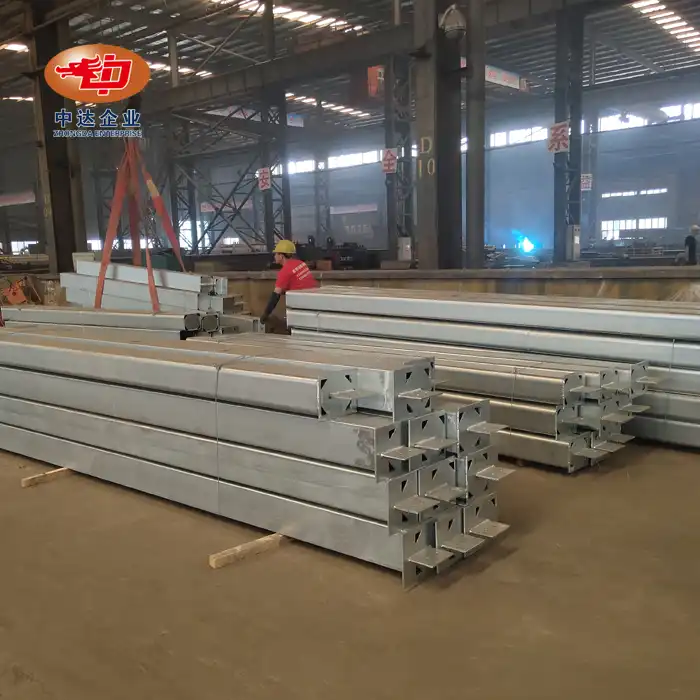
If you want to make sure that your business development, industrial building, or infrastructure project is safe, efficient, and cost-effective, you need to know about every essential component. In structural steel building, a cross column is a special load-bearing part with a cross- or cruciform-shaped design. It is usually made by connecting two H-sections or T-sections together at right angles around a center web. This special arrangement gives both main axes the same amount of structural stiffness and moment of inertia. This makes the column better at resisting forces from all directions than regular I-beams or H-columns. Because cross columns are symmetrical, they are needed for projects that need to be able to resist bending in two directions. These projects include tall buildings, big industrial plants, and complicated infrastructure developments. Instead of focusing on one strong line like normal vertical columns do, these parts spread loads widely in several directions, making the structure stronger as a whole.
Understanding Cross Columns in Structural Steel Construction
Definition and Core Functions
Cross columns are the most important part of modern steel frames because they keep the structure stable even when loads are spread out in different ways. When seen from above, these structural parts stand out because of their unique four-flanged shape that looks like a plus sign. This design lets beams and structural supports join from all four sides, without the need for complicated stiffener plates or extra support that regular columns need when they are loaded along their weak axis.
The main job of these parts is to make sure that the work is distributed properly. Cross column systems offer consistent performance regardless of load position in buildings subjected to wind forces from various directions, earthquake activity, or machine movements. Engineers don't have to worry about "strong axis" versus "weak axis" with symmetrical columns because they are symmetrical. Our cross-section columns are made from Q355B low-alloy steel using a double H-shaped welded joint. They have flange widths that range from 100 to 300 mm and web thicknesses that range from 6 to 25 mm, so they can handle a wide range of difficult uses.
Material Composition and Design Variants
The choice of material has a direct effect on how well these structure parts work and how long they last. High-strength low-alloy steels like Q355B, Q460, or ASTM A992 types are best because they can be welded better and have a yield strength of more than 345 MPa. The process of welding needs to be carefully managed—full joint penetration welds at the flange-to-web contact make sure that the piece will behave like a single unit when it's stressed.


There are different versions of the system to solve different technical problems. Standard welded systems let you change the flange width and web thickness ratios the most. Encased composite configurations use steel frames and concrete to make them more fire resistant and able to hold more weight. This is especially useful in places like hospitals and data centers where usefulness after a disaster is very important. Our factory uses precise CNC cutting and automatic welding to keep geometric tolerances within ±2mm to ±3mm. This stops the structural integrity from being compromised during installation by bending and bowing.
Distinction from Conventional Columns
Procurement managers can make better decisions when they know what makes these parts different from regular H-beams or box columns. When loads are aligned with their inner dimension, traditional H-columns work well, but they have trouble when forces act perpendicular to this line. Box columns have great twisting strength, but they need complicated electro-slag welding and internal diaphragms, which makes them much more expensive to make.
Cross-shaped members are a good compromise because they offer isotropic stiffness without the added difficulty of making closed hollow sections. In terms of cost, this means that our cross-section columns save about 10% of the material used by similar box columns while also making installation 30% faster. The open shape also makes it easier to check and fix problems with the structure while it is in use.
The Structural Benefits of Using Cross Columns
Enhanced Load-Bearing Capacity and Resilience
It becomes clear how useful these parts are for engineering when you look at how they work in real life. When it comes to horizontal stiffness, cross columns are 40% stronger than regular columns of the same weight. This means that structures in high-rise buildings will wobble less. In places where hurricane-force winds or earthquakes are common, this extra stiffness is very useful.
The uniform cross-section gives the structure better rotational stiffness, which means it can withstand the bending forces that often damage buildings during earthquakes. In Special Moment Frames, which are built to be occupied right away after an earthquake event, these beams have predicted hysteresis loops that get rid of energy well without the lateral-torsional bowing that happens with uneven members. Their large gyration radius lowers slenderness ratios, which lets them handle higher axial loads in tall buildings where each meter of height adds more complexity.
Spatial Optimization and Design Flexibility
In modern design, open room plans with few visible barriers are becoming more and more popular. Cross columns work great in this situation because they fit perfectly at wall crossings and corners, where their jutting ends fit in naturally with the shape of the building. This feature makes the net useful floor area bigger, which is important in business real estate where every square meter affects rental income directly.
The ability to connect on four sides makes building plans easier because beams can frame from different directions without having to use heavy connection plates that are expensive and add weight to standard systems. Engineers like this because it gives them more design options, which helps them come up with creative solutions for complicated factories where pipes, elevators, and equipment supports need to meet at different angles. Our customized honeycomb beam hole design choice makes this even more flexible by cutting self-weight by 20% without affecting the performance of the structure.
Integration with Modern Construction Systems
Building Information Modeling has changed how solid steel parts are ordered, made, and put together. Cross columns work well with BIM-based processes because they have a simple shape that makes it easier to find clashes and coordinate with water, electrical, and mechanical systems. At Zhongda Steel, we offer BIM-driven prefabrication services that make sure the dimensions are correct and cut down on the need for changes to be made on-site.
These structure parts also support flexible building methods, which are becoming more popular in business and industrial projects. Their reliable link ports make it possible to build whole structure bays off-site. These bays can then be moved and set up quickly, which cuts down on total project timelines. Our manufacturing method combines careful building with thorough non-destructive testing. This makes sure that parts get to job sites ready to be installed right away, without any costly delays.
Practical Applications and Case Studies of Cross Columns
High-Rise Commercial Buildings
Super-high-rise buildings pose special technical problems, and picking the right parts has a direct effect on their cost and ability to be built. cross columns have been very helpful in the corners and frames of buildings that are taller than 300 meters. Because they are symmetrical, they don't affect air flow as much as shapes that are rectangular or circular. This means that they are more comfortable for people inside while also reducing the weight of the structure.
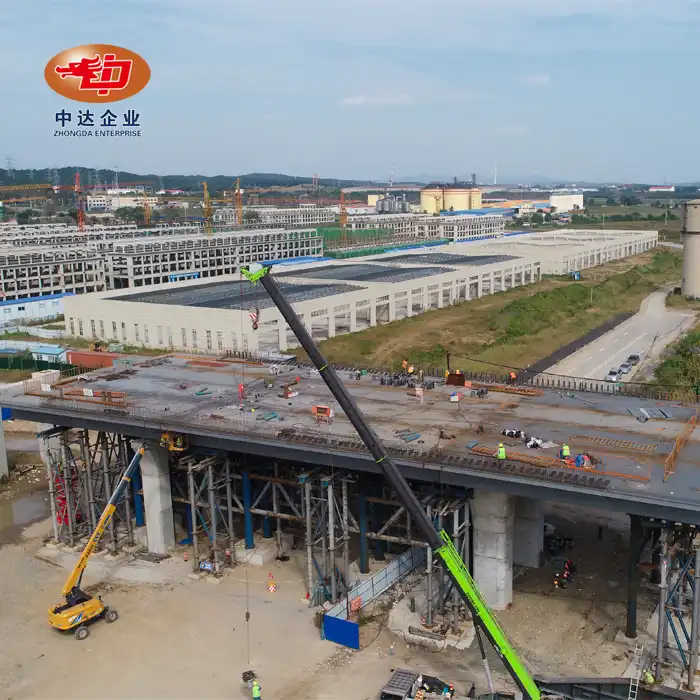
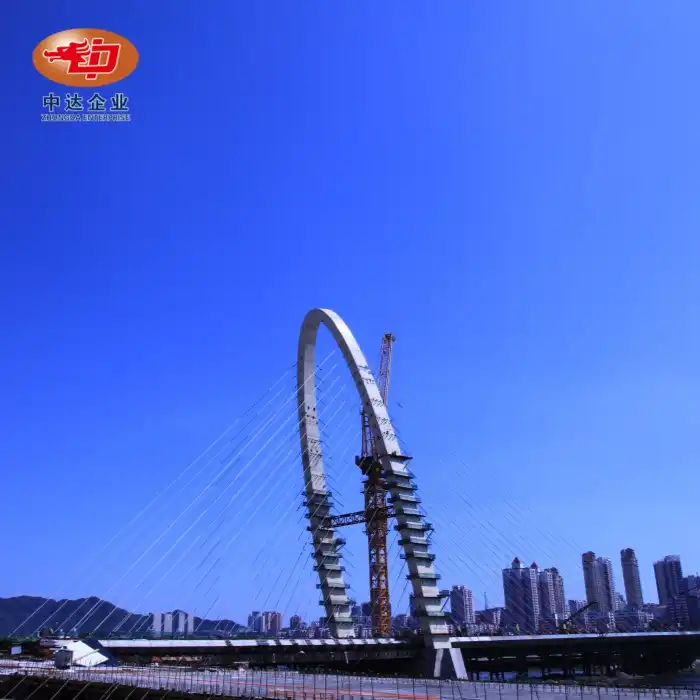
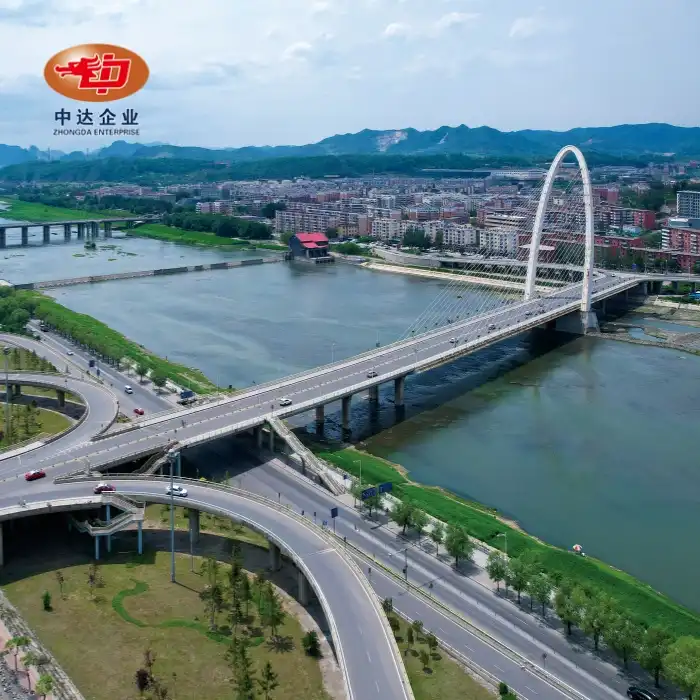
The 18,000-ton Shenyang Dongta Cross-Hunhe River Bridge project showed how good we are at making these complicated parts for tough jobs. The bridge required structural parts that could handle moving car loads, stresses caused by temperature changes, and wind forces from many places at the same time. Our cross-section columns had the right amount of biaxial twisting resistance and had to meet very tight size requirements for proper field assembly.
Industrial Facilities and Heavy Equipment Supports
There are a lot of heavy loads that standard columns often can't handle well in manufacturing plants and processing facilities. Vibrations from equipment, heat expansion, and loads on pipes that go in more than one way mean that structure supports need to be strong in all directions. These needs are met by cross columns, which also make link details easier that would normally take a lot of time for engineering and production.
Our collaboration with central state-owned enterprises like China Railway and CSCEC on multiple industrial plants demonstrates the versatility of these structural elements. In one petrochemical facility, cross-section columns supported critical process equipment while accommodating the complex array of utilities connecting from four sides. The installation efficiency gains reduced critical path activities by several weeks, allowing earlier commissioning and revenue generation for the facility owner.
Infrastructure and Public Projects
Engineers working for the government who make airports, subway stops, and other public buildings like these parts because they last a long time and keep working well. The open cross-section makes it easier to check and maintain the structure over its entire life, which lowers its total cost of ownership compared to closed empty parts that make it hard to find rust inside.
Australian mining crushing sites are another place where materials are put to the test in hard conditions. The cross columns we sent to these jobs abroad were able to withstand toxic environments, big changes in temperature, and heavy loads from moving equipment. Our -60°C Weathering Steel Anti-corrosion Technology ensured reliable performance in these challenging conditions, demonstrating the suitability of properly engineered cross-section columns for critical industrial infrastructure.
Selecting the Right Cross Column Solution for Your Project
Assessment Criteria and Load Requirements
Before choosing the best structure parts, it's important to carefully look at what the project needs. Dead loads come from structural and non-structural elements, live loads come from people and tools, wind loads depend on where the building is located and how tall it is, and seismic forces depend on the land conditions and the seismic design category. cross columns need to be the right size to handle all of these effects at the same time.
In addition to basic strength numbers, material characteristics should be carefully thought through. Performance is affected by ductility, hardness at low working temperatures, and characteristics that vary through thickness. When welding across the direction of rolling causes pressures that go through the whole length, there is a chance that the lamellae will tear. By choosing materials with proven Z-direction features, this type of failure that has damaged buildings in the past can be avoided.
Compatibility with existing structural systems affects both new construction and retrofit projects. Connection details must transfer forces efficiently between columns and beams, foundations, or supported equipment. Our engineering team provides comprehensive support evaluating these interfaces, ensuring that cross-section columns integrate smoothly with other project components regardless of design standards employed—whether AISC, Eurocode, or other international specifications.
Comparative Analysis with Alternative Solutions
Understanding the trade-offs between choices is important for making smart buying decisions. Standard H-columns seem to be cheaper at first, but when they are loaded in more than one direction, they often need extra strengthening and link support, which takes away from their apparent cost benefit. Box columns work really well, but they need special ways to be welded and inspected, which adds time to the manufacturing process and costs more money.
The cross-section columns are in a good spot in this range. Because they don't have internal diaphragms or complicated electro-slag welding processes, they cost 15 to 20 percent less to make than similar box columns. Installation goes faster because the connections are simple and can be reached from all four sides. The open part makes it easy to check and maintain the coating, which extends the service life in acidic conditions and keeps the lifecycle costs low.
Customization Options and Technical Support
Standardized goods can't always meet the needs of each project in the best way possible because each one is different. Zhongda Steel can make a lot of changes to your order, like changing the material specifications, adding special finishes to make the steel last longer, or integrating project-specific connection details. Our experienced research and development (R&D) team works with client engineers from the first idea to the end product, making sure that unique solutions meet both performance goals and price limits.
Delivery times have a big effect on building plans and the cost of borrowing. Standard cross-section column shapes are shipped 15 days after an order is confirmed. Custom designs, which need technical analysis and special manufacturing methods, are finished in 25 days. Compared to industry standards, this means 20–30% less wait time, which directly leads to shorter critical paths and faster project finish.
Installation and Maintenance Best Practices for Cross Columns
Foundation Preparation and Erection Procedures
Preparing the base correctly is the first step to a successful installation. Base plates need to be perfectly leveled and grouted so that their whole surface area bears the same amount of weight. Anchor bolt patterns need to be carefully laid out to match the details of the column connections. Dimensional accuracy is usually kept to within ±3mm to avoid delays in field modifications. Temporary bracing systems stabilize cross columns during erection until permanent beam connections provide lateral support.
Positioning methods change based on the size of the job and the limitations of the spot. Mobile cranes are still the most common way to lift things, and their gear is made so that they don't twist or bend while they're lifting. For bigger jobs, tower cranes or other heavy-lifting tools may be needed. As part of our manufacturing process, we place lifting bolts in specific places to make them easier to use and keep the structure's stability. All of our columns are checked for final dimensions before they leave our plant. This keeps fit-up problems to a minimum, which saves important construction time.
To complete a connection, strict obedience to welding methods approved by AWS D1.1 or similar standards is required. When temperatures drop below the levels required for the base metal grade, field welds need to be heated up first. Before protective coats are applied, the welds are inspected visually and non-destructively using ultrasound testing for full-penetration groove welds and magnetic particle inspection for fillet welds. This is done to make sure the welds are strong.
Inspection Protocols and Corrosion Management
Routine inspections detect deterioration early when corrective measures remain straightforward and economical. Inspection intervals depend on environmental exposure, with corrosive atmospheres requiring more frequent examination than benign interior conditions. Critical areas include connection zones where stress concentrations occur, the inner corners of the cross profile where moisture accumulates, and any coating damage that exposes bare steel to atmospheric attack.
Ultrasonic thickness gauging measures how much a piece has been lost due to rust, which helps with deciding whether it can continue to be used or if it needs to be reinforced. Magnetic particle inspection shows surface-breaking cracks in structures that are loaded and unloaded over and over again. During manufacturing, our quality control processes create standard paperwork that makes it easier to check the structure's state over its entire operating life.
Corrosion protection strategy selection balances initial cost against maintenance requirements and expected service life. High-build epoxy zinc-rich bases offer great protection, but the finish needs to be replaced every 10 to 15 years, based on how much it is exposed to the elements. Hot-dip galvanizing is more durable in harsh settings, but sometimes field-bolted splices are needed because of limits on column length. When coating, extra care needs to be taken in the inner corners of cross-section profiles. Holiday testing makes sure that all of the coating covers these wet spots completely.
Long-Term Performance Monitoring
Advanced structures increasingly incorporate monitoring systems that track performance parameters over time. Strain gauges installed on critical columns measure actual load distribution, verifying design assumptions and providing early warning of overload conditions. Accelerometers detect vibration characteristics that may indicate foundation settlement or connection loosening requiring attention. These technologies enable condition-based maintenance strategies that optimize resource allocation while ensuring safety.
Temperature monitoring proves valuable in structures exposed to extreme thermal cycles, where differential expansion can induce stresses not considered during initial design. Our experience with Arctic bridge projects in Russia and mining facilities in Australia has informed design refinements that enhance performance under harsh environmental conditions. Regular data analysis identifies trends before they develop into problems, extending asset life while minimizing unplanned downtime.
Conclusion
Cross columns represent a sophisticated engineering solution for structural steel projects requiring multidirectional load resistance and design flexibility. Their uniform shape gives them the same hardness in all directions, which makes the connections easier and improves the general performance of the structure. These parts improve the load capacity, installation efficiency, and lifetime cost-effectiveness of a wide range of buildings, from high-rise business projects to heavy industrial facilities and important infrastructure. The best way to get these benefits is to choose the right materials, make sure they are well-made, and place them correctly. This will ensure that they work well for decades to come. As building projects get more complicated and performance requirements rise, cross-shaped structural members will continue to be an important part of making big design dreams come true while keeping the safety and cost-effectiveness that make projects successful.
FAQ
How do cross columns differ from standard H-beams in structural applications?
The main difference is in how much force resistance there is. Standard H-beams have a strong axis and a weak axis, and their moment capacities are very different. This means that they need to be carefully oriented when they are being designed. Cross columns give the same amount of stiffness in both main directions, so you don't have to worry about rotation. They also make it easier to connect beams from all four sides without adding a lot of stiffness. Because of this, they work great in corners and other places where pressure can come from different directions.
What are typical lead times for custom cross column fabrication?
Standard cross-section column shapes usually ship 15 days after an order is confirmed. Custom designs, on the other hand, need special engineering analysis and are made to exact measurements, and they usually take 25 days to finish. These plans are based on normal production capabilities. If you work with our production planning team, you can speed up projects with tight deadlines.
Can these structural components be used in seismic-resistant construction?
When properly designed, cross columns work great in earthquake situations. Because they are symmetrical, they have predicted hysteresis behavior that successfully releases earthquake energy without the lateral-torsional bowing that happens in parts that are not symmetrical. They are often included in Special Moment Frames that are made to be occupied right away after an earthquake, especially in important buildings like hospitals and emergency response centers.
Partner with Zhongda Steel for Superior Cross Column Solutions
Zhongda Steel has built a reputation as a reliable cross column maker by sending well-thought-out structure parts to difficult projects all over the world. Our cross-section columns are made of Q355B low-alloy steel and are welded using modern methods. They are 40% more stiff on the sides than other options and cost 10% less to make. We are a top cross column provider with certificates from CE, EN 1090, AWS, and JIS. This means that we promise agreement with international standards that are important for EPC project chains around the world. Get in touch with our technical team at Ava@zd-steels.com to talk about your specific project needs and find out how our BIM-driven fabrication capabilities, ultra-precise cutting tolerances, and full support services can speed up your construction timeline while ensuring structural excellence that will last.
References
American Institute of Steel Construction. Steel Construction Manual, 15th Edition. AISC, 2017.
Bruneau, Michel, et al. Ductile Design of Steel Structures, 2nd Edition. McGraw-Hill Professional, 2011.
European Committee for Standardization. EN 1993-1-1: Eurocode 3 - Design of Steel Structures - Part 1-1: General Rules and Rules for Buildings. CEN, 2005.
Salmon, Charles G., et al. Steel Structures: Design and Behavior, 5th Edition. Pearson, 2008.
Galambos, Theodore V., et al. Structural Stability of Steel: Concepts and Applications for Structural Engineers. John Wiley & Sons, 2008.
Chen, Wai-Fah and Lui, E.M. Handbook of Structural Engineering, 2nd Edition. CRC Press, 2005.
YOU MAY LIKE
_1754027396028.png "Steel Stair Treads")