What are the Design Considerations for Heavy-Duty Steel Truss Bridges?
2026-06-02 13:06:03






When builders make heavy-duty steel truss bridges, they have to find a balance between how well the structure works, how well the materials work, and how long the bridge will last. For heavy-duty uses, a steel truss bridge needs to be carefully planned out in terms of the truss structure, the high-quality materials used (like ASTM A709 Gr.50 steel), a full load analysis that includes both live and dead loads, and advanced rust protection systems. These things are taken into account to make sure the building stays safe and works well even in difficult conditions, all while reducing the time it takes to build and the money it costs over its lifetime for transportation, infrastructure, and industry projects.
Understanding Heavy-Duty Steel Truss Bridge Design Principles
To be a good heavy-duty bridge engineer, you need to know how structure mathematics, material science, and following the rules all work together to make spans that are safe and effective.
Truss Configuration Selection
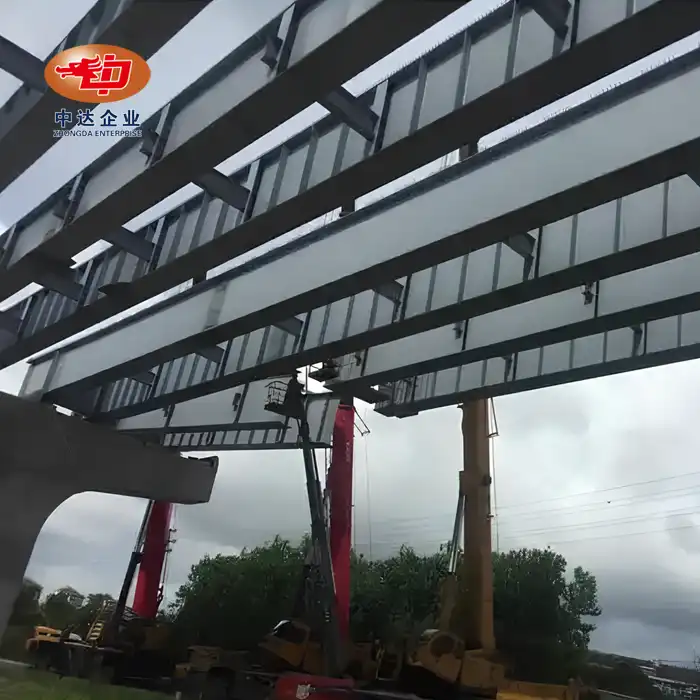
If you pick the right truss design, the bridge will be able to spread loads more evenly through its parts. The Warren truss design uses diagonal members to make shapes that are either equal in length or width. This creates a distributed force distribution that works well for medium to long spans of 30 to 150 meters. This shape uses the least amount of material while keeping the structure solid. The Pratt truss, on the other hand, has vertical compression members and lateral tension members. It works especially well when the bridge deck has to hold big loads like freight trains or mine equipment. In both cases, the vertical forces are turned into axial loads that can be handled. This gets rid of the bending moments that would have needed larger parts otherwise. Zhongda's modular systems use these tried-and-true shapes to provide quick building options that keep the structure's integrity in a wide range of situations.


Material Selection and Steel Grade Specifications
High-performance steel types are the building blocks of long-lasting truss structures that can handle high operating and weather pressures. ASTM A709 Gr.50 steel has a minimum yield strength of 345 MPa and is great for making complicated node connections because it is easy to weld and tough when hit. When adding gusset plates to chord members, it is very important that the Z35 Z-direction performance standard handles through-thickness features so that lamellar breaking doesn't happen during welding on thick plates. This improved directionality makes sure that the structure stays together at key link points where stress naturally builds up. Some types, like ASTM A572, have similar mechanical qualities but slightly different chemical makeup. This lets engineers choose the best material for a job based on the welding process and the temperature range that needs to be used. At our 120,000-square-meter building, we follow strict rules for material approval and do full chemistry analyses to make sure everything is in line before we start making things.
Regulatory Frameworks and Load Standards
Following well-known engineering standards makes sure that bridges meet safety standards for the whole time they are in use. The AASHTO LRFD Bridge Design Specifications go into great depth about how to combine loads, figure out resistance, and use structure analysis methods that are perfect for North American situations. These standards say that you have to think about a lot of different load cases, such as the weight of an HL-93 car, wind speeds up to 1.6 kPa, earthquake design forces, and changes in temperature that cause secondary stresses. Eurocode EN 1993-2 has similar rules that have been changed to fit international practice. It focuses on final limit states and serviceability standards. Our engineering team uses these models consistently during the early stages of design, using load and resistance factor methods that take into account variations in materials and building limits. This strict method creates buildings that are stronger than the standards for the Highway-I Level Load, carrying loads of up to 100 tons while keeping displacement limits that stop noises that cause tiredness.
Key Engineering Considerations in Heavy Steel Truss Bridge Construction
Moving from a mental design to a real building requires advanced analysis tools and strategic planning for manufacturing that reduces risk and raises quality.
Advanced Analysis and Optimization Techniques
Finite element analysis software is used in modern bridge engineering to model complicated load lines and find stress peaks before the steel truss bridge is built. These computer programs break down the whole truss structure into thousands of separate parts. They then figure out the deflections, member forces, and link needs for different load situations. Sensitivity studies show which factors have the biggest effect on how a structure behaves. This lets engineers find the best member sizes and lower the total amount of steel used without lowering safety standards. In our BIM-driven prefabrication method, three-dimensional modeling is combined with fabrication data. This makes sure that important link geometry is accurately measured to within ±0.2mm limits. This digital-to-physical combination gets rid of problems with field fitting that usually cause building to take longer and cost more than planned.
Prefabrication Advantages Over Site Assembly
By making bridge parts in a controlled factory setting, big advantages are gained compared to traditional stick-built building methods. Here are the main benefits this method offers for difficult building projects:
- Quality Consistency: Automated cutting equipment and robotic welding cells keep precise control of dimensions and weld quality that can't be reached in the field, where weather and access issues make work less reliable.
- Accelerated Schedules: Making multiple truss panels at the same time while the site is being prepared cuts down on total project timelines by 30 to 40 percent compared to methods that involve fabricating and putting up each panel one at a time on-site.
- Enhanced Safety: Less high-elevation welding and connection work means workers are less likely to be hurt by falling, and workplace layouts lower the number of injuries that happen when workers have to do a lot of heavy lifting.
These manufacturing savings directly lead to lower lifetime costs and a faster return on investment for clients who need to set up infrastructure quickly. With a production capacity of 60,000 tons per year, we can work on multiple projects at the same time and still meet delivery dates, even for big bridge programs that need hundreds of tons of manufactured steel.
Maintenance Planning and Inspection Protocols
Proactive repair plans keep things in good shape so they last longer and stop major breakdowns that put people in danger and block important transportation routes. At every welding node during manufacturing, we use Magnetic Particle Testing and Ultrasonic Testing as part of our thorough inspection process. These tests find underground flaws as small as 0.5mm before they grow into stress cracks. Full-node inspection procedures make sure that links between gusset plates, which have generally been the weakest points during overloads, meet high quality standards. After installation, we suggest visual checks every two years along with nondestructive tests in high-stress areas. This will help you keep an eye on the integrity of the paint system and spot the start of rust before protective coats fail completely. By writing down what was found during inspections, a maintenance database is made that helps predictive models figure out when repairs should be done and how much money should be spent on them over the bridge's working lifetime.
Comparative Analysis: Steel Truss Bridges vs Alternatives for Heavy Loads
Structural Performance Comparison
Prestressed concrete bridges have great compression strength, but they need much lower sections to reach the same lengths, which takes up important vertical space below the structure. Their weight is usually 200 to 300 percent higher than steel options, which raises the cost of foundations and makes building harder in bad soil. Suspension bridges are great for crossing very long distances, but they have complicated cable systems that need special checking tools and cost more to maintain than regular trusses. Composite steel-concrete designs use both materials well, but they make building more difficult because deck casting processes can be delayed by bad weather. Steel truss bridges offer the best strength-to-weight ratios for spans between 50 and 200 meters. Their open-web shape makes it easy for utilities to cross while keeping the structure stable in high winds. Because triangulated sections are more structurally efficient, the amount of material used stays the same even as the span grows. This keeps costs more stable than other options that need material costs to rise exponentially.
Economic and Practical Advantages
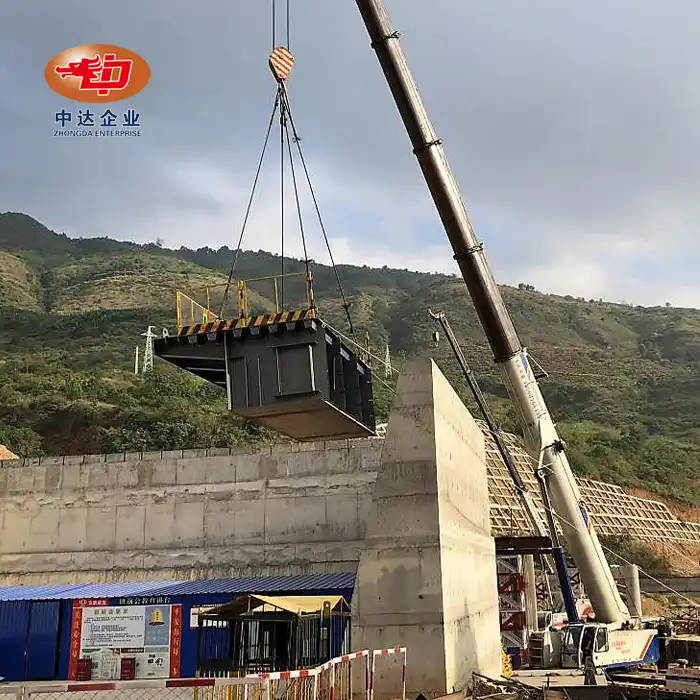
When you look at the total costs of ownership, modular steel truss systems have a clear term value. When prefabricated parts are delivered to the job site, they are ready to be quickly put together using standard mobile cranes. This cuts down on the need for expensive falsework and reduces the amount of traffic problems that happen when installing on busy roads or trains. Because fixed connections are flexible, they can be used for future widening projects or load capacity upgrades without having to rebuild the whole structure. This is something that can't be done with solid concrete construction. Corrosion protection systems that use 160-micrometer thermal spray zinc, epoxy mica iron intermediate coats, and polyurethane topcoats form a shield that lasts longer than 40 years in tough industrial environments where sulfur dioxide and salt exposure speed up corrosion. Our removable emergency bridge types are the most flexible on the market. They can be used to build 200-meter spans in just 48 hours during disaster recovery operations, whereas normal building methods take months to move the site. This timeliness is worth a lot to clients who are in charge of important supply chain routes or rural resource mining operations where downtime costs more than a thousand dollars an hour.
Procurement and Cost Considerations for Heavy-Duty Steel Truss Bridges
Long-term practical economics and up-front capital spending must be balanced in strategic buying choices. Quality and compliance must be ensured throughout the supply chain.
Cost Component Analysis
Knowing how bridge projects are funded allows for accurate planning and useful comparisons of suppliers. The price of raw materials changes with the global steel market, but they usually make up 40 to 45 percent of all manufacturing costs. This means that specifying the right types is very important for keeping costs down without losing performance margins. Another 35 to 40 percent goes to fabrication labor and support costs, which vary a lot depending on the complexity of the link and the amount of weld checking needed. Transportation arrangements make up 8 to 12 percent, based on how far away the job is and whether parts need special heavy-haul permits for big loads. Installation costs are between 10 and 15 percent when the site is ready for a crane, but they go up a lot when environmental limits or a lack of staging places make it hard to schedule the work. Our fully integrated method, which includes everything from planning to installation, makes costs clear and gets rid of the price layers that come with having multiple subcontracting chains.
Supplier Evaluation Criteria
To choose skilled makers, you need to check their technical skills and make sure they have quality control systems in place that make sure products are always delivered on time. Certification to ISO 9001 quality standards shows that there are written procedures for tracking materials, making sure that welding procedures are safe, and testing without damaging the steel, all of which are important for making structure steel. In order to get EN 1090 approval, structures that are bonded must meet certain technical skill levels that are right for parts of bridges that are likely to break. Compliance with the AWS D1.5 Bridge Welding Code shows that you know how to meet strict acceptance standards for features that are likely to wear out over time and are loaded and unloaded many times. Beyond qualifications, looking at a supplier's past work on similar projects shows if they have the real-world experience to deal with the tricky communication issues that come up when building a bridge. The 18,000-ton Shenyang Dongta Cross-Hunhe River Bridge and several Jingha Expressway structures are in our collection. This shows that we can successfully manage mega-projects that need precise interface control during multiple building phases. Our ability to react to different legal settings and customer standards is proven by our work with Australian mining operations in other countries.
Customization and Engineering Support
For bridge projects to be successful, engineers must work together to turn useful needs into the best structure solutions. During the early stages of design, our technical team works directly with clients to do site-specific studies that take into account things like natural conditions, earthquake risks, and the specific operating load ranges for each application. Customization goes beyond just changing the size; it also includes specifics like integral abutments that get rid of expansion joints, composite deck systems that make the structure stiffer, and architectural finishes that meet aesthetic needs without sacrificing structural efficiency. Post-delivery help includes overseeing the installation, watching the load testing, and teaching care staff how to check the structure that was delivered. This all-inclusive service model makes sure that technical knowledge is successfully transferred from the maker to the owner, which improves the performance of the asset for as long as it is used. Our technical team leverages BIM to ensure technical expertise transfers successfully.
Case Studies and Best Practices in Heavy-Duty Steel Truss Bridge Design
Real-life examples show how academic ideas can be turned into useful infrastructure that supports heavy-duty industry processes.
Mining and Resource Sector Applications
Extraction activities that are far away need transportation systems that can handle off-road haul trucks that weigh more than 400 tons. Our mine project in Australia used modular steel truss bridge spans to carry these heavy loads across environmentally sensitive waterways, where traditional building methods would have been against the rules. The Warren truss design spread out heavy axle loads well while reducing the amount of digging needed in places where heavy equipment couldn't get to. sped up building plans so they were in line with operational launching dates. This kept production ramp-up schedules from being delayed, which would have cost millions of dollars in lost income each week. Better rust protection dealt with dust and water issues that are common in open-pit settings. This kept the structure strong even in harsh weather conditions that quickly wear down coating systems that aren't up to par.
Transportation Infrastructure Innovations
In order to expand the Jingha Expressway, old buildings had to be replaced while traffic on one of China's busiest freight routes had to be kept going. Our prepared method allowed installation windows on the weekends, which caused the least amount of trouble for industrial truck drivers who count on unbroken supply lines. Because the work was done in stages, only some lanes had to be closed at a time instead of the whole path, which would have forced traffic to take side routes for hundreds of kilometers. Standardized parts that could be put together in different ways made material management easier across multiple bridge sites. This made buying things easier and allowed for economies of scale that wouldn't have been possible with structures that were built specifically for each span. Performance monitoring during the first service period proved that bending behavior stayed within expected ranges and link details showed no signs of fatigue crack start, even though traffic amounts were higher than expected based on the original design.
Lessons Learned and Best Practice Synthesis
Many successful projects have traits that set them apart from unsuccessful ones that run over budget and have quality problems. Using manufacturing experts early on in the design process helps find problems with constructability before they become expensive changes to make in the field. This cuts change order costs by 15 to 25 percent compared to the old way of doing things, which was design-bid-build. Detailed planning for quality that includes inspection hold spots and acceptance standards stops disagreements during final acceptance tests that cause the project to take longer to finish. Clear communication procedures between design engineers, builders, and assembly workers make sure that everyone knows what their job is at all times during the building process. According to our 70% client renewal rate, clients value these joint methods that always meet project goals for cost, schedule, and quality without sacrificing any of those.
Conclusion
Heavy-duty steel truss bridges need to be designed with structural principles, material requirements, building methods, and lifetime costs all taken into account. For projects to be successful, they have to find a balance between short-term cost concerns and long-term performance needs. They do this by choosing the right truss configurations and steel types that give the best strength-to-weight ratios while still being durable in difficult working conditions. Advanced rust protection systems and prefabrication strategies offer measured value by shortening building times and extending the time between upkeep tasks. When making a purchase choice, providers should be given preference if they can show that they have the technical certifications, appropriate project experience, and full engineering support skills that guarantee a successful project from idea to operating commissioning.
FAQ
What steel grades work best for heavy-load truss bridge applications?
ASTM A709 Gr.50 steel works best for most heavy-duty bridge uses because it has a minimum yield strength of 345 MPa and is easy to weld and tough against impact at service temperatures. The Z35 Z-direction standard improves the through-thickness qualities, which stops lamellar breaking when thick-plate connections are being made, which is important for the stability of the truss node.
How does prefabrication speed up and improve the quality of construction?
Factory-controlled manufacturing settings keep limits on dimensions and weld quality that can't be reached in the field. Parallel manufacturing while the site is being prepared cuts down on plans by 30 to 40 percent, and automated processes get rid of the human error that hurts consistency. Full-node inspection methods find problems before they are installed, so they don't have to be fixed during final acceptance testing, which can be expensive.
What maintenance challenges affect steel truss bridges and how can they be mitigated?
Most upkeep problems are caused by corrosion at connection points and paint system wear. When sprayed correctly, multi-layer protection coatings with thermal spray zinc basecoats can last for 40 years. Magnetic particle and ultrasound tests are used in regular inspection programs to find early signs of damage before the structure's ability to hold weight is lost in steel truss bridges. This way, planned maintenance can be done instead of emergency fixes.
Partner with Zhongda for Your Steel Truss Bridge Requirements
Zhongda blends 20 years of experience in manufacturing with cutting-edge engineering skills to provide the best structural solutions for tough building projects. Our ISO 9001/14001/45001 and EN 1090 certifications show that we are firmly committed to quality management systems that guarantee consistently high-quality products. As a reliable steel truss bridge maker, we keep a 60,000-ton yearly production capacity to handle multiple mega-projects at the same time, from the initial planning phase to the final completion phase. Whether you need standard highway spans or specialized industrial buildings for tough environments, our engineering team specializes in making solutions that are tailored to the site conditions and operating needs. Get in touch with Ava@zd-steels.com right away to talk about how our BIM-driven prefabrication method and full technical support can speed up your next bridge project and keep costs down over its lifetime.
References
American Association of State Highway and Transportation Officials. AASHTO LRFD Bridge Design Specifications, 9th Edition. Washington, DC: AASHTO, 2020.
Barker, Michael G. and Puckett, Jay A. Design of Highway Bridges: An LRFD Approach, 3rd Edition. Hoboken, NJ: John Wiley & Sons, 2013.
Chen, Wai-Fah and Duan, Lian. Bridge Engineering Handbook: Construction and Maintenance, 2nd Edition. Boca Raton, FL: CRC Press, 2014.
Connor, Robert J., Dexter, Robert, and Mahmoud, Hussam. Inspection and Management of Bridges with Fracture-Critical Details. Washington, DC: Transportation Research Board, 2005.
Kulicki, John M. and Mertz, Dennis R. "Evolution of Horizontally Curved Steel Bridge Design." Journal of Bridge Engineering Vol. 11, No. 5 (2006): 563-573.
Troitsky, M.S. Steel Truss Bridges: Theory, Design, and Practice. New York: Van Nostrand Reinhold, 1990.
YOU MAY LIKE
_副本_1762324991500_1788850629424.jpg "steel beam construction")