



What Steel Truss Girder Configuration Fits Heavy-Duty Bridge Projects?
2026-10-11 13:00:01






When engineers ask which steel truss girder configuration works best for heavy-duty bridge projects, the answer depends on span length, load type, and environmental conditions. For spans exceeding 100 meters under dynamic rail or highway loading, a Warren truss with verticals delivers the best balance of stiffness and material efficiency. The Pratt truss suits medium-span highway bridges with dominant vertical loads, while the K-truss handles long-span rail bridges where web buckling is a concern. Each configuration uses triangulated geometry to transfer forces through axial tension and compression, reducing dead weight while maintaining structural performance.
Understanding Steel Truss Girder Basics for Heavy-Duty Bridges
It's helpful to know what makes a Steel Truss Girder different from a regular solid-web beam and why that difference is important at a large scale before comparing configurations.
What Is a Steel Truss Girder?
A Steel Truss Girder is a type of structural frame made up of triangle-shaped pieces that are linked to each other. Because each part only carries tension or compression, the system can span long distances with a lot less material than a solid plate girder of the same load. Mechanical, electrical, and water systems can also pass through the structure thanks to this open-web design. This lowers the overall height of buildings used for industrial and bridge purposes.
How It Differs from Conventional Beams
As the span length gets longer, traditional solid-web beams get heavier and cost more. A Steel Truss Girder solves this problem by spreading the weight across a group of thin parts instead of a single mass. AISC Design Guide 14 says that Steel Truss Girders can have span-to-depth ratios between 10:1 and 15:1. This gives engineers a lot of options when it comes to deck height and clearance needs.
Common Configurations and Their Structural Logic
- Warren Truss: There are no vertical members between the diagonal members, so the load is spread out evenly. It works best for highway bridges with spans between 60 and 120 meters.
- Pratt Truss: The diagonals hold the structure together, and the vertical parts support the weight. This setup works well when live loads are present and makes managing steel weight easy to understand.
- Howe Truss: Diagonals carry compression, which is the opposite of Pratt. These are used less often in modern steel bridges, but they are still used when certain timber chord combinations are needed.
- K-Truss: Web members are arranged in a K shape, which cuts down on the length that isn't supported and increases the resistance to bending. It is best for long-span rail bridges where the web parts have to handle a lot of compression force.
Each of these configurations has its own load-path logic, and picking the wrong one for a certain span or load profile can waste materials and cause problems with how well it works.
Evaluating Steel Truss Girder Configurations for Heavy-Duty Projects
For tough bridge environments, the right configuration choice is based on how the structure works in real life, not just static load charts.
Load Capacity and Fatigue Resistance
Many millions of loads are put on and off of railroad and highway bridges over the course of their useful lives. A study in the Journal of Bridge Engineering (ASCE, 2019) shows that the main thing that causes stress cracks to start is the shape of the nodes at the points of the Steel Truss Girder panels. Designs that follow the AWS D1.5 bridge welding code and reduce stress concentrations at gusset plates always perform better than those that don't. These designs also have 20–30% longer service lives when the same amount of traffic is applied.
Span Length and Material Efficiency
Beyond a span of about 80 meters, Steel Truss Girders perform better than concrete box girders because the dead load of concrete starts to work against itself at longer spans. A Warren truss made from Q355B or ASTM A572 Grade 50 steel stays strong for its weight, and its open-web shape cuts down on wind drag, which is important for bridge decks in coastal or canyon areas.
Transport and Installation Advantages
Prefabricated Steel Truss Girder modules usually weigh 30–50% less than similar concrete sections. This means that smaller cranes aren't needed and they're easier to move on roads with limited space. Shorter on-site assembly times are also caused by modular assembly at the manufacturing plant. This cuts down on labor costs and project schedule risk. These things are especially important for mining access bridges and crossings in industrial parks where the ground makes it hard for big machines to move.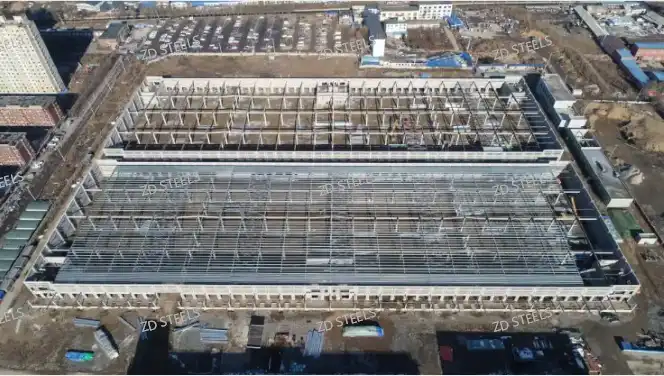
Procurement Considerations: Choosing and Ordering Steel Truss Girders
Getting the shape of the structure right is only half the battle. Your procurement strategy determines whether you get parts on time and within budget that actually meet engineering requirements.
Key Price Influencers
The final cost depends on the type of material, the unique node geometry, the surface treatment standard, and the distance of transport. The duplex system, which includes hot-dip galvanizing and a high-build epoxy topcoat, is suggested for use in C5-M coastal settings. It raises the cost of surface treatment but greatly increases the time between maintenance visits. To be able to compare suppliers fairly, procurement teams should ask for itemized quotes that break down the costs of steel tons, fabrication hours, and coating.
Evaluating Suppliers
Check the following about a Steel Truss Girder maker or supplier:
- Third-party mill test certificates (MTCs) proving yield strength and chemical makeup.
- Welding processes and skills that are certified by AWS D1.1 or EN ISO 15614. These are the results of non-destructive testing (NDT) on important node welds, specifically ultrasonic testing (UT) and magnetic particle inspection (MPI).
- Certification in quality management, like ISO 9001, and certification in structural fabrication, like EN 1090.
These checks keep you from having to pay a lot of money for mistakes in the field and losing time because of parts that don't meet standards.
Lead Times and Logistics Planning
Standard Steel Truss Girder production usually takes 8–14 weeks from the time the order is confirmed until it is finished in the plant. This depends on how complicated the design is and how many are ordered. For international ocean freight or domestic oversize-load trucking, procurement managers should add an extra two to four weeks. When the manufacturing plan is in sync with the site's readiness, expensive holding and re-handling at the job site is avoided.
Construction and Maintenance of Steel Truss Girders in Heavy-Duty Bridges
Building structures that last a long time from engineering drawings requires good fabrication and field practices.
Best Practices During Erection
How smoothly field assembly goes depends on how accurate the dimensions are during fabrication. For example, camber levels must be within certain tolerances, and node spacing must be checked against the design model. The usual way to connect things in the field is with high-strength friction-grip (HSFG) bolts, which provide steady clamping force in all kinds of weather. Shop-welded and field-bolted sequencing keeps construction speed up while lowering the chance of quality issues.
Inspection and Maintenance Schedule
Active care greatly increases the useful life of a service and lowers its total cost over its entire life. Heavy-duty Steel Truss Girders usually go through the following evaluation steps:
- A visual check of all member surfaces, coating condition, and bearing assemblies once a year.
- An NDT inspection of the primary node welds every five years, focusing on areas found in the original fatigue analysis.
- Every time the coatings are inspected, the dry film thickness (DFT) must be checked against the standards of ISO 12944 class C5.
- Making sure that the HSFG bolt assemblies are tightened again after the first full seasonal temperature cycle.
Patterns of wear or coating degradation tend to repeat in the same places after the first check. This lets maintenance crews plan focused interventions instead of full surface treatments.
Field Case Reference
A Zhongda-made Steel Truss Girder section that was sent to Russia for an Arctic crossing was made to work at –60 °C using weathering-grade steel that has an approved anti-corrosion system. A check after installation proved that all node welds and coating layers were up to code, with no problems being found. This result shows what careful quality control during manufacturing and being able to track materials can do for a difficult project.
Making the Right Decision: Which Configuration Fits Your Project?
When choosing the right Steel Truss Girder type for a project, use this decision matrix as a guide. It shows the typical spans for different types of bridges:
| Project Type | Recommended Configuration | Typical Span |
|---|---|---|
| Highway bridge, light traffic | Pratt or Warren | 40–80 m |
| Rail bridge, heavy dynamic load | Warren with verticals or K-Truss | 80–150 m |
| Industrial access or mining bridge | Warren or Pratt | 30–60 m |
| Long-span port or terminal crossing | K-Truss | 100–200 m |
This matrix is just a place to start for engineers, not the answer. Site-specific limits, such as the ability of the land to support weight, the classification of the area as a seismic zone, and the need for adequate flood clearance, can change the best option for each project. Zhongda's engineering team works directly with procurement managers and EPC contractors to run load models and suggest setups based on BIM-driven prefabrication planning. This makes sure that the final design is based on the real site conditions instead of general guidelines.
Conclusion
To choose the right Steel Truss Girder configuration for a heavy-duty bridge project, the structural geometry needs to be matched to the type of load, the span, and the environment. Warren and K-truss systems always work best for long-span and rail work, while Pratt designs are best for medium-span highway work. Fabrication quality, which can be checked through MTCs, NDT records, and approved coating systems, is what turns a good plan into a bridge that works safely for decades. When procurement teams check the credentials of suppliers and plan lead times, they carefully guard their budgets and project schedules.
FAQ
1. How do I figure out how much weight a Steel Truss Girder can hold?
It depends on the cross-sections of the members, the grade of the steel, the shape of the panel points, and how well the connections work. Engineers often use finite element analysis (FEA) along with hand calculations based on AISC 360 or AASHTO LRFD to confirm the limits for both final strength and serviceability deformation.
2. For long spans, is a Steel Truss Girder preferable to a concrete one?
For spans longer than 80 meters, Steel Truss Girders usually have less dead weight, can be put up faster, and are easier to move. When the spans are shorter, concrete is more competitive because its higher compression strength and lower maintenance cost make up for its weight.
3. How long does it usually take to make something?
It usually takes 8–14 weeks to make something from approved plans, but it can take longer for more complicated custom setups. Procurement teams should plan for a total of 12 to 18 weeks, which includes shipping and site logistics.
4. Can Steel Truss Girders be made stronger after they are put in place?
Yes, it is possible to strengthen the member using welded cover plates or external post-tensioning cables, as long as a structural engineer checks the revised load model again to make sure the nodes can handle the load and the connections are strong enough.
5. What kind of anticorrosion system works best in coastal or marine settings?
For marine exposure, the standard is a duplex system that includes hot-dip galvanizing according to ISO 1461 and a high-build epoxy/polyurethane finish that is rated for C5-M settings.
Get Your Custom Steel Truss Girder Quote from Zhongda
Are you building a heavy-duty bridge and need a trusted Steel Truss Girder supplier? Since 2004, Zhongda Steel has shipped manufactured truss systems to six countries. The company is ISO 9001, EN 1090, and OHSAS 45001 certified and can make 60,000 tons of steel each year. Our BIM-driven manufacturing and anti-corrosion technology, which works at –60 °C, meets the strictest requirements. Contact our engineering team right away at Ava@zd-steels.com to get a quote.
References
1. American Institute of Steel Construction (AISC). Steel Construction Manual, 16th Edition. AISC, 2022.
2. American Association of State Highway and Transportation Officials (AASHTO). LRFD Bridge Design Specifications, 9th Edition. AASHTO, 2020.
3. American Welding Society (AWS). AWS D1.5: Bridge Welding Code. AWS, 2020.
4. Galambos, T.V. & Surovek, A.E. Structural Stability of Steel: Concepts and Applications for Structural Engineers. Wiley, 2008.
5. Barker, R.M. & Puckett, J.A. Design of Highway Bridges: An LRFD Approach, 3rd Edition. Wiley, 2013.
6. Chen, W.F. & Duan, L. (Eds.). Bridge Engineering Handbook: Superstructure Design, 2nd Edition. CRC Press, 2014.
YOU MAY LIKE
