
Why Choose a Steel Box Girder for Curved Urban Flyovers?
2026-09-08 13:00:00






Curved urban flyovers present some of the most demanding structural challenges in modern civil engineering. When tight horizontal radii, heavy dynamic loads, and constrained urban footprints converge, the steel box girder stands out as the definitive structural solution. Its hollow, closed-section profile delivers torsional rigidity several hundred times greater than open-section alternatives, allowing it to handle eccentric loading along curved alignments without complex lateral bracing. Fabricated from high-strength Q345D and Q420D steel, and engineered for spans reaching 420 meters, this girder type delivers both geometric adaptability and long-term structural integrity where other solutions fall short.
Introduction to Steel Box Girders in Urban Infrastructure
Overpasses in cities are no longer just straight lines. Modern interchange ramps and elevated connectors go through dense city centers and need to have curvature radii that standard I-beams can't handle without having to be braced in a way that makes them less stable. This problem is beautifully solved by the Steel Box Girder, which is made up of top and bottom flange plates connected by two vertical web plates to make a sealed hollow shape.
The AASHTO LRFD Bridge Design Specifications say that Steel Box Girder systems need to carefully control warping loads and cross-section distortion. The closed box shape is naturally good at both of these things. Because of this, the hollow structural girder is the main part of elevated highways, urban rail viaducts, and complicated interchange ramps all over the world, including in North America.
Key Advantages of Steel Box Girders for Curved Urban Flyovers
Picking the correct superstructure part affects the project's cost, time frame, and safety for many years to come. Here are the main structural benefits of the Steel Box Girder that make it perfect for bent flyovers:
- Exceptional torsional rigidity: A closed-box profile has torsional stiffness that is hundreds of times higher than an I-beam of the same size. This is very important when live loads act eccentrically along curved alignments. A study in the Journal of Bridge Engineering (ASCE, 2019) shows that closed-section designs make torsional failure modes in bent structures much less likely.
- Superior strength-to-weight ratio: Zhongda's fabricated Steel Box Girders can lose up to 20% of their weight compared to traditional plate girders by using Q345D steel (yield strength ≥345 MPa) for the main members and Q420D at high-stress joints, along with corrugated web options. This directly lowers the cost of the substructure.
- Geometric adaptability: The cross-section geometry can be changed, and the beam heights can be anywhere from 1.25 m to 8 m. This lets engineers make the profile work best along the whole curved alignment, exactly matching the bending moment needs.
- Accelerated construction: Factory prefabrication in segments of 12 to 30 meters shortens the time needed to put things together on-site by up to 50%, which keeps traffic moving smoothly in busy urban areas.
When added up, these benefits add up to real lifetime savings. When compared to concrete options of the same span, projects that use prefabricated curved Steel Box Girders always report lower foundation costs, faster commissioning, and lower long-term maintenance costs.
Steel Box Girder Design Principles Tailored for Curved Flyovers
Compliance with International Standards
When designing a Steel Box Girder, the AASHTO LRFD, the AWS D1.5 Bridge Welding Code, and EN 1090 must all be followed to the letter. From the start of a project, Zhongda's design team takes into account earthquake resilience standards, fatigue load spectra, and dynamic amplification factors. This makes sure that all regulations are met for both U.S. projects and foreign infrastructure programs.
Finite Element Analysis and Fabrication Precision
For correctly mapping stress patterns across curved alignments, you need to use advanced finite element models. Before making a single cut, Zhongda's engineers use BIM-integrated FEA processes to find the best plate widths, stiffener spacing, and diaphragm placement. The digital models are then turned into precisely manufactured pieces using CNC ultra-thick plate cutting with ±0.2 mm tolerance and automated welding lines. This ensures that the design purpose and the physical reality are fully matched.
Comparison: Steel Box Girders vs. Other Girder Types for Curved Flyovers
Understanding the pros and cons of different girder systems helps procurement teams make smart choices. Key differences are summed up in the table below:
| Girder Type | Torsional Resistance | Weight | Curved Alignment Suitability | Maintenance Demand |
|---|---|---|---|---|
| Steel Box Girder | Excellent | Low–Medium | Excellent | Low |
| I-Beam | Bad | Low | Narrow | Medium |
| Concrete Box Girder | Good | High | Moderate | Medium–High |
| Composite/Truss | Variable | Moderate | Heavy | Heavy |
On curved alignments, I-beams need a lot of lateral bracing, which adds cost and complexity. Even though concrete box girders are good at torsional strength, they add a lot of dead weight to the structure, which makes the foundation work harder and the span less efficient. While composite and truss systems have their uses, they rarely compare to the flexibility and long-term cost-effectiveness of a fully welded Steel Box Girder shape when it comes to tight urban bends.
Procurement Considerations for Steel Box Girders in B2B Context
When you buy Steel Box Girders, the choices you make have big effects. The total cost of the project is affected by more than just the price of the steel itself. Lead time, certification compliance, the difficulty of fabrication, and support after delivery are all factors.
When choosing a Steel Box Girder manufacturer, pay close attention to the following factors:
- Certifications: ISO 9001/14001/45001, EN 1090, AWS, and JIS approvals show that a supplier's quality management system meets standards that are known all over the world.
- Custom fabrication capacity: For project-specific curved alignments, you need the ability to change the cross-section, integrate BIM designs, and offer OEM/ODM services.
- Production scale: Zhongda's 120,000 m² facility and 60,000-ton yearly production capabilities allow for consistent delivery even on large-volume projects. Lead times are cut by 20–30% through vertically integrated operations.
- Proven project references: The 18,000-ton Shenyang Dongta Cross-Hunhe River Bridge and the Jingha Expressway expansion are examples of large-scale work that has been done successfully in the real world.
A supplier with both technical depth and logistical dependability lowers procurement risk by a large amount. This is especially true for international EPC contractors who have to stick to tight milestone schedules.
Installation Methods and Maintenance Tips for Longevity
Erection Strategy for Curved Segments
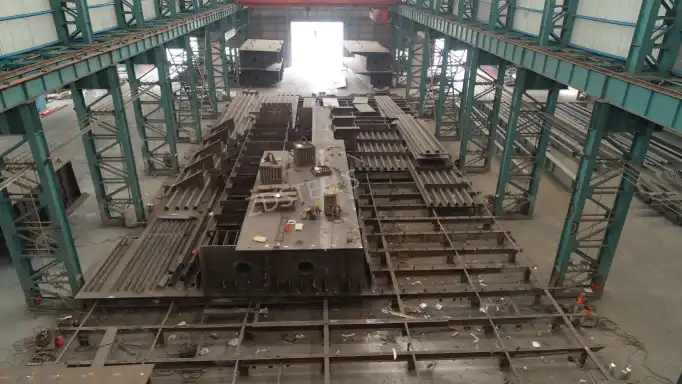
When curved Steel Box Girder pieces are being put together, they need to be carefully aligned. Zhongda's prefabricated units are made in factory segments that are 12–30 m long and have match-cast geometry to make them easier to put together in the field. Launching gantry, crane-lift, and incremental launching methods can all be used with the modular design. This gives contractors more options for setting up on tight urban sites.
Anti-Corrosion and Inspection Protocols
Zhongda uses two types of anti-corrosion systems: hot-dip galvanizing and multi-layer thermal spray treatment. These systems are designed to give products at least 30 years of service life, even in areas with high corrosion levels (C5-M). Our -60°C Weathering Steel Anti-corrosion Technology makes this possible in both cold and seaside environments. A structured routine should be used for periodic inspections: visual and ultrasonic weld inspections should happen every 5 years, coating integrity should be checked once a year, and diaphragm/stiffener checks should be done after any major earthquake or impact. Lifecycle costs can be predicted with proactive maintenance protocols, and structural ratings are kept the same for the whole design life.
Conclusion
Curved urban flyovers need a structural solution that balances physical complexity, torsional load requirements, speed of building, and longevity over time. The Steel Box Girder meets all four goals with a single, tried-and-true system. It is the best choice for workers who buy infrastructure because it is made of high-strength Q345D and Q420D steel, has a cross-section geometry that can range from 1.25 m to 8 m, and can be prefabricated in the plant, which cuts time spent on-site by half. Steel Box Girder solutions from Zhongda are made to work for the whole lifetime of any curved urban flyover. They come with widely known certifications and a 70% client renewal rate.
FAQ
How does a curved box girder handle seismic forces in urban environments?
The closed hollow section naturally spreads seismic loads across all four plates of the cross-section, so there aren't any stress points that form in open profiles. Zhongda's designs include the AASHTO seismic performance zone standards and BIM-based analysis, which ensures that the structures are controlledly flexible and strong during earthquakes.
What factors affect lead times for custom curved girder orders?
The lead time is based on the complexity of the cross-section, the total weight, the coating requirements, and the logistics of the destination. When compared to non-integrated suppliers, Zhongda's vertically integrated production cuts project lead times by 20–30%. This includes everything from BIM design to automated welding and corrosion treatment.
Are steel box girders a sustainable choice for infrastructure projects?
Over 85% of structural steel is recycled around the world (World Steel Association, 2023), making it one of the most reusable building products. When Steel Box Girder steel reaches the end of its useful life, it still has a high scrap value and can be used again in the production cycle. This supports the circular economy, which is becoming more and more important in public infrastructure procurement frameworks.
Partner with Zhongda for Your Next Curved Flyover Project
Zhongda is a trusted Steel Box Girder manufacturer with over two decades of proven delivery on complex infrastructure projects worldwide. Our engineering team is ready to look over your curved flyover specs, help you find the best girder geometry, and give you a full plan for building it. Reach out today at Ava@zd-steels.com or visit zd-steels.com to request a consultation and take the next step toward a structurally superior, on-schedule project outcome.
References
1. American Association of State Highway and Transportation Officials (AASHTO). LRFD Bridge Design Specifications, 9th Edition. AASHTO, 2020.
2. American Welding Society. AWS D1.5: Bridge Welding Code. AWS, 2020.
3. Nakai, H., & Yoo, C. H. Analysis and Design of Curved Steel Bridges. McGraw-Hill, 1988.
4. Linzell, D. G., & Nadakuditi, V. P. "Parameters Influencing Curved, Horizontally Curved Steel Bridge Cross-Frame Forces." Journal of Constructional Steel Research, Elsevier, 2011.
5. Fan, Z., & Helwig, T. A. "Behavior of Steel Box Girders with Top Flange Bracing." Journal of Structural Engineering, ASCE, 1999.
6. World Steel Association. Steel's Contribution to a Low Carbon Future and Climate Resilient Societies. World Steel Association, 2023.
YOU MAY LIKE