Advantages of I-Shaped Girders in Steel Bridge Design
2026-04-01 16:31:31






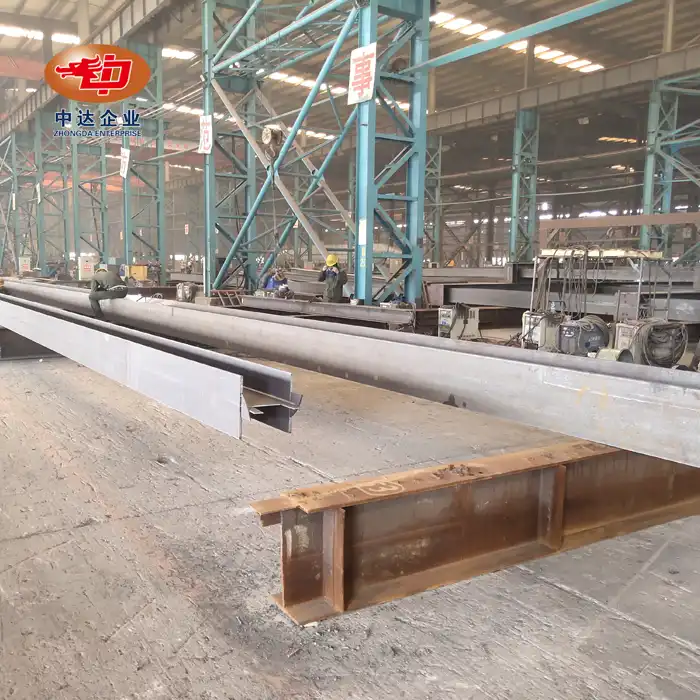
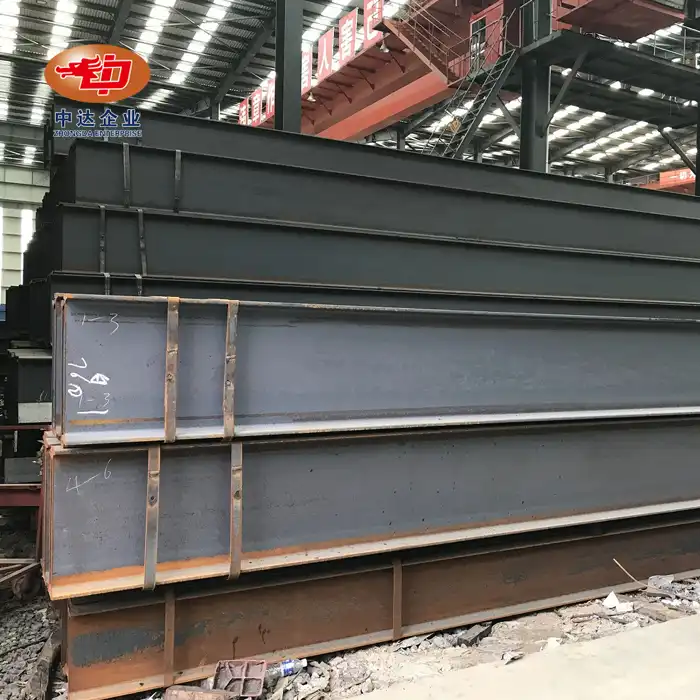
In current steel bridge building, I-shaped girders are the most important part. They offer the best combination of structural efficiency and engineering flexibility. These important parts have two horizontal flanges linked by a central vertical web. This makes the best shape that improves load-bearing capacity while using the least amount of material. Because i-shaped girders are stronger than other types, they are used for a wide range of building projects around the world, from overpasses over highways to large suspension bridges that span large bodies of water.
Understanding I-Shaped Girders in Bridge Engineering
Structural Composition and Design Fundamentals
I-shaped girders are made up of two horizontal plates that are joined together by a vertical web. This makes a slim design that is perfect for load-bearing uses. This arrangement makes the best use of the material by focusing the steel mass at the edges, where bending forces are highest. The flanges stop tension and compressive forces, and the web stops shear forces and keeps the structure stable against horizontal bowing.
Engineering Standards and Load Distribution Principles
The i-shaped girder design improves strength-to-weight ratios more than other shapes like T-shaped or box girders by placing materials more efficiently. Key design concepts focus on making the moment of inertia as big as possible while keeping the assembly as simple as possible. International engineering standards, like the AASHTO LRFD Bridge Design Specifications and Eurocodes, make sure that structures stay strong in a wide range of weather situations.
Technical Specifications for Bridge Applications
When procurement workers understand these basics, they can critically look at girder specs. With simple setups, modern i-shaped girders can support spans from 30 to 150 feet. Continuous spans can go much further. The web depth is usually between 24 and 72 inches, and the flange measurements change based on the load needs and deflection standards.


Comparative Analysis: I-Shaped Girder vs. Other Girder Types
Performance Against Box Girders
I-shaped girders are much easier to make and cost less to make than box girders. Box girders are great at resisting twisting and can span longer distances, but they need complicated internal entry for upkeep and inspection. The open design of I-shaped girders makes regular repair tasks easier to access, which lowers the overall cost of ownership by a large amount.
Advantages Over T-Shaped and H-Shaped Alternatives
In terms of how the load is distributed, i-shaped configurations are better than T-shaped and H-shaped girders. T-shaped girders work well in composite building, but they can't handle uniform loads. When it comes to columns, H-shaped girders work great, but when it comes to bending, improved I-shaped shapes are better.
Steel vs. Concrete and Other Mixed Materials
In many ways, steel i-shaped girders are better than their concrete and composite cousins. With premade steel components, construction goes much faster, and the lighter weight makes base requirements easier. Steel's ability to be recycled makes it less harmful to the environment, and its ability to be used for different bridge lengths gives designers more freedom than with other materials.
Advantages of I-Shaped Girders in Steel Bridge Design
Superior Load Capacity and Structural Performance
Thanks to their amazing strength-to-weight ratio, I-shaped girders can hold a lot of weight and support long-span bridges very efficiently. By concentrating material where the structure needs it most, the optimized cross-sectional shape achieves the highest bending strength with the least amount of steel weight. This efficiency directly leads to lower costs and better structure performance in a wide range of pressure situations.
I-shaped girders are essential for building modern bridges because they have these main structural benefits:
- When the wide flanges are placed as far away from the neutral axis as possible, they make the best bending moment capacity. This lets the lengths be longer with less deflection.
- Easy shear handling: The vertical web design offers great shear protection while keeping costs low and making the product simple.
- No fatigue: smooth stress changes between flanges and web reduce stress buildsup, which increases service life in repeated loading situations.
- Load path clarity: Direct force transfer through clearly outlined structural parts makes analysis easier and makes sure that performance is reliable.
These structure benefits work together to make bridges that perform better than expected and stay cost-effective for as long as they are used.
Cost-Effective Fabrication and Installation Benefits
Streamlining the manufacturing process and standardizing the installation process lead to increased production and lower project costs. Using automatic cutting and welding tools, modern steel fabrication shops can make i-shaped girders with great accuracy. This makes manufacturing more efficient, which leads to lower prices and more predictable delivery times that are necessary for big building projects.
Installation benefits include fewer cranes needed and easier steps for setting up. Because steel I-shaped girders aren't as heavy as concrete options, they cut down on the need for heavy tools and speed up the building process. Delays caused by bad weather are much less common because steel is still being put up when concrete work would have to stop.
Customization and Design Adaptability
I-shaped girders are very useful for complicated bridge designs that are part of global building projects because they can be customized. Changeable depth configurations allow for different moment needs along bridge spans, making the best use of materials and improving the economy of the structure. When loads are concentrated near supports, haunched sections offer better bending strength, and constant depth spans make construction and installation easier.
Using unique shapes that meet both structural and aesthetic needs makes architectural integration possible. Special coatings and weathering steel choices make things last longer in tough conditions, like on seaside bridges that are exposed to salt water or on industrial crossings that deal with chemical atmospheres.
Procurement Considerations for I-Shaped Girders
Sourcing from Reputable International Manufacturers
Getting girders from known foreign makers that meet strict quality standards and offer certified products with warranties is key to a successful procurement process. Established providers have complete quality control systems that include being able to track down materials, making sure that welding procedures are safe, and making sure that dimensional limits are checked by a third party. These approvals make sure that the project's requirements are met and greatly lower the risks of buying.
Customization and Technical Requirements Alignment
Customized manufacturing lets you precisely match the structure with the technical needs of your project, taking into account things like span configurations, load conditions, and environmental factors. Building Information Modeling (BIM) technology is used by advanced makers to improve frame designs before they are made. This gets rid of problems in the field and speeds up the installation process.
Logistics Planning and Bulk Ordering Strategies
Ordering in bulk can save you a lot of money on prices and make sure that the quality of all of your tasks is the same. Logistics planning is very important for making sure that deliveries happen on time and that building schedules are followed smoothly. This is especially true for foreign clients who are in charge of large-scale infrastructure projects. Coordinated shipping plans cut down on the amount of space needed for storage and the cost of moving things around on building sites.
Best Practices for Selecting I-Shaped Girders in Steel Bridge Projects
Material Grade and Quality Verification
To make sure that the I-shaped girders they choose meet strict engineering requirements, procurement managers should put factors like material grade, measurement accuracy, and the reputation of the maker at the top of their lists. Some types of high-strength steel, like ASTM A709 Grade 50, can hold more weight while still meeting the standards for toughness and weldability. Mill test certificates and inspection records from a third party make sure that the chemical makeup and properties of the material are correct.
Compliance with Technical Specifications
To avoid structural fails and cost overruns, it is still important to make sure that technical specs and industry standards are being followed. Reviewing the manufacturing drawings, welding processes, and quality control plans in great detail makes sure that they are in line with the needs of the project. In the AISC Code of Standard Practice, the allowed levels of manufacturing quality are set by the dimension tolerances.
Supplier Support and Maintenance Services
Long-term success depends on working with suppliers that offer full support and upkeep services after the sale. This makes sure that the structure continues to work well and that the lifecycle costs are kept as low as possible. Having technical support during the installation process can help with problems in the field and with coordinating work. Maintenance suggestions and check schedules make things last longer while keeping the structure's integrity.
Conclusion
I-shaped girders are still the best way to build a steel bridge because they are more structurally efficient, easier to make, and have been shown to last for a long time. They are the best choice for building projects that need reliable, cost-effective solutions because they have the best mix of strength, weight, and ease of construction. Their ability to adapt to different span designs and environmental conditions means that they will continue to be useful as bridge building practices change. Standardized manufacturing methods also keep prices low and delivery reliable.
FAQ
What factors influence the cost of I-shaped girders?
Pricing is heavily affected by the type of material, the size of the frame, how difficult it is to make, and the number of items ordered. High-strength steel types cost more, but they can be used for longer lengths with less weight. Custom configurations cost more to make than normal profiles, but you can usually get big savings when you order in bulk.
How do I-shaped girders compare in load capacity to alternative girder types?
Due to their optimized moment of inertia, I-shaped girders are great for bending uses and often perform better than similar weight box girders in simple span circumstances. While box girders are better at handling torsional loads, i-shaped designs are better for most bridge uses because they are easier to reach and maintain.
Can I-shaped girders be customized for specialized bridge designs?
Modern manufacturing techniques allow for a lot of personalization, such as different depth parts, haunched shapes, and unique connection details. Cutting and welding machines that are computer-controlled help advanced makers make complicated shapes while keeping quality standards and dimensions accurate.
Partner with Zhongda for Premium I-Shaped Girder Solutions
With ISO 9001, 14001, and OHSAS 45001 certificates and cutting-edge BIM-driven fabrication methods, Zhongda Steel makes I-shaped girders that are among the best in the world. Our plant, which can hold 60,000 tons per year, makes precision-engineered girders with a cutting accuracy of 0.2 mm, backed by tried-and-true -60°C weathered steel anti-corrosion technology. Our expert team will make sure you get what you need on time and to the highest standard, whether you need standard setups or custom solutions. Talk to our technical experts about your project needs at Ava@zd-steels.com and find out why top builders around the world trust Zhongda as their i-shaped girder provider.
References
Chen, W.F. and Duan, L. "Bridge Engineering Handbook: Construction and Maintenance." CRC Press, 2014.
American Association of State Highway and Transportation Officials. "AASHTO LRFD Bridge Design Specifications." 9th Edition, 2020.
Barker, R.M. and Puckett, J.A. "Design of Highway Bridges: An LRFD Approach." John Wiley & Sons, 2013.
Troitsky, M.S. "Planning and Design of Bridges." John Wiley & Sons, 1994.
Xanthakos, P.P. "Theory and Design of Bridges." John Wiley & Sons, 1994.
Tonias, D.E. and Zhao, J.J. "Bridge Engineering: Design, Rehabilitation, and Maintenance of Modern Highway Bridges." McGraw-Hill Education, 2012.
YOU MAY LIKE

_副本_1754289134653.jpg "Prefabricated Steel Structure Exhibition Hall")