Designer's Guide to Steel Box Girder Bridges
2026-04-20 08:39:14






It is important to know the basics of steel box girder bridge technology when planning big building projects. Combining hollow box-shaped steel pieces in these structures is a beautiful way to solve engineering problems. They make bridges that are stronger and can hold more weight. The closed structure is better than standard open-section beams because it resists twisting forces better and keeps the strength-to-weight ratio good. This way of thinking about design solves three major problems: unstable bending in bent lines, problems with airflow over long spans, and limited depth in crowded cities. As a qualified provider with 20 years of experience in fabrication, we know that technical merit and long-term dependability are both important factors in buying choices.
Understanding Steel Box Girder Bridges: Design Principles and Functionality
As bridge engineering has grown, it has always tried to make structures as efficient as possible. Modern box girder designs came about because they had to be able to span longer distances and handle more complicated loads. The hollow box section spreads pressures more widely than regular I-beams, which makes it perfect for projects that need to be stable both vertically and laterally.
Historical Evolution and Modern Applications
In the late 20th century, development required longer lengths with less visual effect, which led to big changes in how bridges were built. High-strength steel types like ASTM A709 Grade 50W have made it possible for engineers to cut down on the size of members without lowering safety standards. Building Information Modeling (BIM) is used in the planning part of today's manufacturing processes, which allows for exact fabrication tolerances that make sure things fit together perfectly in the field. For cable clamp positioning, our plant in the Shenyang Economic-Technological Development Zone uses 3D laser scanning with an accuracy of ±2mm. This shows how traditional ideas about structures can now include digital proof methods.


Key Design Principles Affecting Performance
The way that traffic loads, wind forces, and thermal pressures move through the framework is controlled by load distribution mechanics. The rotational constant of the closed box section is several hundred times higher than that of the open shapes. This means that there is no need for external cross-bracing. Material optimization is all about putting extra-thick plates in high-stress areas in a smart way. Our CNC machines can cut plates that are more than 100 mm thick with a range of ±0.2 mm. Stability depends on carefully calculating the web spacing and flange proportions. Single-cell designs work for spans less than 30 meters, while multi-cell designs can handle lengths more than 40 meters. These technology choices have a direct effect on how easy it is to build and how long it will last.
Single-Cell Versus Multi-Cell Design Configurations
To choose between these choices, you need to look at the bridge's width, span length, and the expected traffic trends. Single-cell boxes are easier to make and less complicated to join, which makes them a good choice for buildings that aren't too wide. Concentrated loads are spread out better across bigger decks in multi-cell setups, but they need more internal webs and more complex quality control. Our engineering team uses finite element analysis to look at real load distribution and come up with the best cell design for each job.
Common Engineering Challenges and Solutions
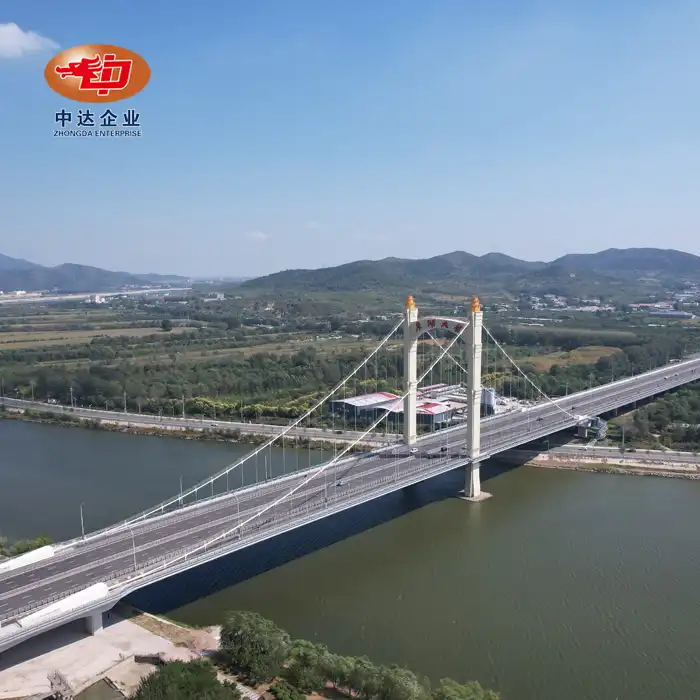
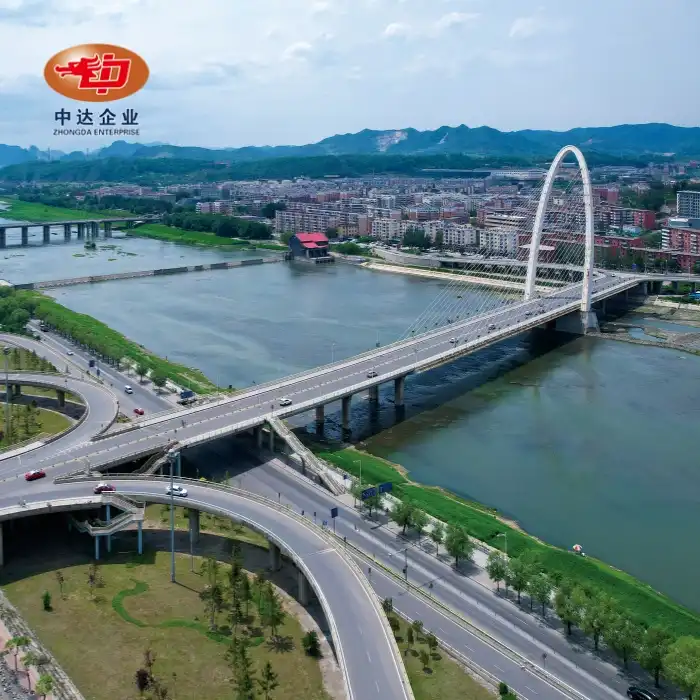
Cracks from fatigue are still a big problem at orthotropic deck joints in a steel box girder bridge, especially where longitudinal ribs meet transverse floor beams. To fix this, we use full-penetration welding that is checked by ultrasonic testing that meets AWS D1.5 standards. Proactive steps are needed to stop corrosion in the sealed box environment. Our dehumidification systems keep the relative humidity inside below 40%, and S-type wire wrapping tape is used for extra protection. When spans are longer than 400 meters, aerodynamic instability becomes very important. Sleek trapezoidal shapes lower wind drag coefficients and stop fluttering. We came up with these ideas after working on many projects, such as the Shenyang Dongta Cross-Hunhe River Bridge, which required us to carefully assemble 18,000 tons of structural steel.
Advantages and Applications of Steel Box Girder Bridges
When you compare structure systems, you can see why steel box girder bridges are so popular in some market groups. The main benefit is that they can handle rotational loads that would be too much for other types. When cities and towns plan urban interchanges with tight curve radii, the closed section's ability to fight tipping moments is a must. Because it is technically better, it can be used for a wider range of infrastructure needs.
Comparative Advantages Over Alternative Bridge Types
Compared to concrete box girders, steel versions weigh about one-fifth as much. This means that they require much less base and seismic mass. This edge in weight speeds up the building process; using Accelerated Bridge Construction (ABC) methods, prefabricated pieces up to 12 meters long can be moved and put in place with little trouble to traffic. Box girders look better than steel truss designs because there is no obvious external bracing. This is good for architects who work in sensitive urban settings. When maintenance access and the ability to make changes later are taken into account over a 75-year service time, lifecycle cost analysis always favors steel options. Our weathering steel choices make corrosion protection even better, so you don't have to paint them over and over again in moderate exposure settings.
Real-World Case Studies From Transportation Infrastructure
Highway projects show how these design choices work in real life. The Jingha Expressway Expansion used several box girder pieces that were made in our plant. This cut the time it took to build by 25% compared to options that used cast-in-place concrete. To keep the shape of the track, railway bridges need to have strict deflection limits. The high stiffness-to-weight ratio of steel sections meets these needs and also allows for electrical systems to be installed in covered cable tunnels. International partnerships, like providing parts for Australia's mining infrastructure, show that normal manufacturing methods can work in a wide range of temperatures, from humid warm areas to dry deserts.
Industrial and Commercial Sector Applications
Box girder technology is used for more than just regular traffic lines. It is also used in industries for specific tasks. Heavy-duty crane runways that can handle 50-ton lifting tools are needed at ports. As structural experts, we know how to incorporate these practical loads into bridge frameworks. Rapid-deployment modular spans are helpful for energy projects, especially wind farm entry roads that go through rough terrain. They cause less damage to the environment. The enclosed box makes it safe for utility lines to run through, which makes these buildings perfect for infrastructure routes that serve logistics hubs and delivery centers.
Sustainability and Lifecycle Considerations
Steel is an environmentally friendly choice because it can be recycled. When compared to concrete demolition trash, steel buildings still have 95% of their scrap value. Embedded carbon is cut by 18% at our plant by making manufacturing more efficient. This is done by using optimized nesting methods that waste as little raw material as possible. Being able to strengthen and adapt existing steel bridges makes them last longer without having to be replaced completely. This is in line with circular economy principles that are being required more and more by government buying policies. Our ISO 14001:2015 certification shows that we are dedicated to managing the environment during the whole production process. This makes sure that we meet the changing standards for sustainability.
Steel Box Girder Bridge Construction and Maintenance Process
For a steel box girder bridge project to be completed successfully, there must be strict process control from the beginning of planning to decades of operating service. Each step of the manufacturing process has to follow size guidelines that make sure everything fits correctly when it's put together in the field. Our 120,000-square-meter building coordinates these tasks with the accuracy needed for major infrastructure.
Fabrication Protocols and Quality Assurance
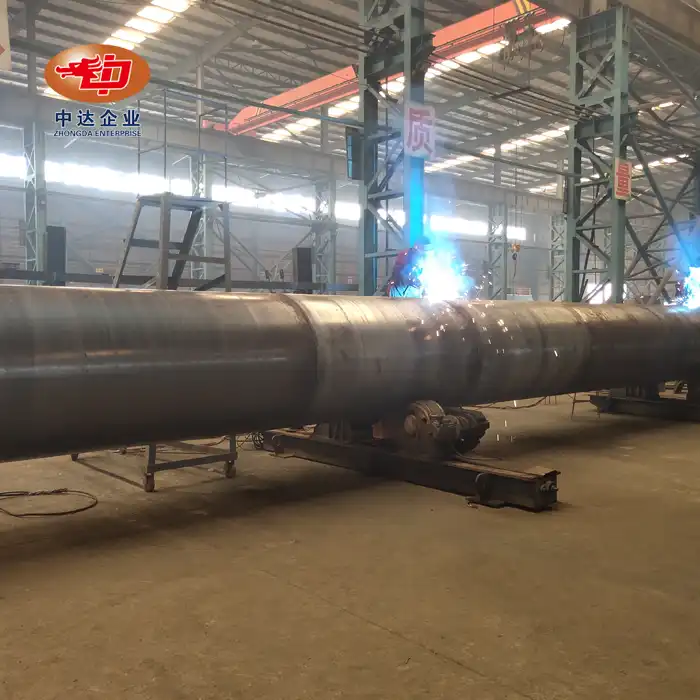
The first step in making a component is getting materials that are approved to meet the FHWA-NHI-07-096 standards. This makes sure that the main cable parts have a tensile strength of at least 1770 MPa. Plasma and oxy-fuel systems are used in CNC cutting operations to handle plates up to 150 mm thick and keep the edges straight within 2 mm over 12 meter lengths. During tack welding, assembly clamps keep web plates straight on the flanges. This stops angle distortions that would weaken the structure. Welding processes are qualified by tests based on EN 1090 standards, and all welders keep their AWS licenses up to date. Some non-destructive testing methods are 100% volumetric ultrasound inspection of butt welds and magnetic particle inspection of important fillet joints.
Standardized work units and continuous flow manufacturing have helped us become more efficient, as shown by our ability to make 802 tons of 12-meter box girder pieces every month. For surface treatment, zinc-rich epoxy primers are put on in controlled settings to get a dry film thickness of 125 to 200 microns. With these quality control measures, we were able to get ISO 9001:2015 approval and keep 70% of our clients by always keeping our delivery promises.
On-Site Assembly Techniques and Safety Protocols
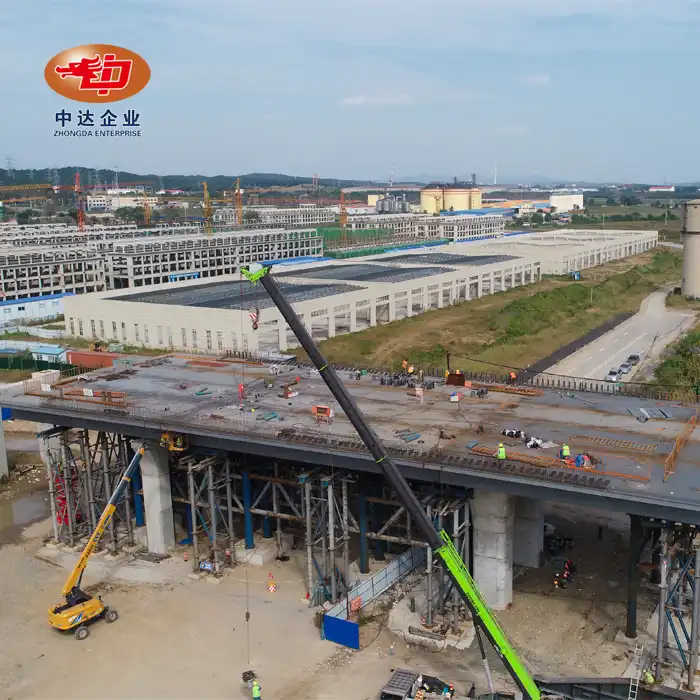
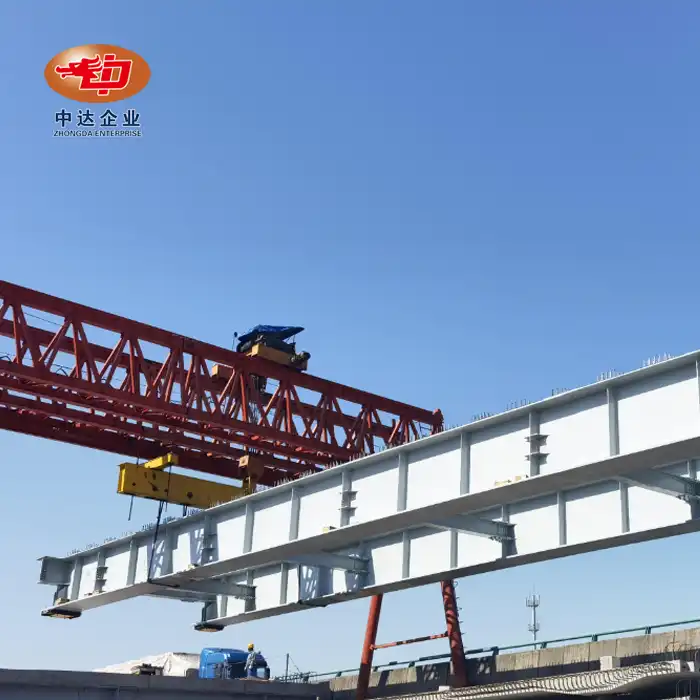
Approaches to field construction depend on how easy it is to get to the spot and any environmental restrictions. Incremental launching is best for projects with many similar spans because it moves finished parts over temporary supports using hydraulic jacks. Heavy-lift cranes place pre-assembled pieces in cable-stayed shapes, which needs to be coordinated with rigging experts who are licensed to work with parts weighing more than 80 tons. Bolted splice connections make assembly go quickly and allow changes to be made in the field. Our 3-axis drilling tools make sure that the alignment of the bolt holes is accurate to within 1 mm. Safety planning includes steps for entering a tight area for welding work inside, and all projects must have continuous air monitoring and emergency recovery systems. Working on big, complicated projects with China Railway and CSCEC has made these procedures the best in the business.
Maintenance Requirements and Inspection Regimes
Systematic review programs are needed to keep steel box girder bridge structures working well over many years. Every two years, checks look at important details that are likely to wear out using visual methods plus dye penetrant tests when available. Permanent lighting and ventilation systems are installed inside box areas to make it easier to look closely at objects that are hidden. Coating condition surveys check how thick the leftover film is and find spots that need to be touched up before the steel underneath is exposed. Our maintenance guidance papers tell you how to clear the drainage ports and how often to change the filters in your dehumidification system. This keeps moisture from building up, which speeds up corrosion. Fiber-optic strain monitors are now built into more advanced tracking systems. This allows for real-time monitoring of structural health that can predict when repair is needed before damage becomes obvious on a steel box girder bridge.
Market Comparison and Procurement Guidance for Steel Box Girder Bridges
When choosing a provider, you have to look at both their professional and financial terms. A person in charge of procurement has to weigh up the initial costs against the long-term value of the item while also making sure that the skills of the vendors meet the needs of the project.
Cost-Performance Analysis Across Bridge Typologies
To make a budget, you need to know how the costs of materials, the difficulty of the construction, and the installation methods affect each other. Even though the price per ton for fabricated steel is higher than the unit rate for concrete, the total cost of the job is often cheaper because of shorter plans and lower foundation costs. Customization fees depend a lot on how complicated the design is. For example, normal cross-sections from well-known templates require the least amount of engineering work, but unique geometric needs require more research money. Lifecycle value estimates need to take into account how easy it is to check, how long the coating will last, and how much it could be widened or strengthened in the future. When clients compare options, our clear price system helps them do so based on similar technical factors rather than separate unit costs.
Criteria for Selecting Qualified Manufacturers
A supplier's certification collection shows how committed they are to quality processes. When structural steelwork is put together, EN 1090 approval makes sure that the methods used meet European technical standards. AWS approval proves quality control in welding, which is important for joints that are sensitive to fatigue. Track records on similar projects show that the company has dealt with problems like super-long spans over 500 meters or 12-level wind resistance standards in the real world. Fabrication features, such as the thickest plate that can be used, heat treatment facilities, and sample assembly space, directly affect what designs a maker can safely make for a steel box girder bridge.
Ordering and Bidding Process Considerations
For procurement to go well, there must be clear, thorough technical specs that spell out what the expected performance is rather than just telling people what to do. When compared to standard design-bid-build methods, design-build delivery models often save 15-20% on costs by letting producers improve constructability during engineering development. When negotiating a contract, the parties should talk about who is responsible for transportation, who will provide help in the field, and the terms of the warranty for both supplies and work. Digital platforms make it easier to keep track of parts and share paperwork, which is especially helpful for projects with multiple stages that need planned supplies. As part of our OEM and ODM services, we offer full project lifecycle support, from initial design advice to building help and inspections after installation.
Conclusion
When choosing the right steel box girder bridge systems for a key project, you have to balance technical needs, price limits, and long-term operational concerns. Steel box girder designs offer unmatched torsional performance, faster building timelines, and the ability to be used in a wide range of situations, from industrial routes to urban interchanges. Understanding the quality standards for manufacturing, the rules for upkeep, and new technologies helps procurement pros make choices that are in line with the organization's goals. As the needs for infrastructure change to include longer spans, faster delivery, and less damage to the environment, these building solutions keep getting better through new materials and digital production techniques. The information in this guide gives you the confidence to work with suppliers and get good results from your projects.
FAQ
What factors most critically affect design decisions?
Initial size is based on the needed load capacity, and improved finite element models are used to look at how the live load is distributed. Choosing the right material means weighing up the original costs against the need for corrosion protection. For example, weathering steel works well in mild settings, but sea exposures require stronger coating systems. Span-to-depth ratios are usually between 18:1 and 25:1, depending on how much the beam can bend and how the person wants it to look. After 400 meters, aerodynamic stability is very important, so cross-sectional shapes need to be tested in a wind lab to make sure they are correct.
How do costs compare between steel and concrete alternatives?
Concrete is cheaper per cubic meter than steel, but steel is lighter, which cuts foundation costs by 20–35% and speeds up building plans by 30–40%. Total lifetime costs rely a lot on how easy it is to get to the spot for upkeep. Over 75 years of service, steel's ability to be inspected and retrofitted makes up for its higher starting costs. When looking at costs, steel options are often the best choice because they are strong and can withstand earthquakes.
How can buyers identify reputable suppliers?
Quality management systems are checked by a variety of certifications, such as ISO 9001, EN 1090, and AWS credentials for a steel box girder bridge. Look at the size and complexity of past projects to see if they fit your needs. Experience over a very long period of time shows that you have advanced technical skills. Ask for factory checks to find out how much equipment can hold, especially how much a heavy-lift crane can lift and how thick a plate can be. Our ability to fabricate 60,000 tons of steel every year and our track record of 60 major projects show that we have the operating scale needed for tough infrastructure programs.
Partner With Zhongda for Your Next Steel Box Girder Bridge Project
Zhongda offers precisely designed structure solutions and has been making high-quality products for 20 years. The steel box girder bridge systems we offer can span up to 2000 meters and can withstand 12 levels of wind. They are held up by main wires that can withstand 1770 MPa of tension. As a qualified maker of steel box girder bridges with ISO 9001/14001/45001 and EN 1090 certifications, we use advanced CNC technology to keep the cutting accuracy within ±0.2mm across very thick plates. Our 120,000-square-meter factory makes 802 tons of 12-meter girder pieces every month, making sure that key path dates are met. You can talk to our engineering team about your project requirements by emailing Ava@zd-steels.com, or you can visit zd-steels.com to learn more about all the things we can do. Together, we can make your idea for infrastructure a reality through careful planning, strict quality control, and dependable execution.
References
Chen, B. and Wang, T. (2019). Steel Box Girder Bridges: Design and Construction. Transportation Engineering Press.
American Association of State Highway and Transportation Officials (2020). AASHTO LRFD Bridge Design Specifications, 9th Edition. Washington, D.C.
Troitsky, M.S. (2018). Orthotropic Bridges: Theory and Design, Second Edition. James F. Lincoln Arc Welding Foundation.
European Committee for Standardization (2021). Eurocode 3: Design of Steel Structures - Part 2: Steel Bridges. Brussels, Belgium.
Xiang, H. and Liu, G. (2020). "Fatigue Performance of Welded Connections in Steel Box Girder Bridges." Journal of Bridge Engineering, Vol. 25, No. 8.
Federal Highway Administration (2018). Steel Bridge Design Handbook: Box Girder Bridges. U.S. Department of Transportation, Publication No. FHWA-HIF-16-002.
YOU MAY LIKE