Some Analyzes on Box Girders Bridges
2026-05-08 11:20:32






The steel box girder bridge stands out as a highly advanced large-scale infrastructure option that offers exceptional torsional stiffness and span capabilities. These hollow, tube structures are very useful in situations where traffic needs to be kept to a minimum, like at curved highway interchanges, long-span bridges, and during quick building. Modern box girder designs offer better resistance to twisting forces thanks to their closed-section geometry and high-grade metals. They also look better and require less upkeep in a wide range of weather conditions.
Understanding Steel Box Girder Bridges
Structural Fundamentals and Configuration Types
A steel box girder bridge has hollow cross-sections that are either rectangular or trapezoidal. The top and bottom sides are linked by webs that are either straight up and down or slanted. When compared to open I-beam shapes, which are best at bending vertically, the closed form has much higher torsional stiffness—often hundreds of times higher per unit weight. Because of this geometric benefit, these structures are necessary for curved lines where eccentric loading causes large bending moments.
There are single-cell and multi-cell types in the structure pattern. Single-cell designs work well for shorter spans and smaller traffic loads because they make it easier to make things and check them. Multi-cell configurations spread loads out more widely over bigger decks, making them better for heavy freight corridors or train uses where stress concentration in one area must be kept to a minimum. Within each group, engineers choose either hybrid designs that use steel girders and concrete decks or fully orthotropic steel deck systems that have longitudinal ribs attached to the top flange and directly carry wheel loads.
For jobs in North America, material standards usually call for ASTM A709 Grade 50W or Grade HPS 70W, which have yield strengths of 345 to 485 MPa. In Europe, EN 10025 S355 or S460 grades are used, while in Asia, GB/T Q345qD or Q420qD weathering steels are more popular. Copper, chromium, and nickel are used in these high-performance metals to create protective oxide layers that stop further corrosion without the need for standard paint systems. This is a huge benefit in naval or industrial settings where accessing parts for upkeep is difficult.


Core Design Principles and Load Analysis
The strength of a structure depends on how well the dead loads, live loads, wind forces, earthquake activity, and temperature-induced stress cycles are analyzed. The closed box section avoids twisting by shear flow around the edges, which is a better way to do it than open parts that rely on warping restraint. Engineers can use finite element modeling tools like MIDAS Civil or SAP2000 to test complicated load combinations and check that they are in line with Eurocode 3 Part 1–5 or the AASHTO LRFD Bridge Design Specifications.
When spans are longer than 200 meters, aerodynamic stability becomes very important. The smooth trapezoidal shape reduces drag and stops vortex-induced vibrations that were a problem with early suspension bridge designs. Wind tunnel testing confirms flutter stability margins and makes sure structures can handle 12-level wind resistance. Zhongda regularly meets this requirement by optimizing computational fluid dynamics and validating physical prototypes. Our projects use major cable systems that use PPWS (Parallel Wire Strand) technology and 5.2 mm wires that have a tensile strength of 1770 MPa. These systems can hold very long spans (300 to 2000 meters) when traditional girder systems are too expensive.
Applications Across Infrastructure Sectors
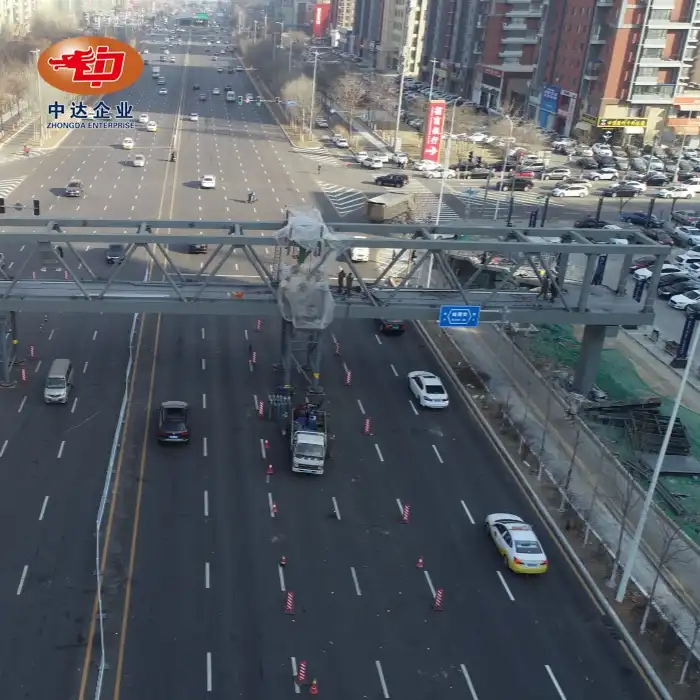
The most usual use is for curved urban interchanges, where horizontal alignment circles drop below 300 meters. Traditional I-girder systems would need a lot of cross-bracing, which would make the deck formwork harder to do and raise the cost of production. Because box sections can naturally bend in two directions, they don't need any extra support and the structure still looks beautiful. Government contractors who work on busy urban areas like how prefabricated pieces keep lanes from having to be closed. Zhongda improves this service by using modular building methods to send 802 tons of precisely manufactured parts every month.
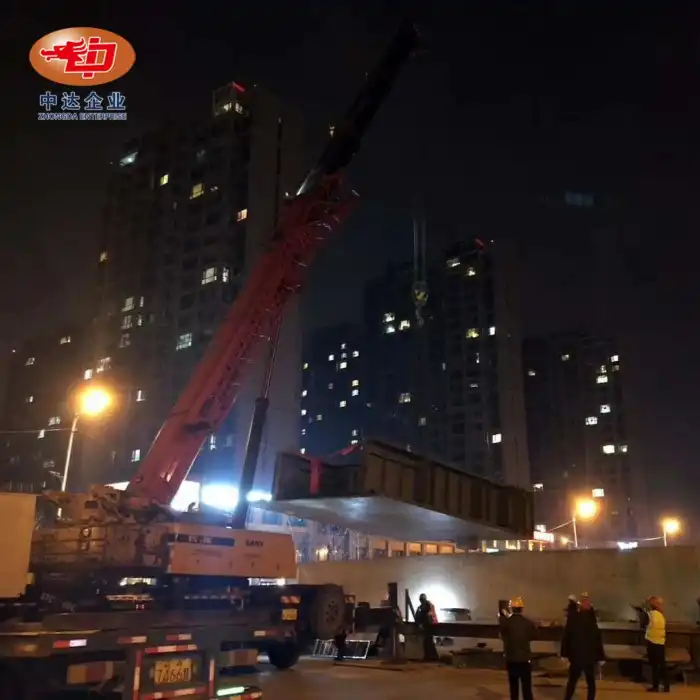
Long-span cable-stayed and suspension bridge decks need light stiffening steel box girder bridge to keep the base and earthquake mass loads as low as possible. Steel options are about one-fifth the weight of similar concrete box girders, which makes them much cheaper and speeds up the building process. Marine ports gain a lot from fast building methods where big pieces are brought in by barge and lifted into place during small windows of good weather. -60°C Weathering Steel Anti-corrosion Technology is used in our projects in the harsh Arctic. This technology makes sure that structures are reliable in places where standard protection coatings fail when temperatures change.
A steel box girder bridge meets the strict bending and shaking requirements of railway bridges by having the right depth-to-span ratios. Using steel box girders and ballasted concrete decks together in a composite structure reduces noise transfer and evenly distributes dynamic loads. Mining infrastructure needs to be just as strong. For example, platforms for heavy equipment and conveyors need frames that don't rust and can hold a lot of weight. Zhongda's history of sending parts to mining sites in Australia shows that we can come up with solutions that meet the unique environmental and operating needs of the mining industry.
Construction and Maintenance of Steel Box Girder Bridges
Modern Fabrication and Assembly Techniques
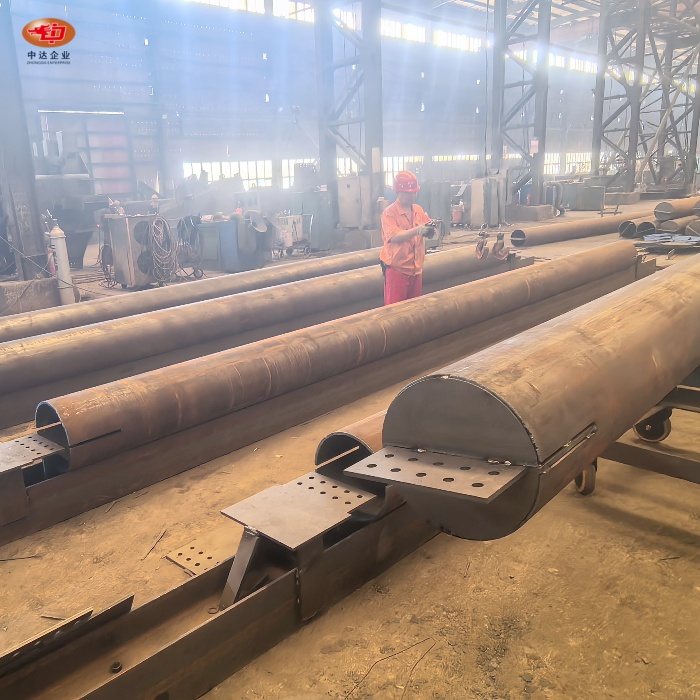
Advanced production starts with prefabrication processes that are driven by BIM and combine CNC machining and 3D laser scanning. Zhongda's 120,000 m² plant has ultra-thick plate cutting tools that keep tolerances of ±0.2mm, which is very important when making pieces that need to be joined in the field. We use 3-axis drilling tools to make sure that the placement of the bolt holes is accurate to within ±2mm. This is checked by using 3D laser scanning technology to position the cable clamps. This level of accuracy gets rid of the need for expensive field changes and speeds up the assembly plans.
Getting the materials, CNC cutting, subassembly welding, full assembly, surface treatment, and a thorough quality check are all steps in the production process. Submerged arc welding (SAW) makes controlled horizontal lines, and gas metal arc welding (GMAW) finishes complicated joint shapes. Post-weld heat treatment removes any remaining stresses in thick parts, which keeps them from warping while they're being shipped. Before adding zinc-rich epoxy primers rated for C5 marine environments, the surface must be prepared according to the SSPC-SP10 standards for near-white blast cleaning. However, weathering steel choices don't need to be coated at all if the design of the drainage system keeps water from building up.
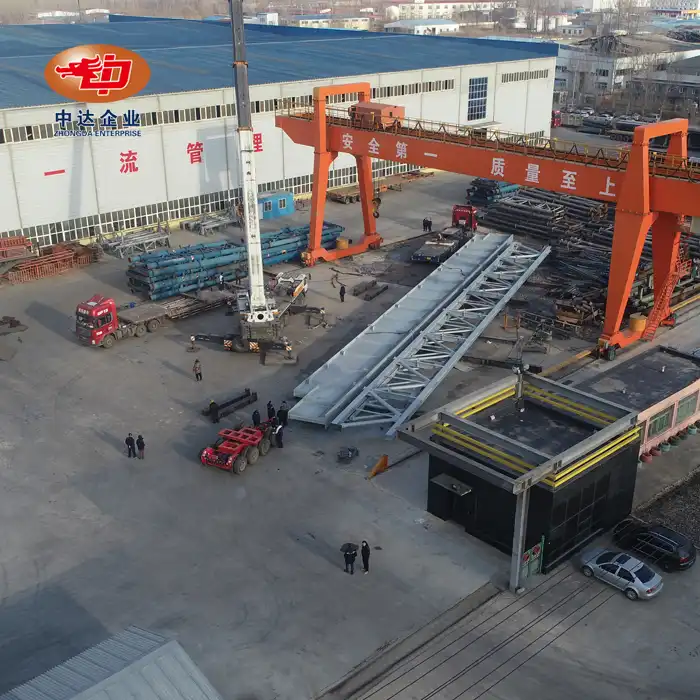
Before taking something apart for travel, trial assembly processes make sure that the dimensions are correct. To follow road transport rules, segments are usually 12 meters long, but longer units can be used with special heavy haul permits when highway openings allow it. When you ship something by barge, there are no length limits, so you can send the whole span to project areas along the water. Working with China Railway and CSCEC on projects like the 18,000-ton Shenyang Dongta Cross-Hunhe River Bridge shows how to coordinate logistics to handle deliveries in multiple segments along complicated urban routes.
Structural Defects and Compliance Standards
Weld porosity, imperfect fusion, lamellar tears, and geometric distortion are all common flaws in the manufacturing process. Ultrasonic testing, magnetic particle inspection, and radiography examination are all non-destructive testing methods that find flaws below the surface of parts before they leave the manufacturing yard. The ISO 9001:2015 quality control system at Zhongda requires that all butt welds be tested in volume and that fillet welds linking orthotropic deck ribs be sampled using macro etch. The acceptance standards are based on the AWS D1.5 Bridge Welding Code, which sets the maximum size of a flaw based on the expected fatigue category and stress range.
Compliance for a steel box girder bridge includes more than just manufacturing. It also includes tests for welder performance, material licenses, and standards for welding procedures. Our AWS (American Welding Society) qualified fabricator standing shows that we follow North American standards, and our EN 1090 certification shows that we meet the needs of the European market. When projects want to get U.S. government funds, they have to make sure they follow the FHWA-NHI-07-096 guidelines for designing, inspecting, and repairing cable-supported bridges. Zhongda keeps these credentials up to date through ongoing audits and training programs for staff.
When a composite deck is put together in the field, there are more quality issues to think about, such as checking the splice link torque, the fitting tolerances for the bearings, and the post-tensioning force. Before releasing pieces for deck placement, construction inspection checklists write down measures of camber, web plumbness, and flange level. Protecting the boxes from the weather while they are being put together keeps moisture from getting inside. This safety measure is strengthened by temporarily closing and using dehumidification equipment during long assembly processes.
Maintenance Protocols and Lifecycle Management
The AASHTO Manual for Bridge Evaluation lays out risk-based guidelines for how often routine checks should be done. Usually, eye inspections are required every two years, and hands-on exams are required every six years. The internal walkways that are built into box girders make it easier for inspectors to get to important features that are likely to wear out, like rib-to-deck welds and diaphragm connections. Permanent lighting and air systems keep the relative humidity inside below 40%. This stops electrolytic corrosion processes that would otherwise speed up in small areas.
Corrosion protection methods depend on the area they are in. Our dehumidification systems and S-type wire wrapping tape keep wetness out of cable anchorages and stays that connect them. Within 18 to 36 months, weathering steel surfaces form stable color layers, which means they don't need to be painted like treated steel does every 15 to 25 years. When protective coats are needed, current three-coat systems—a zinc-rich primer, an epoxy middlecoat, and a polyurethane topcoat—last for 25 years or more in harsh marine environments.
Long-term, fatigue cracking is still the main worry, especially at the ends of orthotropic deck ribs and cutout features. Once in a while, ultrasonic thickness surveys find sections that are missing because of weathering or localized rust. This allows for targeted fixes to be made before the structure's strength decreases. Some ways to fix old structures are to use crack arrest holes, bolted doubler plates, and composite patch treatments that fix load paths without closing lanes. Zhongda offers aftermarket support services such as site assessments, fix engineering, and the fabrication of new parts to make sure that clients can keep their assets working well for the full 75–100 year plan lives.
Comparative Analysis for Informed Procurement Decisions
Structural Advantages Against Alternative Bridge Types
Steel box girder bridge have different performance ranges when compared to plate girders, trusses, and concrete options. Plate girder systems with many parallel I-beams are cheaper for straight, short-span uses, but they need a lot of cross-bracing when the width or curve goes over small limits. Long spans with truss designs use less material, but the joints are more complicated and require more upkeep because there are so many places where things can go wrong. Concrete box girders last a long time and don't need much upkeep, but they have heavy dead loads—often five times heavier than steel equivalents—which means they need bigger supports and take longer to build.
Box girder stiffening trusses are used in cable-stayed bridges to handle dead load and cable stress well. The thin steel section cuts down on the approach span needed, and the closed shape provides the rotational stiffness needed for asymmetric cable setups. Similar ideas are used for suspension bridge decks, though aerodynamics play a big role in choosing the shape. Zhongda can support these historic crossings because we can build super-long spans up to 2000 meters long. The weight of the structures directly affects cable size, tower height, and the overall cost of the project.
When doing an economic study, you need to look at the total costs of owning, not just the cost of building the house. Steel box girders cost more per ton than concrete ones, but they can be put up faster, which cuts down on finance costs and fines for traffic delays. In marine settings where underground building is expensive, lower base loads save a lot of money. Lifecycle upkeep costs are lower for weathering steel types that don't need to be painted again, but the choice of coating method is still project-specific and depends on how the structure looks and how much it will be exposed to the elements.
Material Selection and Engineering Software Tools
There is a mix between strength, toughness, weldability, and corrosion protection in high-performance structural steels. Grade 50W weathering steel works well in most mild areas and forms a protected patina when it goes through normal wet-dry cycles. Grade HPS 70W has a higher yield strength, which lets you make shallower parts and longer spans, but the standards for the welding process need to be stricter. Zhongda's agreements with certified steel mills for material sourcing ensure traceability and Charpy V-notch impact tests at service temperatures. This is important for buildings that will be used in subzero winters, when brittle fracture risks arise.
Engineering software packages combine structural analysis, manufacturing details, and the order of building. MIDAS Civil models geometric nonlinearity and the relationship between cables and structures in cable-stayed and suspension bridge systems. SAP2000 is great at modal analysis, which makes sure that natural frequencies stay away from harmonics that come from vortex loss. Tekla Structures makes fabrication drawings that include a bill of materials and feed design models straight to CNC cutting tools. This digital continuity gets rid of typing mistakes and lets design changes be made in real time in response to changes in the field or in client requirements.
Finite element modeling verifies the final strength and serviceability performance under set mixtures of loads. Studies that use parameters find the best web thickness, flange width, and internal stiffener spacing to keep weight as low as possible while still meeting standards for stress, bending, and stability. Fatigue analysis uses S-N models from AASHTO standards to guess how much service life is left based on expected traffic patterns. Zhongda's engineering team works together with clients using cloud-based BIM tools to show designs and find clashes before fabrication starts. This is a service that EPC contractors who are in charge of organizing multi-discipline building projects really value.
Conclusion
A study of the steel box girder bridge shows that it is the best way to balance structural efficiency, constructability, and lifetime economy for a wide range of demanding infrastructure uses. The closed-section shape provides unmatched torsional stiffness, which makes it possible for curved lines and long spans where other systems fail. Modern manufacturing technologies, like BIM integration, precise CNC cutting, and advanced non-destructive testing, make sure that the dimensions are correct and the material is intact, which is important for 75–100 year service lives. To be successful in procurement, you need to work with qualified producers who can show that they have the production capacity, quality systems, and project experience that match the technical needs. As rules for sustainability and digital tracking systems change the goals of infrastructure, steel box girders are still at the forefront of creating new, strong transportation networks.
FAQ
What advantages do steel box girders offer compared to concrete alternatives?
Box girders made of steel weigh about one-fifth as much as similar parts made of concrete. This means that base loads and seismic mass are greatly reduced. This edge in weight means smaller piers, shallower footings, and lower substructure costs. This is especially helpful in coastal settings where building underground is expensive. Using prefabricated pieces for faster construction reduces traffic delays, which is very important in busy urban areas. The ability to look from the inside makes it easier to keep an eye on the state, and weathering steel choices get rid of the need to paint structures that are normally coated.
How do manufacturers ensure quality and safety in fabrication?
Material approvals that check the chemical make-up and mechanical features are the first step in strict quality control. Weld flaws can be found before parts leave the manufacturing yard through non-destructive testing such as ultrasound examination, magnetic particle inspection, and radiographic testing. Laser scans for dimensions checks the accuracy of the geometric tolerances, and trial assembly processes make sure that the field splices work with each other. Both ISO 9001 certification and AWS approval show that quality management is organized and in line with international bridge rules. Zhongda follows the rules set by AASHTO, Eurocode, and FHWA, which makes sure that structures are reliable in all global markets.
What factors most significantly influence project costs?
40 to 50 percent of the cost of production goes to material standards, especially steel grade and corrosion protection systems. Section complexity affects work hours; for example, orthotropic decks need a lot of rib welding while easier composite designs don't. Transportation arrangements are very different depending on the size of the parts, the distance they need to be delivered, and the availability of sea access. The cost of installation depends on how big of a crane is needed, how complicated the temporary work is, and how much labor costs in your area. Total ownership costs often go over the initial building costs over 75-year service lives because of things like upkeep access, coating durability, and inspection regularity.
Partner with Zhongda for Superior Steel Box Girder Bridge Solutions
Zhongda Steel can help you build the structures you want with steel box girder bridge systems that are precisely designed and have been used successfully for 20 years. Our ISO-certified factory provides 60,000 tons of goods every year. They use modern BIM-driven fabrication and strict quality controls that meet AASHTO, FHWA-NHI-07-096, and other foreign standards. Whether your project needs super-long spans of more than 300 meters, quick accelerated bridge building deployment, or corrosion protection in harsh environments, our engineering team can help you find the best ways to make your structure work better and last longer. As a reliable steel box girder bridge maker that works with China Railway, CSCEC, and clients from around the world on six continents, we ask procurement professionals to look into ways that we can work together. You can email our technical experts at Ava@zd-steels.com or go to zd-steels.com to get quotes for specific projects, look through our extensive product catalog, and get access to detailed engineering tools that will help you make smart purchasing choices.
References
Chen, W.F. and Duan, L. (2014). Bridge Engineering Handbook: Construction and Maintenance. CRC Press, Boca Raton, Florida.
American Association of State Highway and Transportation Officials (2020). AASHTO LRFD Bridge Design Specifications, 9th Edition. Washington, D.C.
Troitsky, M.S. (1987). Orthotropic Bridges: Theory and Design, 2nd Edition. James F. Lincoln Arc Welding Foundation, Cleveland, Ohio.
European Committee for Standardization (2006). Eurocode 3: Design of Steel Structures - Part 2: Steel Bridges. Brussels, Belgium.
Gaylord, E.H., Gaylord, C.N., and Stallmeyer, J.E. (1992). Design of Steel Structures, 3rd Edition. McGraw-Hill, New York.
Xanthakos, P.P. (1994). Theory and Design of Bridges. John Wiley & Sons, New York.