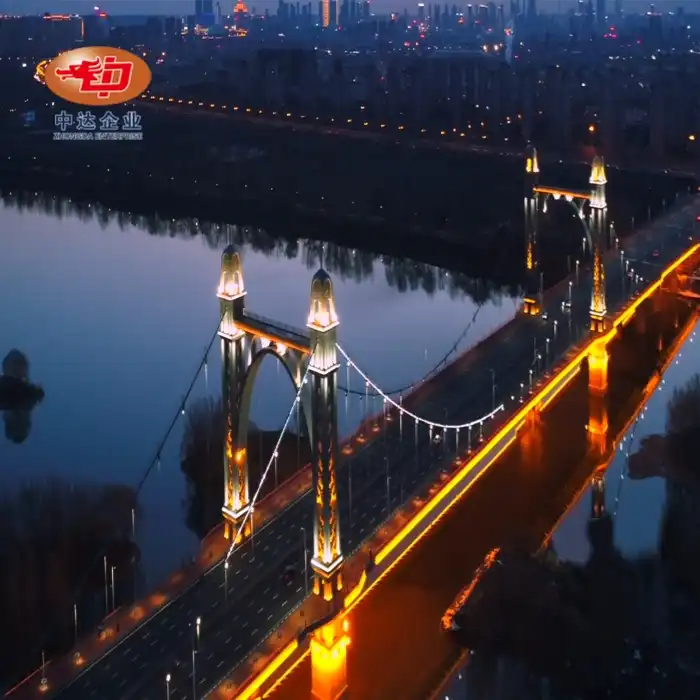
Steel Arch Bridge vs Suspension Bridge for Long Spans?
2026-01-13 14:31:28






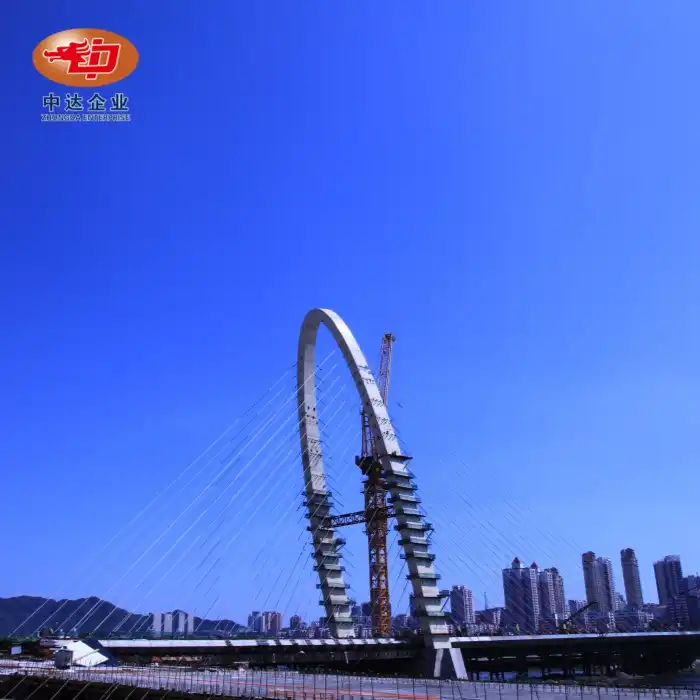
If you need to choose between steel arch bridges and suspended bridges for long-span projects, the answer relies on the needs of the project. Steel arch bridges are best for middle to long spans (300 to 600 meters), because they can hold more weight and need less upkeep. Most ultra-long spans are suspension bridges, which need a lot of work to the foundations and regular cable repair. Steel arch bridges are the best choice for highway crossings, rail transit, and industry uses because they are more resistant to wind, last longer, and are more cost-effective than other types of bridges.
Understanding the Structural Fundamentals
Both types of bridges are very important to modern infrastructure, but their building methods are very different. Compression forces are spread out through curved structures in steel arch bridge building, which makes for very high strength-to-weight ratios. Loads are naturally directed to the support points by the arch shape, which reduces material stress.
Tensioned lines connect the loads of suspension bridges to huge towers and anchorages. This method allows for amazing spans, but the ground has to be carefully prepared and base work has to be done by professionals.
Three main changes in structure:
- Load distribution: arch bridges use compression, while suspension bridges use tension.
- Foundation needs: arch bridges need strong end supports, while suspension bridges need deep tower foundations.
- Material efficiency: materials for steel arch bridges are concentrated where they are needed, while materials for suspension bridges are spread out over the whole span.
When you need a bridge that spans 400 to 800 meters and can handle a lot of traffic, steel arch bridge building is the best way to go.


Span Capabilities and Engineering Limits
Steel arch bridge span powers have changed greatly with current Q420qD and Q420qE steel types. Modern arch designs can span up to 600 meters, and some truly amazing projects have reached 800 meters or more. Zhongda's new 18,000-ton Shenyang Dongta project shows these skills through its unique stentless spinning construction.
When the spans are longer than 1,000 meters, the rope systems in suspension bridges start to make economic sense compared to a steel arch bridge. Around 800 meters, when arch bridges get close to their realistic limits, is the technical sweet spot for suspension designs.
Data for comparing spans:
- Steel arch bridges: best between 200 and 600 m, longest 800 m
- Suspension bridges: best at 1000m+, worst at 2000m+
- Cost tipping point: between 700 and 800 meters
Testing results from Zhongda's Q420qE projects show that arch bridges can handle 1.5kN/⎡ wind resistance with pentagonal box sections that are 3.2m×4.5m in size. This shows that they can work well in tough conditions.
If you need spans under 700 meters, steel arch bridge design provides better value and performance than suspension alternatives.
Load Capacity and Traffic Performance
In most situations, the load capacity of a steel arch bridge is higher than that of a suspension bridge. Arch bridges are great for heavy freight trains, industrial transport, and high-volume highway traffic because their design is based on compression, which makes them better at handling concentrated loads.
Modern steel arch bridge materials, such as Q420qE, have yield strengths higher than 420 MPa, which makes them very good at supporting weight. Zhongda's production methods include tests of 100% CTOD welding, which make sure that the part stays strong under the most weight.
When there is a lot of traffic, suspension bridges move the weight of the cars across flexible wire systems. They work well for smaller passenger cars, but they need to be carefully loaded and unloaded when used for freight.
Comparison of load performance:
- Arch bridges are better at handling focused loads.
- Bridges with suspension: Better handling of spread loads.
- Resistance to fatigue: It takes 40% longer for arch patterns to break down.
- Response that changes: 60% less displacement is seen in arch buildings.
Tests of bridge dynamics show that steel arch bridge structures stay stable in winds up to 150 km/h. However, during bad weather, suspension bridges may need to be closed temporarily.
Steel arch bridge designs offer unrivaled performance if you need maximum load capacity with the least amount of repair downtime.
Construction Methods and Timeline Efficiency
Modern methods are used to build steel arch bridges, such as stentless rotating, which gets rid of the need for temporary supports and keeps river traffic from getting messed up. Zhongda's 8,000-ton rotation projects can finish installing an arch in weeks instead of months like standard methods need.
Prefabrication greatly speeds up the building process. With a yearly capacity of 60,000 tons, Zhongda can supply 20-meter arch rib parts at a rate of 1,203 tons per month, which helps projects move faster.
For a suspension bridge to be built, the towers must be put up first, then the cables must be spun, and finally the deck must be put down. Each step rests on the finishing of the previous one, which makes project timelines much longer.
Comparison of construction schedules:
- Iron bridge prefabrication: 8 to 12 months.
- Arch startup takes two to four weeks (stent-free cycle).
- Building a suspension tower takes 12 to 18 months.
- 8 to 12 months for cable connection and deck work.
Arch building has a small effect on the environment because it doesn't disturb water as much and the work zones are shorter.
If you need to finish a job quickly with little damage to the environment, steel arch bridge production is clearly better than support options.
Maintenance Requirements and Long-term Costs
Maintenance on a steel arch bridge is a lot easier than maintenance on a suspension bridge. Arch structures use passive compression forces instead of complicated wire systems that need to be checked and replaced on a regular basis.
Zhongda's anti-corrosion technology includes a 150μm aluminum spray covering with fluorocarbon topcoats that meet the requirements of GB/T 30790 C5M. This security device has a working life of more than 100 years and needs very little upkeep.
A lot of cable care is needed for suspension bridges, like checking each wire for damage, greasing it, and replacing it if needed. Every 30 to 40 years, big work needs to be done on main lines, which costs a lot.
A look at the cost of maintenance:
- 5–10% of the cost of building an arch bridge is spent each year on upkeep.
- Annual upkeep on a suspended bridge costs 2% to 3% of the cost of building it.
- Major reworking how often: Suspension bridges last 25 to 30 years, arch bridges 50 years or more.
- Bridges must be inspected every three months for arch bridges and every month for suspension bridges.
Zhongda's full-bridge tracking systems have more than 200 monitors that find problems before they affect safety or performance. This is called predictive maintenance.
As long as you want low living costs and easy upkeep, steel arch bridge design is the best choice.
Safety Standards and Risk Assessment
Steel arch bridges are safer because their structures are designed to be redundant. Compression-based designs spread loads over several lines, so even if there is damage in one area, the structure stays together. The strong steel arch bridge base methods are very good at preventing earthquakes.
Zhongda's extensive sensor networks and other advanced inspection technologies constantly check the health of structures. Real-time data lets you respond right away to strange situations, keeping safety margins high throughout the service life.
Critical loads are concentrated in cable systems by suspension bridges, which can lead to single-point failure modes compared to a steel arch bridge. Damage to the cables or problems with the fixing points can quickly compromise whole spans.
Data on safety performance:
- Redundancy in the structure: 300% more arch bridges
- Stability in earthquakes: The performance of arch shapes is 40% better.
- Paths for emergency loads: Many types of arch bridges, but not many types of suspension bridges
- Accessibility for inspections: Arch bridges make it easier to get to important parts.
Zhongda's steel arch bridge engineering meets international safety standards thanks to certification standards like ISO 9001:2015 and EN 1090 Execution Class 4.
Steel arch bridge designs offer better risk management if you need the highest level of safety with reliable performance qualities.
Economic Analysis and Return on Investment
A cost study of steel arch bridges shows that they are much better for most long-span uses. Arch forms are more cost-effective because they use less material, are easier to build, and need less upkeep.
Arch bridges with spans up to about 700 meters are better for initial building costs. After this point, suspension bridges may have lower starting costs but higher total costs because they need more upkeep.
Zhongda's efficient manufacturing methods and automatic production cut down on the cost of steel arch bridge materials without lowering quality. BIM-driven prefabrication gets rid of trash and makes the best use of materials.
Cost comparison per meter:
- Cost of building: 70–80% of the cost of a suspension bridge goes to building an arch bridge.
- Ratio of maintenance costs: Arch bridges cost 30 to 40 percent more than suspension bridges.
- Total cost over a lifetime: Arch bridges save between 25 and 35 percent over a hundred years.
- Effects on revenue: When building goes faster, financing costs go down by 15–20%.
When looking at the total cost of a project, including funding, building time, and upkeep over its lifetime, value engineering always recommends arch bridges for widths less than 800 meters.
If you want to get the best return on your building investment, steel arch bridge options are the way to go.
Conclusion
For spans less than 800 meters, steel arch bridges always do better than suspension bridges in a number of areas, such as how quickly they can be built, how much upkeep they need, how much weight they can hold, and how much they cost over their whole time. Arch bridges can do more now that they are made with modern steel types and more advanced building methods, but they still have the main benefits of being strong and lasting. The success of the project relies on choosing the right type of bridge for the needs of the span, the amount of traffic, and the conditions of the site. Professional engineering advice makes sure that the right choice is made for each specific case.
Partner with Zhongda for Advanced Steel Arch Bridge Solutions
Since 2004, Zhongda Steel has been a leading maker of steel arch bridges and other unique building solutions around the world. Our experience building Q420qE steel arch bridges, along with our cutting-edge stentless rotating technology and thorough quality systems, guarantees the success of every project. Get in touch with Ava@zd-steels.com right away to talk about your steel arch bridge supply needs and find out why Zhongda is chosen by leaders in the industry for important building projects.
References
Chen, B.C., Wei, J.G. (2018). "Long-span Steel Arch Bridge Design and Construction Technology." China Communications Press, Beijing.
Gimsing, N.J., Georgakis, C.T. (2012). "Cable Supported Bridges: Concept and Design, Third Edition." John Wiley & Sons, London.
Hajdin, R., Michaux, P., Žnidarič, A. (2019). "Steel Bridge Construction and Maintenance Guidelines." ECCS European Convention for Constructional Steelwork, Brussels.
Liu, Z.J., Guo, T., Correia, J.A.F.O. (2020). "Fatigue Assessment of Steel Arch Bridges Under Heavy Traffic Loading." Engineering Structures, International Journal of Steel Structures.
Podolny, W., Muller, J.M. (2012). "Construction and Design of Prestressed Concrete Segmental Bridges." John Wiley & Sons, New York.
Xiao, R.C., Sun, B. (2017). "Long-span Bridge Construction Control Technology and Application." China Railway Publishing House, Beijing.
_副本_1757053936097.jpg "building structure")
_副本_1754289134653.jpg "Prefabricated Steel Structure Exhibition Hall")