
Steel Box Girder Provides High Torsional Strength for Long-Span Bridges
2026-08-25 13:00:00






When designing modern bridge infrastructure that must span rivers, valleys, or busy highways, engineers face a fundamental challenge: how to create structures that resist both vertical loads and twisting forces. Steel box girders have emerged as the definitive solution, providing exceptional torsional strength that allows bridges to safely carry dynamic traffic loads across distances exceeding 400 meters. Their hollow, fully welded design distributes stress efficiently throughout the cross-section, preventing dangerous twisting movements that could compromise structural integrity. This unique combination of strength, adaptability, and proven performance has positioned these girders as the backbone of contemporary long-span bridge construction worldwide.
Understanding Steel Box Girders and Their Design Principles
What Makes Box Girders Structurally Superior
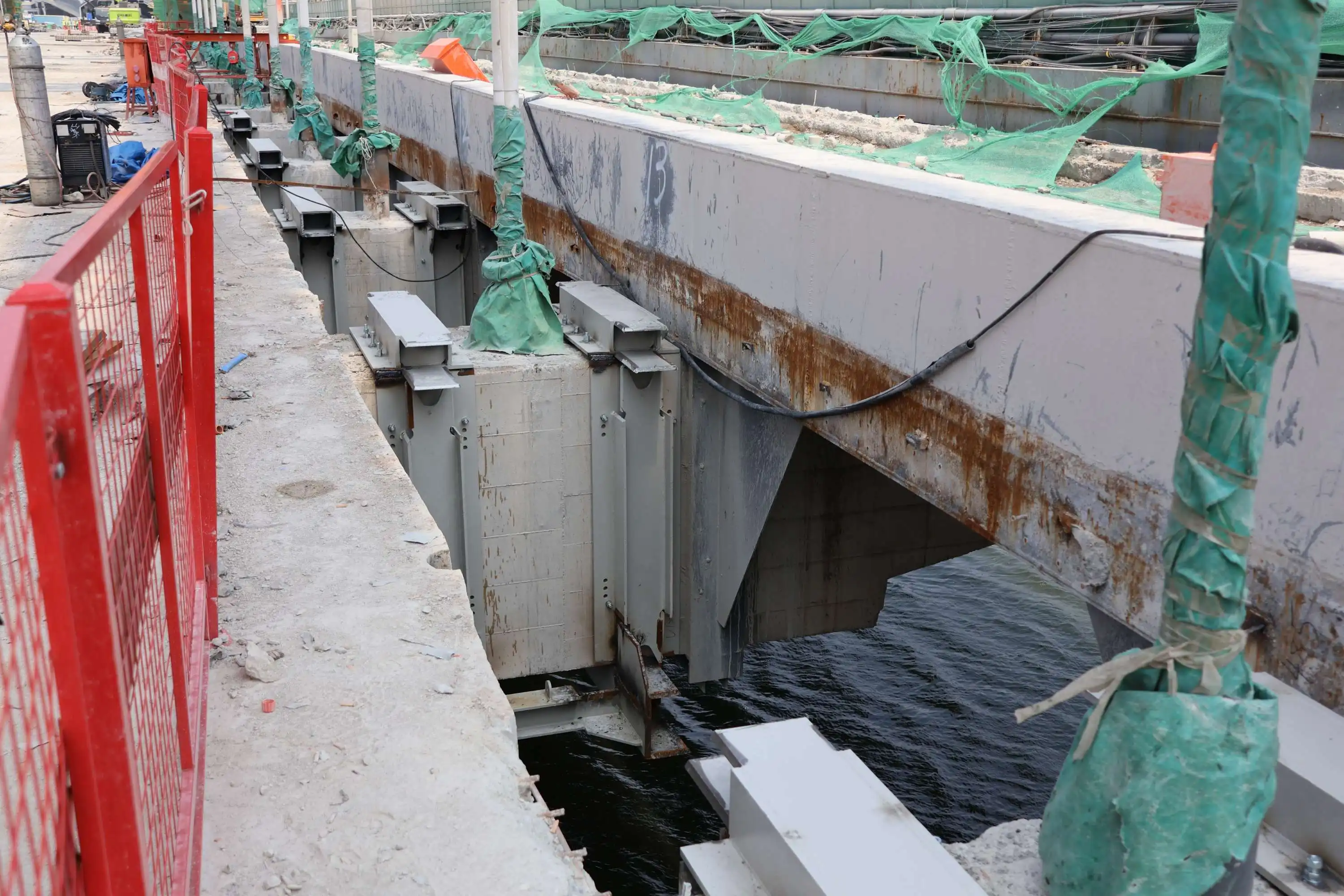
Box girders are better for engineering because they have a closed cross-sectional geometry. This means that they are hollow and have a rectangular or trapezoidal shape that is made by connecting steel pieces together. This arrangement makes a torsionally rigid cell that is much better at resisting twisting forces than open sections like I-beams. When traffic loads move horizontally, or wind applies uneven pressure, the closed shape keeps its shape by spreading stress evenly along all four walls instead of gathering it at weak spots.
Material Selection and Mechanical Properties
Bridge girders that last a long time are made from high-grade structural steel. For the main parts of our structures, Zhongda mostly uses Q345D steel, which has a minimum yield strength of 345 MPa and is the best combination of strength and weldability. In critical connection zones, Q420D steel is used, which improves load strength at points where stress builds up. This strategic material specification makes sure that every part does its job for the whole structure's service life, which is usually more than 30 years.
Optimizing Geometry for Span and Load Capacity
The cross-sectional measurements of a beam directly affect how far it can span and hold up heavy traffic. Engineers can get the most out of the materials they use by making designs with heights that can be changed from 1.25 meters to 8 meters depending on the span needs. For longer spans, deeper sections offer better moment resistance, while shallower profiles are better for shorter distances. Our engineering team uses BIM-based modeling to look at the unique needs of each project and find the exact geometry that improves performance while reducing material use and total project costs.
The Mechanics of Torsional Resistance
Torsional rigidity is a way to measure how well a structural element can keep its shape when it is loaded in an eccentric way. The shear modulus, the polar moment of inertia, and the cross-sectional values are all used in the method. Box girders are great for this because their closed shape gives them a large polar moment of inertia compared to their weight. In real life, this mathematical edge means that bridges stay straight and true even when big trucks only use one lane. This keeps them from sagging, which is unsafe and speeds up wear.
Comparative Analysis: Steel Box Girders vs Other Girder Types
Evaluating Performance Against Concrete Alternatives
Concrete girders have been used to build bridges for many years because they are strong and don't catch fire. However, they are not as effective as steel alternatives in several important ways. Curing times for concrete are much longer than those of other materials, which can add months to project schedules. Because the material is heavy, substructures and foundations need to be stronger and larger, increasing the overall cost of the project. One of the most important limitations of concrete is its low tensile strength and low torsional resistance. This means it is generally limited to shorter spans where twisting forces are manageable, while solutions such as the Steel Box Girder can provide higher strength, better load distribution, and greater suitability for longer bridge spans.
How Box Girders Outperform I-Beams
I-beams are a popular shape for structures, but their open cross-section makes them very limited for use in bridges. Because an I-beam has low torsional resistance, it needs extra support systems to keep it from turning, which makes the project more complicated and costs more. The open web also makes it hard to check from the inside and offers less security against corrosion. Box designs get rid of these problems by making a closed space that can be entered for upkeep. They also provide natural torsional strength without the need for extra bracing members.
Comparing Fabrication and Lifecycle Economics
The cost and worth of something over time are both affected by how complicated it is to make. Composite girders made of steel and concrete need a lot of different trades to work together, and they need time to cure, which adds to the overall length of the project. To tension pre-stressed concrete, you need special tools and knowledge. Truss girders have a lot of link places that need to be made individually and checked for quality. Our fully soldered box parts speed up production by using automated methods that make sure consistency while cutting down on the time it takes to make them. Over the lifecycle of a structure, Steel Box Girders that are properly protected have higher economic returns than alternatives that need to be fixed more often because they require less maintenance and last longer.
Construction and Fabrication of Steel Box Girders for Long-Span Bridges
Advanced Manufacturing Techniques
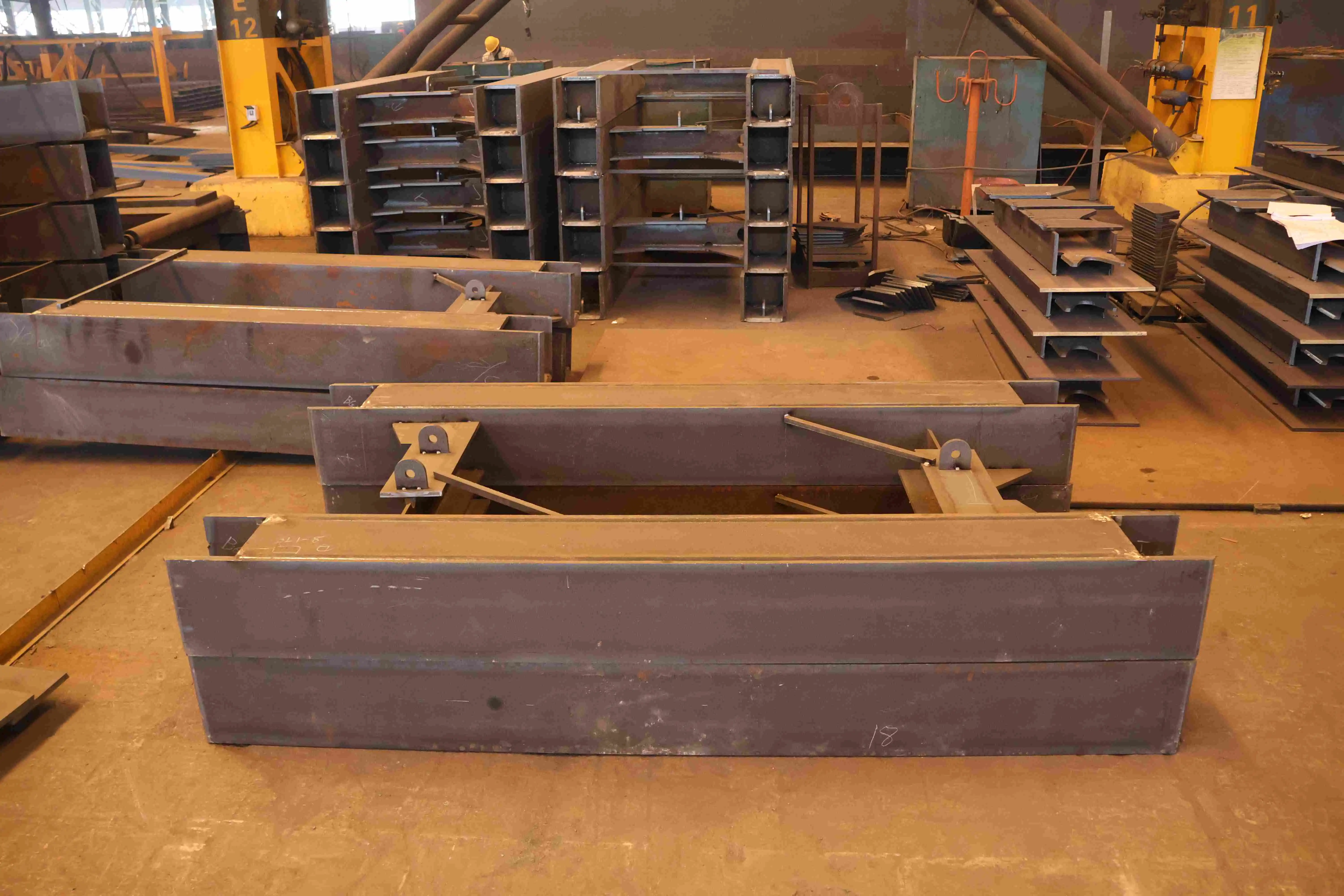
Precision is the first step in modern manufacturing. CNC ultra-thick plate cutting equipment at our plant keeps errors within ±0.2mm, which makes sure that parts fit together perfectly when they are put together. Automated welding lines make sure that every seam has a uniform, high-quality weld. This makes the fully welded box parts that keep the structure together. This controlled factory environment gets rid of the delays and quality problems that come with constructing things in the field. It makes it possible to make girders that meet international standards like ISO 9001, EN 1090, and AWS requirements.
Modular Prefabrication Advantages
On-Site Assembly and Installation Methods
It takes careful planning to get premade parts to the project site, but the payoff comes when they are put together. With crane-based construction, pieces can be moved into place and joined together in days instead of weeks like with cast-in-place methods. Field splices that are either bolted or welded together pieces to make continuous spans. Quality control checks each link. This quick assembly cuts down on traffic jams on existing roads and the safety risks that come with long construction projects in active transportation corridors.
Quality Assurance Throughout Production
Before leaving our building, every girder goes through a strict check. Non-destructive testing checks the stability of the weld, dimensional checks make sure the shapes are correct, and material certifications list the qualities of the steel. Our quality management system, which is certified to ISO 9001 standards, keeps detailed records of every step of the production process. This makes it easy to find what was used, which is something that procurement managers like. Our organized approach to quality has helped us keep 70% of our clients and get repeat business from big contractors like China Railroad and CSCEC. These companies know that ensuring quality upstream stops problems that cost a lot later on.
Corrosion Protection and Service Life Extension
The main thing that can shorten the life of a steel building is being exposed to the environment. Our two-layer rust protection method takes care of this problem completely. Either hot-dip galvanizing or a special primer forms the first layer. It forms a mechanical link that keeps water from getting to the base metal. The second layer is made up of high-performance topcoats that are made to last in certain situations, like salt spray from the ocean or smog from factories. This two-pronged method makes the service life longer than 30 years, even in harsh settings. This protects investments in infrastructure and lowers the costs of repainting and fixing up over time.
Procurement Considerations for Steel Box Girders in Global B2B Markets
Understanding Pricing Structures and Cost Drivers
Several things affect how much money you need to invest in bridge girders. The prices of raw materials change with the global steel market, but companies that make a lot of steel, like Zhongda, can usually get better prices because they already have strong relationships with suppliers. Fabrication becomes more challenging as project requirements become more complex. For example, varying cross-sections and curved webs in a Steel Box Girder that reduce weight by 20% require more engineering expertise and specialized tools. Costs for transportation depend on the delivery distance and the efficiency of the logistics system. Ocean freight is used for overseas projects, while specialized trucks are used for deliveries within the United States. Experienced procurement professionals work closely with suppliers to understand these factors and negotiate deals that balance predictable costs with technical requirements.
Evaluating Supplier Capabilities and Certifications
When looking for a manufacturing partner, it's important to carefully consider their production capacity, technical know-how, and quality credentials. A supplier's annual production output shows how well they can handle big orders without running into schedule problems. With a capacity of 60,000 tons, we can handle major infrastructure projects. Certifications are a factual way to show that a system meets international standards and quality standards. The EN 1090 approval, which is accepted all over Europe and is becoming more and more popular around the world, shows that strict manufacturing requirements have been met. AWS certification proves that a person knows how to weld, and ISO 9001, 14001, and 45001 certifications show that a person has full control over quality, environmental, and safety systems.
Geographic Considerations in Supplier Selection
Logistics, lead times, and following the rules are all affected by where the factory is located. Because their supply lines are more integrated and their factories are more efficient, Asian suppliers can often offer reasonable prices. Our Shenyang facility is close to big steel mills and has easy access to deep-water ports for shipping goods around the world. Buyers in North America and Europe should look at the total cost of delivery instead of just the factory price. They should think about things like shipping, insurance, and customs duties. These worries are eased by our open delivery terms and help with export paperwork. This makes the buying process easier for foreign customers who aren't used to doing business across borders.
Custom Fabrication and Engineering Support
Standard products work well for simple tasks, but custom solutions are needed for complicated bridge projects. Our engineering team works with customers from the first planning phase to the final delivery phase. We offer BIM-based modeling that works well with platforms for project coordination. With variable cross-section optimization, beam heights can be changed to match moment diagrams. This puts more material where stresses are highest and less weight where stresses are lowest. Corrugated web technology lowers mass even more without lowering strength. This achieves the 20% weight reductions that lower foundation costs and make assembly easier. With this full engineering support, procurement goes from being a simple purchase to a real partnership that improves the results of the project.
Why Choose Steel Box Girders for Your Long-Span Bridge Projects?
Unmatched Torsional Strength for Structural Stability
When the cross-section is closed, it provides torsional rigidity that open sections just can't match. This directly means that bridges will be safer and last longer because they will be able to withstand the bending forces that come from uneven traffic loads and side wind pressures. Box girders are being used more and more by engineers when they need to build spans longer than 200 meters because other options require expensive bracing systems or just can't do the job. Our girders have held spans of up to 420 meters, showing that they can do things that aren't possible in traditional bridge engineering.
Lifecycle Cost-Effectiveness and Value Engineering
The initial investment is only one part of the total cost of the project. Total ownership costs change a lot over decades of use because of things like maintenance costs, service life, and when to replace things. Steel Box Girders that are properly built and protected last a long time, which means that they don't need to be fixed as often, which saves money and time on repairs. When bridge owners look at the total cost of ownership over a period of time, the longer service intervals and higher durability of high-quality steel construction always deliver better economics than alternatives that need more frequent maintenance.
Environmental Sustainability and Material Efficiency
Environmental duty is becoming a bigger priority in modern infrastructure. Steel can be recycled almost completely when a building's time has come to go. This is in line with the principles of the circular economy and sustainability goals. The optimized design makes better use of materials, which means less raw material is used, which lowers the embodied carbon compared to heavier alternatives. Rapid prefabricated construction keeps site disturbance and community disruption to a minimum, which means that bridge projects have less of an impact on the environment overall. Public agencies and private companies that have to meet stricter environmental standards and community expectations are aware of these issues.
Proven Performance in Landmark Projects
The outcomes in the real world back up the calculations and claims made by engineers and manufacturers. The 18,000-ton Shenyang Dongta Cross-Hunhe River Bridge is an example of the size and complexity of the work we do every day. The Jingha Expressway growth projects show that we can handle big traffic projects. Working together with global EPC firms has helped build infrastructure in a wide range of climates and conditions, from Russia's Arctic to Australia's mining facilities. Our Class I Steel Structure Professional Contracting Qualification and our track record of success give procurement professionals the confidence they need when choosing critical infrastructure parts.
Conclusion
Making smart choices about what to buy is important when it comes to bridge infrastructure because it affects regional growth and economic connections. Steel Box Girders have a high torsional strength that lets them be built with long spans that modern transportation networks need. They will also last for decades thanks to advanced fabrication techniques and corrosion protection systems. Engineers and project managers can come up with solutions that are the best in terms of both performance and value if they fully understand design principles, the pros and cons of different types of girders, and how to buy them. As the world's need for infrastructure grows, these structural systems will continue to be the basis for building safe, effective bridges.
FAQ
What span lengths work best for box girder applications?
Box girder technology works well for spans between 50 and 420 meters, with 100 to 300 meters being the most common range for optimal performance. Other types of girders may be cheaper for shorter spans, but box sections are better for longer spans because they are more rigid and stronger for their weight. The best span length for each job depends on things like the site conditions, the amount of weight that needs to be carried, and the ease of building entry.
How does maintenance compare between steel and concrete girders?
In comparison to concrete alternatives, Steel Box Girders with proper corrosion protection need less maintenance. Our double-layer protection systems mean that maintenance isn't needed for more than 30 years. In contrast, concrete structures usually need repairs every 15 to 20 years for cracks, spalling, and corrosion of the reinforcements. Accessibility for inspection also varies. For example, internal access within box girders lets you look at all surfaces in great detail, but concrete girders only let you look at them briefly until damage is obvious.
What are typical fabrication lead times?
From the time the order is confirmed until it is delivered, most standard projects take 12 to 16 weeks. This includes engineering, buying materials, fabrication, quality control, and finishing. Customizations that are very complicated or very large numbers may cause delays, but our 60,000-ton annual capacity usually allows for faster schedules for pressing needs. Getting our engineering team involved early on in the planning stages of the project makes sure that the schedule is realistic and fits in with the overall construction schedule.
Partner with a Trusted Steel Box Girder Manufacturer
With strict quality standards and 20 years of specialized experience, Zhongda brings its vertically integrated capabilities to infrastructure projects around the world. Our ISO-certified factory makes box girders that meet international standards, and our engineering team helps with everything from the initial design to the final installation. We provide the technical precision and manufacturing excellence that complex bridge projects require, whether they need standard configurations or custom solutions with variable cross-sections and the best weight reduction. Email us at Ava@zd-steels.com to talk to our technical experts about your specific needs. Check out our website at zd-steels.com to learn more about all of our structural steel solutions and to read thorough project case studies that show how dedicated we are to engineering greatness.
References
1. Chen, W. F., & Duan, L. (2014). Bridge Engineering Handbook: Superstructure Design (2nd ed.). CRC Press.
2. Combault, J., Prado, M., & Papanikolas, P. (2005). Steel Box Girder Bridges: Design Guide and Construction Manual. French Association for Steel Construction.
3. Heins, C. P., & Firmage, D. A. (1979). Design of Modern Steel Highway Bridges. John Wiley & Sons.
4. Menn, C. (1990). Prestressed Concrete Bridges. Birkhäuser Basel.
5. Troitsky, M. S. (1987). Orthotropic Bridges: Theory and Design (2nd ed.). The James F. Lincoln Arc Welding Foundation.
6. Xanthakos, P. P. (1994). Theory and Design of Bridges. John Wiley & Sons.
YOU MAY LIKE