
Steel Box Girder Supports Highway and Railway Bridges with Superior Stability
2026-08-25 13:00:00






When modern infrastructure projects demand both strength and longevity, steel box girders emerge as the optimal choice for highway and railway bridge construction. These fully welded hollow structural components distribute loads efficiently across long spans while resisting torsional forces that would compromise conventional bridge designs. At Shenyang Zhongda Steel Structure Engineering Co., Ltd., we've witnessed how these precision-engineered elements transform challenging crossings into reliable transportation corridors, delivering superior stability through advanced metallurgy and thoughtful engineering that meets the rigorous demands of contemporary infrastructure development.
Understanding Steel Box Girders: Design, Materials, and Applications
What Makes Box Girders Structurally Superior
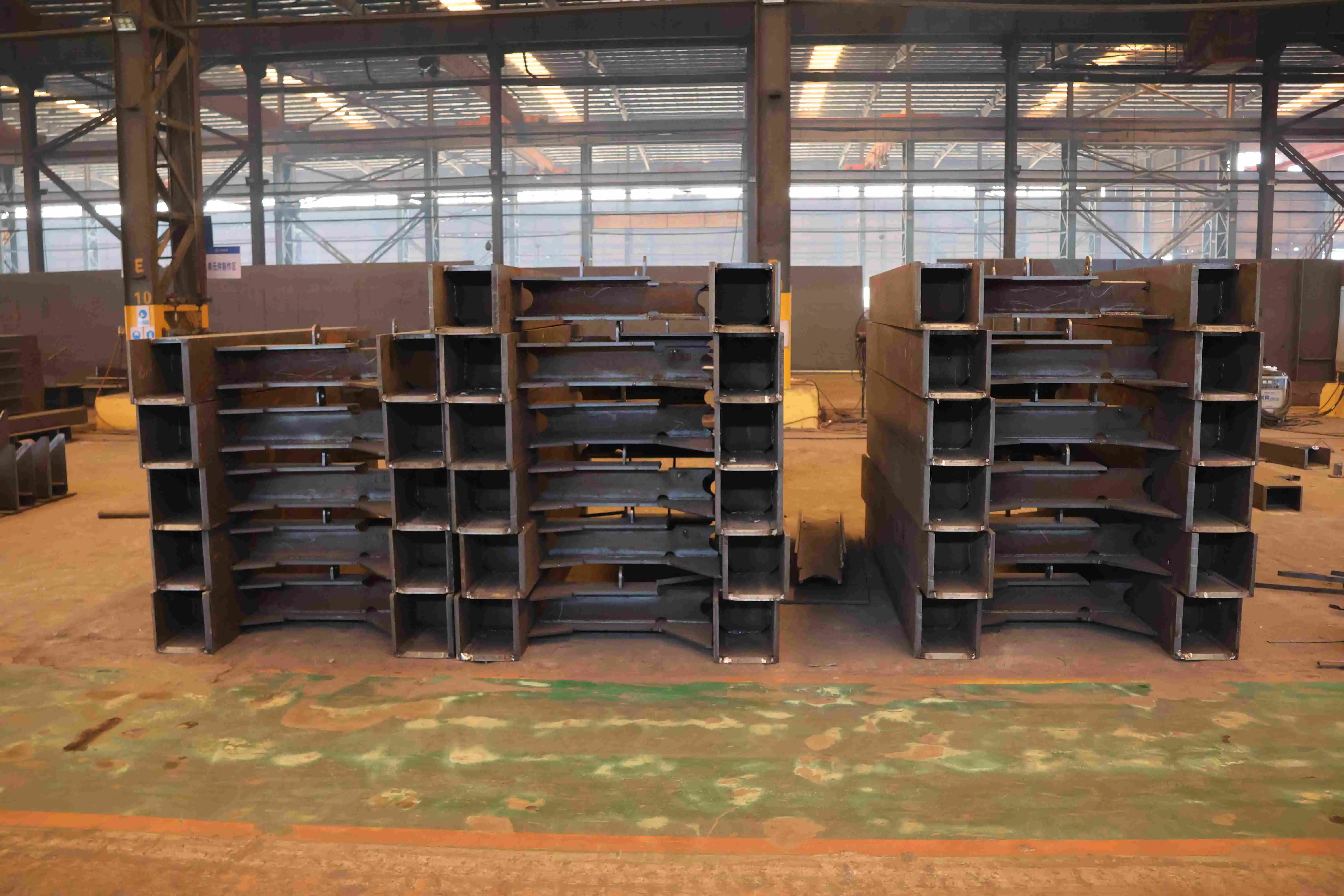
Compared to regular I-beam profiles, the hollow rectangular shape makes the structure very rigid in the twist direction. Our fully welded box sections get rid of stress concentrations at bolted joints. This makes the building more resistant to forces from traffic and the environment. This closed-cell design naturally stops lateral buckling, which makes it perfect for curvy lines and wide bridge decks, where regular girders have trouble.
Since the middle of the 20th century, bridge engineers have used this technology. However, new developments in welding automation and steel metallurgy have greatly increased their abilities. The Shenyang Dongta Cross-Hunhe River Bridge, which uses 18,000 tons of our manufactured parts, shows how current box girder technology can make spans longer than 200 meters while still keeping the structure strong.
Material Selection for Maximum Performance
Bridge girders are built to last with high-strength steel grades. We usually use Q345D steel, which has a minimum yield strength of 345 MPa, for the main parts of structures because it is strong, easy to weld, and resistant to pressure at different temperatures. Critical connecting zones get Q420D steel, which increases the load capacity where forces are concentrated.
Material choice goes beyond just checking for strength. Low-temperature toughness is important for bridges in northern climates where temperature changes and freeze-thaw cycles can damage structures. We only buy materials that meet EN 10025 standards. This makes sure that the mechanical qualities are always the same, which is proven by mill certifications and independent lab tests.
Strategies for stopping corrosion start with the material specification. We use double-layer security systems that include either hot-dip galvanizing or multilayer spray coatings. These systems are designed to last more than 30 years in tough settings. Professional-grade bridge parts are different from common structural steel because they use an integrated approach to material science.
Real-World Applications Across Transportation Networks
Box girder technology helps highway bridges by reducing the amount of maintenance they need and extending the time between inspections. The Jingha Expressway expansion project showed how prefabricated sections can speed up construction in areas with a lot of traffic, causing as little disruption as possible while building structures that are designed to withstand decades of heavy commercial vehicle loading.
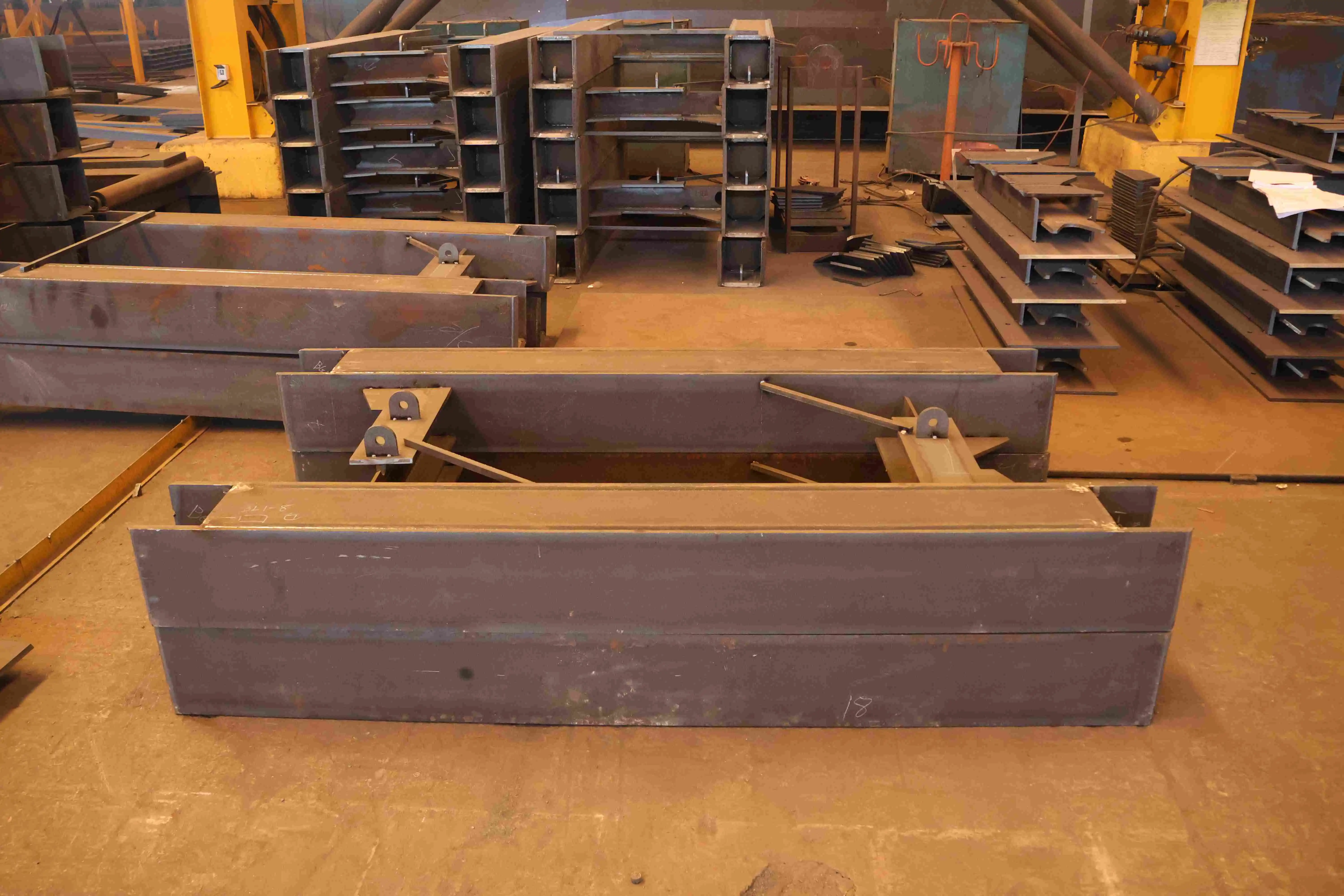
Even more accuracy is needed for railroad uses because the moving loads from fast trains create complicated stress patterns. Our Steel Box Girder designs with varying cross-sections, which range in height from 1.25 meters to 8 meters, can meet a wide range of span needs while making the best use of materials. Overall weight is cut by about 20% by corrugated steel webs. This lowers foundation loads and seismic vulnerability without lowering structural capacity.
Advantages of Steel Box Girders Compared to Other Girder Types
Choosing the right girder system has an effect on the cost, time, and long-term performance of the project. Understanding these competitive benefits helps procurement workers make choices that are right for the project.
Performance Characteristics That Matter:
- Load Capacity Excellence: Box girders handle concentrated loads and continuous spans more efficiently than I-beams, distributing forces through four-sided construction rather than relying on single-web configurations. This translates to lighter structures achieving equivalent or superior load ratings.
- Torsional Resistance: The closed-section geometry resists twisting forces inherently, eliminating the need for additional bracing systems required by open-section alternatives. Curved bridge alignments particularly benefit from this characteristic.
- Maintenance Economics: Steel's inspectable surfaces and predictable deterioration patterns contrast favorably with concrete, where internal degradation may progress undetected. Protective coating systems extend maintenance intervals significantly compared to bare steel or inadequately protected alternatives.
- Construction Speed Advantage: Factory prefabrication enables quality control impossible at construction sites while reducing onsite labor requirements by approximately 50%. Segments measuring 12 to 30 meters arrive ready for assembly, compressing project schedules substantially.
These benefits add value to projects over their entire lifecycles. Infrastructure owners are becoming more aware that investing in high-quality steel parts at the start will save them money in the long run compared to other systems that need a lot of upkeep or replacement too soon.
Production and Construction Process of Steel Box Girders
Fabrication Standards and Quality Assurance
Before cutting the first plate, three-dimensional modeling is used to find any potential problems that might come up during the precision manufacturing process. Our 120,000-square-meter building has CNC ultra-thick plate cutting equipment that keeps tolerances within ±0.2mm, which is important for making sure that parts fit together correctly during assembly.
Full-penetration welds that meet the requirements of the AWS D1.5 Bridge Welding Code are done by automated welding lines. We only hire skilled welders who have passed strict testing programs. We also use ultrasonic and X-ray inspection to make sure that all of our important parts are properly welded. This multi-level quality control method makes sure that every girder section meets engineering requirements before it leaves our plant.
Material traceability systems keep track of every steel plate from the time it is certified at the mill until it is inspected a final time. This creates the necessary paper trails for keeping project quality records. Third-party inspection agencies check our processes against ISO 9001, EN 1090, and project-specific quality plans. This gives us independent proof that meets even the strictest buying needs.
Logistics and Onsite Assembly Strategies
Transportation logistics have a big impact on design choices. We cut girders into lengths that meet the rules for road transport while avoiding as many field splices as possible, which are expensive and hard to do. Specialized trailers can carry oversize parts when the economics of the job make it worth it.
On-site assembly sequences are planned to work with the capabilities of the erection equipment and the needs of managing traffic. Temporary supports make sure that the pieces are in the right place before the field connections are made, which are usually done with high-strength bolts and welding when required by the specs. Surveying teams keep checking the alignment to make sure that finished buildings meet strict geometric limits.
Parallel workflows allow for construction times that are cut by about 50% compared to cast-in-place options. While foundations cure, fabrication of the Steel Box Girder happens at the same time instead of following a one-step-at-a-time process. This shortening of time is very useful for projects that need to be finished early to generate revenue or reduce the costs caused by traffic delays.
Extending Service Life Through Corrosion Management
The last and most important step in the manufacturing process is applying a protective layer. Abrasive blasting is used to prepare the surface so that it meets the cleanliness standards set by ISO 8501, which creates patterns that help the coating stick. Zinc-rich bases, lasting middle coats, and topcoats made for specific exposure conditions are all part of multi-layer systems.
When we design coating specifications, we take site-specific factors into account. For example, coastal areas need coatings that are more resistant to chloride, industrial areas need coatings that are resistant to chemicals, and northern climates need coatings that can be flexible while still keeping their integrity through thermal cycling. Instead of using general solutions, this tailored approach improves the performance of the protection system.
Long-term safety efficiency is affected by how easy it is to do maintenance. Our designs include features that make future inspection and coating renewal easier, like enough space between things, raised work platforms, and drainage details that keep water from building up in weak spots. These seemingly small factors have a big effect on lifecycle costs and the longevity of structures.
Procurement Guide for Steel Box Girders: Selecting the Right Supplier and Product
Critical Evaluation Criteria for Supplier Selection
How well providers can meet project deadlines without sacrificing quality is based on their manufacturing ability. With the ability to produce 60,000 tons per year and vertically integrated skills that cover everything from planning to construction support, we can work on several big projects at the same time. Visiting production plants shows how advanced the equipment is, how mature the quality systems are, and how skilled the workers are in ways that written records alone can't.
If a supplier has worked on similar projects before, it means they know how to deal with the technical issues that come up when building a bridge. Look over catalogs of finished projects and make notes on span lengths, loading conditions, and weather risks that are similar to what you need. Our work on complicated infrastructure, like Arctic bridges in Russia and mining structures in Australia, shows that we can adapt to a wide range of situations.
Certification portfolios show that you follow international rules, which is important for projects that involve people all over the world. In addition to the basic ISO 9001 quality management certification, technical skills can be proven with EN 1090 certifications for structural steel fabrication and AWS welding certifications. Our Class I Steel Structure Professional Contracting Qualification is the best construction title in China and shows that we have a wide range of skills.
Customization Capabilities and Engineering Support
Standardized goods don't usually make complicated bridge projects better. We work with our customers to come up with custom solutions using changeable cross-section designs that use the least amount of material possible while still meeting the needs of the structure. By using engineering analysis to find the best shape for different loading scenarios, single spans up to 420 meters are made possible.
Integrating BIM makes it easier for structural, engineering, and building professionals to work together. Three-dimensional models find conflicts early on, which cuts down on the need for expensive changes in the field. Our engineering team helps with technical issues all the way through a project's lifespan, from initial design advice to troubleshooting during building and planning for long-term upkeep.
Corrugated web optimization is a good example of how specialized engineering can make things better. We find the safest places for corrugated configurations to reduce weight without lowering capacity by looking at how shear and bending stresses are distributed. This new idea, which can cut weight by up to 20%, directly leads to lower base costs and better performance during earthquakes.
Navigating Delivery Schedules and Compliance Requirements
Schedule changes can be avoided by giving accurate lead time estimates for a Steel Box Girder project. Fabrication usually takes 12 to 20 weeks after technical approval, but this depends on how complicated the job is and how long the production queue is. We keep communication open about capacity limits so that we can plan ahead instead of finding out about delays late in the procurement cycle.
Different places have different rules about how to follow them. Because we've worked on projects around the world before, we are used to dealing with different building codes, transportation rules, and import requirements. Mill certifications, welding process standards, quality control records, and third-party inspection reports that meet strict project requirements are all part of documentation packages.
Care is taken with the details of shipping and packaging. We protect finished surfaces by wrapping them in weatherproof material and using blocking arrangements to keep them from getting damaged during transit. Site readiness changes can be accommodated by flexible delivery schedules, and storage options can fill in the time between production completion and construction windows.
Future Trends and Innovations in Steel Box Girder Technology
Advanced Materials and Protective Systems
When copper, chromium, and nickel are added to weathering steel, protective patina layers form. In many settings, this means that painting is not necessary. Our -60°C weathering steel technology takes this idea to places where it is very cold and normal materials become brittle. These innovations lower lifecycle costs and improve sustainability by getting rid of the need for coating maintenance.
Nano-modified protective layers are a new technology that makes corrosion protection much better. Laboratory tests show that the service life goes beyond what present systems can handle, and more data on how they work in the field is still being collected. We are keeping a close eye on these changes and are ready to use proven technologies as soon as they are ready to go beyond the trial stage.
High-performance tubes filled with concrete combine the tensile strength of steel with the compressive strength of concrete. This makes hybrid systems that make the best use of the properties of the materials. At the moment, composite action is mostly used in columns and piers, but researchers are looking into how it could be used in frame building to improve performance or use less material.
Fabrication Technology Advancing Precision and Efficiency
By making complex joint geometries with consistent quality, robotic welding systems achieve consistency that can't be reached by hand. Our automated lines have real-time tracking that finds deviations right away. This stops flaws before they happen and saves time on later inspections. This new development in technology raises the quality of work and makes workers safer by taking them out of dangerous situations.
More and more large parts are prefabricated using modular assembly methods, which moves work from construction sites to controlled factory settings. Improvements to transportation infrastructure and specialized heavy-lift tools make it possible to move bigger parts, which cuts field installation time from weeks to days. We've delivered bridge sections that weighed more than 200 tons and put them together on-site in just one operation.
Digital twin technology makes virtual copies of buildings that can follow them through their entire lives. Sensors that are built in during the manufacturing process constantly check for stress levels, corrosion development, and structural health. This makes predictive maintenance possible instead of reactive methods. This method, which is based on data, finds the best times for inspections and interventions to make infrastructure available while keeping lifecycle costs as low as possible.
Sustainability Considerations Driving Design Evolution
As environmental rules get stricter, steel's natural ability to be recycled makes it a good choice. A lot of the materials in our goods are recycled, and when they're no longer needed, the parts are sent back to steel mills to be reprocessed without losing any of their quality. This idea of a circular economy is very different from solid buildings that are hard to get rid of.
Lifecycle analyzes that compare different bridge options are becoming more and more important in buying decisions. People usually only look at the original prices, but looking at things like energy use, carbon footprints, maintenance needs, and end-of-life issues gives more complete pictures of how something affects the environment. When taken into account as a whole, Steel Box Girders perform well on all of these criteria.
Span optimization cuts down on the amount of foundation needed, which means less damage to sensitive environments like wetlands or the ocean. Longer spans mean fewer piers, which is better for the habitat and could lower the overall cost of the project because foundations don't have to be built in difficult soil.
Conclusion
FAQ
What factors determine steel box girder load capacity?
Several things affect the load capacity, such as the strength of the steel grade, the cross-sectional shape, the length of the span, and the design of the connections. When engineers look at a structure, they look at its dead loads (its own weight), its live loads (from traffic), its environmental loads (from wind and earthquakes), and its fatigue loads (from cyclic loading). Our Q345D and Q420D steel specifications give you an idea of the basic strength of the material, and our optimized geometries and thorough analysis make sure there are enough safety margins. Custom engineering is done for each project to make sure the capability meets the needs of the code and unique loading cases.
How does maintenance differ between steel and concrete bridge girders?
Steel girders let you look at all of their sides directly, so you can find rust or damage early on. Protection coating systems need to be replaced every so often, usually every 15 to 25 years, but this depends on the environment and the quality of the system when it was first installed. Internal damage in concrete buildings, like rebar rust, may go unnoticed until it does a lot of damage and needs expensive repairs. Because steel breaks down in predictable ways and is easy to fix, it often has lower lifecycle maintenance costs, even though it needs more visible ongoing care. Having the right starting protection measures has a huge effect on how much it costs to maintain steel buildings over time.
What are typical fabrication lead times for custom bridge projects?
Standard projects usually take 12 to 16 weeks from the time the engineering drawings are approved until they are delivered. This time includes getting the materials, making the project, inspecting it for quality, and applying a protective coating. Timelines may be pushed back to 18 to 20 weeks for designs that are very complicated and require a lot of customization, special steel types, or very strict quality standards. We suggest involving fabricators in the early stages of design. This way, issues with lead times and possible design changes that would improve production efficiency can be found early on. Our 60,000-ton annual capacity and vertically integrated processes make sure that even big projects stay on schedule.
Partner with Zhongda for Your Next Bridge Infrastructure Project
For twenty years, Shenyang Zhongda Steel Structure Engineering Co., Ltd. has been working on bridge projects all over the world. As a top Steel Box Girder supplier, we use cutting-edge manufacturing technology and offer full engineering support to make sure that the parts we deliver meet the strictest requirements. Our 120,000-square-meter factory, which is approved to ISO 9001/14001/45001, EN 1090, and AWS standards, makes high-quality structural steel that supports highway and rail bridges in harsh settings, from the Arctic to tropical coastlines. Please email our infrastructure experts at Ava@zd-steels.com to talk about your project needs and find out how our technical know-how, tried-and-true quality systems, and 70% client retention rate can help you build a bridge. You can look at what we can do and ask for full technical data by going to zd-steels.com.
References
1. Chen, B. and Wang, T. (2018). Design and Construction of Steel Box Girder Bridges. China Communications Press.
2. American Institute of Steel Construction (2020). Steel Bridge Design Handbook: Structural Analysis. AISC Publications.
3. Zhao, L., Liu, Y., and Chen, S. (2021). "Fatigue Performance of Welded Steel Box Girders in Long-Span Bridges." Journal of Bridge Engineering, 26(4), 045-058.
4. European Convention for Constructional Steelwork (2019). Fabrication and Erection of Steel Box Girder Bridges: Best Practice Guidelines. ECCS Technical Publications.
5. Troitsky, M.S. (2017). Orthotropic Bridges: Theory and Design. James F. Lincoln Arc Welding Foundation.
6. Ministry of Transport of China (2019). Specifications for Design of Highway Steel Bridge. China Planning Press.
YOU MAY LIKE