The Future Prospects of Steel Box Girder Bridges
2026-04-15 16:34:00






Advances in materials science, smart tracking systems, and environmentally friendly building practices all contribute to the bright future of steel box girder bridge technology. With their hollow box-shaped cross-sections, these buildings continue to be the most popular choice for long-span infrastructure projects around the world because they are the most rigid in terms of torsion, the most aerodynamic, and the least demanding in terms of upkeep. The global market for these bridge systems is expected to grow a lot as cities get more people and old infrastructure needs to be replaced. New developments in modular prefabrication, corrosion-resistant alloys, and real-time structural health monitoring are changing the way construction professionals design and buy things.
Understanding the Foundations: Why Steel Box Girder Bridges Matter?
Structural Principles That Define Modern Infrastructure
These structures are fundamentally different from regular I-beam forms because they have a hollow box layout. Engineers make a closed-section shape that is very resistant to twisting forces by connecting the top and bottom edges through vertical webs to surround the internal space. This feature is very helpful when planning curvy highway interchanges or bridges that are loaded in unusual ways.
From our experience at Zhongda, we know that this shape allows for lengths of 100 to 300 meters without using too much material. Because of the cross-sectional efficiency, projects can put support piers farther apart, which lowers the cost of the base and has less of an effect on the environment. We've built bridges out of high-performance steel types like Q420qD that have yield strengths higher than 345 MPa and are still very tough and easy to weld even when the temperature is below zero.


Comparative Advantages Over Alternative Bridge Systems
When buying teams look at the different types of bridges, steel box girder bridge systems are different from concrete or open-section steel designs in a number of ways. Weight is a very important factor; our steel solutions usually weigh about one-fifth as much as similar concrete buildings. This lower weight immediately means a smaller base is needed. This is especially helpful in areas prone to earthquakes or with soft soil, where the cost of driving piles goes up quickly.
For long-span uses, the aerodynamic shape is very important. We designed bridges with trapezoidal box forms that reduce wind drag coefficients. This gives them the 12-level wind resistance ratings that are needed for placements near the coast or in the valley. When there is a lot of wind, the smooth outside surfaces stop vortex shedding, which can cause dangerous movements.
Another useful benefit is that maintenance entry is easy to get to. The inside of the box part has covered paths for inspection and utility lines, so maintenance teams can work without worrying about the weather. Our designs include constant lighting and dehumidification systems that keep the humidity inside below 40%. This stops internal rusting that could weaken the structure over many years of use.
Quality Standards Driving Procurement Decisions
Every part of the making and installing is governed by international standards. Meeting the needs of the AASHTO LRFD Bridge Design Specifications, the Eurocode 3 standards, and the FHWA-NHI-07-096 U.S. specifications guarantees that the bridge will work with projects around the world. Before any part leaves our 120,000 m² production complex, our ISO 9001:2015-certified facility goes through non-destructive testing methods like ultrasonic and magnetic particle inspection to make sure the quality of the welds.
These quality guarantees are very important for B2B buyers who are handling the risk of multimillion-dollar infrastructure investments like a steel box girder bridge. The qualifications, which include ISO 14001:2015 for environmental management and ISO 45001:2018 for occupational health standards, show organized methods to quality that cut down on project delays and warranty claims.
Industry Challenges Shaping Current Construction Practices
Corrosion Vulnerabilities and Fatigue Concerns
Corrosion is still a problem for steel infrastructure that is exposed to de-icing salts, marine settings, or industry pollutants, even though technology has improved. Traditional sealing methods need to be reapplied every 15 to 20 years, which adds costs to the total cost of ownership. It is important to pay close attention to the details and inspection procedures when checking for fatigue cracks at soldered joints, especially in orthotropic deck panels that are loaded by truck over and over again.
We've dealt with these worries in a number of different ways. Our weathering steel choices create protective rust layers that don't need to be painted at all when the right drainage is in place to keep water from building up. The S-type wire wrapping tape and dehumidification methods we use protect the insides of sealed boxes from corrosion even more, making them last much longer than standard designs.
Fabrication Complexity and Initial Cost Considerations
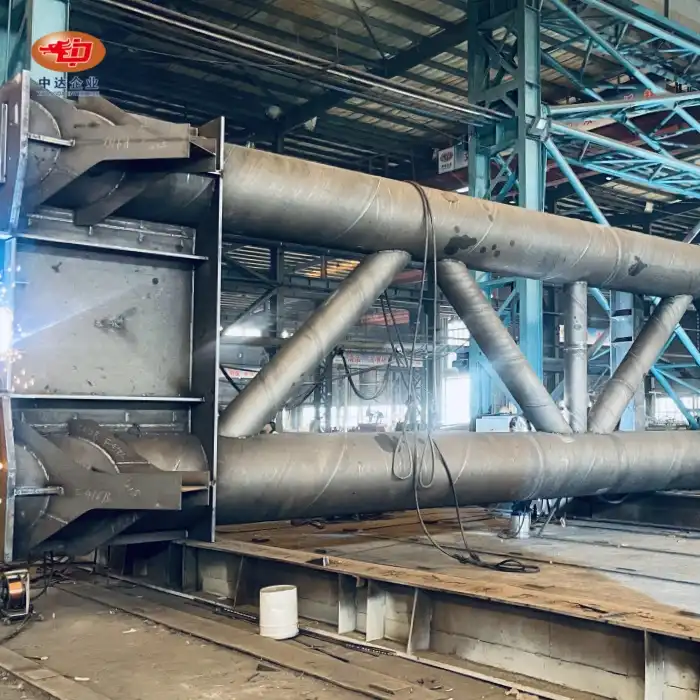
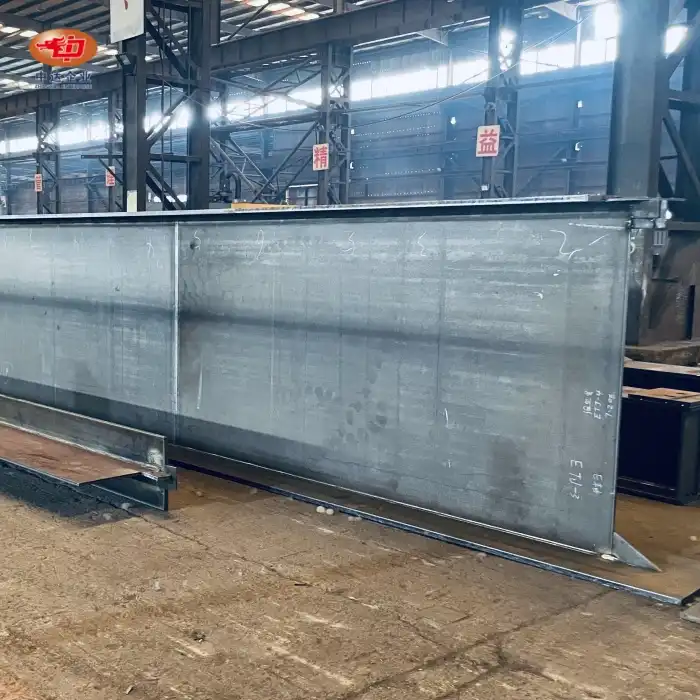
Making a steel box girder bridge requires more accuracy than making an easier type of bridge. To keep the measurements within ±0.2mm for 12-meter beam pieces, you need high-tech CNC tools and strict quality control methods. This level of accuracy is made possible by our 3-axis drilling systems and ultra-thick plate cutting capabilities. However, the complex production process means that the starting costs for materials and labor are higher than with concrete alternatives.
Procurement pros who are careful with their budgets need to look at the total costs over the whole lifecycle, not just the beginning costs. Even though steel box systems may cost 15-20% more up front, they usually save money over their 50-year design lifespans because they don't need as much of a base, can be built faster, and don't need as much upkeep. Our 20–30% shorter lead time than the industry average speeds up project finish, keeping costs for traffic delays to a minimum and toll sites making more money faster.
Span and Load Limitations in Traditional Designs
Usually, steel box girders can only handle major spans of about 300 meters before they need to be supported by cable-stayed or suspension systems. Load rating limits also show up when car weights go up or when projects need to add more space in the future. These restrictions make it harder to plan purchases for projects whose long-term demand isn't clear or where a phased construction method is desired.
Emerging Innovations Transforming Bridge Engineering
Advanced Materials and Protective Coatings
New discoveries in material science are changing the way steel box girder bridge construction can be carried out. High-performance steel alloys now have a tensile strength of 1770 MPa and better low-temperature toughness. This makes it possible to make thinner parts that lower dead loads without lowering safety limits. Our PPWS main wire systems with a 5.2mm diameter are made of this new breed of materials that are very strong.
Traditional zinc-rich bases are no longer the only way to coat something like a steel box girder bridge. Multi-layer systems with ceramic particles and nano-engineered barriers guard for 30 years without any upkeep, even in harsh sea settings (C5). The way the coating is applied is very important. Our surface treatment steps make sure that all the complicated shapes and weld areas are covered, which is where coating problems usually start.
Automated Fabrication and Modular Construction Methods
Robotic welding devices have changed the quality and regularity of joints. When AWS D1.5-certified welding processes are carried out by automatic equipment, they get rid of the human error that used to cause details to wear out quickly. The 50T crane at our plant makes it easy to move big prefabricated pieces around. This supports modular building methods that cut the time needed for assembly on-site by 40–50%.
The modular method is more than just an efficient way to make things. By making the best use of section lengths that are limited by transportation—usually 30 meters on the highway or unlimited by sea—we can speed up bridge building methods that replace whole spans during weekend road closures. This skill comes in very handy when fixing up urban infrastructure because long road bans hurt the economy too much.
Smart Monitoring Technologies and Structural Health Systems
Sensor networks that are built in during construction may be the most important new idea for managing bridges. Strain gauges, accelerometers, and rust monitors send data about how structures behave in real-world service situations all the time. With these real-time insights, predictive maintenance plans can be made to fix small problems before they become big enough to need expensive emergency repairs.
Our 3D laser scanning technology can accurately place wire clamps and check the geometry while they are being put together to within ±2mm. This level of accuracy stretches to ongoing monitoring—laser systems can find deformations on the millimeter scale that point to possible problems years before they can be seen by normal checking methods. The data analytics features let bridge owners get the most out of their repair funds by putting resources where monitoring data shows they are needed most, rather than sticking to strict schedules.
Sustainable Manufacturing and Lifecycle Cost Optimization
As government departments try to lower their carbon loads and meet green building standards, environmental concerns are becoming more and more important in their purchasing decisions. Steel is naturally more sustainable than concrete because it can be completely recycled when it's no longer needed. Building parts can be remelted and remade without losing any of their quality, which opens up possibilities in the circular economy that aren't possible with concrete.
Our ISO 14001:2015-certified environmental management systems in our factories show that we are serious about this. The amount of carbon that is built into supplied bridge parts is lessened by using energy-efficient fabrication equipment, recovering waste heat, and improving transportation. When you add in the longer service lives that come from better rust protection, new steel box systems are better for the environment over the lifecycles of infrastructure.
Market Trends and Strategic Procurement Insights
Global Demand Drivers and Regional Growth Patterns
Modernization projects for infrastructure in North America, Europe, and the Asia-Pacific area are creating a huge need for long-span bridge options like steel box girder bridge. In the United States alone, there are more than 40,000 bridges that are physically faulty and need to be replaced within the next 20 years. This cycle of rebuilding creates a steady need for new bridge systems that keep work to a minimum while extending the life of the bridge.
As cities grow, signature crossings that serve both traffic and public character purposes are more likely to be cable-stayed designs with steel box girder bridge components. Smart city projects connect bridges to telecommunications networks and green energy systems. This needs internal areas that can be changed easily and modular building methods, which are easy to use with steel box designs.
Evaluating Supplier Capabilities and Partnership Criteria
A lot more goes into successful buying than just comparing prices. When making designs that fit the needs of a particular spot, like those caused by earthquakes, high temperature ranges, or harsh weather conditions, technical knowledge is very important. Our engineering team has completed more than 60 important projects, such as Arctic bridges in Russia that had to withstand temperatures as low as -60°C and mining infrastructure in Australia's harsh coastal environments. This shows that they have the wide range of skills that serious infrastructure buyers need.
Whether projects meet their key milestone dates depends on their production capacity and how reliable their deliveries are. Our proven 802-ton monthly delivery rate for 12-meter box girder segments and 60,000-ton yearly fabrication capacity give big projects the flow they need. The fact that 70% of our clients have stayed with us shows that good delivery performance and quick expert help lead to long-term partnerships instead of one-time supplier relationships.
Emerging Sectors and Future Growth Opportunities
Building infrastructure for renewable energy is opening up more job possibilities for people with specialized steel building knowledge. Access roads to wind farms need a lot of bridges over environmentally sensitive areas. Lightweight steel solutions are best for these situations because they can be built quickly and have little effect on the foundations. As solar fields are built in flood-prone areas, they need entry platforms and structures that are higher than the ground. These structures are similar to bridges in how they are built.
To support the growth of e-commerce, the logistics infrastructure needs warehouses and delivery centers that are getting smarter and need to be able to hold a lot of stuff. For port terminal extensions, especially for equipment that moves containers, you need steel buildings that don't rust and are made to last for decades in harsh sea settings. The same skills in fabrication and materials know-how that set apart top bridge makers are used in these industrial uses.
Conclusion
The progress made on steel box girder bridge systems shows that building solutions are getting smarter, more environmentally friendly, and less expensive. New materials, smart monitoring integration, and advanced manufacturing methods are getting around problems from the past and making more uses possible. The need to renew infrastructure around the world creates a steady demand for makers with both proven technical skills and cutting-edge tools. When purchasing managers look at providers based on a wide range of factors, such as technological innovation, production capacity, quality certifications, and lifetime support, their companies are more likely to benefit from these game-changing developments. These bridge systems are important parts of transportation networks in the 21st century because they combine structural economy, fast building methods, and predictive maintenance technology. They serve generations of users.
FAQ
What factors determine load capacity in box girder designs?
The amount of weight that something can hold is based on its physical features, such as its cross-sectional area and moment of inertia, as well as its design parameters, such as the maximum stress that it can hold and the amount of movement that it can handle. Engineers use advanced finite element analysis to find the best values for these parameters by simulating real-life work conditions. This makes sure that safety factors are met while material use is kept to a minimum. Details of the connections and the way the lateral bracing is set up also have a big effect on the total capacity, especially for long spans that are not supported and are subject to bending and twisting loads at the same time.
How do steel and concrete box girders compare economically?
Even though the original cost of steel is usually 15-20% higher than that of other materials, steel box girder bridge solutions are often more cost-effective in the long run. Foundation savings from less dead weight often cover material costs, especially when the dirt is hard to work with. Advantages in construction speed—often allowing installation plans to be cut by 40–50%—reduce secondary costs and traffic problems. Lifecycle analysis has to look at upkeep costs. Steel is better because it's lighter, which makes it easier to examine, and modern coatings make it possible to paint more often, which leads to a better return on investment over 75-year planning plans.
What should buyers prioritize when selecting manufacturers?
Technical knowledge shown by finished project portfolios and technical certificates shows the ability to handle unique, difficult needs. Fabricators can meet project deadlines and dimensional limits if they have the right amount of production capacity and high-tech tools. Quality standards like ISO 9001, EN 1090, and AWS badges show that quality management is being done in a planned way. The difference between transactional providers and strategic partners is customer support, such as design help, value engineering, and quick communication. Buyers should look at all of these factors together instead of just focusing on the first price quotes.
Partner with Zhongda for Your Next Infrastructure Project
Shenyang Zhongda Steel Structure Engineering has 20 years of experience working on projects around the world and can make 60,000 tons of precision steel structures every year. They offer the best steel box girder bridge options. We are the best company for tough infrastructure projects because our production methods are FHWA-NHI-07-096 certified, our designs are driven by BIM, and our steel can withstand temperatures as low as -60°C. Our team can help you with all aspects of your project, from the initial idea to the final commissioning. This includes super-long spans with 12-level wind resistance, shortened building timelines, and personalized OEM/ODM engineering. Get in touch with our technical experts at Ava@zd-steels.com to talk about how Zhongda's advanced skills can help you get the best deal on your next bridge. You can look at our project collection at zd-steels.com and ask for full specs that are made to fit your infrastructure needs.
References
Chen, B., & Wang, T. (2021). Advanced Steel Box Girder Bridge Design: Principles and Applications. Beijing: China Architecture & Building Press.
Federal Highway Administration. (2019). Steel Bridge Design Handbook: Box Girder Systems. Washington, DC: U.S. Department of Transportation.
Kolstein, M. H. (2020). Fatigue Classification of Welded Joints in Orthotropic Steel Bridge Decks. Delft: Delft University of Technology Press.
Pipinato, A. (2022). Innovative Bridge Design Handbook: Construction, Rehabilitation and Maintenance. Amsterdam: Elsevier Science.
Troitsky, M. S. (2018). Cable-Stayed Bridges: Theory and Design (3rd ed.). Boca Raton: CRC Press.
Zhang, Q., & Liu, Y. (2023). Smart Monitoring Technologies for Long-Span Steel Bridges. Singapore: Springer Nature.
YOU MAY LIKE