Applications of Lattice Columns in Modern Architecture
2026-06-17 17:04:19






Lattice columns are a revolutionary way to design structures. They are made up of linked parts that make a strong framework that has great strength-to-weight performance. These built-up compression elements use vertical or horizontal bracing systems to spread loads evenly around factories, business buildings, and infrastructure projects around the world. The lattice column design, on the other hand, increases the radius of gyration relative to cross-sectional area. This solves important bending problems in tall buildings while cutting material use by up to 40%. Their proven adaptability includes high-rise building, bridge infrastructure, and energy facilities where the best use of materials has a direct effect on the cost and environmental impact of the project.
Understanding Lattice Columns in Modern Architecture
What Makes Lattice Columns Distinct From Traditional Supports?
These structures are based on the basic engineering idea of connecting several long chords with triangulated support patterns. This shape better spreads out compression forces than straight parts, especially in situations where the height is more than 12 meters. The open-web design lowers wind load factors while keeping high rotational stiffness, which is a huge benefit for buildings that are exposed to changing weather forces. The most common choice of material is high-strength low-alloy steels like ASTM A572 Gr. 50 or Q355B, which have yield strengths that can handle heavy axial loads and allow methods for weight reduction.
Core Structural Characteristics Driving Industry Adoption
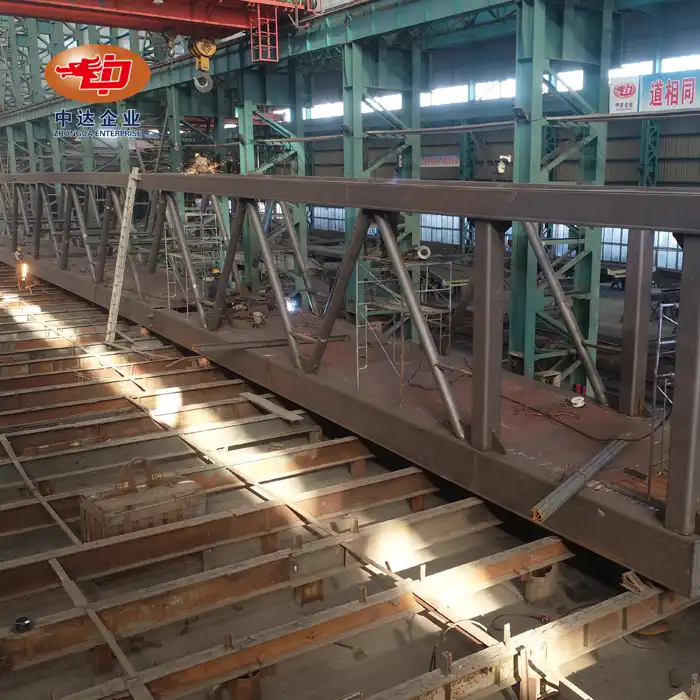
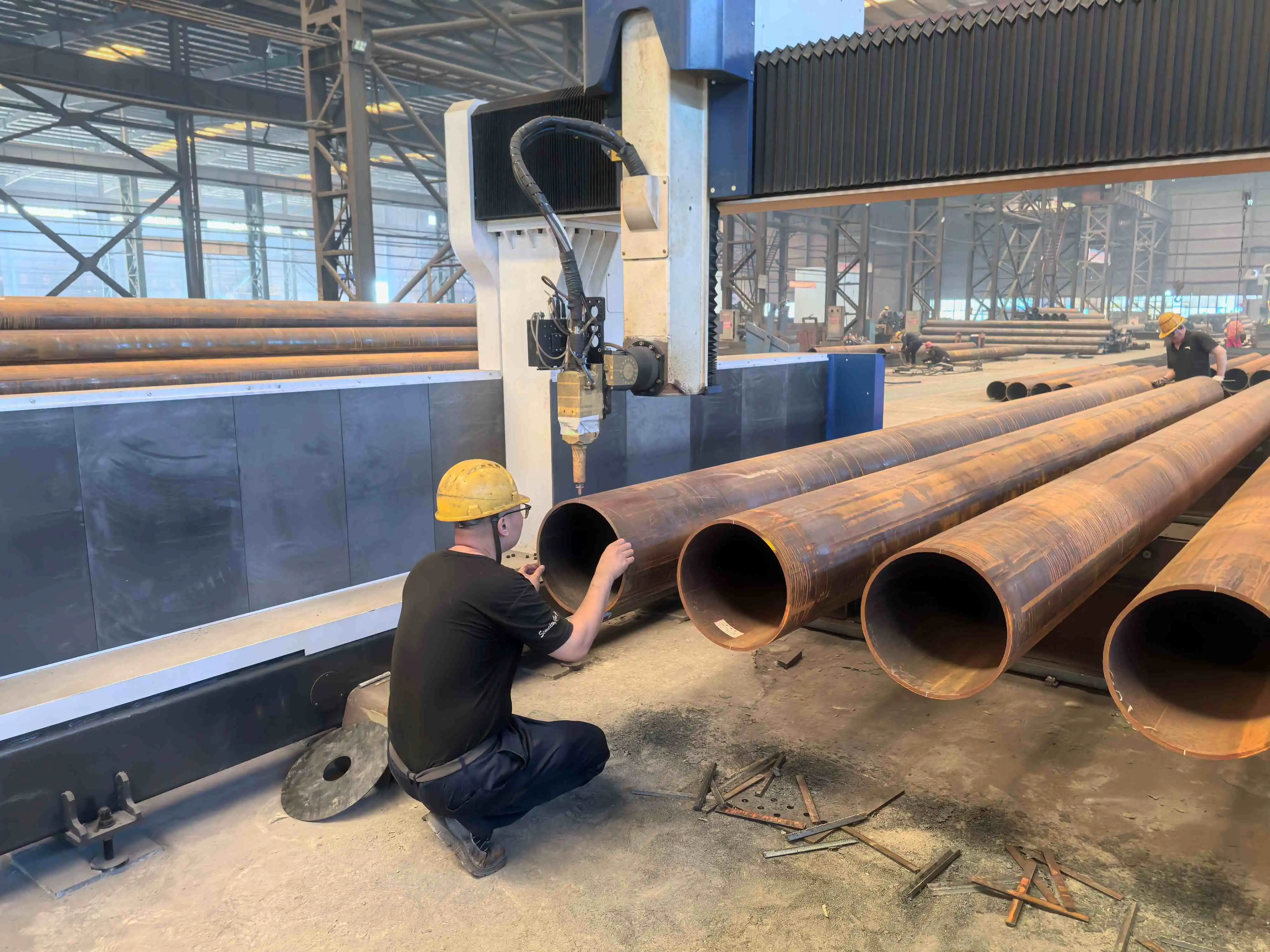
Engineers choose these parts because they solve problems that keep coming up in long-span building. The updated slenderness ratio measurement takes into account shear deformation in the lacing system. To keep individual chords from breaking locally, it is important to pay close attention to the distance between bracing elements. Most lacing angles are between 40 and 60 degrees, which is the best range for transferring shear force while keeping manufacturing efficiency high. Hot-dip galvanization according to ASTM A123 standards increases service life in acidic settings. This meets the need for toughness in chemical processing plants or industrial zones along the coast. At Zhongda, our factory uses CNC cutting tools that keep limits of ±0.2mm. This makes sure that the sizes are accurate, which makes field assembly and connection easier.
Material Science and Performance Standards
Carbon steel formulas are put through a lot of tests to make sure they meet foreign standards like ASTM A500 and EN 10219. The chemical makeup of structural steel has a direct effect on the quality of the weld and its ability to fight wear over time. This is especially true for buildings that are loaded and unloaded over and over again. Our special -60°C weathering steel anti-corrosion technology protects structures better in harsh environments like the arctic or when the temperature changes a lot. This new development in metalworking makes it more resistant to rust than traditional zinc coats. This lowers the costs of upkeep over the course of a product's lifetime and makes it last longer than 50 years in tough industrial environments.
Key Applications of Lattice Columns in Contemporary Building Projects
Because these designed systems are better at supporting structures, they have real benefits in many areas of building. Understanding how these parts are used in different businesses helps buying managers find the best specs for their own working needs.
High-Rise Commercial and Residential Structures
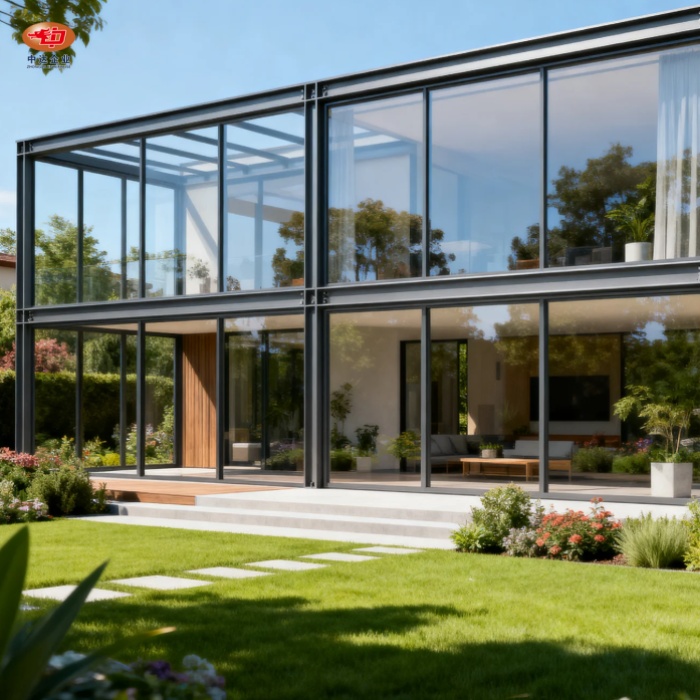
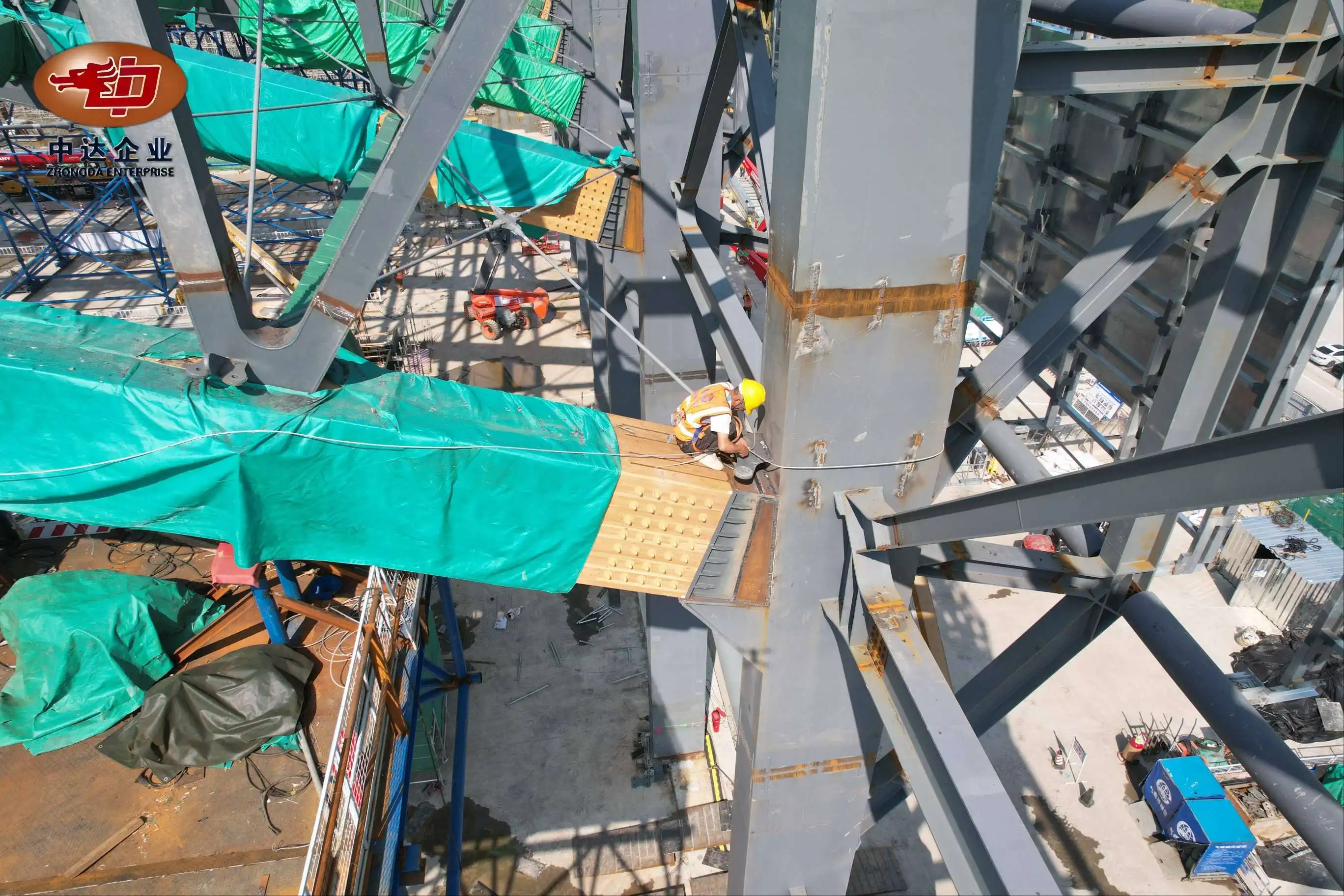
Vertical support systems with less dead weight are very helpful for buildings with more than one floor. The weight savings—between 30 and 50 percent compared to solid sections—reduce the need for foundations and make the structure more resistant to earthquakes. Engineers who build towers in areas that are prone to earthquakes like how the open layout lets them control how much energy is lost during earthquakes. Our work on the China Railway offices tower showed how premade lattice columns sped up building by getting rid of a lot of welding that had to be done on-site. This cut installation time by 45 percent while still meeting strict quality control standards.
Industrial Warehouses and Manufacturing Facilities
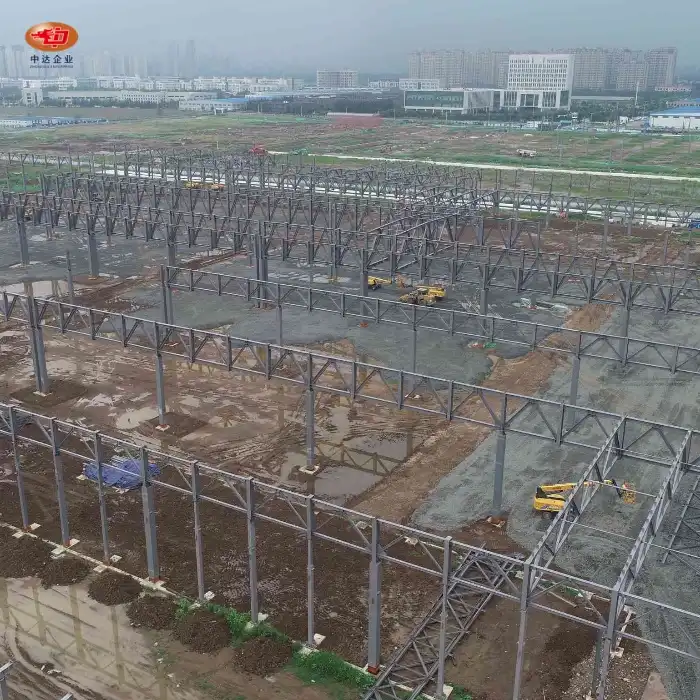
For material handling tools and production processes to work, the inside of large industrial buildings needs to be free of columns. These structural parts allow clear spans of more than 100 meters without the need for supports in the middle. This gives warehouse workers and plant managers the most operating freedom. At Zhongda, we use a flexible lattice column design philosophy that lets us make changes to fit overhead crane loads, mezzanine levels, and equipment platforms without affecting the structure's strength. The thermal efficiency benefits are especially helpful for cold-chain transport facilities because the lighter material reduces thermal bridges more than solid steel columns, which leads to better shielding and lower HVAC costs.
Infrastructure and Transportation Projects
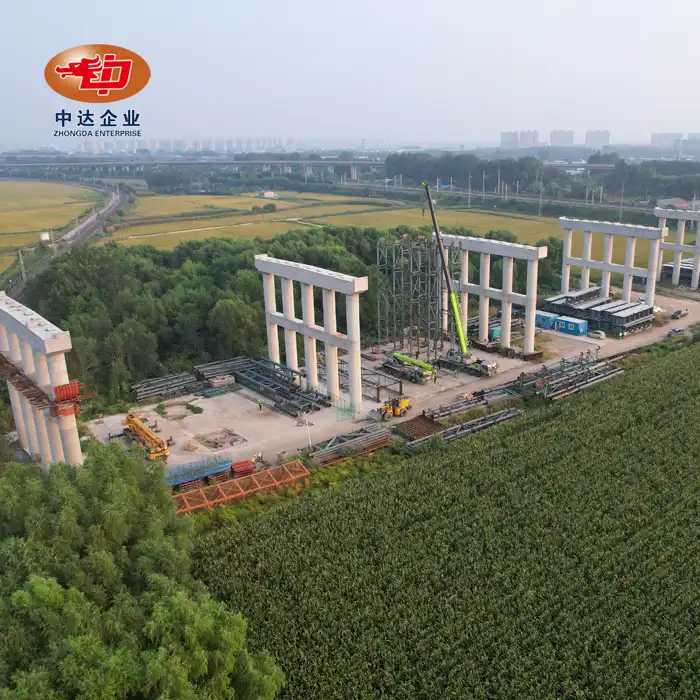
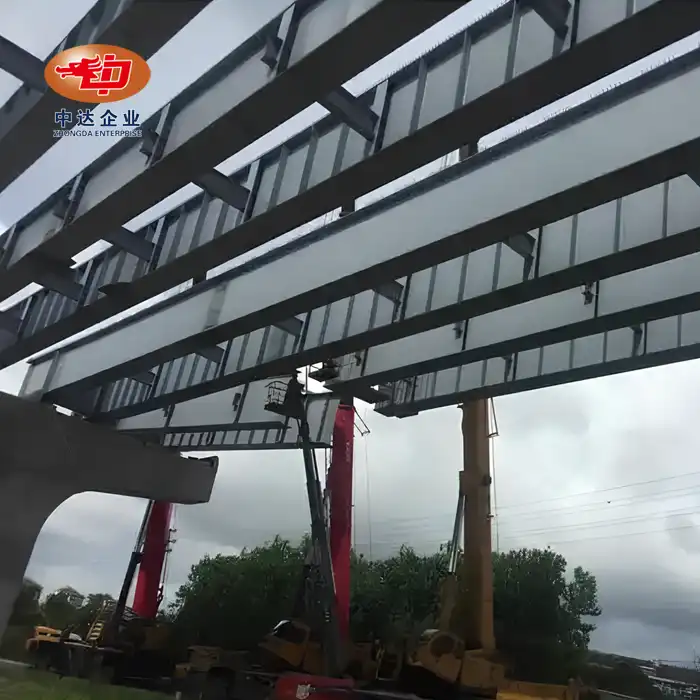
Building a bridge is one of the most difficult tasks that compression members have to do. Engineers in the transportation sector choose lattice column designs for pier supports because they optimize strength to weight, which lowers base costs and lets spans between supports be longer. Working with CSCEC on the Arctic bridge project in Russia showed that certain surfaces can handle changes in temperature and de-icing salts that are very harsh on metal. For the project, each column had to be able to hold more than 500 tons of weight, and there had to be mill test certificates, dimensional inspection reports, and coating verification data for every part that could be used to track its origin. These had to meet both Russian GOST standards and international ISO standards.
Energy Sector Installations
When wind-induced dynamic forces are combined with heavy static loads, they create unique structure problems for people who work on renewable energy projects. Box-section designs are used in solar farm rack systems and wind turbine supports to prevent rotational loads from uneven panel stacks or rotor force. Our marine-grade alloys offer the rust protection that is needed for offshore wind farms, where high humidity and salt spray make materials break down faster. Power plant workers like how the visual openness of lattice column designs makes inspection procedures easier. This lets maintenance teams find internal rust or link wear without having to do damaging tests.
Technical Advantages Over Traditional Column Designs
By comparing performance measures, procurement managers can see why these designed solutions are being chosen over more traditional ones more and more. The economic and performance benefits go beyond the cost of acquisition and include the ease of placement and the value over the course of the product's life.
Superior Material Efficiency and Weight Reduction
The designed shape has the same load-bearing capacity as solid parts but uses a lot less steel. This optimization of materials directly leads to lower transportation costs, which is an important factor to keep in mind for foreign projects where shipping costs make up a big part of the budget. When compared to standard lattice column systems, the container optimization methods used by Zhongda increase shipping density and lower freight costs by 25 to 30 percent. Cutting down on weight also makes it easier to move and lift during installation, which lets smaller cranes be used and lowers the hiring costs.
Enhanced Resistance to Dynamic Forces
Wind load estimates show that open-web setups have a lot of benefits. The smaller projected area lowers the wind pressure on vertical surfaces, which lowers the toppling moments that are passed to the base systems. This trait is especially useful near the coast or in high places where wind affects how structures are built. Less mass also improves seismic performance, since lower acceleration loads during ground motion events lead to lower seismic forces. Our engineering team gives you checked load estimates and finite element analysis results that show you meet all U.S. risk groups for wind and earthquake design standards under ASCE 7.
Global Code Compliance and Certification
To run an international project successfully, you need to know how to deal with different legal systems. We are committed to quality management systems that are accepted in both European and North American markets, as shown by our ISO 9001, EN 1090, and OHSAS 45001 certifications. We follow the rules in AISC 360-16 Section E6 about built-up members, which includes doing shear stiffness calculations that are specific to lattice column designs. Documentation packages include design calculations signed off by licensed professional engineers, material certificates that show where the steel came from using rolling mill heat numbers, and inspection reports from a third party that confirm the tolerances for size and coating thickness. This all-around method speeds up the regulatory approval process and cuts down on project delays caused by missing or incorrect paperwork.
How to Select the Right Lattice Column Solution for Your Project?
To choose the right strategic components, you need to carefully look at the technical needs, the surroundings, and the limitations of the project. Informed decision-making processes make sure that long-term efficiency is maintained while balancing performance requirements with budget constraints.
Assessing Project-Specific Load and Span Requirements
To start structural analysis, you need to have a good idea of the dead loads, live loads, and external forces like wind, earthquake, and heat effects. The slenderness ratio estimate, which compares the effective length to the radius of gyration, shows how likely it is that the structure will buckle. Lattice column designs that maximize moment of inertia without equivalent mass increases are especially helpful for projects with high slenderness ratios. Our engineering support team helps with basic size calculations by giving us load tables and design plans that speed up the process of making specifications. We check the conditions of the base, the arrangements of the horizontal bracing, and the details of the connections to make sure they work with the rest of the structural systems.
Material Selection and Corrosion Protection Strategies
The factors of environmental exposure determine the right steel types and covering methods for protection. Standard hot-dip galvanization can be used for industry uses inland, but duplex finishing methods that combine galvanizing with epoxy or polyurethane topcoats are needed for better safety along the coast. Our -60°C weathering steel technology works in very cold places where normal materials are likely to break because they are so weak. Stainless steel choices are better for chemical production plants because they can handle acidic or alkaline environments better. We offer material comparison models that show how resistant a material is to rust, how much it costs at first, and how long it is expected to last under different exposure conditions. These help with lifetime cost analysis during the evaluation and purchase processes.
Partnering With Experienced Manufacturers
Supplier choice has a big effect on the success of a project that goes beyond just delivering the first parts. Throughout the lifetime of a project, manufacturers with a wide range of skills, from technical help to manufacturing and quality testing, are valuable. Our 120,000-square-meter building at Zhongda has high-tech CNC machine centers, automatic welding stations, and digital shaping equipment that makes sure the shapes are exact. Our 60,000-ton yearly production ability can handle jobs of all sizes, from small business buildings to huge infrastructure projects. Digital coordination with design and MEP systems is made possible by BIM-driven prefabrication routines. This lets you find problems before the fabrication process starts and avoids expensive changes in the field. We give each foreign package its own project manager who is in charge of coordinating just-in-time delivery plans, the best way to load containers, and the paperwork needed for customs clearance.
Future Trends and Innovations in Lattice Column Technology
Ongoing research and development keeps improving performance while also handling new industry objectives like smart infrastructure integration and ecology.
Advanced Materials and High-Strength Alloys
New developments in material science are focusing on ultra-high-strength steels with yield strengths above 690 MPa. These steels allow for even more weight decreases without losing load capacity. Fiber-reinforced plastics can be used to make composite materials that don't rust and are lighter, but because they are more expensive, they are only used in certain aircraft and naval uses right now. We are keeping a close eye on these changes and keeping in touch with steel mills and research centers to find out how new materials can be used in building.
Automation and Modular Construction Integration
Digital production technologies change how quickly and accurately things are made. Robotic welding systems make regular, high-quality links while cutting down on the need for workers and making the workplace safer. Automated assembly tools make sure that the geometry is correct, which gets rid of the cumulative tolerance problems that make field assembly harder. We bought Industry 4.0 manufacturing systems that have real-time quality tracking, predictive maintenance tools, and digital twin models that help us make the best use of our production schedule. These technology advances mean shorter wait times and more reliable delivery for jobs that need to be done on time.
Smart Infrastructure and Structural Health Monitoring
Internet-of-Things (IoT) integration lets you keep track of a structure's performance all the time by using built-in sensors to measure things like strain, vibration, and rust. This information is used by predictive maintenance strategies to plan actions that will be taken before small problems become major ones that cost a lot to fix. This increases the service life and lowers the total cost of ownership. We work with technology partners to create sensor integration protocols that work with building information management platforms. These protocols give site managers useful information about the state of structures and how long they will last.
Conclusion
Lattice columns improve the performance of business building, infrastructure development, and industrial facility projects by better distributing materials, making load-bearing more efficient, and cutting down on installation times. When it comes to strength-to-weight optimization, rust resistance, and global code compliance, these designed solutions have been shown to be better than standard solid parts. As concerns about sustainability grow and building plans get shorter, the economic and environmental benefits of using less material and putting together modules quickly become stronger. Strategic relationships with experienced makers give you access to the technical know-how, quality certifications, and reliable delivery performance that are necessary to carry out a project successfully.
FAQ
What advantages do lattice columns provide over solid steel columns?
When compared to solid parts of the same size, these designed structures are 30 to 40 percent lighter while still holding the same amount of weight. The lighter weight cuts down on the need for foundations, lowers the cost of shipping, and makes the building more resistant to earthquakes. Open-web designs reduce wind loads and make it easier to view the inside for rust tracking.
How do these systems contribute to sustainable construction practices?
Material optimization cuts down on the amount of steel used without affecting the strength of the structure, which directly lowers embodied carbon footprints. Improvements in manufacturing efficiency, such as reusing rates of 95% of materials and low-emission finishing methods, make environmental performance even better. The longer service life due to better rust protection reduces the number of replacements needed and the environmental effects that come with them over the course of the product's life.
Can lattice column designs accommodate custom architectural requirements?
According to modular design principles, sizes, connections, and load requirements can be changed in a lot of ways. Engineers work directly with architects and structural consultants to come up with solutions that meet both the needs of the architect's aesthetic vision and the needs of the structure's performance. Because they can do custom manufacturing, they can work with different project shapes and keep costs low by using standard production methods.
Partner With Zhongda for Your Next Structural Project
Zhongda offers precisely designed lattice column solutions backed by 20 years of experience working on projects around the world and quality control systems that are ISO-certified. Our advanced manufacturing skills, such as BIM-driven prefabrication and ±0.2mm CNC cutting precision, make sure that the sizes are correct and that installations are completed faster in business, infrastructure, and industrial settings. As a reliable lattice column maker with clients like China Railway, CSCEC, and BMW, we offer full technical support, from the initial design advice to the help after the installation. Get in touch with our technical team at Ava@zd-steels.com to talk about how our custom structure solutions can improve the performance of your project, lower its lifecycle costs, and help you meet tight delivery deadlines with proven dependability.
References
American Institute of Steel Construction. (2016). Specification for Structural Steel Buildings: AISC 360-16. Chicago: AISC.
Chen, W.F., & Lui, E.M. (2005). Handbook of Structural Engineering. Boca Raton: CRC Press.
European Committee for Standardization. (2005). Eurocode 3: Design of Steel Structures - Part 1-1: General Rules and Rules for Buildings. Brussels: CEN.
Galambos, T.V., & Surovek, A.E. (2008). Structural Stability of Steel: Concepts and Applications for Structural Engineers. Hoboken: John Wiley & Sons.
Salmon, C.G., Johnson, J.E., & Malhas, F.A. (2009). Steel Structures: Design and Behavior. Upper Saddle River: Pearson Prentice Hall.
Trahair, N.S., Bradford, M.A., Nethercot, D.A., & Gardner, L. (2008). The Behaviour and Design of Steel Structures to EC3. London: Taylor & Francis.
YOU MAY LIKE
_副本_1762415806774.jpg "hangar structure")